The first batch of venison summer sausage I ever made came out way too dry, and I spent an embarrassing amount of time trying to figure out what went wrong.
Turns out, the fix was simpler than I expected. 🦌
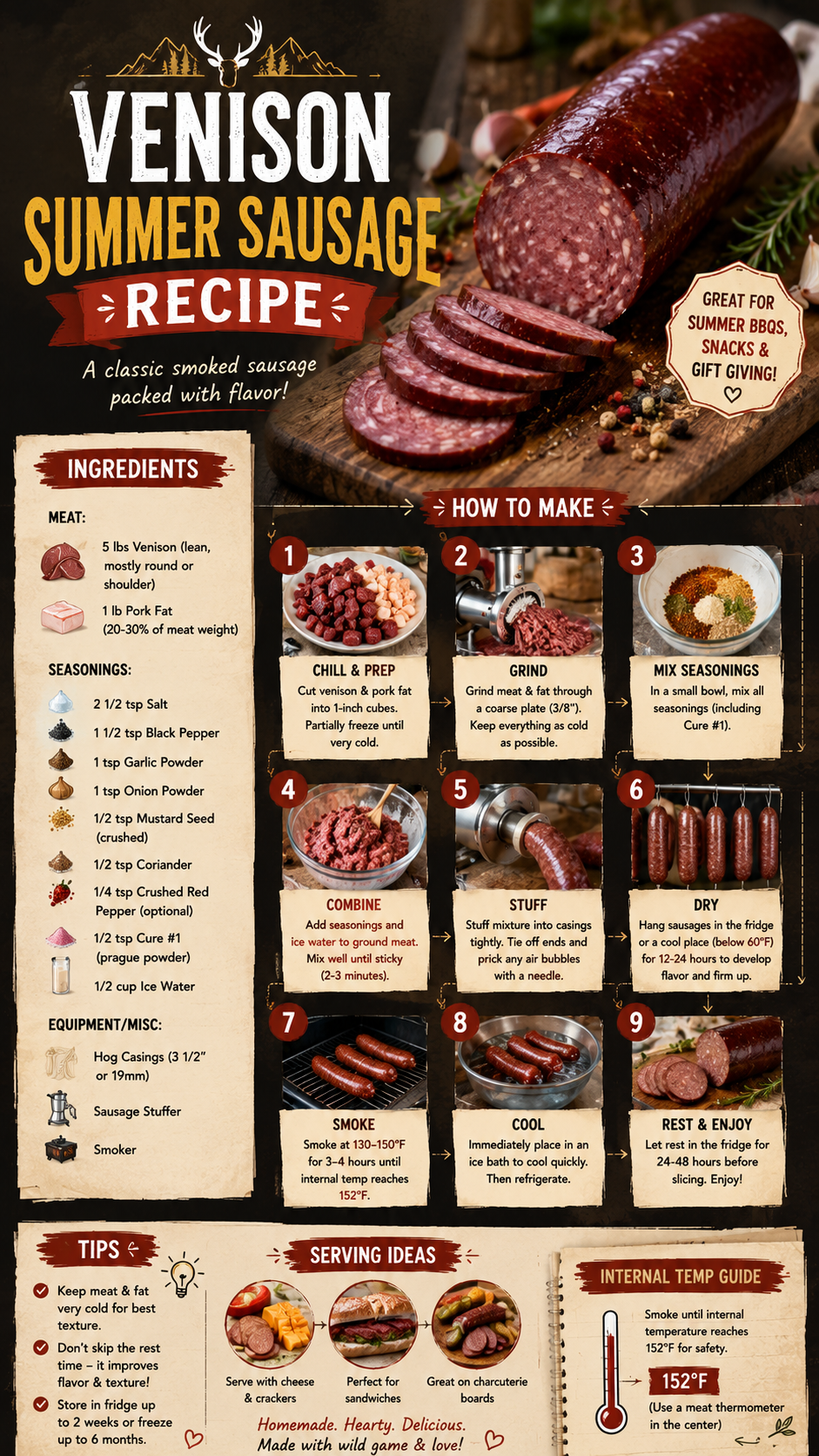
Venison summer sausage is a cured, smoked sausage made from ground deer meat, mixed with pork fat and a specific blend of seasonings, then smoked low and slow until it’s safely cooked through.
It’s a genuinely satisfying way to use up venison from a hunting season, turning it into something you’ll actually want to snack on for months afterward.
The process takes a few days start to finish, but most of that time is hands-off curing and smoking.
Here’s something worth knowing: summer sausage gets its name from its original purpose as a shelf-stable food that could survive warm months without refrigeration, thanks to the combination of curing and smoking. 🌞
That same process is exactly why it still holds up so well in storage today, long after refrigeration made it less of a necessity and more of a tradition.
Why This Recipe Works
Venison is extremely lean on its own, which sounds like a good thing until you realize lean meat dries out fast once it hits the smoker.
Mixing in pork fat solves that problem directly, giving the sausage enough moisture and richness to stay tender through the entire smoking process.
The curing salt does double duty here, it’s responsible for that classic tangy, fermented flavor people associate with summer sausage, and it’s also what makes the sausage safe to store for extended periods.
Getting the ratio of venison to fat right is really the most important technical detail in this whole recipe, more than any specific seasoning choice.
What You’ll Need
- 4 lbs ground venison
- 1 lb pork fat, ground or finely diced
- 4 tbsp curing salt (Cure #1)
- 2 tbsp coarse black pepper
- 2 tbsp mustard seed
- 1 tbsp garlic powder
- 1 tbsp onion powder
- 1 tsp red pepper flakes (optional)
- ¼ cup ice water
- Sausage casings
That’s the full ingredient list, and beyond the meat and casings, everything else is shelf-stable seasoning.
Tools You’ll Need
- Meat grinder, if grinding your own venison and pork
- Large mixing tub
- Sausage stuffer
- Smoker
- Meat thermometer
How to Make Venison Summer Sausage
Step 1: Mix the meat and cure
In a large tub, combine the ground venison, pork fat, curing salt, black pepper, mustard seed, garlic powder, onion powder, and red pepper flakes.
Add the ice water and mix thoroughly by hand until the mixture is evenly combined and starts to feel slightly tacky.
Wearing food-safe gloves makes this part easier and keeps the curing salt off your skin during the longer mixing process.
Step 2: Cure
Cover the mixture tightly and refrigerate for 24-48 hours, which allows the curing salt to fully penetrate the meat.
This curing period is non-negotiable for both flavor and food safety, so resist the urge to skip ahead.
You may notice the color of the meat shift slightly during this time, which is a normal sign the cure is working as it should.
Step 3: Stuff the casings
Using a sausage stuffer, pack the cured mixture into your casings, pressing firmly to avoid trapping air pockets.
Tie off both ends securely.
If you spot any trapped air after stuffing, a sterilized pin can help release it without damaging the casing too much.
Step 4: Smoke
Smoke at a low temperature, around 150-170°F, until the internal temperature of the sausage reaches 160°F.
Depending on casing size and your smoker, this can take anywhere from 4 to 8 hours.
Step 5: Cool and rest
Once smoked, let the sausage cool at room temperature for roughly an hour.
Move it to the fridge to finish cooling fully before slicing into it.
Pro Tips
A handful of details that genuinely make a difference here.
- Weigh your venison to fat ratio carefully. A roughly 80/20 venison to fat ratio tends to produce the most consistent, moist results.
- Keep everything cold while mixing. Warm fat can smear instead of distributing evenly, which affects the final texture.
- Use a reliable meat thermometer. Smoker temperatures fluctuate, so internal temperature is a far more accurate measure of doneness than time alone.
- Don’t rush the smoke. Going low and slow gives you better texture and more even color throughout than cranking up the heat to speed things up.
- Let the sausage rest before cutting into it. This helps it hold together better and prevents the juices from running out immediately.
- Keep a written log of your batches. Tracking your exact ratios and seasoning amounts makes it much easier to recreate a batch you particularly loved.
Substitutions and Variations
- No venison available? Elk, moose, or even lean beef can work using this same basic method and ratios.
- Want a smokier flavor without a smoker? A liquid smoke addition, combined with low oven baking, can approximate the flavor, though it won’t be identical to true smoking.
- Want it cheesier? Mix in cubed high-temperature cheese specifically designed to hold up during smoking.
- Want a milder version? Cut back on the black pepper and mustard seed slightly for a gentler overall flavor.
- No sausage stuffer on hand? A large piping bag works in a pinch, though it takes more time and effort to pack tightly.
Make Ahead Tips
This recipe is essentially designed around the idea of stocking up, since making a big batch during hunting season means you’ve got sausage ready for months.
Vacuum sealing individual portions before freezing helps preserve flavor and texture far longer than standard freezer bags.
Nutritional Info & Diet Swaps
One serving (about 2 oz) comes out to roughly 140-170 calories, depending on the exact ratio of venison to pork fat used.
For a leaner version: Reduce the pork fat slightly, though this will affect both moisture and overall texture, so testing a small batch first is worth doing.
On sodium: Curing salt is essential here for safety, so this isn’t a recipe where sodium reduction is really an option without compromising the process.
Meal Pairing Suggestions
- A charcuterie board: Pairs naturally with sharp cheese, pickles, and crackers.
- A simple sandwich: Thin slices on crusty bread with mustard make for an easy lunch.
- Tailgate spreads: A natural fit alongside other game-day snacks and appetizers.
- A holiday appetizer table: Works well alongside other cured meats and cheeses during the holidays.
Time-Saving Tips
- Have a butcher grind your venison and pork together if you don’t own a grinder.
- Make one large batch per hunting season rather than several smaller ones throughout the year.
- Buy a pre-measured seasoning blend specifically made for summer sausage if you want to skip individual measuring.
Leftovers and Storage
Store in the fridge for up to 3 weeks once fully cooled, wrapped tightly or in an airtight container.
For longer storage, freeze individual portions for up to 6 months, ideally vacuum sealed.
Only slice what you plan to eat soon, keeping the rest of the log whole to extend its shelf life.
FAQ
Can I substitute regular salt for curing salt? No. Curing salt contains sodium nitrite, which prevents harmful bacterial growth during the curing process. Regular table salt does not provide this same protection.
Can I make this without a smoker? You can approximate it using a low oven temperature, though you’ll miss out on the authentic smoky flavor a real smoker provides.
Why did my sausage turn out greasy instead of moist? This usually means the fat ratio was too high, or the fat wasn’t distributed evenly during mixing. Sticking closer to an 80/20 ratio tends to solve this.
Is it safe to taste the mixture before it’s cooked? No, raw ground meat mixtures, especially those containing curing salt, should not be tasted before they’re fully cooked.
How long does the curing step really need to be? At minimum 24 hours, though many people prefer the full 48 hours for a more developed flavor.
Can I scale this recipe down for a smaller batch? Yes, just scale the seasoning amounts proportionally based on however much venison and pork fat you’re actually using.
Wrapping Up
This sausage turns a season’s worth of venison into something genuinely worth looking forward to, batch after batch.
Properly cured ground meat, a careful smoke, and a little patience while it all comes together. That’s really the entire process.
Make a batch the next time you’ve got venison to work with, and dial in your own preferred ratio of pepper and mustard seed along the way.
If you try this one, leave a comment below and let me know how your batch turned out, or any adjustments you made to the seasoning. I’d love to hear about it.