
Beef cheeks don’t look like much when you buy them. They’re tough, sinewy, and need to be trimmed. But give them time—slow, gentle heat in a wine-rich broth—and they transform into something extraordinary. The meat becomes so tender it practically dissolves on your tongue. The sauce turns silky and deep.
This is cold-weather cooking at its best. The kind of dish you start in the afternoon so your house smells like red wine and herbs by dinnertime. It’s special occasion food that doesn’t require fancy technique, just patience.
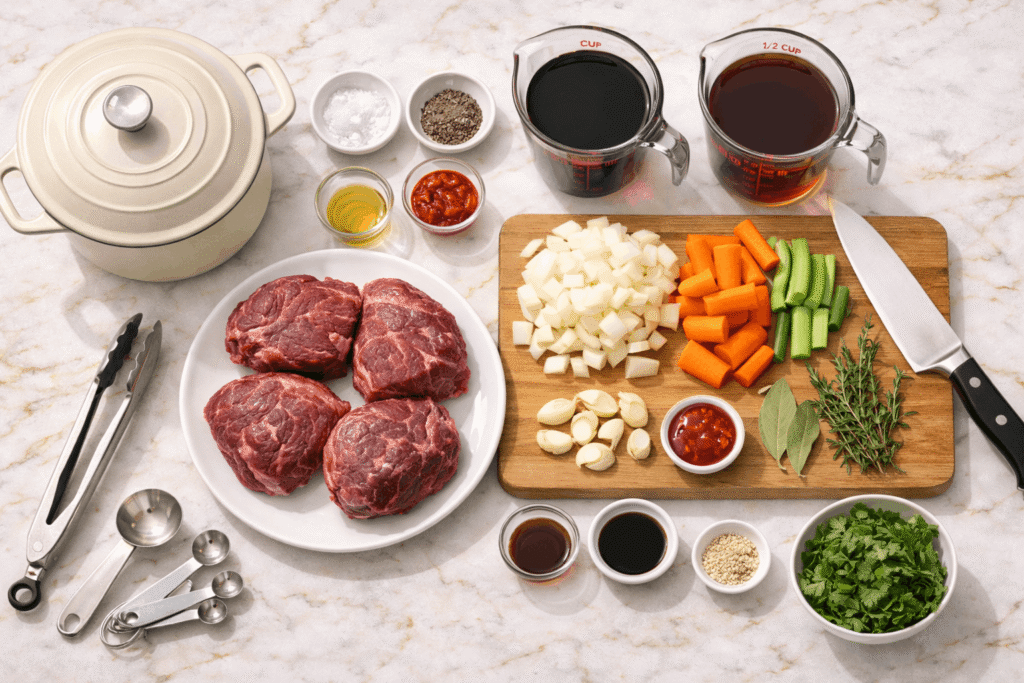
What You’ll Need
For the Beef Cheeks:
- 4 beef cheeks (about 3 lbs total), trimmed of excess fat and silverskin
- 2 teaspoons kosher salt
- 1 teaspoon black pepper
- 3 tablespoons olive oil
- 2 medium yellow onions, roughly chopped
- 2 large carrots, peeled and cut into 2-inch pieces
- 3 celery stalks, cut into 2-inch pieces
- 6 garlic cloves, smashed
- 3 tablespoons tomato paste
- 2 cups dry red wine (Cabernet or Merlot work well)
- 2 cups beef stock
- 4 sprigs fresh thyme
- 2 sprigs fresh rosemary
- 2 bay leaves
- 1 tablespoon balsamic vinegar
For Serving:
- Creamy polenta, mashed potatoes, or egg noodles
- Fresh parsley, chopped
Tools:
- Large Dutch oven with lid
- Tongs
- Chef’s knife
- Cutting board
- Measuring cups and spoons
- Fine-mesh strainer (optional, for sauce)
Preparing and Searing the Meat
Preheat your oven to 300°F.
Pat the beef cheeks dry with paper towels. Season them generously on all sides with salt and pepper. Wet meat won’t brown, so make sure they’re dry.
Heat the olive oil in your Dutch oven over medium-high heat until it shimmers. Working in batches if needed, sear the beef cheeks for 3-4 minutes per side until deeply browned. Don’t move them around—let them develop a crust.
Transfer the seared cheeks to a plate. Don’t worry about cooking them through. They’ll spend hours in the oven.
Building the Braising Liquid
Lower the heat to medium. Add the onions, carrots, and celery to the pot. Cook for about 8 minutes, stirring occasionally, until the vegetables start to soften and pick up the brown bits from the bottom of the pot.
Add the garlic and tomato paste. Stir for about 2 minutes. The tomato paste should darken slightly and coat the vegetables.
Pour in the red wine. Use a wooden spoon to scrape up any remaining browned bits from the bottom. Let the wine simmer for about 5 minutes to cook off some of the alcohol.
Add the beef stock, thyme, rosemary, and bay leaves. Stir to combine.
Braising
Nestle the beef cheeks back into the pot, along with any juices that accumulated on the plate. The liquid should come about halfway up the sides of the meat. If it doesn’t, add a bit more stock or water.
Bring everything to a simmer, then cover the pot with the lid.
Transfer the Dutch oven to your preheated oven. Braise for 3 to 3½ hours. The meat is done when you can easily pierce it with a fork and it wants to fall apart. Some cheeks may be done sooner than others depending on their size.
Finishing the Sauce
Carefully remove the beef cheeks from the pot and set them on a plate. Cover loosely with foil to keep warm.
If you want a refined sauce, strain the braising liquid through a fine-mesh strainer into a bowl, pressing on the vegetables to extract their flavor. Discard the solids.
Pour the strained liquid back into the pot. Bring it to a simmer over medium-high heat and let it reduce for about 10 minutes until it thickens slightly and coats the back of a spoon.
Stir in the balsamic vinegar. Taste and adjust the seasoning with salt and pepper.
Return the beef cheeks to the sauce just to warm them through.
Serving
Spoon polenta, mashed potatoes, or egg noodles into shallow bowls. Place a beef cheek on top. Ladle the rich sauce over everything. Finish with a sprinkle of fresh parsley.
This serves 4 people. The beef cheeks are rich and filling, so one per person is enough.
Leftovers reheat beautifully. Store them in the sauce in an airtight container in the refrigerator for up to 4 days. Reheat gently on the stovetop.