
Thai curry should hit multiple notes at once—creamy coconut, fiery chilies, aromatic lemongrass, tangy lime. It should have depth from fish sauce and palm sugar, brightness from fresh herbs, and enough heat to make you reach for rice. This red curry delivers all of that without requiring a trip to three different stores.
The curry paste does most of the heavy lifting. You bloom it in oil to wake up the spices, add coconut milk to create a rich sauce, then simmer chicken and vegetables until everything melds together. Thirty minutes start to finish, and you have something that tastes like it came from a good Thai restaurant.
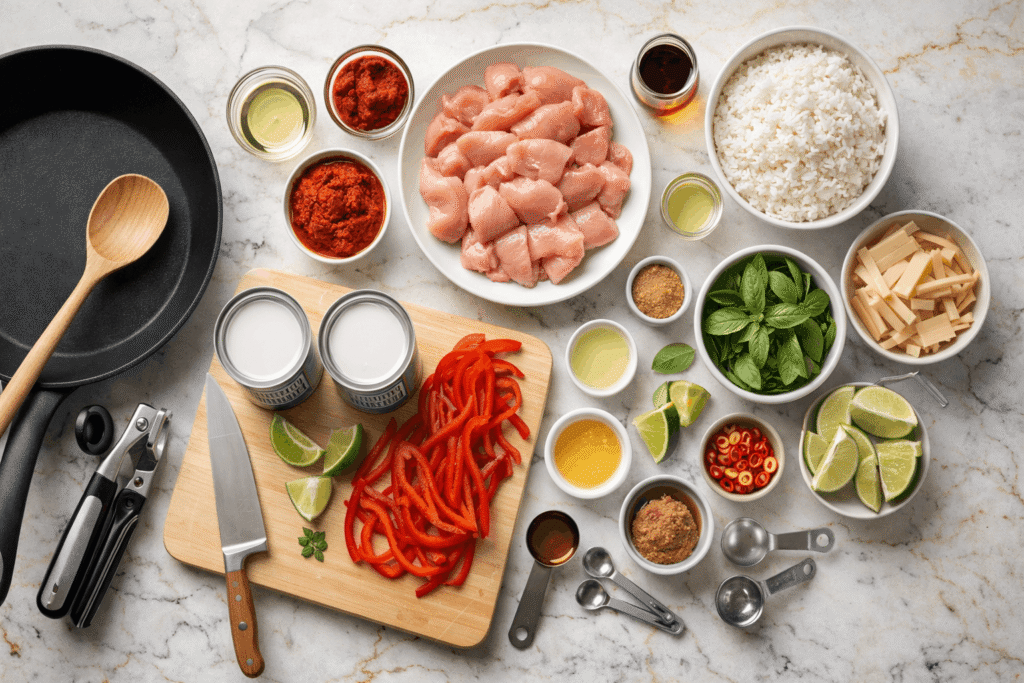
What You’ll Need
For the Curry:
- 2 tablespoons vegetable oil
- 3-4 tablespoons Thai red curry paste
- 2 (13.5 oz) cans full-fat coconut milk
- 1½ lbs boneless, skinless chicken thighs, cut into bite-sized pieces
- 1 red bell pepper, sliced thin
- 1 cup sliced bamboo shoots (canned, drained)
- 1 cup Thai basil leaves (or regular basil)
- 2 tablespoons fish sauce
- 1 tablespoon palm sugar or brown sugar
- 2 kaffir lime leaves (or zest of 1 lime)
- 1 tablespoon lime juice
- 1 Thai chili, sliced (optional, for heat)
For Serving:
- Jasmine rice, cooked
- Fresh Thai basil leaves
- Lime wedges
- Sliced red chilies (optional)
Tools:
- Large skillet or wok
- Wooden spoon
- Chef’s knife
- Cutting board
- Measuring cups and spoons
- Can opener
Blooming the Curry Paste
Heat the vegetable oil in your large skillet or wok over medium heat.
Add the curry paste. Stir it into the oil, breaking it up with your wooden spoon. Cook for about 2-3 minutes, stirring constantly. The paste will become fragrant and darken slightly. The oil will turn red and aromatic. This step is crucial—it wakes up all the spices in the paste.
Building the Sauce
Pour in about half of one can of coconut milk—just the thick cream from the top if you can. Stir it into the curry paste. It will sizzle and start to separate slightly, which is what you want.
Cook this mixture for 2-3 minutes, stirring frequently. The oil will begin to separate from the coconut milk, and you’ll see a thin red oil layer on the surface. This means the curry is developing proper flavor.
Add the remaining coconut milk from both cans. Stir to combine. Bring to a gentle simmer.
Adding Chicken and Vegetables
Add the chicken pieces to the curry. Stir to coat them in the sauce. Let them simmer for 8-10 minutes until cooked through. The chicken should be tender and the sauce should thicken slightly.
Add the sliced bell pepper and bamboo shoots. Simmer for another 3-4 minutes until the pepper softens but still has some bite.
Seasoning
Stir in the fish sauce, palm sugar, and kaffir lime leaves (or lime zest). Tear the lime leaves slightly to release their oils before adding.
Taste the curry. The flavor should be balanced—creamy, slightly sweet, salty from the fish sauce, with underlying heat. Adjust by adding more fish sauce for saltiness, more sugar for sweetness, or more curry paste for heat.
Add the lime juice. Stir in most of the Thai basil leaves, reserving some for garnish. If using fresh Thai chili, add it now.
Let everything simmer together for another 2 minutes so the flavors meld.
Serving
Spoon jasmine rice into bowls. Ladle the curry over the rice, making sure each serving gets chicken, vegetables, and plenty of sauce.
Garnish with fresh Thai basil leaves, lime wedges, and sliced chilies if desired.
This makes 4 servings.
The curry tastes even better the next day as the flavors continue to develop. Store leftovers in an airtight container in the refrigerator for up to 4 days. Reheat gently on the stovetop, adding a splash of water or coconut milk if it’s thickened too much.
You can substitute chicken with shrimp (cook for 3-4 minutes instead), tofu (add at the end just to warm through), or a mix of vegetables for a vegetarian version. If going vegetarian, replace fish sauce with soy sauce.
For a thicker curry, let it simmer uncovered for a few extra minutes to reduce. For a thinner curry, add a bit of chicken stock or water.
Thai basil has a distinct anise-like flavor that regular basil doesn’t, but regular basil works in a pinch. Kaffir lime leaves are worth seeking out at Asian markets—they add an irreplaceable citrus aroma—but lime zest is an acceptable substitute.
The level of heat depends on your curry paste brand. Start with 3 tablespoons and add more if you want it spicier. Thai chilies are extremely hot, so use them sparingly.