You’ve cooked salmon before. And it probably came out dry, a little bland, or just fine.
This is the recipe that fixes that.
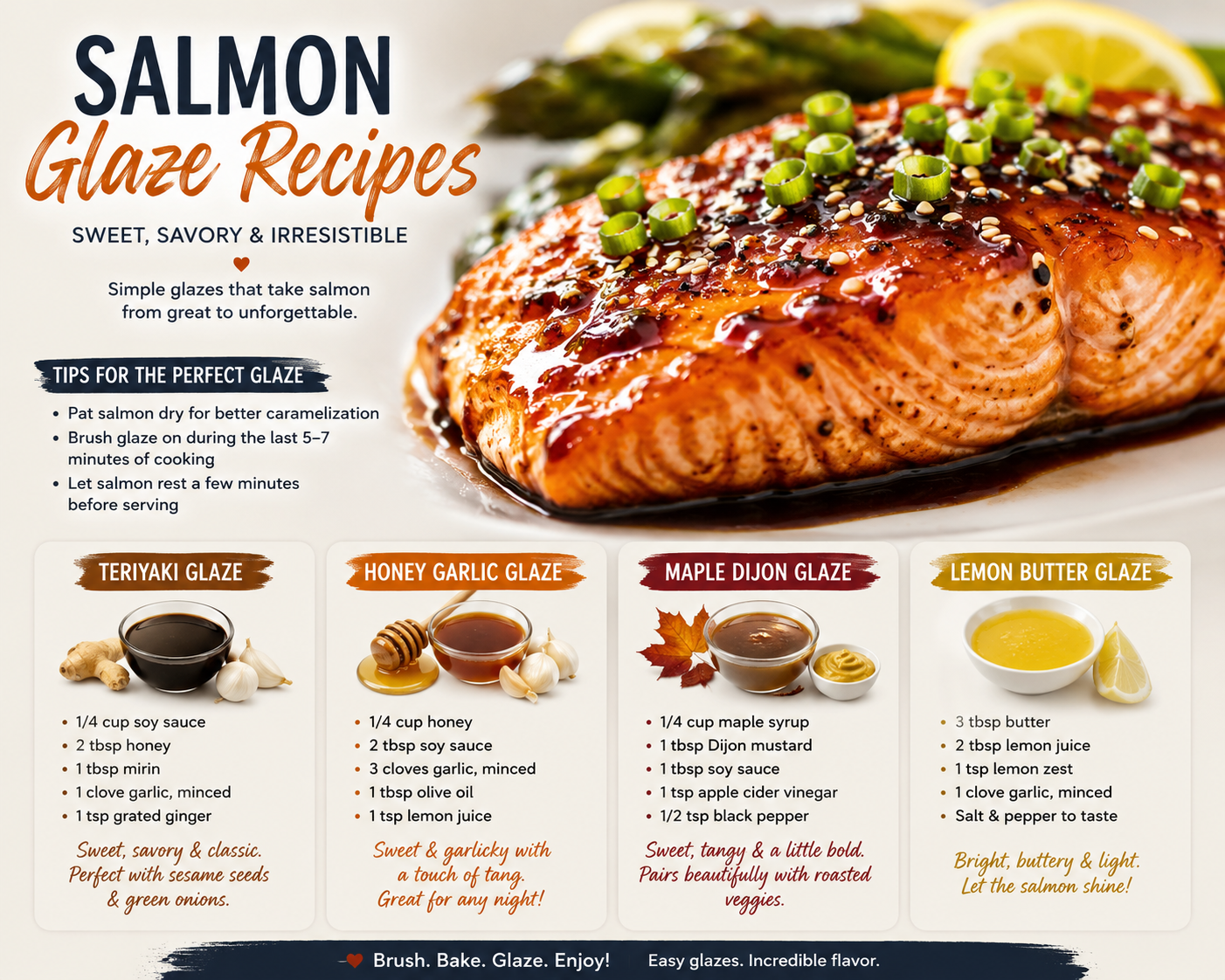
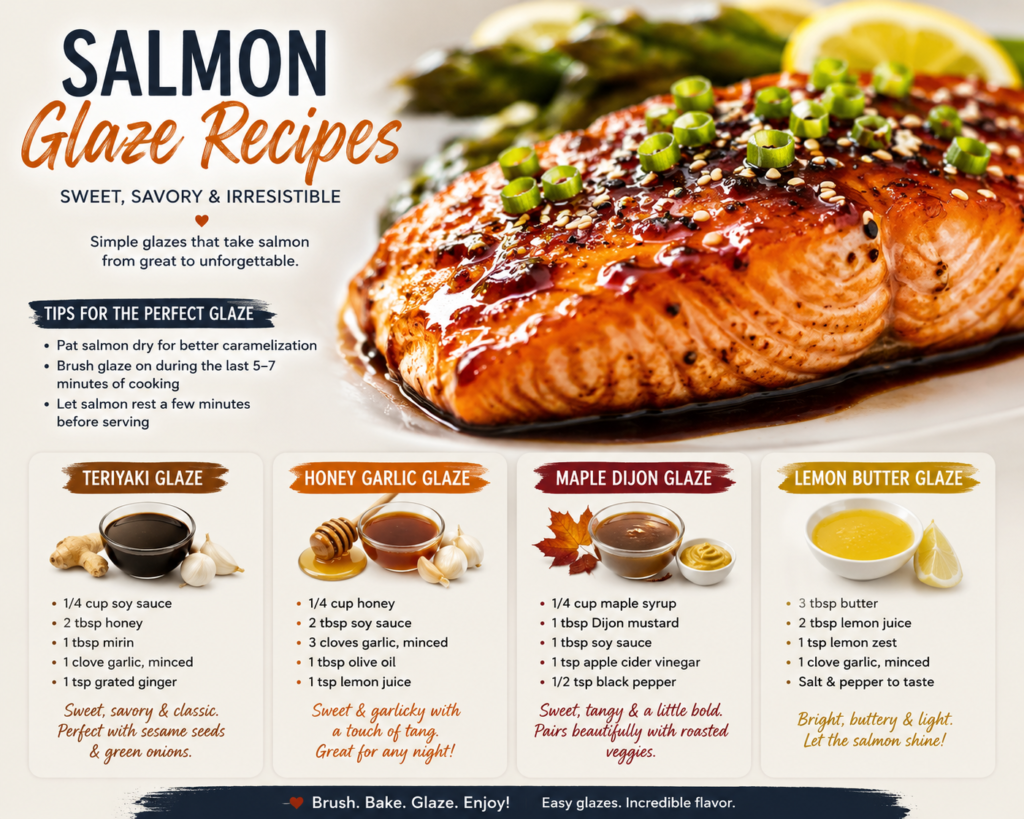
We’re talking a honey garlic glaze that caramelizes in the pan, hits every flavor note you want (sweet, savory, a little tangy, slightly spicy if you want it), and takes about 20 minutes start to finish.
It’s the kind of dinner where people ask you for the recipe and you casually say “oh I just threw it together.” You didn’t. But they don’t need to know that. 😄
The trick isn’t some secret ingredient. It’s a combination of small techniques most people skip. And once you know them, you’ll never go back to plain baked salmon again.
Keep reading, because the Pro Tips section alone is worth bookmarking.
What You’ll Need
For the Salmon:
- 4 salmon fillets (about 6 oz each, skin-on preferred)
- 1/2 teaspoon kosher salt
- 1/4 teaspoon black pepper
- 1 tablespoon olive oil
For the Honey Garlic Glaze:
- 3 tablespoons honey
- 3 tablespoons low-sodium soy sauce
- 4 cloves garlic, freshly minced
- 1 tablespoon fresh lemon juice (about half a lemon)
- 1 teaspoon Dijon mustard
- 1/4 teaspoon red pepper flakes
- 1 tablespoon unsalted butter (for finishing)
- Fresh flat-leaf parsley, roughly chopped (for garnish)
- Lemon wedges (for serving)
Tools You’ll Need
- Large oven-safe skillet (cast iron is ideal)
- Small mixing bowl
- Whisk or fork
- Wide spatula or tongs
- Paper towels
- Measuring spoons
- Sharp knife and cutting board
- Meat thermometer (optional but helpful)
Pro Tips
These are the things I really wish someone had told me before I overcooked three salmon fillets figuring them out on my own.
1. Pat the salmon completely dry before it hits the pan. Moisture is the enemy of a good sear. Dry fish gets a golden crust. Wet fish steams in its own water and you end up with a grey, soft exterior. Paper towels. Every single time.
2. Start skin-side down and don’t touch it. Once that fillet is in the pan, leave it alone for at least 4 minutes. Moving it too early tears the skin and kills the crust. It will release on its own when it’s ready to flip.
3. Use a thermometer, not a guess. Salmon goes from perfectly cooked to chalky in about 90 seconds. Pull it at 125-130°F for medium (slightly translucent in the center) or 145°F for fully cooked. This single step removes all the guesswork.
4. Medium-high heat only. Too low and you get no sear. Too high and the glaze scorches before the salmon cooks through. Medium-high is the zone you want to stay in once the glaze goes in.
5. Don’t skip the butter at the end. One tablespoon swirled in right before serving gives the glaze that glossy, restaurant-quality finish. It takes ten seconds and it genuinely makes the whole dish look and taste more elevated.
Substitutions and Variations
You don’t need to follow this exactly. Here’s how to make it work for your pantry or dietary needs:
| Ingredient | Swap Options |
|---|---|
| Soy sauce | Coconut aminos (soy-free), tamari (gluten-free) |
| Honey | Maple syrup or agave nectar |
| Dijon mustard | Whole grain mustard or yellow mustard |
| Salmon fillets | Arctic char, steelhead trout, or halibut |
| Red pepper flakes | A teaspoon of sriracha or chili garlic paste |
| Fresh lemon juice | Rice vinegar or lime juice |
Love heat? Double the red pepper flakes and stir a teaspoon of gochujang into the glaze.
Dairy-free? Skip the finishing butter. The glaze still thickens up beautifully.
No stovetop? Pour the glaze over the fillets in a lined baking dish and bake at 400°F for 12 to 15 minutes. You lose the crispy sear but it’s almost completely hands-off.
Make Ahead Tips
If weeknight cooking feels like a race against the clock, here’s what you can prep ahead:
- The glaze: Whisk everything together (honey, soy sauce, garlic, lemon, Dijon, pepper flakes) and store it in a sealed jar in the fridge for up to 3 days.
- Marinate in advance: Pour half the glaze over the raw fillets, cover, and refrigerate for up to 2 hours before cooking. The flavor gets noticeably deeper.
One important note: don’t marinate past 2 hours. The lemon juice starts to chemically “cook” the salmon and changes the texture in a way that’s hard to fix once it’s happened.
Nutritional Info and Meal Pairings
Per Serving (1 fillet with glaze):
| Nutrient | Amount |
|---|---|
| Calories | ~380 kcal |
| Protein | 34g |
| Fat | 18g |
| Carbohydrates | 18g |
| Omega-3 Fatty Acids | ~2.2g |
Here’s a fact that stops people mid-bite: a single serving of salmon delivers more omega-3 fatty acids than most people get in an entire week of eating. Pair that with garlic’s documented anti-inflammatory properties and you’ve made yourself something that genuinely qualifies as health food while tasting like you ordered from a restaurant.
What to Serve It With:
- Garlic butter rice — soaks up the leftover glaze in the pan perfectly
- Steamed jasmine rice — clean, simple, lets the salmon shine
- Roasted asparagus or broccolini — keeps the whole plate light and fresh
- Mashed potatoes — for when you want something more comforting
- A simple arugula salad with lemon vinaigrette — if you want the whole meal done in under 30 minutes
How to Make Honey Garlic Glazed Salmon
Total Time: 20 minutes | Servings: 4 | Skill Level: Beginner-friendly
Step 1: Make the glaze. In a small bowl, whisk together the honey, soy sauce, minced garlic, lemon juice, Dijon mustard, and red pepper flakes until smooth. Set it aside.
Step 2: Prep the salmon. Pat each fillet completely dry with paper towels. Season both sides with salt and pepper.
Step 3: Heat the pan. Add the olive oil to a large oven-safe skillet over medium-high heat. Wait until the oil shimmers before adding anything. A cold pan is where good sears go to die.
Step 4: Sear skin-side down. Place the fillets skin-side down. Press each one gently with your spatula for about 10 seconds to ensure the skin makes full contact with the pan.
Cook for 4 to 5 minutes without moving them. They’ll release on their own when the skin is ready.
Step 5: Flip and pour the glaze. Flip the fillets. Immediately pour the glaze over all of them. The pan will sizzle aggressively. That’s a good sign.
Cook for another 3 to 4 minutes, spooning the glaze back over the tops of the fillets every minute or so.
Step 6: Check for doneness. Use a fork to gently test a thick part of the fillet. It should flake easily. Or use a thermometer to hit your preferred temperature (125°F for medium, 145°F for fully cooked).
Step 7: Add the butter. Turn off the heat. Drop in the tablespoon of butter and swirl the pan until it melts into the glaze.
Step 8: Serve immediately. Spoon the glaze from the pan over each fillet. Top with fresh parsley and serve with lemon wedges on the side.
Leftovers and Storage
Glazed salmon reheats better than most people expect, as long as you don’t blast it in the microwave on full power.
Storing:
- Cool completely before storing
- Airtight container in the fridge for up to 3 days
- Not recommended for freezing once glazed (the texture changes significantly)
Reheating:
- Oven (best): 275°F for 10 to 15 minutes, covered loosely with foil
- Stovetop: Low heat with a small splash of water or broth, covered
- Microwave: 50% power in 90-second intervals only
Using leftovers creatively:
- Flake over a grain bowl with avocado, cucumber, and sesame seeds
- Toss through pasta with a spoonful of cream cheese and a squeeze of lemon
- Stuff into butter lettuce wraps with shredded cabbage and sriracha mayo
FAQ
Can I use frozen salmon? Yes. Just make sure it’s fully thawed and thoroughly patted dry. Frozen salmon holds more water, so that drying step becomes even more important.
My glaze burned in the pan. What went wrong? The heat was likely too high once the glaze hit the pan. Honey caramelizes fast, so dial back to medium after you flip and add the glaze.
Can I make this without skin-on salmon? Of course. Skinless fillets work fine. They’re a little more delicate to flip, so use a wide spatula and be gentle.
Is this keto-friendly? Not as written, since honey adds sugar. Swap the honey for a monk fruit syrup and use coconut aminos instead of soy sauce to cut the carbs significantly.
Can I make this on the grill? Yes. Oil the grates well, grill skin-side down over medium-high for 4 to 5 minutes, flip, brush generously with glaze, and cook for another 3 to 4 minutes. Watch for flare-ups from the dripping honey.
How do I know if my salmon is fresh at the store? Fresh salmon should smell like clean ocean water, not “fishy.” The flesh should be firm and spring back when you press it. If it smells strong or feels mushy at the market, skip it and come back another day.
My salmon is sticking to the pan. What do I do? It’s not ready to flip yet. Salmon releases naturally from the pan when the sear is complete. Give it another minute and try again.
Wrapping Up
This honey garlic glazed salmon is the recipe you cook once and immediately add to your permanent weeknight rotation.
It’s fast, it looks impressive, and once you nail those Pro Tips (seriously, dry the fish and use a thermometer), it’s genuinely hard to mess up.
The glaze on its own is so good I’ve drizzled it over roasted vegetables and eaten that alone.
Give it a go and leave a comment below. I’d love to hear how it turned out, which swaps you tried, or any questions that came up along the way. Your feedback also helps other readers, so don’t be shy. 👇