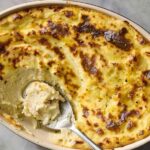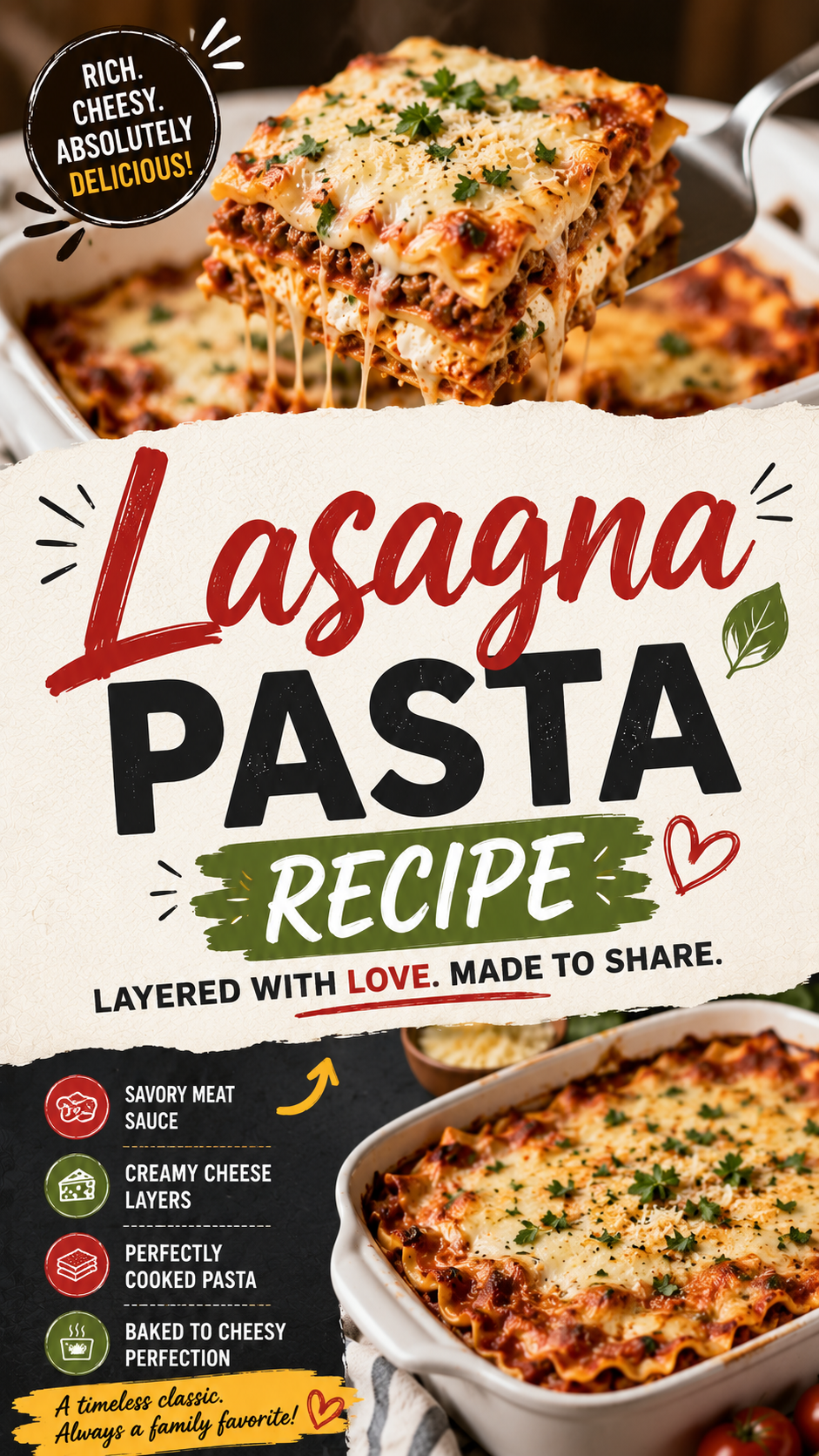
You know that moment when someone pulls a lasagna out of the oven and the cheese is stretching a foot off the pan?
That’s this recipe.
Rich meat sauce. Creamy layered cheese. Pasta that’s cooked right into the whole thing. Baked until the top is golden and the edges are just slightly caramelized.
This is the kind of dish that gets passed down. The one people ask you to bring to every gathering. The one that disappears before anything else on the table.
And the good news? It’s not complicated. It just takes a little patience. Stick with me through the whole post because there’s one step near the end that most people skip, and it’s the reason some lasagnas slice cleanly and others fall apart.
What You’ll Need
For the Meat Sauce
- 700g (1.5 lbs) ground beef (80-85% lean)
- 1 large white onion, finely diced
- 5 garlic cloves, minced
- 2 tbsp olive oil
- 3 tbsp tomato paste
- 1 can (800g / 28 oz) crushed tomatoes
- 1 can (400g / 14 oz) diced tomatoes with juices
- 1 cup beef broth
- 1½ tsp dried Italian seasoning
- 1 tsp dried basil
- 1 tsp salt
- ½ tsp black pepper
- 1 tsp sugar
- ½ tsp red chili flakes (optional)
- Small handful of fresh basil, torn
For the Béchamel (White Sauce)
- 4 tbsp unsalted butter
- 4 tbsp all-purpose flour
- 2½ cups whole milk, warmed
- ½ tsp salt
- ¼ tsp white pepper
- ¼ tsp nutmeg
- ½ cup grated parmesan cheese
For the Layers
- 15-18 lasagna pasta sheets (regular, not no-boil)
- 3 cups shredded mozzarella cheese, divided
- 1 cup grated parmesan cheese, divided
- Fresh parsley, chopped (for garnish)
Tools You’ll Need
- Large heavy-bottomed skillet or Dutch oven (for meat sauce)
- Medium saucepan (for béchamel)
- Large pot (for boiling pasta)
- 9×13 inch deep baking dish (ceramic or glass)
- Aluminum foil
- Colander
- Whisk (essential for lump-free béchamel)
- Wooden spoon
- Rubber spatula
- Sharp knife and cutting board
- Measuring cups and spoons
- Cheese grater
- Ladle or large spoon
Pro Tips
1. Make a béchamel instead of using only ricotta. Classic Italian-American lasagna uses ricotta. Authentic Italian lasagna uses béchamel, a simple white sauce made with butter, flour, and milk. This recipe uses béchamel and the difference is remarkable. It creates creamy, silky layers that hold together beautifully and give the pasta a richness that ricotta alone can’t quite match.
2. Cook your pasta two minutes short of al dente. The noodles finish cooking in the oven. If you cook them all the way through before layering, they go soft and mushy by the time the lasagna is done. Pull them out early, run under cold water to stop the cooking, and lay flat on oiled parchment so they don’t stick together.
3. Make your meat sauce the day before if you can. This is the single biggest flavor upgrade you can make. A meat sauce that’s been sitting in the fridge overnight is deeper, richer, and more developed than one made fresh the same day. The tomatoes, herbs, and beef have time to fully come together in a way that even a long simmer can’t replicate.
4. Whisk the béchamel constantly. Once you add the flour to the butter, your arm doesn’t stop moving. Stop for even 20-30 seconds and you’ll get lumps. Keep whisking while you slowly pour in the warm milk, and you’ll end up with a perfectly smooth, glossy sauce every time.
5. Cover tightly for the first bake, then uncover for the last. The covered phase steams and cooks everything through. The uncovered phase is where the magic happens on top. That golden bubbly crust and those slightly caramelized edges only come from direct oven heat. Don’t skip the uncovered portion.
Substitutions and Variations
Protein
| Original | Swap Options |
|---|---|
| Ground beef | Half beef, half Italian sausage (incredible flavor upgrade) |
| Ground beef | Ground turkey or ground pork |
| Meat sauce | Roasted mushroom and vegetable sauce (vegetarian) |
Sauce
| Original | Swap Options |
|---|---|
| Homemade béchamel | Ricotta mixed with an egg (classic American style) |
| Whole milk béchamel | Use 2% milk (slightly less rich, still good) |
| Beef broth in sauce | Chicken broth or red wine (adds depth) |
Pasta
| Original | Swap Options |
|---|---|
| Regular lasagna sheets | No-boil sheets (add ¼ cup extra liquid to sauce) |
| Regular | Gluten-free lasagna noodles |
| Regular | Fresh pasta sheets if you’re feeling ambitious |
Cheese
| Original | Swap Options |
|---|---|
| Mozzarella | Provolone, fontina, or a blend |
| Parmesan | Pecorino Romano (saltier, sharper flavor) |
| Dairy béchamel | Dairy-free béchamel using oat milk and dairy-free butter |
Make Ahead Tips
Lasagna pasta is built for making ahead. Here are three ways to do it:
Make the sauce ahead (recommended): Cook the meat sauce up to 3 days in advance. Store covered in the fridge. The flavor only gets better.
Assemble and refrigerate: Build the entire lasagna, cover with plastic wrap then foil, and refrigerate up to 24 hours before baking. Add 15-20 minutes to the covered bake time since it’s starting from cold.
Freeze unbaked: Assemble completely in a foil pan, wrap tightly in two layers of heavy-duty foil, and freeze for up to 3 months. Thaw in the fridge for 24 hours before baking. Bake covered for 60 minutes, then uncover for the final 20-25 minutes.
Freeze individual slices: Bake fully, cool completely, slice, wrap individually in plastic then foil. Freeze up to 3 months. Reheat straight from frozen at 350°F covered with foil for 35-40 minutes.
How to Make It
Step 1: Make the Meat Sauce (40 minutes)
- Heat olive oil in a large skillet over medium-high heat. Add onion and cook for 5 minutes until soft and golden.
- Add garlic and cook 1 minute until fragrant.
- Add ground beef. Don’t stir immediately. Let it sit and brown on one side for 2 minutes before breaking it up. Cook until no pink remains. Drain off excess fat, leaving about 1 tablespoon in the pan.
- Push meat to the side and add tomato paste directly to the pan. Cook the paste for 2 minutes, stirring constantly, until it darkens slightly. This step caramelizes the tomato paste and adds enormous depth.
- Stir paste into the meat. Add crushed tomatoes, diced tomatoes, beef broth, Italian seasoning, basil, salt, pepper, sugar, and chili flakes. Stir to combine.
- Bring to a boil, then reduce heat and simmer uncovered for 25-30 minutes until the sauce is thick and rich. Stir in fresh basil at the end. Set aside.
Step 2: Make the Béchamel (15 minutes)
- Melt butter in a medium saucepan over medium heat.
- Add flour all at once and whisk constantly for 1-2 minutes until a pale paste forms and smells slightly nutty.
- Slowly pour in warm milk, a splash at a time at first, whisking continuously after each addition to prevent lumps.
- Once all the milk is incorporated, cook over medium heat, whisking frequently, for 5-7 minutes until the sauce is thick enough to coat the back of a spoon.
- Remove from heat. Stir in salt, white pepper, nutmeg, and parmesan. Taste and adjust seasoning. Set aside. The sauce will thicken more as it cools, which is fine.
Step 3: Cook the Pasta
- Bring a large pot of generously salted water to a boil.
- Cook lasagna sheets for 2 minutes less than the package directions.
- Drain and immediately run under cold water. Lay flat on oiled parchment paper in a single layer. Drizzle lightly with oil to prevent sticking.
Step 4: Assemble
Preheat oven to 375°F (190°C).
Layer in your 9×13 baking dish in this exact order:
- Thin smear of meat sauce on the bottom (prevents sticking and adds flavor to the base)
- Layer of pasta sheets overlapping slightly
- One third of the béchamel spread evenly
- One third of the meat sauce over the béchamel
- ¾ cup mozzarella and a generous sprinkle of parmesan
- Pasta sheets
- Half the remaining béchamel
- Half the remaining meat sauce
- ¾ cup mozzarella and parmesan
- Final layer of pasta sheets
- Remaining béchamel spread all the way to the edges
- Remaining meat sauce
- All remaining mozzarella (about 1½ cups) piled on top with the last of the parmesan
Step 5: Bake
- Tent foil over the dish (don’t press it down onto the cheese) and bake covered at 375°F for 40 minutes.
- Remove foil and bake uncovered for 20-25 minutes until the top is deep golden brown and bubbling.
- Remove from oven. Do not cut it yet. Rest for 20-25 minutes. This is non-negotiable.
- Garnish with fresh parsley, slice with a sharp knife, and serve.
Nutritional Breakdown (per serving, serves 10-12)
| Nutrient | Amount |
|---|---|
| Calories | ~550 |
| Protein | 36g |
| Carbohydrates | 42g |
| Fat | 26g |
| Fiber | 3g |
| Sodium | ~820mg |
Using ground turkey and 2% milk béchamel drops this to approximately 450 calories per serving.
Meal Pairing Ideas
- Garlic bread or focaccia for soaking up the sauce on the plate
- Classic Caesar salad or a simple arugula salad with lemon dressing to cut through the richness
- Roasted broccolini or green beans for something light alongside
- A full-bodied Italian red like Chianti Classico, Barolo, or Barbera d’Asti
- Sparkling water with lemon between bites to keep the palate fresh
Leftovers and Storage
Fridge: Covered tightly, this keeps beautifully for 5 days. The flavor deepens even further overnight and day-two lasagna is a genuinely wonderful thing.
Freezer: Individual slices wrapped tightly in plastic wrap then foil keep for up to 3 months.
Reheating from fridge:
- Microwave: 2½ to 3 minutes covered with a damp paper towel on medium power
- Oven: Cover with foil, bake at 350°F for 20-25 minutes
Reheating from frozen:
- Thaw overnight in fridge then reheat as above
- From frozen: 350°F covered for 50-60 minutes
Tip: Add a small splash of water or extra sauce to each portion before reheating to keep the pasta moist and prevent the edges from drying out.
FAQ
What’s the difference between this and a ricotta lasagna? This recipe uses béchamel (white sauce) instead of ricotta. Béchamel is made from butter, flour, and milk and creates silkier, creamier layers. It’s how lasagna is traditionally made in northern Italy. Ricotta is more common in American-style versions. Both are delicious, but béchamel gives a more restaurant-quality result.
Can I skip making the béchamel and use ricotta instead? Absolutely. Mix 500g (2 cups) whole milk ricotta with 1 egg, ½ cup parmesan, salt, pepper, and a pinch of nutmeg. Use it the same way you’d use the béchamel in the layering steps.
My béchamel has lumps. Can I fix it? Yes. Pour it through a fine mesh strainer to catch the lumps, then whisk the strained sauce vigorously. You can also use an immersion blender. Next time, add the milk more slowly and keep whisking without stopping.
How many layers should lasagna have? Three layers of pasta is the standard for a 9×13 pan and gives you the right ratio of pasta to sauce to cheese. Some deep pans can fit four layers. Fewer than three and the pasta-to-filling ratio feels off.
My lasagna is watery on the plate. What happened? Most commonly this is from the meat sauce being too thin (not simmered long enough), pre-shredded mozzarella releasing extra moisture (always shred your own from a block), or not resting the lasagna long enough before cutting. All three contribute to a watery result.
Can I make this gluten-free? Yes. Use gluten-free lasagna noodles and substitute the all-purpose flour in the béchamel with a 1:1 gluten-free flour blend or cornstarch (use half the amount if using cornstarch). Everything else stays the same.
How do I know when it’s fully cooked through? Insert a knife straight down into the center and leave it there for 5 seconds. Pull it out and touch the blade to your wrist. If it’s very hot, the lasagna is cooked through. If it’s just warm, give it 10 more minutes covered and check again.
Wrapping Up
There are recipes you make once and forget, and then there are recipes that become part of your rotation forever.
This lasagna pasta recipe is the second kind.
It takes a Sunday afternoon and a little bit of effort. But what comes out of that oven is the kind of food that makes people push back from the table and say they’re done, then somehow find room for a second slice anyway.
Make it for a family dinner. Make it for a friend who needs a good meal. Make a full pan and work through it slowly all week.
Then come back here and leave a comment below. Tell me if you went with béchamel or ricotta, what you paired it with, and how long it lasted in your house. I’m guessing less than 48 hours. 👇