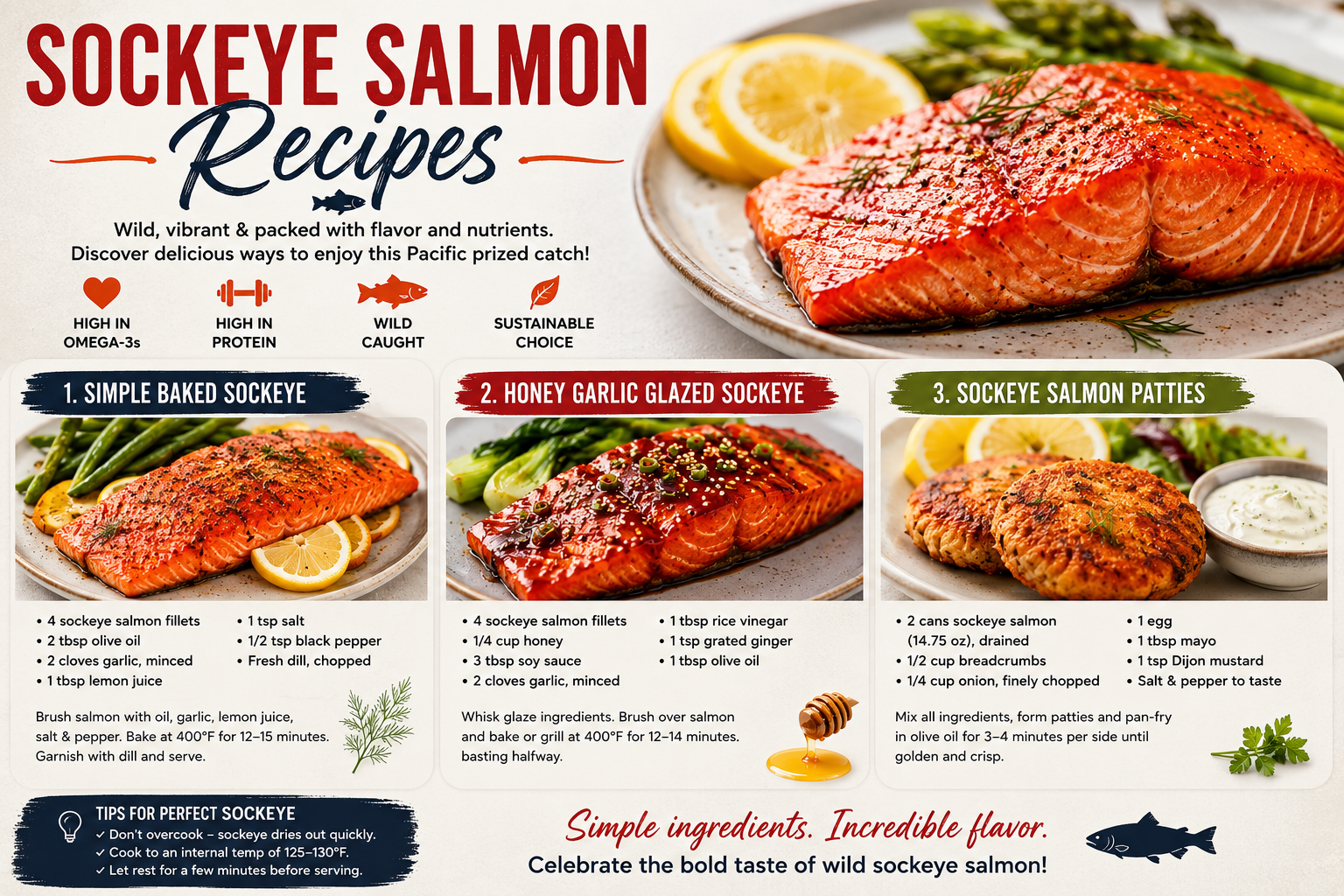
Most people overcook salmon. And the ones who don’t? They act like it’s some kind of secret skill.
It’s not. You just need the right fish, the right technique, and about 15 minutes. That’s it.
Sockeye salmon is one of those ingredients that does most of the work for you. The flavor is deep, almost buttery on its own, and that signature deep red color? It looks like you spent way more time in the kitchen than you actually did.
This pan-seared version with lemon herb butter is the recipe I keep coming back to. It’s weeknight-fast but dinner-party impressive, and once you nail it, you’ll wonder why you ever ordered salmon at a restaurant.
(Stick around because there’s a pro tip at the end that most people skip, and it makes a bigger difference than you’d expect.)
What You’ll Need
For the Salmon:
- 4 sockeye salmon fillets (about 6 oz each), skin-on
- 1 teaspoon kosher salt
- 1/2 teaspoon black pepper
- 1/2 teaspoon garlic powder
- 1/2 teaspoon smoked paprika
- 2 tablespoons olive oil
For the Lemon Herb Butter:
- 4 tablespoons unsalted butter
- 3 garlic cloves, minced
- 2 tablespoons fresh lemon juice
- 1 teaspoon lemon zest
- 2 tablespoons fresh parsley, chopped
- 1 tablespoon fresh dill, chopped
- 1/4 teaspoon red pepper flakes (optional)
- Salt to taste
Tools You’ll Need
- Cast iron skillet or heavy-bottomed stainless steel pan
- Fish spatula (a regular spatula works, but a fish spatula is a game-changer)
- Small saucepan
- Paper towels
- Tongs or a flat spatula
- Zester or microplane
- Cutting board and sharp knife
Pro Tips
These are the things I wish someone had told me before I made sad, rubbery salmon for the first time.
- Dry the fillets completely before seasoning. Pat them down with paper towels until there’s zero moisture on the surface. Wet fish = no sear = disappointment. The drier the surface, the better that golden crust forms.
- Cold fish in a hot pan is your enemy. Pull the fillets out of the fridge 15 to 20 minutes before cooking. A cold fillet dropped into a hot pan contracts and cooks unevenly. Room temperature salmon = even cook all the way through.
- Don’t move it. Once the salmon hits the pan, leave it alone. Seriously. The fillet will release naturally when it’s ready to flip. If you’re fighting it, it’s not ready yet.
- Start skin-side down. The skin acts as a natural barrier and protects the delicate flesh. Cook it 70% of the way through on the skin side, then flip for just 1 to 2 minutes on the flesh side.
- Brown butter first, then add the lemon. If you squeeze lemon into the pan too early, it cools everything down and you lose that nutty brown butter flavor. Add the lemon off the heat, or at the very end.
Instructions
Step 1: Prep the salmon
Take the fillets out of the fridge 15 to 20 minutes before cooking. Pat them completely dry with paper towels, skin side and flesh side.
Mix together the salt, pepper, garlic powder, and smoked paprika. Season the flesh side of each fillet generously.
Step 2: Heat the pan
Heat the cast iron skillet over medium-high heat for about 2 minutes. Add the olive oil and let it get hot until it shimmers. You want the pan screaming hot before the fish touches it.
Step 3: Sear the salmon
Place the salmon fillets skin-side down into the pan. Press each fillet gently with your spatula for the first 10 seconds to prevent curling.
Cook for 4 to 5 minutes without touching them. The skin should crisp up and the sides of the fillet will start to turn opaque about halfway up.
Flip carefully and cook for just 1 to 2 more minutes on the flesh side. The salmon is done when it flakes easily with a fork but still has a slightly translucent center. Pull it just before you think it’s done. The residual heat finishes it off.
Step 4: Make the lemon herb butter
While the salmon cooks, melt butter in a small saucepan over medium heat. Let it cook until it starts to foam and turns a light golden brown, about 3 to 4 minutes. Watch it closely because it goes from perfect to burned fast.
Add the minced garlic and cook for 30 seconds. Remove from heat. Stir in the lemon juice, lemon zest, parsley, dill, and red pepper flakes. Season with salt.
Step 5: Plate and serve
Spoon the lemon herb butter generously over each fillet. Serve immediately.
Substitutions and Variations
No sockeye salmon? Atlantic salmon or coho salmon work well here too. The flavor is milder, but the technique is exactly the same.
Dairy-free? Swap the butter for a good quality olive oil or a dairy-free butter alternative. You’ll lose some richness but it’s still really good.
Herb swaps: Not a dill person? Fresh tarragon, chives, or basil all work beautifully here.
Want more heat? Add a pinch of cayenne to the seasoning mix and double the red pepper flakes in the butter.
No cast iron? A heavy-bottomed stainless steel skillet works. Just avoid non-stick if you can since it won’t give you the same crust.
Make-Ahead Tips
The lemon herb butter can be made up to 3 days ahead and stored in the fridge. Reheat gently before serving.
You can also mix and store the dry seasoning blend in a small jar so it’s ready to go for next time.
The salmon itself is always best cooked fresh. It takes 15 minutes, so there’s really no need to do it in advance.
Nutritional Details
| Per Serving (1 fillet + butter) | Amount |
|---|---|
| Calories | ~390 kcal |
| Protein | ~42g |
| Fat | ~24g |
| Saturated Fat | ~8g |
| Omega-3 Fatty Acids | ~2.5g |
| Carbohydrates | ~2g |
| Sodium | ~480mg |
Fun fact: Sockeye salmon has one of the highest concentrations of omega-3 fatty acids of any fish. A single 6 oz fillet gives you more than your daily recommended intake. 🐟
Diet notes:
- Gluten-free as written
- Dairy-free with butter swap
- Whole30/Paleo compatible with ghee instead of butter
- Keto-friendly
Meal pairing ideas:
- Roasted asparagus or broccolini
- Garlic mashed potatoes or cauliflower mash
- Simple arugula salad with lemon vinaigrette
- Steamed jasmine rice or herbed quinoa
Leftovers and Storage
Leftover salmon keeps in an airtight container in the fridge for up to 3 days.
Reheat it low and slow in a covered pan with a tiny splash of water, or eat it cold over a salad (honestly my favorite way to use leftovers).
Do not microwave it. Your coworkers will not forgive you, and the texture goes rubbery fast.
You can also flake leftover salmon into pasta, grain bowls, or scrambled eggs the next morning.
FAQ
Why is sockeye salmon more expensive than Atlantic salmon?
Sockeye is wild-caught (mostly from Alaska and the Pacific Northwest), while Atlantic salmon is typically farmed. Wild fish has a more intense flavor and firmer texture, which is why it’s pricier. It’s worth it for a special dinner.
How do I know when salmon is done without a thermometer?
The flesh should flake easily with a fork and the color should change from deep red/translucent to a lighter, opaque pink. The center can still have a very slight translucency — that’s actually perfect. Internal temp target is 125°F to 130°F for medium.
Can I cook this without the skin on?
You can, but the skin helps hold the fillet together during cooking and protects the flesh. If you absolutely hate skin, remove it after cooking.
My salmon always sticks to the pan. What am I doing wrong?
Two likely culprits: the pan wasn’t hot enough before you added the fish, or the fish was wet. Always preheat the pan fully and dry the fillets with paper towels before seasoning.
Can I bake this instead of pan-sear?
You can bake it at 400°F for 12 to 15 minutes, but you won’t get that crispy golden crust. If you want the full experience, the stovetop method is worth it.
Is it safe to eat salmon slightly undercooked in the middle?
Medium-cooked salmon (slightly translucent in the center) is fine for most healthy adults and is how it’s typically served in restaurants. If you prefer fully cooked, just add a couple more minutes.
Wrapping Up
Sockeye salmon with lemon herb butter is the kind of recipe that makes you feel like a much better cook than you thought you were.
It’s fast, it’s genuinely delicious, and the brown butter situation alone will have people asking what restaurant you ordered from.
Make it once and you’ll have it memorized. That’s how simple it is.
Give it a try this week and drop a comment below with how it went. Seriously, I love hearing from people who actually made the recipe. Ran into a question? Ask it down there too, and I’ll do my best to help.