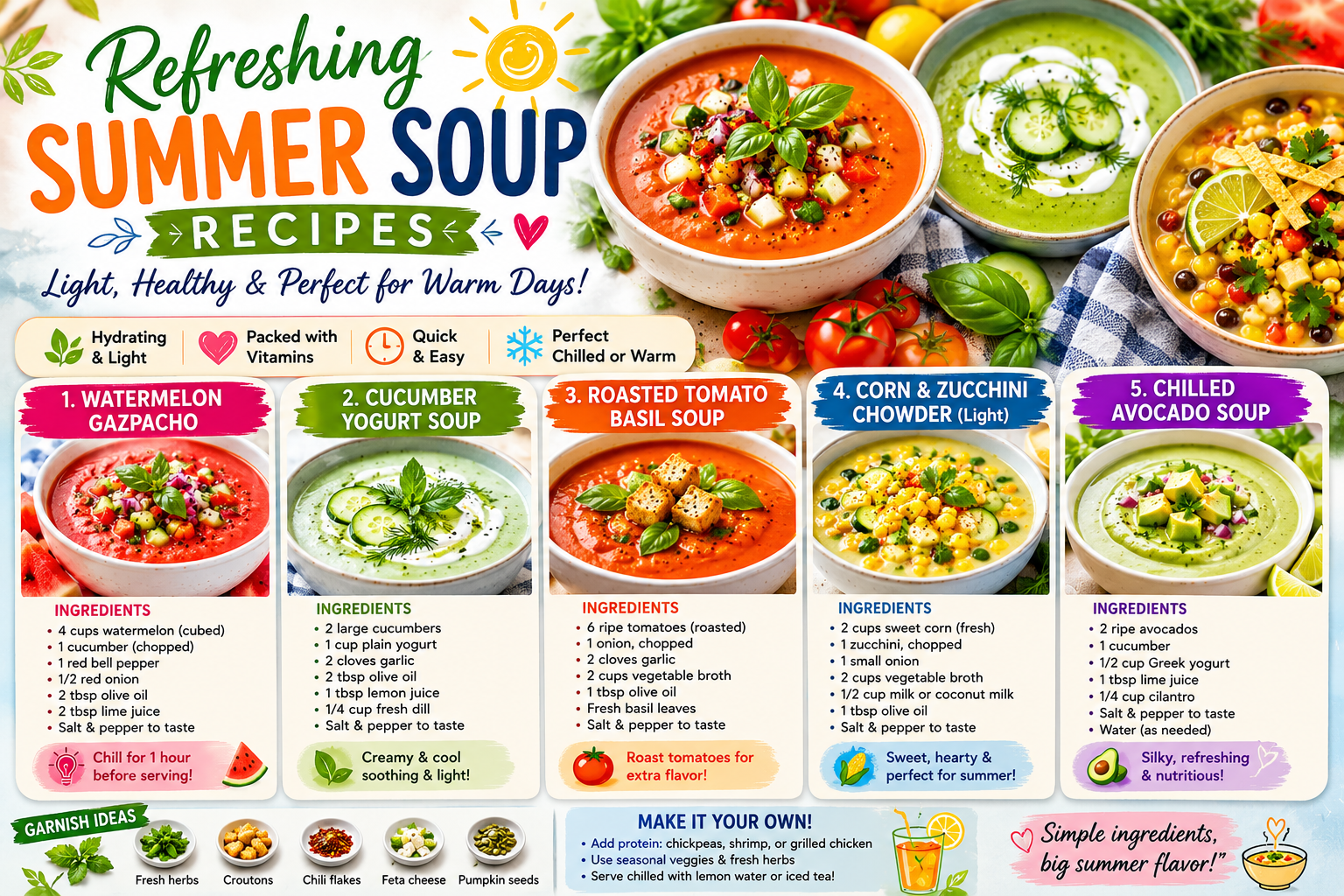
You know that feeling when it’s 90°F outside and someone suggests soup… and somehow it sounds perfect?
That’s the magic of summer soups. Cold, bright, loaded with fresh ingredients, and ready in under an hour. Some of them don’t even touch a stove.
I got obsessed with summer soups a few years ago, and honestly, I’ve never looked back. They’re filling without being heavy, endlessly customizable, and shockingly easy to make look impressive.
This post covers everything: a full recipe, pro tips, substitutions, storage, and a FAQ at the bottom for all the questions you’re probably already thinking about.
Let’s get into it. 🍅
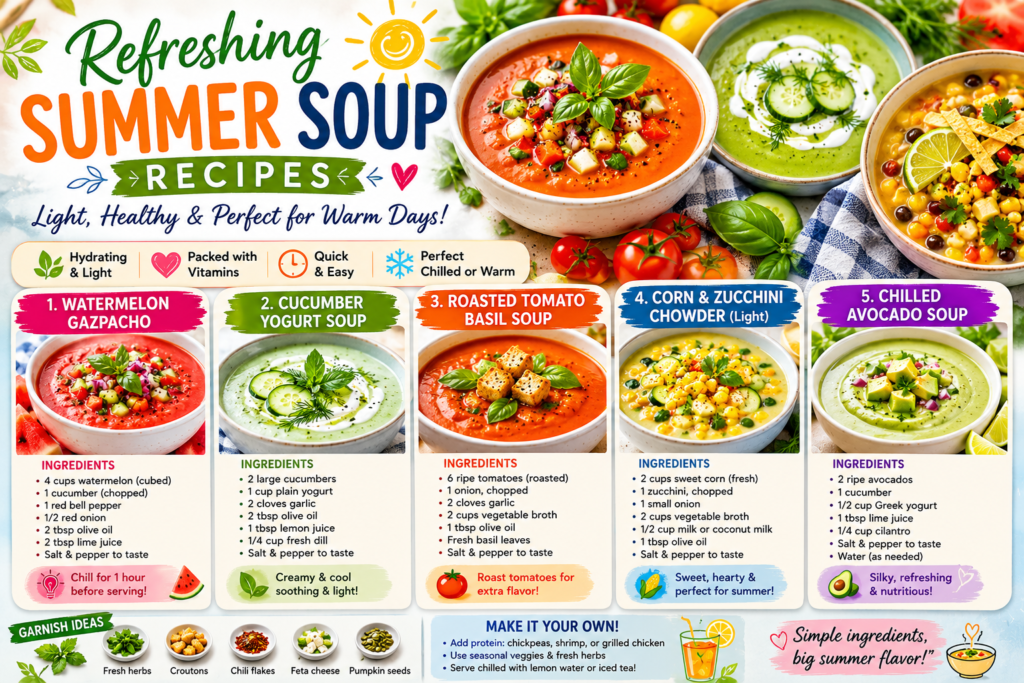
The Star Recipe: Chilled Gazpacho With a Kick
If you’ve never made gazpacho, prepare to have your mind changed about what soup even is.
Gazpacho is a Spanish-origin cold soup that’s been popular for centuries. And here’s something that surprises most people the first time they hear it: the original version contains no cooked ingredients whatsoever. Zero heat. Just blended raw vegetables and good olive oil.
It’s essentially a liquid salad. And it’s outrageously good.
This version adds a gentle kick from jalapeño, a touch of sherry vinegar for brightness, and a drizzle of finishing olive oil that makes every bowl taste like you put in way more effort than you did.
What You’ll Need
For the Soup
- 2 lbs (about 6 medium) ripe Roma tomatoes, roughly chopped
- 1 large English cucumber, peeled and roughly chopped (reserve a few small cubes for garnish)
- 1 red bell pepper, seeded and roughly chopped
- 1/2 medium red onion, roughly chopped
- 2 cloves garlic, peeled
- 1 jalapeño, seeded (or keep the seeds if you like heat)
- 3 tablespoons sherry vinegar (red wine vinegar works too)
- 1/3 cup extra virgin olive oil, plus more to finish
- 1 teaspoon fine sea salt, plus more to taste
- 1/2 teaspoon freshly ground black pepper
- 1 cup cold water (or tomato juice for a more intense flavor)
- 1 thick slice of day-old crusty bread, crust removed (about 1 oz) — optional, but it thickens and smooths the texture beautifully
For the Garnish (Optional But Recommended)
- Small diced cucumber
- Small diced tomato
- Thinly sliced jalapeño rounds
- Fresh basil or parsley leaves
- A drizzle of good olive oil
- Flaky sea salt
Tools You’ll Need
- High-powered blender (a regular blender works, just blend longer)
- Large mixing bowl
- Fine mesh strainer (optional — skip if you like a thicker texture)
- Sharp chef’s knife
- Cutting board
- Measuring cups and spoons
- Ladle for serving
- Serving bowls or glasses — wide shallow bowls look stunning for this
Pro Tips
These are the things that took my gazpacho from good to “wait, you made this?” good.
- Use the ripest tomatoes you can find. This soup lives and dies by its tomatoes. Peak-summer heirlooms or ripe Roma tomatoes at their sweetest will give you a completely different result than out-of-season grocery store tomatoes. Smell them. If they smell like a tomato, they’re good.
- Chill everything before you blend. Pop your chopped vegetables in the fridge for 30 minutes before blending, especially on a hot day. It means the soup goes straight from blender to bowl without needing hours of fridge time.
- Let it sit overnight if you can. Gazpacho genuinely tastes better the next day. The flavors deepen and the olive oil fully emulsifies into the soup. Make it the night before and thank yourself at lunch.
- Season after chilling, not before. Cold dulls flavors. Always taste and adjust salt and vinegar right before serving, not right after blending.
- The bread is your secret weapon. A small piece of day-old bread blended into the soup gives it a silky, slightly thick body without making it heavy. Most traditional Spanish recipes include it for this exact reason.
Instructions
Step 1: Prep Your Vegetables
Roughly chop your tomatoes, cucumber, bell pepper, red onion, and jalapeño. No need to be precise here — everything is getting blended.
If using bread, soak it in a couple tablespoons of cold water for 2 minutes, then squeeze out the excess before adding it to the blender. This softens it so it blends smooth.
Step 2: Blend in Batches
Add your vegetables, garlic, soaked bread, sherry vinegar, salt, and pepper to your blender. Add 1/2 cup of the cold water.
Blend on high for at least 60 seconds until very smooth.
With the blender running on low, slowly drizzle in the olive oil. This emulsifies it into the soup and gives it a silky, almost creamy finish. Add the remaining water and blend for another 30 seconds.
Step 3: Strain (Optional)
Pour the blended soup through a fine mesh strainer set over a large bowl, pressing with the back of a spoon to push through as much liquid as possible. Discard the solids.
Skip this step if you prefer a thicker, more textured soup. Both versions are delicious.
Step 4: Taste and Adjust
Taste the soup. This is the most important step, and most people rush it.
Ask yourself:
- Is it bright and acidic enough? Add more vinegar.
- Does it taste flat? Add more salt.
- Is it too thick? Add a splash more cold water.
Get it exactly where you want it.
Step 5: Chill
Cover and refrigerate for at least 1 hour, or ideally overnight.
Step 6: Serve
Ladle into bowls or glasses. Garnish with diced cucumber, tomato, a jalapeño round, fresh herbs, a drizzle of olive oil, and a pinch of flaky salt.
Serve immediately and enjoy the fact that you made soup without turning on the oven. ☀️
Substitutions and Variations
Gazpacho is extremely forgiving and takes well to swaps.
| Original | Substitution |
|---|---|
| Sherry vinegar | Red wine vinegar, white wine vinegar, or a squeeze of lemon |
| Jalapeño | A pinch of cayenne, or omit entirely for no heat |
| Red bell pepper | Orange or yellow bell pepper (slightly sweeter) |
| Roma tomatoes | Heirloom tomatoes, cherry tomatoes, or beefsteak |
| Crusty bread | Gluten-free bread, or skip for a lighter consistency |
| Cucumber | Zucchini (milder flavor) |
Want a fruity version? Add 1 cup of ripe watermelon or strawberries to the blender. It sounds unusual. It tastes like summer in a bowl.
Going fully vegan? This recipe already is — no changes needed.
Want it creamier? Blend in half an avocado. It adds richness and a gorgeous pale color.
Make-Ahead Tips
Gazpacho is basically designed to be made ahead. A few things to know:
- Make it up to 3 days in advance and store covered in the fridge. The flavor only improves.
- Store garnishes separately. Add them right before serving so they stay crisp and fresh.
- The soup may separate slightly after sitting — just give it a good stir or a quick blitz with an immersion blender before serving.
Nutritional Breakdown
This is a genuinely nutritious meal or starter. Per serving (serves 4):
| Nutrient | Amount (approx.) |
|---|---|
| Calories | ~180 kcal |
| Fat | 13g (mostly from olive oil — the good kind) |
| Carbohydrates | 14g |
| Fiber | 3g |
| Protein | 2g |
| Vitamin C | ~95% of daily value |
| Vitamin A | ~40% of daily value |
| Potassium | High (from tomatoes and cucumber) |
It’s low in calories, high in antioxidants, and naturally hydrating. Which makes it genuinely one of the smarter things you can eat on a hot day.
Meal Pairing Suggestions
Gazpacho works as a starter or a full light meal. A few pairings that go perfectly:
- A crusty sourdough baguette with a smear of good butter
- A simple arugula salad with lemon and parmesan
- Grilled shrimp skewers — the smoky char against cold soup is stunning
- A Spanish tortilla (potato and egg omelette) for a full Spanish-inspired spread
- Chilled rosé — it’s summer, and this combo is practically mandatory
Leftovers and Storage
Store gazpacho in an airtight container or jar in the fridge for up to 3 days.
It does not freeze well — the texture breaks down after thawing. So plan to drink it up within a few days, which honestly won’t be hard.
One thing worth knowing: gazpacho becomes thicker as it sits. If it gets too thick, just whisk in a splash of cold water or tomato juice and give it a taste before adding more salt.
FAQ
Can I make gazpacho without a high-speed blender?
Yes. A regular blender works fine — just blend longer and strain the soup at the end for the smoothest result. An immersion blender also works in a pinch, though the texture will be slightly chunkier.
My gazpacho tastes bitter. What went wrong?
Usually it’s the garlic or an under-ripe tomato. Raw garlic can be aggressive — start with one clove next time. You can also try adding a small pinch of sugar to balance the bitterness.
Can I serve it warm?
Technically yes, but gazpacho is designed to be served cold. Warm gazpacho just becomes… tomato soup. Which is great, but it’s a different thing entirely.
How do I know if my tomatoes are ripe enough?
They should feel slightly soft when gently squeezed, smell noticeably like tomatoes (not like nothing), and have deep red color all the way through when cut. A pale or hollow-looking inside means they weren’t quite ready.
Is this recipe kid-friendly?
Absolutely — just skip the jalapeño and dial back the vinegar by half. Serve it with a fun garnish like a mini cucumber star cut and they’ll be intrigued enough to try it.
Can I add protein to make it a full meal?
Yes. Shrimp, canned white beans, or even chunks of hard-boiled egg are all common additions in Spanish households. Toss them in just before serving.
Wrapping Up
If you’ve been sleeping on summer soups, this is your sign to try one.
Gazpacho takes maybe 15 minutes of actual work, uses ingredients that are at their absolute best right now, and delivers a bowl of something that tastes like a chef made it. Cold, bright, satisfying, and genuinely impressive to anyone you serve it to.
Make it tonight, let it chill, and have it for lunch tomorrow. You’ll see exactly what I mean.
And when you do — come back and leave a comment. I want to know what you thought, what variations you tried, and any questions that came up along the way. That’s the fun part. 👇