You know that soup that tastes like someone’s Italian grandmother made it from scratch, with vegetables from her garden and broth she’d been simmering all morning?
That’s minestrone. And the good news? You can make it at home, on a random Tuesday, in about an hour.
This isn’t a thin, watery soup with a few sad vegetables floating around. Real minestrone is thick, hearty, and loaded with so many good things in every spoonful that it barely feels like soup.
Once you try a proper bowl of this, you’ll understand why Italians have been making it for centuries.
What You’ll Need
For the Soup:
- 3 tablespoons olive oil
- 1 medium yellow onion, diced
- 3 garlic cloves, minced
- 2 medium carrots, peeled and diced
- 2 celery stalks, diced
- 1 medium zucchini, diced
- 1 cup green beans, trimmed and cut into 1-inch pieces
- 1 can (14.5 oz) diced tomatoes
- 1 can (15 oz) cannellini beans, drained and rinsed
- 1 can (15 oz) kidney beans, drained and rinsed
- 6 cups low-sodium vegetable broth (or chicken broth)
- 1 cup small pasta (ditalini, elbow macaroni, or small shells)
- 1 teaspoon dried oregano
- 1 teaspoon dried basil
- 1/2 teaspoon dried thyme
- 1/4 teaspoon red pepper flakes (optional)
- 2 cups baby spinach or chopped kale
- Salt and black pepper to taste
- Freshly grated Parmesan cheese, for serving
- Fresh basil leaves, for serving (optional)
Tools You’ll Need
- Large heavy-bottomed pot or Dutch oven
- Wooden spoon or silicone spatula
- Cutting board and sharp knife
- Can opener
- Measuring cups and spoons
- Ladle
- Vegetable peeler
- Box grater (for the Parmesan)
Pro Tips
These are the things that actually make a difference when you’re making minestrone for the first time.
- Cook the pasta separately. This is the biggest game-changer. If you cook pasta directly in the soup and have any leftovers, the pasta soaks up all the broth overnight and you end up with a thick paste instead of soup. Cook it on the side and add it to each bowl individually.
- Don’t rush the soffritto. The soffritto is the base: onion, garlic, carrot, celery cooked in olive oil until soft and fragrant. This step takes about 8 to 10 minutes and it’s where so much of the flavor comes from. Don’t skip it and don’t rush it.
- Use good quality canned tomatoes. The tomatoes carry a lot of flavor in this soup. San Marzano tomatoes (even the generic store-brand version) make a noticeable difference in the final taste.
- Add greens at the very end. Spinach or kale only needs 2 to 3 minutes in the hot broth. Add it too early and it turns a dull, olive-green color and gets mushy. Add it right before serving and it stays bright and tender.
- A Parmesan rind in the broth is optional but incredible. If you ever finish a block of Parmesan and have the rind left over, drop it into the soup while it simmers. It adds this deep, savory richness that you can’t really explain but you will absolutely notice.
Instructions
Step 1: Build the Base
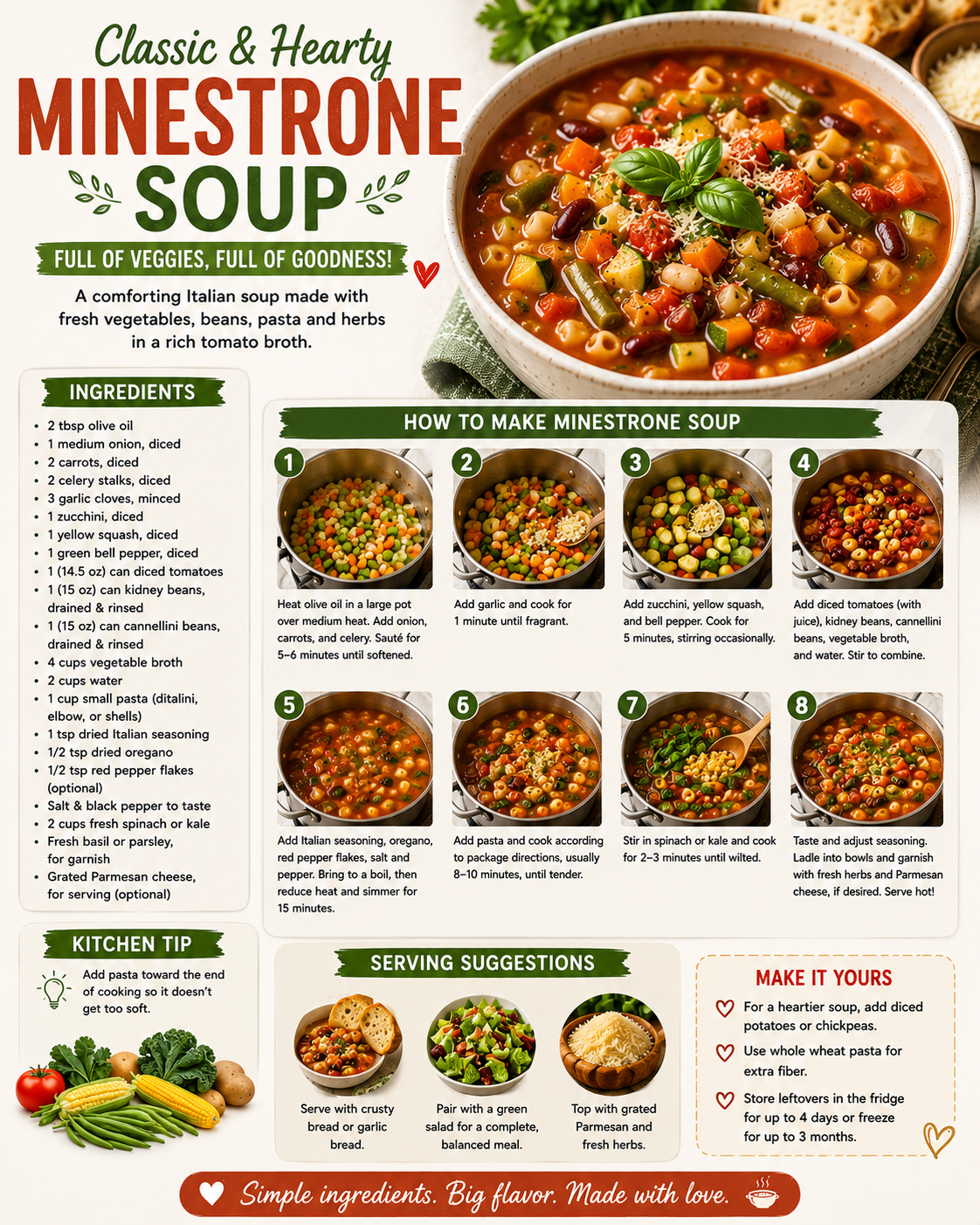
Heat the olive oil in your pot over medium heat.
Add the diced onion, carrots, and celery. Cook for 7 to 8 minutes, stirring occasionally, until soft and slightly golden around the edges.
Add the garlic and cook for another minute until fragrant.
Step 2: Add the Vegetables
Stir in the zucchini and green beans.
Cook for 3 to 4 minutes, just to give them a little head start before the liquid goes in.
Step 3: Build the Broth
Add the diced tomatoes (with their juices), vegetable broth, oregano, basil, thyme, and red pepper flakes.
Stir everything together and bring to a boil.
Step 4: Add the Beans and Simmer
Stir in the cannellini beans and kidney beans.
Reduce heat to medium-low and let the soup simmer uncovered for 20 to 25 minutes. The vegetables should be completely tender and the broth will deepen in flavor.
Step 5: Cook the Pasta (Separately)
While the soup simmers, bring a small pot of salted water to a boil and cook your pasta according to the package directions until al dente.
Drain and set aside.
Step 6: Add the Greens
Stir the spinach or kale into the soup and cook for 2 to 3 minutes until wilted.
Taste and season generously with salt and black pepper.
Step 7: Serve
Ladle the soup into bowls, add a scoop of pasta to each bowl, and top with freshly grated Parmesan and fresh basil if using.
Substitutions and Variations
Minestrone is incredibly flexible. Here’s how to make it yours:
- Different beans? Borlotti beans are very traditional in Italian minestrone. Great northern beans work well too.
- No zucchini? Diced yellow squash, chopped broccoli, or cubed butternut squash all work.
- Make it heartier: Add diced pancetta or bacon with the soffritto for a smoky, meaty version.
- Gluten-free? Swap the pasta for a small gluten-free pasta or just skip it entirely and add extra beans.
- More tomato flavor? Stir in 2 tablespoons of tomato paste with the garlic for a richer, deeper broth.
- Pesto swirl: A spoonful of basil pesto stirred in at the very end is something a lot of Italian nonnas do. It adds a layer of freshness that takes the whole bowl up a level.
Make-Ahead Tips
Minestrone is genuinely one of the best make-ahead soups out there.
Make the soup base (everything except the pasta and greens) up to 3 days in advance and store it in the fridge. The flavor gets significantly better on day two. Cook and add fresh pasta when you’re ready to serve, and stir in the greens right before eating.
If you want to freeze it, leave out the pasta and greens entirely. Freeze the base for up to 3 months, then add pasta and greens fresh when you reheat it.
Nutritional Info (Per Serving, Approximate)
This recipe makes about 6 servings.
| Nutrient | Amount per Serving |
|---|---|
| Calories | ~290 kcal |
| Protein | 12g |
| Carbohydrates | 45g |
| Fiber | 10g |
| Fat | 7g |
| Sodium | ~580mg (varies with broth) |
Between the two types of beans, the vegetables, and the spinach, this soup is basically a full day’s worth of fiber in one bowl. It’s one of those meals that’s genuinely as nutritious as it is satisfying.
Meal Pairing Suggestions
This soup stands completely on its own, but if you want to make a proper meal of it:
- Crusty Italian bread or a focaccia for dunking
- A Caesar salad or simple arugula salad with lemon and olive oil
- Garlic bread, because obviously
- A glass of Chianti or a light red wine if you want to lean into the Italian dinner vibe
Leftovers and Storage
- Fridge: Store the soup (without pasta) in an airtight container for up to 4 days.
- Freezer: Freeze without pasta for up to 3 months.
- Reheating: Warm on the stovetop over medium heat, adding a splash of broth if it’s thickened up. Cook fresh pasta and stir in fresh greens right before serving.
Important: Do not store the pasta in the soup if you have leftovers. It will absorb all the liquid and turn to mush. Store them separately and combine when you reheat.
FAQ
Do I have to use two types of beans?
Not at all. You can use just one type if that’s what you have. Cannellini beans are the most traditional choice for minestrone if you’re picking only one.
Can I use fresh tomatoes instead of canned?
Yes. About 4 to 5 roma tomatoes, diced, will work. Canned is actually more consistent for this recipe since the tomatoes are already soft and broken down, but fresh works in peak tomato season.
My soup tastes a little flat. What should I do?
Salt. Seriously, this soup needs a good amount of salt to bring all the flavors forward. Taste it and keep adding salt in small increments until it clicks. A squeeze of lemon juice at the end also works really well for brightness.
Can I make this in a slow cooker?
Yes. Cook the soffritto on the stovetop first (this step really does matter), then transfer everything except the pasta and greens to the slow cooker. Cook on low for 6 to 7 hours. Add cooked pasta and greens right before serving.
Is minestrone traditionally vegetarian?
It varies by region. Some versions use chicken broth or include pancetta or bacon. The soup itself originated as a way to use up whatever vegetables were available, so there’s no single “correct” version. The fully vegetarian version with good vegetable broth is genuinely delicious on its own.
Can I use frozen vegetables?
Yes. Frozen green beans and frozen spinach both work fine. Add frozen vegetables directly to the pot without thawing. For the spinach, add it at the end just as you would fresh.
Wrapping Up
Minestrone is one of those recipes that sounds simple, and it is — but the result is so much better than it has any right to be.
It’s the kind of soup that fills your kitchen with a smell that makes everyone wander in and ask when it’ll be ready. It’s warm and thick and loaded with vegetables and it tastes like you spent way more time on it than you did.
Make a big pot this weekend. You’ll thank yourself for having leftovers all week.
And when you make it, leave a comment below and tell me how it went! Did you add the Parmesan rind? Did you swap in any different vegetables? Any questions before you get started? Drop them down there 👇 — happy to help.