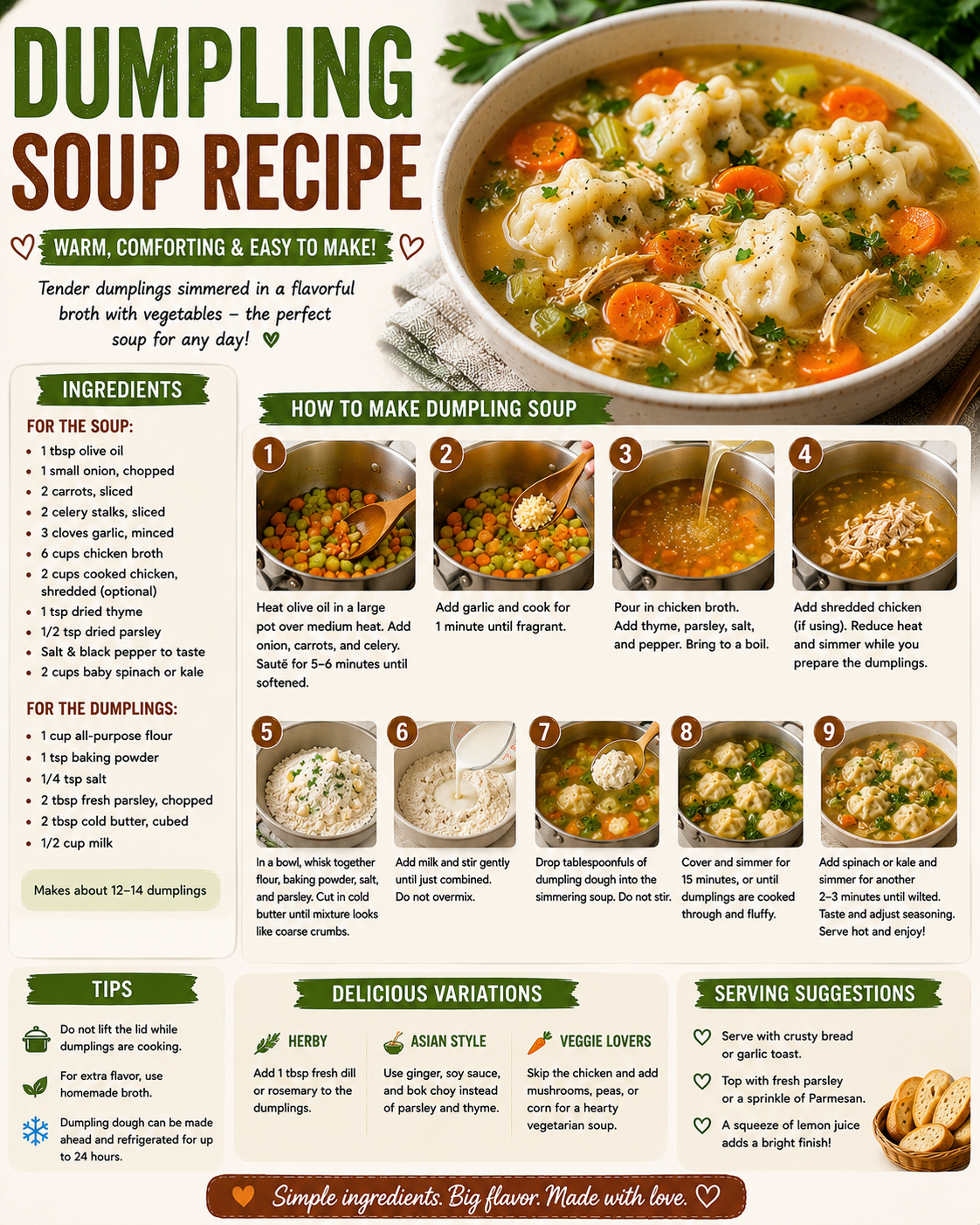
There are soups you make because you need to eat something.
And then there are soups that make you stop mid-spoonful and just… pause.
This dumpling soup is the second kind.
Soft, pillowy dumplings floating in a rich, gingery broth with tender vegetables and a warmth that starts in your chest and spreads everywhere else. It’s the kind of bowl that feels like a full reset after a long day.
And here’s the thing most people don’t realize: you don’t have to make the dumplings from scratch. Store-bought frozen dumplings or potstickers work beautifully here, and nobody at the table will know the difference.
This recipe comes together in under 30 minutes. On a weeknight. With minimal dishes. 👌
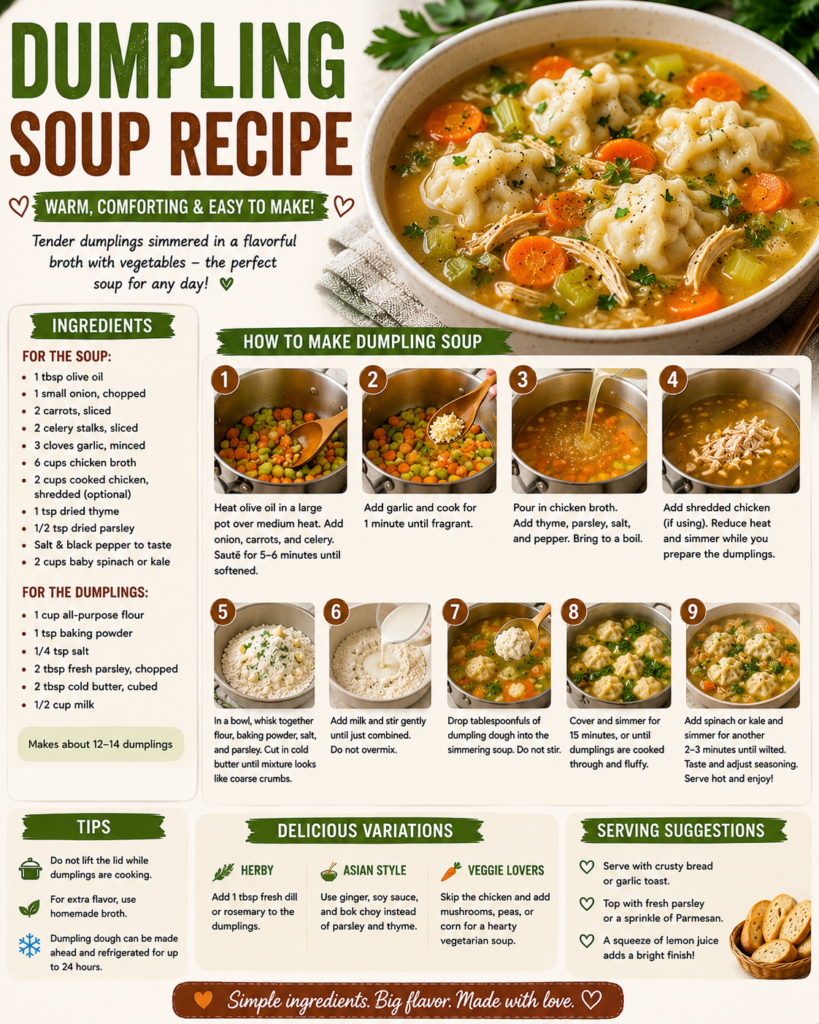
What You’ll Need
For the Broth:
- 1 tablespoon sesame oil
- 1 tablespoon vegetable oil (or any neutral oil)
- 4 garlic cloves, minced
- 1 tablespoon fresh ginger, grated (about a 1-inch piece)
- 4 cups low-sodium chicken broth (or vegetable broth)
- 2 cups water
- 3 tablespoons soy sauce (low-sodium preferred)
- 1 tablespoon rice vinegar
- 1 teaspoon chili garlic sauce (or sambal oelek), adjust to taste
- 1 teaspoon brown sugar
- 2 cups baby bok choy, halved lengthwise (or roughly chopped)
- 1 cup shredded carrots
- 3 green onions, sliced (whites and greens separated)
- Salt and white pepper to taste
For the Dumplings:
- 20 to 24 frozen dumplings or potstickers (any filling: pork, chicken, shrimp, or vegetable)
For Serving:
- Chili oil or chili crisp
- Extra sliced green onions
- Toasted sesame seeds
- Fresh cilantro (optional)
- A soft-boiled egg (optional but highly recommended)
Tools You’ll Need
- Large pot or Dutch oven
- Wooden spoon or silicone spatula
- Cutting board and sharp knife
- Microplane or fine grater (for the ginger)
- Measuring cups and spoons
- Ladle
- Small bowl (for soft-boiling eggs, if using)
Pro Tips
A few things that make this soup go from good to really good.
- Don’t skip the sesame oil bloom. Adding sesame oil with the garlic and ginger right at the start creates this deep, nutty aroma that carries through the entire broth. It sounds like a small thing. It’s not.
- Taste the broth before adding the dumplings. The dumplings themselves are already seasoned, so they’ll add more salt to the soup as they cook. Taste your broth first and season conservatively — you can always add more at the end.
- Don’t boil the dumplings aggressively. A gentle simmer is all you need. Hard boiling makes them tough and can cause them to split open and lose all their filling into the broth.
- Add bok choy near the end. Bok choy wilts fast. Add it in the last 3 to 4 minutes of cooking so it stays bright green and has a slight tender-crisp bite instead of turning completely soft and limp.
- Chili crisp at the end changes everything. A spoonful of chili crisp stirred in right before eating adds heat, crunch, and depth. If you’ve never cooked with it, this soup is the perfect introduction.
Instructions
Step 1: Bloom the Aromatics
Heat the sesame oil and vegetable oil together in your pot over medium heat.
Add the garlic and grated ginger. Cook for 60 to 90 seconds, stirring constantly, until fragrant. Watch it closely — garlic burns fast and bitter garlic ruins a broth.
Add the white parts of the green onions and cook for another 30 seconds.
Step 2: Build the Broth
Pour in the chicken broth and water.
Add the soy sauce, rice vinegar, chili garlic sauce, and brown sugar. Stir everything together and bring to a gentle boil.
Taste the broth here and adjust seasoning — a little more soy for salt, more vinegar for brightness, more chili for heat.
Step 3: Add the Carrots
Stir in the shredded carrots and let them simmer in the broth for 3 to 4 minutes to soften slightly and start releasing their sweetness.
Step 4: Add the Dumplings
Carefully add the frozen dumplings directly into the simmering broth. Do not thaw them first.
Stir gently once to make sure none are stuck to the bottom, then let them cook at a gentle simmer for 6 to 8 minutes, or until they float and are cooked through. (Check your dumpling package for exact timing as it varies by brand and size.)
Step 5: Add the Bok Choy
In the last 3 to 4 minutes of cooking, stir in the halved bok choy.
Cook until the leaves are wilted and the stems are just tender. Remove the pot from heat.
Step 6: Taste and Adjust
Give the broth one final taste. Add salt, white pepper, or a small splash more soy sauce or rice vinegar if needed.
Step 7: Serve
Ladle the soup into bowls, making sure everyone gets a generous amount of dumplings. Top with sliced green onion tops, toasted sesame seeds, a drizzle of chili oil or chili crisp, fresh cilantro, and a soft-boiled egg if using.
How to Make a Soft-Boiled Egg (Optional but Worth It)
Bring a small pot of water to a boil. Gently lower in your eggs and cook for exactly 6 minutes and 30 seconds. Transfer immediately to an ice bath for 5 minutes, then peel and slice in half lengthwise. The yolk should be jammy and golden — not fully set.
Substitutions and Variations
This soup adapts really well to whatever you have in your kitchen.
- Different dumplings? Wontons work great here, especially if you can find them fresh at an Asian grocery store. Tortellini is also a surprisingly delicious swap for a more Italian-influenced version.
- Make it vegetarian or vegan: Use vegetable broth, vegetable-filled dumplings, and swap the soy sauce for tamari. Skip the egg.
- No bok choy? Baby spinach, napa cabbage, or thinly sliced mushrooms all work. Mushrooms in particular add a really nice umami depth.
- Want it creamier? Stir in a tablespoon of white miso paste with the broth for a richer, more complex base.
- Noodles too? A small handful of rice noodles or ramen noodles added with the dumplings makes this even heartier.
- Coconut milk version: Replace 1 cup of the broth with full-fat coconut milk and add a tablespoon of red curry paste with the aromatics. Completely different soup — equally incredible.
Make-Ahead Tips
The broth can be made up to 3 days ahead and stored in the fridge. In fact, it tastes noticeably better the next day once the flavors have had time to settle.
When you’re ready to eat, just reheat the broth, add the frozen dumplings, and finish with bok choy and toppings.
Do not cook the dumplings in advance and store them in the broth. They’ll absorb all the liquid and turn soggy. Always add them fresh when you’re ready to serve.
Nutritional Info (Per Serving, Approximate)
This recipe makes about 4 servings.
| Nutrient | Amount per Serving |
|---|---|
| Calories | ~320 kcal |
| Protein | 14g |
| Carbohydrates | 36g |
| Fiber | 4g |
| Fat | 12g |
| Sodium | ~820mg (varies by dumpling brand + broth) |
Nutrition will vary quite a bit depending on the dumplings you use — check the label on your specific brand for the most accurate numbers.
Meal Pairing Suggestions
This soup is genuinely a full meal on its own. If you want to round it out:
- Steamed jasmine rice on the side (great for soaking up extra broth)
- A simple cucumber salad with rice vinegar and sesame seeds
- Spring rolls or a light side of edamame
- Jasmine or green tea as a drink pairing — it goes surprisingly well
Leftovers and Storage
- Broth only: Store separately in an airtight container in the fridge for up to 4 days, or freeze for up to 3 months.
- Cooked dumplings: Store separately and consume within 1 to 2 days. They will soften in the fridge overnight, which some people actually love.
- Reheating: Warm broth on the stovetop, bring to a simmer, and add fresh or leftover dumplings to heat through. Don’t microwave the dumplings in the broth — they get rubbery.
FAQ
Can I use fresh dumplings instead of frozen?
Yes. Fresh dumplings cook faster — usually 3 to 5 minutes. Watch them closely and pull them out as soon as they float and feel cooked through.
My broth tastes too salty. How do I fix it?
Add more water, a splash of rice vinegar, or a small pinch of sugar to balance it out. A little acidity does a surprising amount of work here.
Can I use chicken broth from a carton?
Absolutely. Low-sodium chicken broth works great. If you happen to have homemade broth in your freezer, use it — the difference in flavor is dramatic. But store-bought is perfectly good for a weeknight soup.
What brand of frozen dumplings should I use?
Any brand works. If you have access to an Asian grocery store, the refrigerated or frozen dumplings there tend to be better quality than most mainstream grocery options. Trader Joe’s potstickers are a solid mainstream option if that’s what you have nearby.
Can I make this spicier?
Yes — increase the chili garlic sauce, add more chili crisp on top, or drop a few dried chili peppers into the broth while it simmers. Pull them out before serving if you don’t want people accidentally biting into one.
Is this soup gluten-free?
Most dumplings contain wheat-based wrappers, so standard dumplings are not gluten-free. Use tamari instead of soy sauce and look for gluten-free dumplings or wontons if needed.
Can I add tofu?
Yes. Firm or extra-firm tofu, cut into small cubes and added with the dumplings, works really well and makes the soup even more filling.
Wrapping Up
Dumpling soup is one of those recipes that earns a permanent spot in your regular rotation.
It’s fast, it’s deeply satisfying, it works with whatever dumplings you grabbed at the store, and the broth alone is something you’ll want to drink straight from the bowl.
Make it once and you’ll understand why it’s the kind of meal people request on repeat.
Give it a try this week, and when you do — drop a comment below! Tell me what dumplings you used, what toppings you added, or any tweaks you made that worked really well. Questions? Leave those too. 👇