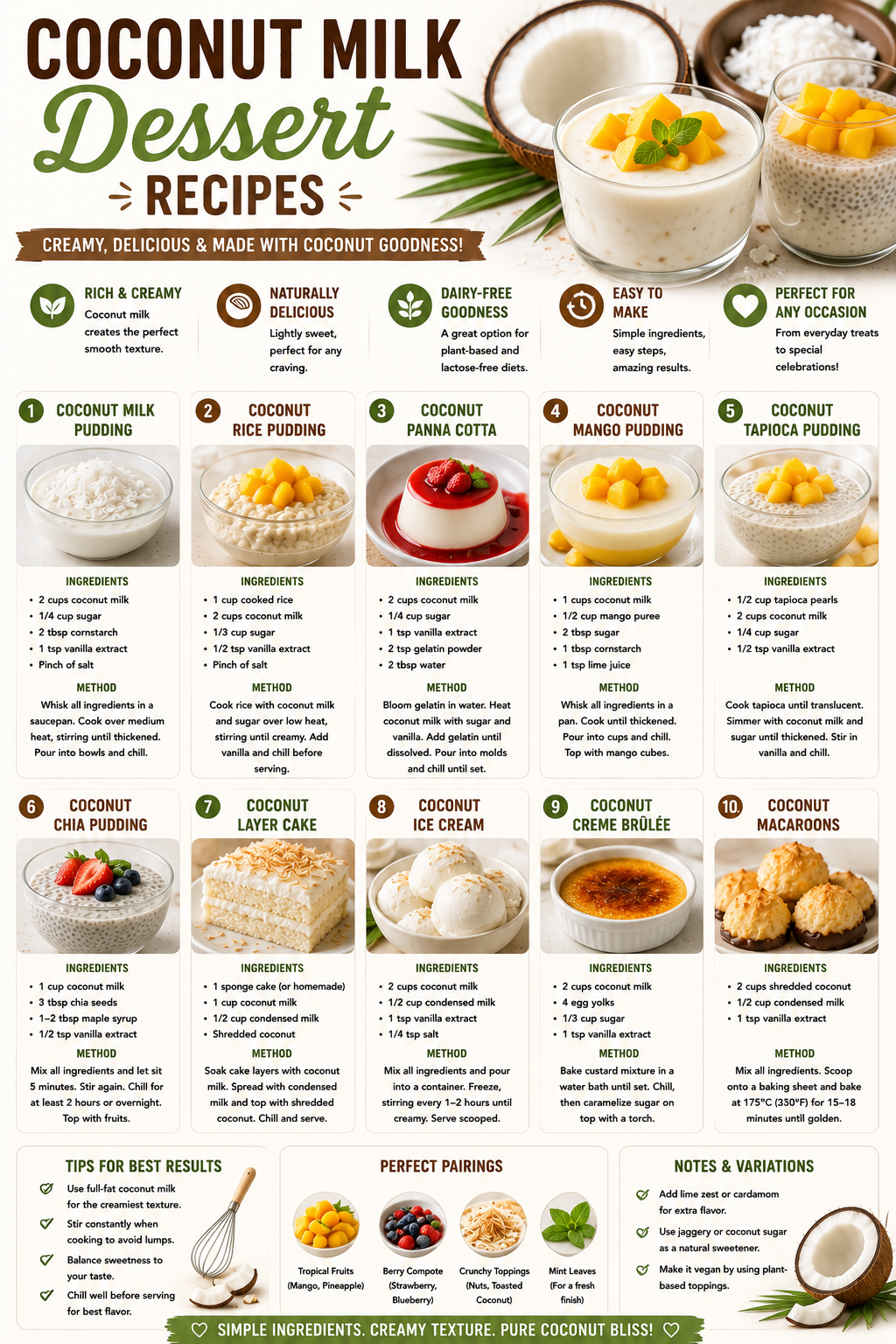
You know that dessert that shows up at a dinner party and everyone stops talking mid-sentence?
This is that dessert.
A silky, lightly sweet coconut milk panna cotta with a mango-lime topping that tastes like it took way more effort than it actually did. Five ingredients. No baking. And it sets in the fridge while you do absolutely nothing.
The fact that it looks this impressive is honestly a little unfair to every other dessert out there.
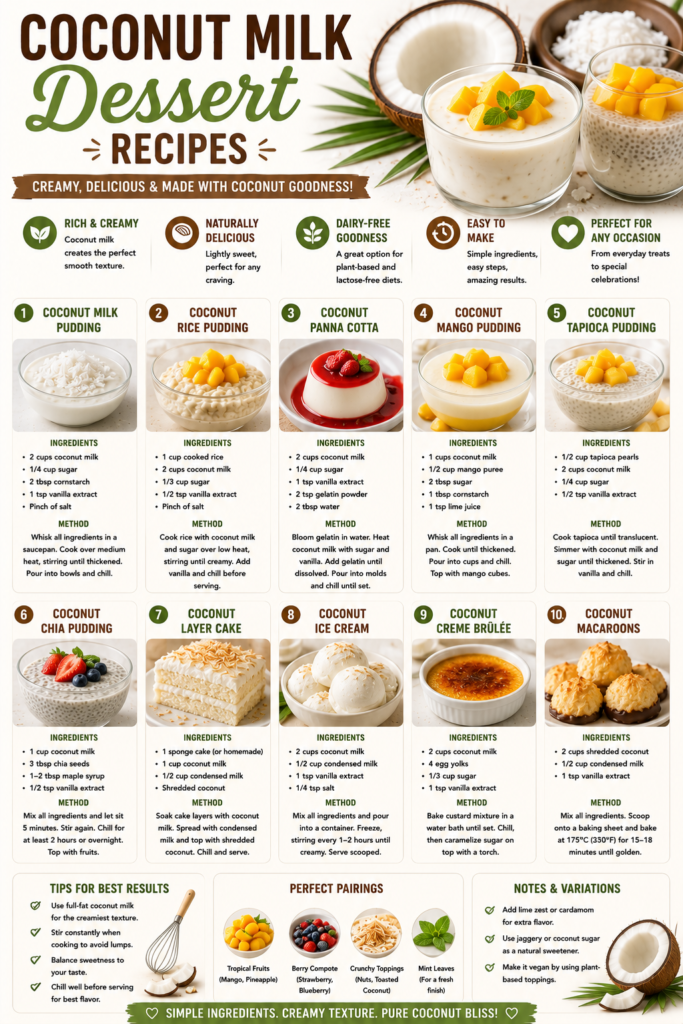
What You’ll Need
For the panna cotta:
- 2 cans (13.5 oz each) full-fat coconut milk
- 3 tablespoons granulated sugar
- 2.5 teaspoons unflavored powdered gelatin (about 1 standard packet)
- 3 tablespoons cold water (for blooming the gelatin)
- 1 teaspoon pure vanilla extract
- Pinch of sea salt
For the mango-lime topping:
- 2 ripe mangoes, peeled and diced small (or 1.5 cups frozen mango, thawed)
- 2 tablespoons fresh lime juice
- 1 teaspoon lime zest
- 1 tablespoon honey or maple syrup
- Pinch of cayenne pepper (optional but surprisingly good)
For garnish:
- Fresh mint leaves
- Toasted shredded coconut
- Extra lime zest
Tools You’ll Need
- Small saucepan
- Mixing bowl
- Whisk
- Measuring cups and spoons
- Fine mesh strainer
- 6 individual ramekins, small glasses, or silicone molds
- Microplane or zester
- Knife and cutting board
- Ladle or large spoon for pouring
Pro Tips
These little details make a bigger difference than you’d expect.
- Full-fat coconut milk only. The light version is too thin and the panna cotta won’t set with the same creamy, spoonable texture. Full-fat is what gives it that rich, almost custard-like consistency.
- Bloom your gelatin properly. Sprinkling it over cold water and letting it sit for 5 minutes before adding it to the warm coconut milk is non-negotiable. If you rush this step and drop it straight into hot liquid, the gelatin won’t activate evenly and your panna cotta might not set right.
- Don’t boil the coconut milk. Bring it to a gentle simmer only. Boiling causes the fats to separate and can give the panna cotta a grainy texture instead of silky smooth.
- Strain it. Pouring the mixture through a fine mesh strainer before filling your molds removes any undissolved gelatin bits and guarantees a perfectly smooth result. It takes 20 extra seconds and it’s worth every one of them.
- Give it a full 4 hours minimum. Yes, you can get away with less, but 4–6 hours in the fridge is where the magic really sets in. Overnight is even better. Make these the day before your event and you’re completely stress-free come serving time.
Substitutions and Variations
No fresh mango? Frozen mango works just as well once thawed and patted dry. Canned mango in syrup also works — just reduce the honey since it’s already sweet.
No gelatin? Use agar-agar as a plant-based substitute. Use 1 teaspoon of agar-agar powder in place of 2.5 teaspoons of gelatin, but note it sets firmer. Dissolve it directly into the warm coconut milk (no blooming needed) and bring to a boil before pouring.
Want it richer? Replace 1/2 cup of coconut milk with full-fat canned coconut cream. The texture gets even denser and more indulgent.
Skip the mango. A simple passion fruit drizzle, sliced strawberries with a touch of honey, or even just a spoonful of raspberry jam all work beautifully on top.
Swap the sweetener. Maple syrup, agave, or coconut sugar can replace the granulated sugar. Each adds a slightly different flavor profile — coconut sugar especially gives it a more caramel-like depth.
Make it boozy. Add 1 tablespoon of coconut rum or spiced rum to the mixture before pouring. Adults-only panna cotta is a thing and it’s very welcome at dinner parties.
Make Ahead Tips
This is one of those rare recipes that’s actually designed to be made ahead.
- Up to 24 hours in advance: Make the full panna cotta, cover the ramekins with plastic wrap, and refrigerate. Don’t add the topping until 30 minutes before serving.
- Mango topping: Make it a few hours ahead and store covered in the fridge. The lime juice keeps it fresh and bright.
- Up to 48 hours: The panna cotta holds well for two days. After that the texture can start to weep slightly at the edges.
How to Make Coconut Milk Panna Cotta
Step 1: Bloom the gelatin
Measure 3 tablespoons of cold water into a small bowl. Sprinkle the gelatin evenly over the surface. Let it sit undisturbed for 5 minutes. It will absorb the water and turn into a soft, spongy paste. That’s exactly what you want.
Step 2: Heat the coconut milk
Pour both cans of coconut milk into your saucepan. Add the sugar and pinch of salt. Warm over medium-low heat, whisking occasionally, until the sugar dissolves and the mixture is hot but not boiling. This takes about 4–5 minutes.
Step 3: Add the gelatin
Remove the pan from heat. Add the bloomed gelatin and whisk immediately until it’s completely dissolved. Add the vanilla extract and whisk once more. Everything should look smooth and uniform.
Step 4: Strain and pour
Set your ramekins or glasses on a flat tray. Pour the mixture through a fine mesh strainer into a large measuring cup or pitcher (this makes pouring much easier). Divide evenly among your 6 molds.
Step 5: Chill
Let the panna cottas cool to room temperature, about 20 minutes. Then cover each one loosely with plastic wrap and refrigerate for at least 4 hours, or overnight.
Step 6: Make the mango topping
Combine the diced mango, lime juice, lime zest, honey, and cayenne (if using) in a bowl. Stir gently, taste, and adjust sweetness or acidity as needed. Refrigerate until ready to serve.
Step 7: Unmold or serve in the glass
If you want to unmold: run a thin knife around the edge of each ramekin, place a serving plate on top, and flip quickly. Give it a gentle tap if needed. It should slide out cleanly.
Serving in the glass? Even easier — skip the unmolding entirely and just spoon the topping right over the top.
Step 8: Top and serve
Spoon the mango-lime mixture over each panna cotta. Garnish with fresh mint, toasted coconut flakes, and a little extra lime zest. Serve immediately.
Nutritional Info (Per Serving)
Based on 6 servings
| Nutrient | Amount |
|---|---|
| Calories | ~280 kcal |
| Total Fat | 20g |
| Saturated Fat | 17g |
| Carbohydrates | 24g |
| Fiber | 1.5g |
| Sugar | 20g |
| Protein | 3g |
| Sodium | ~55mg |
Dietary notes: Naturally dairy-free, gluten-free, and easily made vegan by using maple syrup instead of honey.
Meal Pairing Suggestions
This dessert is light enough to follow a heavier main. A few pairings that work really well:
- After Thai or Vietnamese food — the coconut and lime keep everything cohesive
- After grilled fish or shrimp — the tropical topping complements seafood beautifully
- Alongside a cheese board — the creamy, lightly sweet panna cotta contrasts nicely with sharp cheeses
- At a summer BBQ — make a big batch in individual glasses, no unmolding required, and keep them chilled until dessert time
Leftovers and Storage
Fridge: Covered panna cottas keep well for up to 2 days. Store the mango topping separately and add it fresh when serving.
Already topped: If the mango topping has been added, eat within 24 hours. The mango softens quickly once it sits on the panna cotta.
Can you freeze it? Technically yes, but the texture suffers significantly after thawing — it becomes grainy and loses that smooth creaminess. Better to make a fresh batch.
Tip: If you’re making these for the week, keep them plain in the fridge and add the topping fresh each time you’re ready to eat one. They feel just as good on day two as day one.
FAQ
Can I use coconut cream instead of coconut milk?
Yes, but use it for half the liquid at most. Pure coconut cream is very thick and the panna cotta will be almost too dense to spoon through cleanly. A 50/50 mix with coconut milk is the sweet spot if you want extra richness.
My panna cotta didn’t set. What happened?
A few possibilities: the gelatin wasn’t fully bloomed before being added, the mixture was too hot when the gelatin went in (which can deactivate it), or it didn’t chill long enough. If it’s still liquid after 4 hours, you can try gently rewarming the mixture, adding a tiny bit more bloomed gelatin, and re-pouring into the molds.
Can I make this without individual molds?
Absolutely. Pour it into one large dish or a loaf pan, chill, and serve scooped into bowls. It’s a more casual presentation but just as good.
How do I know when the panna cotta is set?
Give the mold a gentle jiggle. It should wobble slightly in the center (like set jello) but not be liquid. If it sloshes around, it needs more time. If it’s completely firm with no wobble, it’s been in the fridge long enough but might be slightly over-set — still totally fine to eat.
Can kids eat this?
Yes — as long as you skip the cayenne and any alcohol variation. It’s a mild, sweet, crowd-pleasing dessert. The mango topping especially makes it fun for kids.
What if I don’t like mango?
The topping is completely swappable. Try fresh pineapple with a little honey, sliced kiwi, or even a simple berry compote simmered with sugar and lemon juice.
Wrapping Up
There’s something quietly satisfying about putting a dessert in front of people that looks like it came from a restaurant and knowing it cost you about 15 minutes of actual effort.
This coconut milk panna cotta is that recipe for me. I keep coming back to it because it’s the kind of thing that impresses without stressing you out.
Make it this weekend and then come back and tell me how it went in the comments. Did you try it with a different topping? Did you add the cayenne? Did someone at the table actually ask where you bought it? I genuinely want to know 🥥