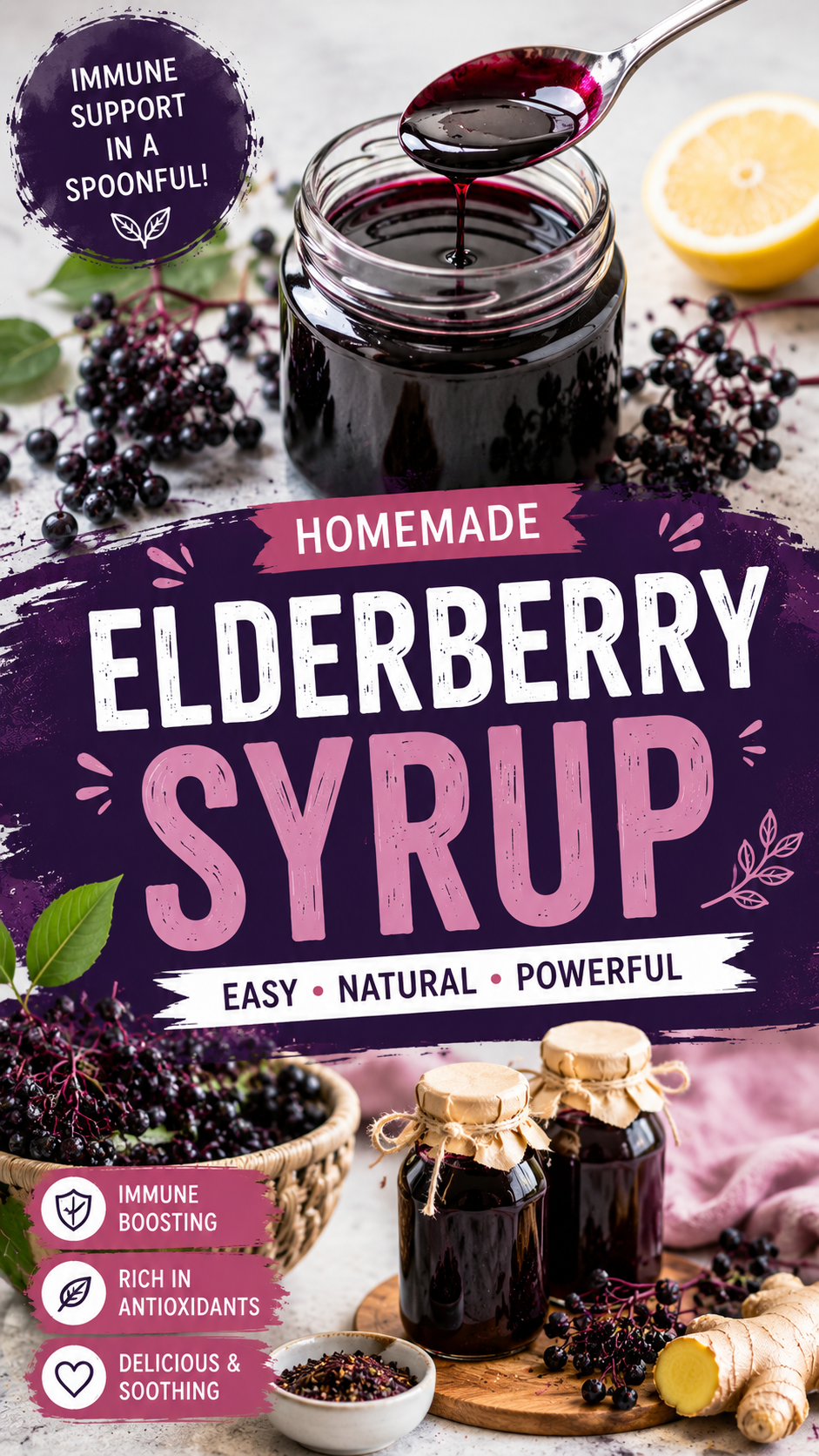
Store-bought elderberry syrup costs around $20–$30 for a small bottle.
This homemade version costs a fraction of that, takes about 45 minutes to make, and honestly tastes so much better.
I put off making it for a long time because I assumed it would be complicated or require ingredients I couldn’t find. It’s neither. You basically simmer a handful of things together, strain it, stir in honey, and you’re done.
One jar lasts weeks in the fridge. And knowing exactly what’s in it — no preservatives, no artificial anything — makes it feel worth every bit of the effort.
There’s also one specific step in the Pro Tips section that most recipes online get completely wrong, and it affects both the safety and the potency of your syrup. I’ll explain it there.
So What Actually Makes Elderberry Syrup Worth Making?
Elderberries (from the Sambucus nigra plant) have been used medicinally for centuries.
Modern research backs up a lot of the traditional use. Studies have shown that elderberry extract can help reduce the duration and severity of colds and flu by supporting immune function. They’re high in vitamin C, vitamin A, antioxidants, and anti-inflammatory compounds called anthocyanins — the same compounds that give them their deep purple-black color.
One 2016 study published in Nutrients found that elderberry supplementation substantially reduced cold duration and severity in air travelers. That’s not nothing.
And with ginger, cinnamon, and cloves in this recipe too, you’re stacking multiple immune-supporting, anti-inflammatory ingredients into every spoonful. 🌿
What You’ll Need
For the Elderberry Syrup
- 1 cup dried elderberries (Sambucus nigra)
- 3 cups cold water
- 1 tablespoon fresh ginger, peeled and grated (or 1 teaspoon ground ginger)
- 1 cinnamon stick (or ½ teaspoon ground cinnamon)
- 4 whole cloves
- 1 cup raw honey (added after cooking — see Pro Tips)
Optional Add-ins
- Zest of 1 lemon (adds brightness and vitamin C)
- 1 teaspoon turmeric powder (extra anti-inflammatory support)
- ¼ teaspoon black pepper (helps activate the turmeric if using)
Tools You’ll Need
- Medium saucepan
- Fine mesh strainer or cheesecloth
- Large glass jar or mason jar (at least 16 oz) for storing
- Wooden spoon or silicone spatula
- Measuring cups and spoons
- Grater or microplane (for fresh ginger)
- Funnel (optional but helpful for pouring into jars)
- Ladle
Pro Tips
A few things that make a real difference here.
- Never boil the honey. This is the big one. Raw honey is added after the syrup cools below 95°F (35°C). Cooking honey destroys its beneficial enzymes and antibacterial properties — which is a big part of why you’re using it in the first place. Patience here actually matters.
- Use dried elderberries, not fresh or raw. Raw elderberries contain a compound called sambunigrin that can cause nausea and vomiting. Dried elderberries have significantly reduced levels, and simmering them further breaks down any remaining compounds. Always cook them — never eat raw.
- Don’t skip the strain. Get every bit of berry and spice material out. Any solids left in the syrup will cause it to ferment or spoil faster in the fridge.
- Squeeze the berries through the cheesecloth. After straining, wrap the cooked berries in cheesecloth and squeeze hard. You can get almost double the liquid out compared to just straining — and that’s where a lot of the concentrated flavor lives.
- Use raw, unfiltered honey if possible. It has more naturally occurring enzymes, antioxidants, and antimicrobial compounds than processed honey. Manuka honey is excellent here if you want to go all-in.
How to Make It
Step 1: Simmer the Berries and Spices
Add the dried elderberries, cold water, grated ginger, cinnamon stick, and cloves to your saucepan.
Bring to a boil over medium-high heat, then reduce to a low simmer.
Simmer uncovered for 40–45 minutes, stirring occasionally, until the liquid has reduced by roughly half. It should look deep purple and almost syrupy.
If using lemon zest or turmeric, add them in the last 10 minutes.
Step 2: Cool and Strain
Remove the pot from the heat and let it cool until it’s warm but not hot — aim for below 95°F (35°C). This takes about 20–30 minutes.
Pour through a fine mesh strainer or cheesecloth into a large bowl or glass measuring cup. Press down firmly on the solids with a spoon (or squeeze the cheesecloth) to extract as much liquid as possible.
Discard the solids.
Step 3: Add the Honey
Once the liquid is warm (not hot), stir in the raw honey.
Start with ¾ cup, taste, and add more if you want it sweeter. Stir until fully dissolved.
Step 4: Bottle and Store
Pour the finished syrup into a clean glass jar using a funnel.
Seal and store in the refrigerator.
Substitutions and Variations
| Ingredient | Substitution |
|---|---|
| Dried elderberries | Elderberry powder (use ¼ cup) |
| Raw honey | Maple syrup (fully vegan option) |
| Fresh ginger | 1 teaspoon ground ginger |
| Cinnamon stick | ½ teaspoon ground cinnamon |
| Whole cloves | ¼ teaspoon ground cloves |
| Plain water | Hibiscus tea (deepens color and adds extra antioxidants) |
Want a stronger syrup? Reduce further to ⅓ of the original liquid volume instead of half. It’ll be more concentrated and more potent per tablespoon.
Want a kid-friendly version? Use a milder honey like clover and skip the cloves. Most kids actually love the flavor once they try it.
Make Ahead Tips
This syrup is almost entirely a make-ahead recipe.
- Make a large batch every 2–3 weeks and keep it ready in the fridge.
- Double or triple the recipe easily — just use a larger pot.
- Freeze extra syrup in an ice cube tray, then transfer frozen cubes to a bag. Each cube is roughly 1 tablespoon — perfect for pulling out one or two at a time.
How to Use Elderberry Syrup
This is the part people forget to ask about. 😄
As a daily supplement:
- Adults: 1 tablespoon per day for maintenance
- Children (1 year+): 1 teaspoon per day
When you feel something coming on:
- Adults: 1 tablespoon every 3–4 hours
- Children: 1 teaspoon every 3–4 hours
Other ways to use it:
- Drizzled over yogurt, oatmeal, or pancakes
- Stirred into sparkling water for a shrub-style drink
- Mixed into tea or warm lemon water
- Used as a glaze for roasted meats (duck or chicken especially)
- Swirled into salad dressings
Nutrition Information (Per 1 Tablespoon Serving)
| Nutrient | Amount |
|---|---|
| Calories | ~30–40 kcal |
| Carbohydrates | 9g |
| Sugar | 8g (natural from honey and berries) |
| Vitamin C | ~6–8mg |
| Antioxidants | High (anthocyanins from elderberries) |
Elderberries contain approximately 6–35mg of vitamin C per 100g and are one of the most antioxidant-dense berries available.
Leftovers and Storage
In the fridge: Keeps for 2–3 months in a sealed glass jar. Always use a clean spoon to scoop — no double-dipping, which introduces bacteria.
In the freezer: Freeze in ice cube trays for up to 1 year. Thaw individual cubes as needed.
Signs it’s gone bad: Mold, off smell, fermented bubbling, or color that looks faded and watery. When in doubt, make a fresh batch.
Glass over plastic: Store in glass jars — the acidity of the berries can leach chemicals from plastic over time.
FAQ
Can I give this to babies under 1 year old? No. Honey is not safe for babies under 12 months due to the risk of infant botulism. For children under 1, use maple syrup as the sweetener instead.
Where do I buy dried elderberries? Most health food stores carry them, and they’re widely available online. Look specifically for Sambucus nigra (black elderberries) — that’s the variety with the most studied health benefits.
Can I use fresh elderberries? You can, but raw elderberries can cause nausea if not fully cooked. If using fresh, simmer for at least 45 minutes and never eat them raw off the bush. Use about 2–3 cups fresh berries in place of 1 cup dried.
Is this safe during pregnancy? There isn’t enough clinical research on elderberry use during pregnancy to give a definitive answer. Talk to your doctor before using it while pregnant or breastfeeding.
Can I use this instead of going to the doctor? This syrup is a supplement, not a replacement for medical care. If symptoms are severe or worsening, always see a healthcare professional.
Can I make this with elderberry juice instead? Yes. Use 1 cup of 100% pure elderberry juice, skip the simmering step, and just warm it gently before adding the honey and spices. It’s a great shortcut.
My syrup turned out thin. Did I do something wrong? It probably needed more reduction time. Next time, simmer longer or let it reduce to closer to ⅓ of the original volume for a thicker consistency.
Wrapping Up
Once you make your own elderberry syrup, the $25 bottle at the pharmacy starts to feel genuinely unnecessary.
A jar of this in your fridge — made with real ingredients you chose yourself, with no mystery preservatives — is such a simple thing that makes a surprisingly big difference, especially going into cold and flu season.
Give it a go and let me know how it turns out in the comments below! 💬 I’d love to know if you added turmeric, used a different honey, or found a creative way to use it beyond the spoon. Questions are always welcome too.