I brought these to a backyard get-together once and genuinely did not get a single one.
Gone. In about four minutes.
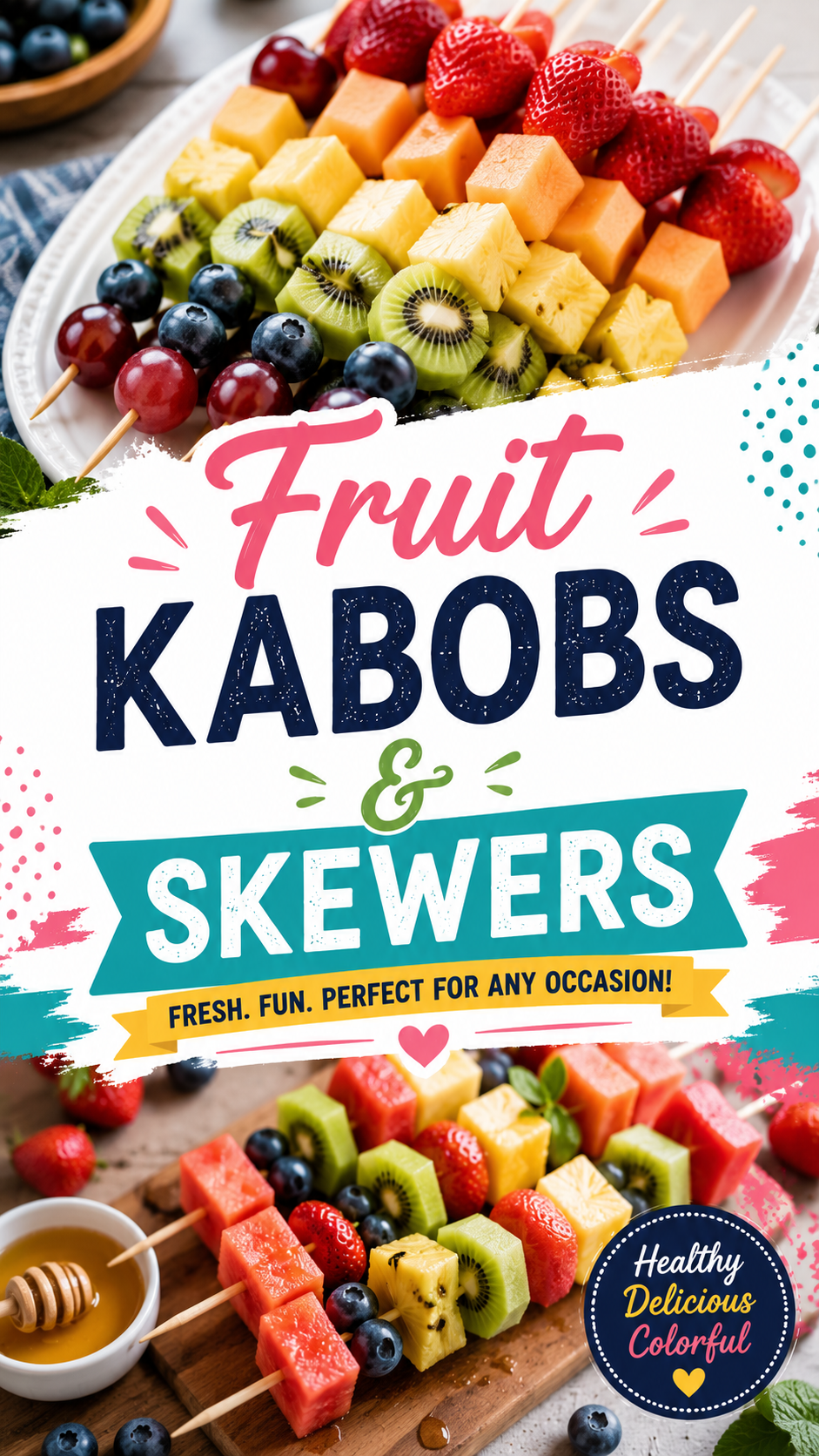
These fruit kabobs are one of those things that look like they took effort but actually take about 15 minutes from start to finish. You skewer colorful fruit, drizzle a simple honey lime glaze on top, and somehow end up with something that feels a little fancy and a lot refreshing.
And here’s the thing nobody tells you: the glaze is what makes them. Plain fruit on a stick is fine. Fruit on a stick with a honey lime drizzle and a pinch of chili? Completely different experience.
Keep reading, because I’ll also show you a few ways to customize these depending on the occasion. 🍓
What You’ll Need
For the kabobs (makes 10 to 12 skewers):
- 2 cups fresh strawberries, hulled and halved
- 2 cups fresh watermelon, cut into 1-inch cubes
- 2 cups fresh pineapple, cut into 1-inch chunks
- 1 cup fresh kiwi, peeled and sliced into thick rounds
- 1 cup fresh blueberries
- 1 cup red grapes, seedless
- 1 cup cantaloupe or mango, cut into 1-inch cubes
For the honey lime glaze:
- 3 tablespoons raw honey
- 2 tablespoons fresh lime juice (about 1 large lime)
- 1 teaspoon lime zest
- Pinch of fine sea salt
- Optional: pinch of chili powder or Tajin for a sweet-heat kick
Optional garnish:
- Fresh mint leaves
- Extra lime zest
Tools You’ll Need
- 10 to 12 wooden skewers (10 inch)
- Large cutting board
- Sharp chef’s knife
- Small mixing bowl
- Whisk or fork
- Shallow dish or sheet pan (for assembling)
- Small pastry brush or spoon (for glazing)
- Serving platter
Pro Tips
A few things I learned after making these more times than I can count.
- Soak your wooden skewers for 20 minutes before using. This keeps them from splintering when you push the fruit through. Sounds minor, but it genuinely makes a difference.
- Cut everything the same size. When pieces are different sizes, they slide around on the skewer and don’t sit right. Aim for 1-inch pieces across the board.
- Thread denser fruits first. Watermelon and pineapple hold the skewer in place. Start with those, then add softer fruits like kiwi and strawberries toward the middle.
- Make the glaze right before serving, not ahead. Lime juice is at its most fragrant when it’s fresh. If it sits too long, it loses that bright citrus punch.
- Chill the assembled skewers for 15 to 20 minutes before serving. Cold fruit holds its shape better and the flavors taste more intense right out of the fridge.
How to Make Them
Step 1: Prep the fruit
Wash everything and dry it well. Pat the fruit dry with paper towels before cutting. Wet fruit slides off the skewer.
Cut everything into uniform 1-inch pieces. Halve the strawberries. Slice the kiwi into thick rounds. Keep blueberries and grapes whole.
Step 2: Make the honey lime glaze
In a small bowl, whisk together the honey, lime juice, lime zest, and sea salt until smooth.
Taste it. It should be tangy, a little sweet, and bright. If it needs more lime, add it. If it’s too tart, add a touch more honey.
Set aside until you’re ready to serve.
Step 3: Assemble the skewers
Thread the fruit onto the skewers, alternating colors as you go. This is the fun part and honestly one of the more satisfying things to put together.
A good pattern: watermelon, blueberry, pineapple, strawberry, kiwi, grape, cantaloupe. Repeat and adjust based on what you have.
Leave about an inch free at each end so the skewer is easy to hold.
Step 4: Chill (optional but recommended)
Lay the assembled skewers on a sheet pan, cover loosely with plastic wrap, and refrigerate for 15 to 20 minutes.
This helps the fruit firm up slightly and makes them easier to pick up and eat.
Step 5: Glaze and garnish
Right before serving, brush or drizzle the honey lime glaze over each skewer.
Sprinkle with a pinch of chili powder or Tajin if you’re using it. Garnish with fresh mint leaves and a little extra lime zest.
Serve immediately on a platter.
Substitutions and Variations
The base recipe works with almost any fruit, so this is really just a starting point.
| Swap | Use Instead |
|---|---|
| Watermelon | Honeydew melon |
| Pineapple | Mango chunks |
| Red grapes | Green grapes or halved cherries |
| Blueberries | Raspberries or blackberries |
| Honey | Maple syrup (vegan-friendly) |
| Lime juice | Lemon juice |
| Chili powder | Cinnamon + a pinch of nutmeg for a warmer flavor |
For a dessert version: Add a small chocolate dipping sauce on the side. Dark chocolate melted with a splash of coconut cream works really well with the fruit.
For kids: Skip the chili and add a light drizzle of vanilla yogurt instead of the glaze. Just as good, and they’ll eat every single one.
For a party spread: Make a “kabob bar” and let guests thread their own skewers. Surprisingly entertaining and it saves you 20 minutes of assembly time.
Make Ahead Tips
You can prep the components separately and assemble when you’re ready.
- The fruit: Cut and store in airtight containers in the fridge up to 24 hours ahead. Keep each fruit type separate so the colors and textures don’t bleed together.
- The glaze: Make it up to 2 days ahead and keep in a small sealed jar in the fridge. Give it a quick stir before using since the honey may settle.
- Assembled skewers: These are best made the same day. If you need to make them a few hours ahead, refrigerate covered and add the glaze right before serving.
Nutritional Breakdown
Approximate values per kabob (based on 12 skewers, without glaze):
| Nutrient | Per Kabob |
|---|---|
| Calories | ~65 kcal |
| Carbohydrates | ~16g |
| Natural Sugars | ~12g |
| Protein | ~0.8g |
| Fat | ~0.3g |
| Fiber | ~2g |
| Vitamin C | ~35% DV |
Add about 20 calories per kabob if you’re using the full honey lime glaze.
These are one of the more genuinely healthy things you can bring to a party without it feeling like you brought “the healthy option.”
Meal Pairing Ideas
Fruit kabobs work really well alongside:
- Grilled chicken or fish at a summer BBQ
- A cheese and charcuterie board (they balance out the salty, rich flavors)
- Pancakes or waffles at a brunch spread
- A simple green salad when you want a light lunch
- A yogurt dip or chocolate sauce as an after-dinner dessert plate
Leftovers and Storage
Assembled, glazed kabobs are honestly best eaten the day you make them.
After that, the fruit softens and the colors start to bleed. It’s still edible, just not as pretty or texturally crisp.
If you have leftover fruit still on the skewers, remove it, store in an airtight container in the fridge, and eat within 1 day. It makes a great topping for oatmeal or yogurt the next morning.
The glaze keeps in the fridge for up to 5 days. It’s also good on grilled chicken, drizzled over avocado toast, or mixed into a salad dressing.
FAQ
Do I have to use wooden skewers?
No. Metal skewers work just as well and you don’t have to soak them. They’re also reusable, which is a nice bonus if you make these often.
What’s the best fruit for kabobs?
Firm fruits work best because they hold their shape on the skewer. Watermelon, pineapple, mango, grapes, strawberries, and kiwi are all great. Avoid very ripe bananas or peaches since they get mushy quickly.
Can I make these the night before?
You can prep the cut fruit the night before and refrigerate it. Assembling the skewers is quick enough to do the morning of an event or a couple hours before serving. The glaze should go on right before serving.
My fruit is sliding around on the skewer. What am I doing wrong?
Two things: the fruit is probably too wet, or the pieces are too small. Pat everything dry before skewering and keep pieces at least 1 inch thick so they have enough surface area to grip the skewer.
Can I grill these?
Yes, and grilled fruit kabobs are actually really good. Brush the fruit with the honey lime glaze before grilling and cook over medium heat for 2 to 3 minutes per side. The natural sugars caramelize and it takes the flavor somewhere completely different.
What dipping sauce goes well with these?
A few that work really well: vanilla Greek yogurt, dark chocolate sauce, sweetened cream cheese dip, or a simple coconut cream drizzle. The honey lime glaze from this recipe is honestly enough on its own, but dipping sauces make them more fun for a crowd.
Wrapping Up
Fruit kabobs are one of those recipes that sounds almost too simple to bother writing about, but the results consistently impress people.
The color, the freshness, the glaze. It all comes together in a way that just works.
Make them for your next gathering, or honestly just a Tuesday afternoon when you want something that feels a little special without any real effort.
Once you try them, drop a comment below and let me know what fruit combination you went with, or if you tried the chili lime version. I’d love to know how it turned out. 👇