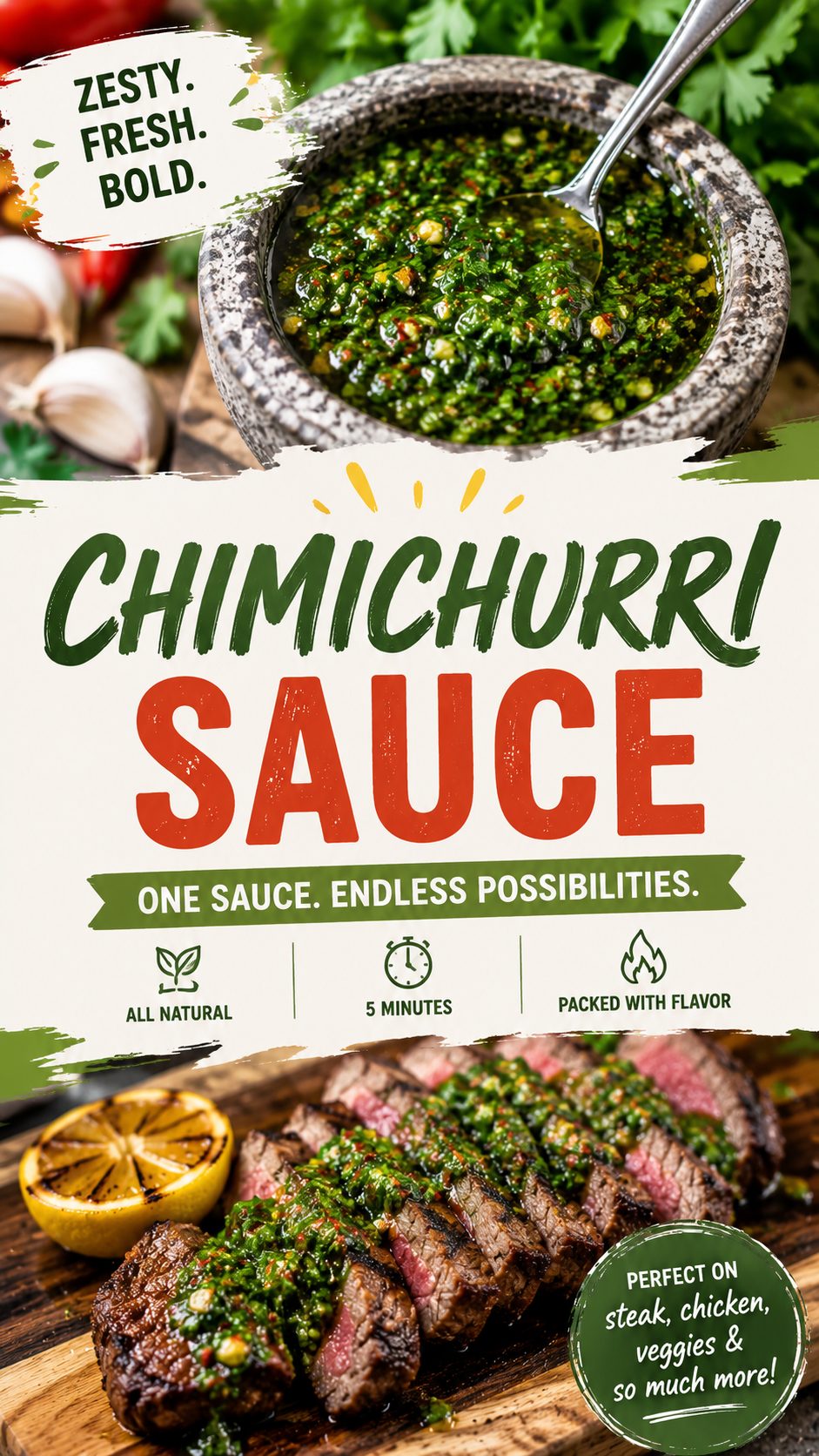
I learned about chimichurri on a trip through Argentina, and honestly, it ruined regular steak sauce for me.
Every grilled meat I touch now gets a spoonful of this stuff. 🌿
It’s bright, garlicky, herby, and slightly tangy in a way that wakes up everything it touches.
And the best part? It takes 5 minutes and a food processor (or even just a knife and some patience).
No cooking. No fancy ingredients. Just fresh herbs, garlic, oil, and vinegar doing all the heavy lifting.
Once you make this, you’ll start putting it on everything. Steak, chicken, roasted veggies, even eggs.
Let’s get into it.
What You’ll Need
For the Chimichurri:
- 1 cup fresh parsley, tightly packed
- 1/4 cup fresh cilantro (optional, but adds great freshness)
- 4 cloves garlic
- 2 tablespoons red wine vinegar
- 1/2 cup olive oil
- 1 teaspoon dried oregano
- 1/2 teaspoon red pepper flakes
- 1/2 teaspoon salt
- 1/4 teaspoon black pepper
- Juice of 1/2 lemon (optional)
Tools You’ll Need
- Food processor or blender (or a sharp knife and cutting board for hand-chopping)
- Measuring cups and spoons
- Small bowl or jar for storing
Pro Tips
Hand-chop for a more authentic texture. Traditional chimichurri is finely hand-chopped, not pureed. If you have the time, chopping by hand gives you that classic rustic texture instead of a smooth sauce.
Let it sit before serving. Chimichurri tastes best after sitting for at least 20-30 minutes. This gives the flavors time to mingle and the garlic to mellow slightly.
Don’t skip the resting time, but don’t make it too far ahead either. The herbs start to lose their vibrant color after a day or two, so it’s best used within 2-3 days for the freshest flavor and color.
Adjust the acid to your taste. Some people like chimichurri more vinegar-forward, others prefer it more oil-rich. Start with less vinegar and add more to taste.
Use good quality olive oil. Since this sauce is mostly oil and herbs with no cooking involved, the quality of your olive oil really shows through. Splurge a little here if you can.
Instructions
- Roughly chop the parsley, cilantro, and garlic.
- Add the parsley, cilantro, and garlic to a food processor.
- Pulse a few times until finely chopped, but not pureed into a paste.
- Transfer to a bowl. Stir in the red wine vinegar, olive oil, oregano, red pepper flakes, salt, black pepper, and lemon juice if using.
- Mix well to combine.
- Taste and adjust seasoning. Add more salt, vinegar, or red pepper flakes as needed.
- Let the sauce sit at room temperature for at least 20-30 minutes before serving to let the flavors develop.
- Spoon generously over grilled steak, chicken, vegetables, or anything that needs a flavor boost.
Substitutions and Variations
| Original | Swap | Notes |
|---|---|---|
| Red wine vinegar | White wine vinegar or lime juice | Slightly different tang |
| Cilantro | Skip entirely | More traditional Argentine version |
| Dried oregano | Fresh oregano | Use 1 tablespoon if fresh |
| Olive oil | Avocado oil | Milder flavor |
| Red pepper flakes | Fresh chili, minced | For more heat |
Want it spicier? Add a finely minced jalapeño or extra red pepper flakes.
Want it smoother? Blend everything until nearly smooth instead of pulsing, for more of a pesto-like consistency.
Make Ahead Tips
Chimichurri actually gets better after sitting for a few hours, so making it ahead is a great idea.
Store it in an airtight container or jar in the fridge.
Bring it to room temperature before serving, since the olive oil will solidify slightly when chilled.
Leftovers and Storage
Store leftover chimichurri in an airtight jar or container in the fridge for up to 5 days.
The color may darken slightly over time, but the flavor stays great.
You can also freeze chimichurri in ice cube trays for up to 3 months. Pop out a cube whenever you need a quick flavor boost.
FAQ
Is chimichurri spicy?
Not really. It has a mild kick from the red pepper flakes, but it’s more herby and tangy than spicy. You can easily adjust the heat level to your preference.
What’s the difference between chimichurri and pesto?
They’re similar in concept, but chimichurri uses vinegar instead of cheese and nuts, and has a brighter, more acidic flavor profile compared to pesto’s richer, nuttier taste.
Can I use dried herbs instead of fresh?
Fresh herbs are really important here since they’re the star of the dish. Dried herbs won’t give you the same vibrant flavor or texture.
What foods pair well with chimichurri?
Grilled steak is the classic pairing, but it’s also fantastic on chicken, fish, roasted vegetables, eggs, or even spread on crusty bread.
Why does my chimichurri taste too oily or too acidic?
This comes down to personal preference and balance. Start with the recipe as written, then adjust the oil-to-vinegar ratio gradually until it tastes right to you.
Wrapping Up
Once you make chimichurri from scratch, the jarred stuff from the store just won’t compare anymore.
It’s fresh, it’s fast, and it makes everything taste like it came from a steakhouse.
Give it a try and let me know in the comments what you put it on. Did you go traditional or add your own twist?
I’d love to hear about it. 🌿🥩