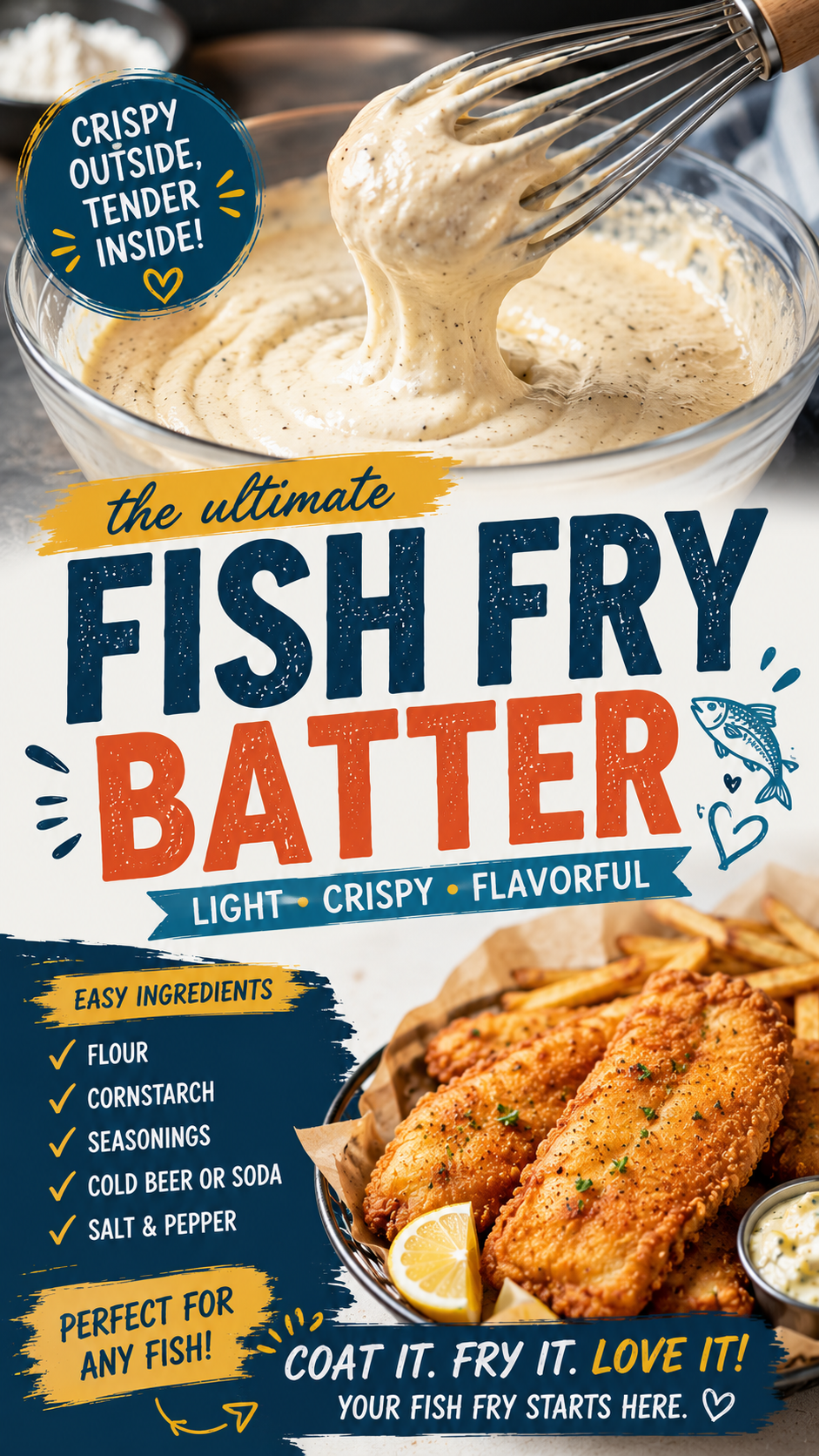
Most people don’t realize the batter is the recipe.
You can start with the freshest fish in the world and completely ruin it with the wrong coating. Soggy. Greasy. Falls off the moment you pick it up. Thick and doughy instead of light and crispy.
Sound familiar?
The fix isn’t complicated. A good fish fry batter comes down to three things: the right ratio of flour to cornstarch, ice-cold liquid, and the correct oil temperature. Get those three right and you’ll get a batter that puffs up golden, shatters when you bite through it, and actually stays on the fish.
This is the batter that does all of that. And it works on any fish.
What You’ll Need
For the Batter (coats 2 lbs of fish, serves 4–6):
Dry Ingredients:
- 1 cup all-purpose flour
- ½ cup cornstarch
- 1 tsp salt
- 1 tsp black pepper
- 1 tsp garlic powder
- 1 tsp onion powder
- 1 tsp smoked paprika
- ½ tsp cayenne pepper
- ½ tsp baking powder
Wet Ingredients:
- 1 cup cold beer (lager or pale ale) — OR 1 cup ice-cold sparkling water for a non-alcoholic version
- 1 egg, lightly beaten
For the Fish:
- 2 lbs fish fillets (cod, catfish, tilapia, whiting, or haddock)
- Extra flour for dusting (about ¼ cup)
- Vegetable oil for frying (enough for 2–3 inches in your pot)
For Serving:
- Lemon wedges
- Tartar sauce or remoulade
- Flaky sea salt
Tools You’ll Need
- A large mixing bowl
- A whisk
- A deep pot or cast iron Dutch oven (for frying)
- A kitchen thermometer (for oil temperature)
- Tongs or a spider strainer
- A wire rack set over a baking sheet
- Paper towels (for patting fish dry)
- Measuring cups and spoons
- A shallow plate or bowl (for the flour dusting step)
Pro Tips
Batter recipes are deceptively simple — a few small decisions make the entire difference between crispy and soggy.
- Cold liquid is non-negotiable. The colder your beer or sparkling water, the crispier your batter. The temperature difference between the ice-cold batter hitting the hot oil creates steam inside the coating, which is what makes it puff up and turn light and airy rather than dense and doughy. Keep your liquid in the fridge until the last second before mixing.
- Don’t overmix the batter. Lumps are fine — actually, lumps are good. Overmixing develops gluten in the flour, which makes the batter tough and chewy instead of light and crispy. Stir just until the dry ingredients are incorporated. A few lumps in the batter equal a crunchier crust on the fish.
- Dust the fish in plain flour before dipping in batter. This step gets skipped constantly and it’s a mistake every time. The dry flour layer gives the wet batter something to grip onto. Skip it and the batter slides off the fish in the oil, leaving you with a naked fillet and a blob of fried batter floating separately in your pot. Not ideal.
- The cornstarch is the secret weapon. Flour alone gives you a coating that goes soft quickly. Cornstarch adds crunch that holds — even after the fish sits for a few minutes. The 2:1 flour-to-cornstarch ratio in this recipe is the sweet spot for light but durable crispiness.
- Fry at exactly 350°F (175°C). Too low and the batter absorbs oil before it has a chance to set — you get greasy, heavy fish. Too high and the outside burns before the fish inside cooks through. Use a thermometer every time, especially between batches when the oil temperature drops.
How to Make It
Step 1: Prep the Fish
Pat the fish fillets completely dry with paper towels. Cut into pieces roughly 3–4 inches long if they’re large.
Season lightly with salt and pepper.
Dust each piece in plain flour, tapping off the excess. Set aside on a plate.
Step 2: Make the Batter
In a large bowl, whisk together all the dry ingredients: flour, cornstarch, salt, pepper, garlic powder, onion powder, smoked paprika, cayenne, and baking powder.
Make a well in the center. Add the beaten egg and pour in the cold beer (or sparkling water).
Whisk gently until just combined. Stop when it comes together — lumps are fine.
The batter should be the consistency of pancake batter: thick enough to coat the back of a spoon but not so thick it clumps.
Step 3: Heat the Oil
Pour 2–3 inches of vegetable oil into your pot. Heat over medium-high until it reaches 350°F (175°C).
Test it: a drop of batter should sizzle immediately, float to the surface, and turn golden in about 45–60 seconds.
Step 4: Batter and Fry
Working in batches of 3–4 pieces:
Dip each flour-dusted piece of fish into the batter. Let the excess drip off for a second.
Carefully lower into the hot oil using tongs. Don’t drop it from height — lower it slowly away from you to avoid splashing hot oil.
Fry for 3–4 minutes per side until deep golden and crispy. The fish is done when it floats to the top and the batter is a rich golden-amber color.
Step 5: Drain and Rest
Remove with tongs or a spider strainer. Place on a wire rack — not paper towels.
Sprinkle immediately with flaky sea salt while the batter is still hot and sticky.
Let the oil return to 350°F before frying the next batch.
Step 6: Serve
Serve immediately with lemon wedges and tartar sauce or remoulade. Fried fish is at its absolute best within 5 minutes of coming out of the oil.
Substitutions and Variations
| Ingredient | Swap Ideas |
|---|---|
| Cold beer | Ice-cold sparkling water, club soda, or ginger beer (non-alcoholic) |
| All-purpose flour | Rice flour (makes the batter even lighter and crispier) |
| Smoked paprika | Regular paprika or chipotle powder |
| Cayenne pepper | White pepper for heat without color change |
| Vegetable oil | Canola oil, peanut oil (traditional for Southern fish fries) |
Batter variations to try:
- Classic Southern cornmeal batter: Replace the flour entirely with fine cornmeal and skip the wet ingredients — just press the seasoned dry cornmeal directly onto the fish. Gives a rougher, crunchier, more rustic crust. No batter, no bowl, no mess.
- Beer batter (extra light): Use a full cup of very cold lager and increase cornstarch to ¾ cup. The extra carbonation creates an even airier, almost tempura-like texture.
- Spicy Cajun batter: Add 1 tsp Cajun seasoning, ½ tsp dried oregano, and ½ tsp white pepper to the dry mix. Bold, smoky, and has a slow burn.
- Lemon-herb batter: Add 1 tsp lemon zest and 1 tsp dried dill to the dry mix. Fresh and bright — pairs especially well with cod or halibut.
- Gluten-free version: Use a 1:1 gluten-free flour blend and rice flour in equal parts instead of all-purpose flour. The result is slightly lighter than the original.
What Fish Works Best
Any white, flaky fish works beautifully with this batter. Here’s how the most common options compare:
| Fish | Texture in Batter | Flavor Notes |
|---|---|---|
| Cod | Thick, meaty flakes | Clean and neutral — lets the batter shine |
| Catfish | Dense, holds shape | Slightly earthy, traditional Southern choice |
| Tilapia | Thin fillets, cooks fast | Very mild, great for first-timers |
| Haddock | Delicate, flaky | Slightly sweet, classic British fish and chips |
| Whiting | Light and tender | Delicate flavor, fries up quickly |
| Bass | Firm, holds up well | Fresh, slightly sweet |
| Halibut | Thick and meaty | Rich flavor, premium option |
Avoid very oily fish like salmon or mackerel — the fat content works against the batter and makes the result greasy rather than crispy.
Make Ahead Tips
The batter itself is best made fresh — but a few things can be prepped ahead to make the day-of much smoother.
- Dry mix: Combine all the dry ingredients (flour, cornstarch, and all spices) up to 1 week ahead and store in a sealed jar. On frying day, just add the wet ingredients.
- Fish prep: Pat the fish dry, cut to size, and refrigerate uncovered on a rack for up to 4 hours before frying. The surface dries out further in the fridge, which helps the batter adhere even better.
- The wet batter: Make it a maximum of 30 minutes before frying. Beyond that, the carbonation in the beer or sparkling water dissipates and you lose the light, airy texture that makes this batter special.
Nutritional Breakdown
Per serving (approximately 5 oz battered and fried cod, without sides):
| Nutrient | Approx. Per Serving |
|---|---|
| Calories | 320–370 kcal |
| Protein | 24–28g |
| Carbohydrates | 28–32g |
| Fat | 10–14g |
| Fiber | 0.5g |
| Sodium | 480–540mg |
Cod is one of the leanest proteins you can fry — about 20g of protein per 4 oz serving with under 1g of fat before the batter. The batter and frying add calories and fat, but a properly fried piece of fish at 350°F absorbs significantly less oil than most people assume.
Diet-friendly notes:
- Gluten-free: Use GF flour blend + rice flour as noted in variations
- Dairy-free: Already is — no changes needed
- Lower calorie: Use the air fryer method below
- Pescatarian: Already is — no changes needed
Air fryer option: Spray battered fish generously with cooking oil spray on all sides. Air fry at 400°F (200°C) for 10–12 minutes, flipping once at the halfway point. The batter won’t be identical to deep-fried, but it comes out genuinely crispy and is a solid weeknight option.
Leftovers and Storage
Fried fish is best eaten immediately. There’s really no way around this — the batter starts losing its crunch within 20–30 minutes of coming out of the oil.
That said, if you have leftovers:
Fridge: Store in an airtight container for up to 2 days.
Reheating (to get the crunch back): Place on a wire rack on a baking sheet. Reheat in a 375°F (190°C) oven for 10–12 minutes. The dry heat re-crisps the batter far better than a microwave ever will. A microwave turns fried fish into something sad and chewy — use the oven.
Leftover ideas:
- Fish tacos: shredded into warm tortillas with shredded cabbage, pickled jalapeños, and a drizzle of sriracha mayo
- Fish sandwich: on a soft brioche bun with tartar sauce, lettuce, and a slice of tomato
- Fish rice bowl: flaked over steamed rice with cucumber, avocado, and a soy-sesame drizzle
FAQ
Why does my batter keep falling off in the oil? Almost always one of three things: the fish wasn’t dry before dredging, you skipped the flour-dusting step, or the oil wasn’t hot enough when the fish went in. All three are fixable. Pat the fish very dry, always flour-dust before battering, and verify your oil is at 350°F with a thermometer.
Can I make this batter without beer? Absolutely. Ice-cold sparkling water or club soda works just as well. The carbonation is what matters — it creates the same light, airy texture as beer. Ginger beer also works and adds a subtle, slightly sweet flavor that’s actually really good with white fish.
Why is my batter soggy and greasy? Oil temperature. If the oil is below 350°F when the fish goes in, the batter absorbs oil before the exterior has a chance to set and crisp up. Let the oil get to temperature, check it between batches, and don’t crowd the pot — adding too many pieces at once drops the temp fast.
How thick should the batter be? Pancake batter consistency — thick enough to coat the back of a spoon and hold its shape on the fish, but not so thick it drips off in chunks. If it’s too thick, add a splash more cold liquid. If it’s too thin, add a tablespoon of flour at a time.
Can I reuse the frying oil? Yes, two or three times. Let it cool completely, strain through a fine mesh sieve or cheesecloth to remove batter bits, and store in a sealed jar. Discard it when it smells off, looks very dark, or starts smoking at low temperatures.
Does the type of beer matter? Not dramatically — any lager, pale ale, or light beer works. Avoid very hoppy IPAs (the bitterness can come through in the batter) and dark stouts (they’ll color and flavor the batter heavily). A basic lager like Budweiser, Coors, or Kingfisher is genuinely the right choice here.
Wrapping Up
Light. Crispy. Holds its crunch. Stays on the fish.
That’s the whole goal of a fish fry batter and this one delivers every time.
Master the three fundamentals — cold liquid, don’t overmix, correct oil temperature — and you’ll never have soggy fried fish again. Try the Cajun variation when you want to turn the heat up. Try the lemon-herb version when you want something fresh and bright.
And then come drop a comment below 👇 Did you use beer or sparkling water? Which fish did you try it on? Any variations you made that worked out really well? I want to hear all of it.