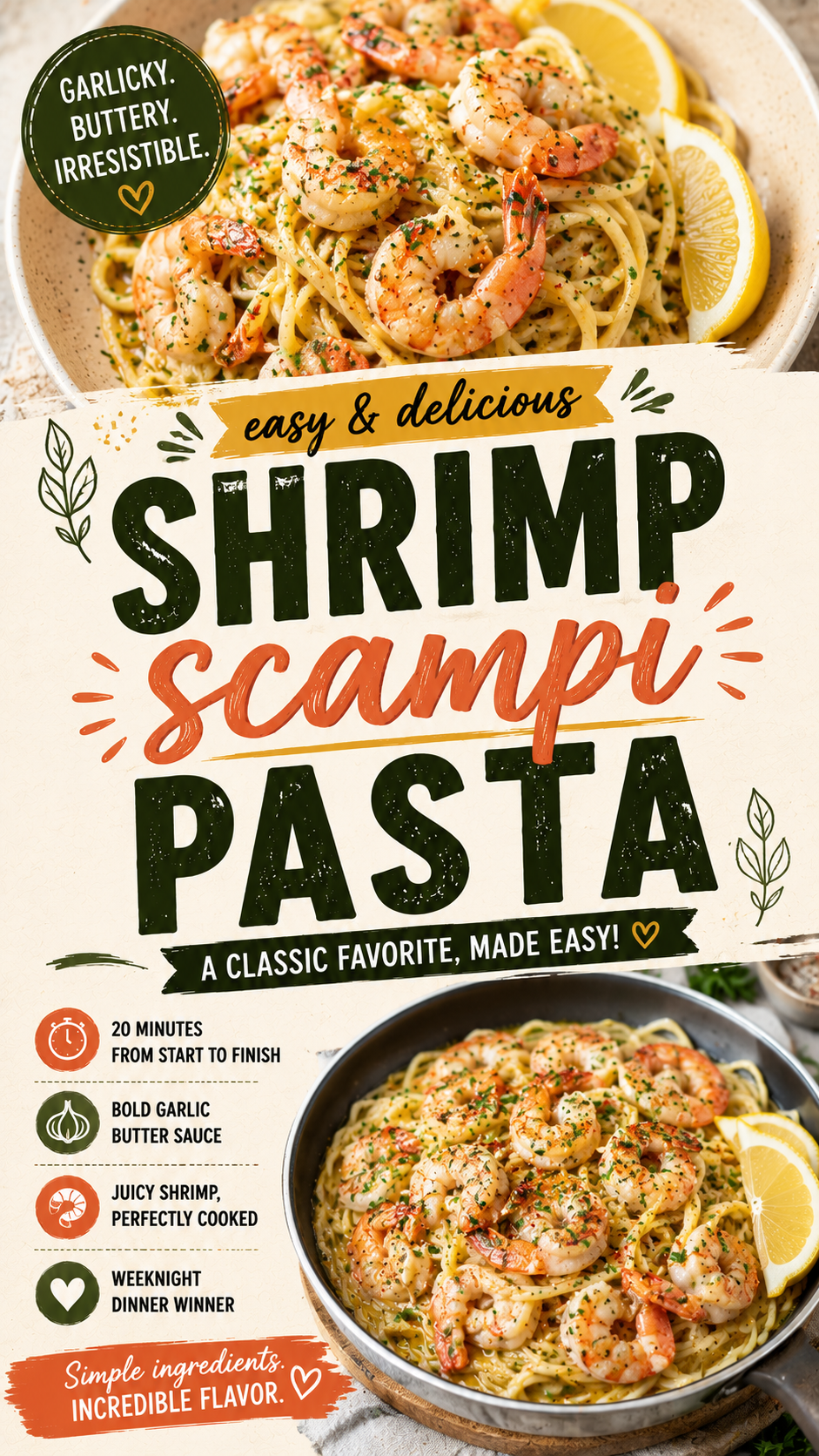
Twenty minutes. One pan. A pasta dish that genuinely tastes like a restaurant made it.
Shrimp scampi is one of those recipes that sounds fancier than it is. Garlicky, buttery, with a bright hit of lemon and white wine — it’s the kind of sauce that makes you want to drag every piece of bread you own through the pan when the pasta is gone.
And the thing nobody tells you: overcooked shrimp is the only real way to mess this up. Shrimp cook in under 3 minutes. Pull them out of the pan too late and they turn rubbery and tough. Get the timing right and they’re juicy, tender, and practically melt when you bite them.
That timing is what this recipe is built around. Everything else is just butter and garlic — and those two things rarely let you down.
What You’ll Need
For the Shrimp Scampi Pasta (serves 4):
Pasta:
- 12 oz linguine or spaghetti
- 1 tbsp salt (for pasta water)
Shrimp:
- 1½ lbs large shrimp (21–25 count), peeled and deveined, tails on or off
- ½ tsp salt
- ½ tsp black pepper
- ½ tsp smoked paprika
Scampi Sauce:
- 4 tbsp unsalted butter, divided
- 2 tbsp olive oil
- 8 cloves garlic, thinly sliced
- ½ tsp red chili flakes
- ½ cup dry white wine (Pinot Grigio or Sauvignon Blanc) — OR ½ cup chicken broth
- 3 tbsp fresh lemon juice (about 1½ lemons)
- 1 tsp lemon zest
- ¼ cup fresh parsley, chopped
- Salt and black pepper to taste
For Serving:
- Lemon wedges
- Extra parsley
- Freshly grated Parmesan (optional — traditional scampi doesn’t include it, but no one’s stopping you)
- Crusty bread
Tools You’ll Need
- A large pot (for boiling pasta)
- A large skillet or sauté pan (12-inch)
- Tongs
- A colander
- A microplane or fine grater (for lemon zest)
- A knife and cutting board
- Measuring cups and spoons
- A ladle (for reserving pasta water)
Pro Tips
Shrimp scampi is forgiving in most ways — but a few details genuinely change the outcome.
- Reserve pasta water before draining. This is the most underused trick in pasta cooking. The starchy water left in the pot after cooking pasta is liquid gold — add a splash to the sauce at the end and it binds everything together into a silky, restaurant-style coating on every strand. Set a measuring cup or mug next to the pot so you don’t forget to grab it before draining.
- Cook shrimp in a single layer and don’t touch them. Place the shrimp in the pan, leave them for 60–90 seconds until a pink curl starts forming up the sides, then flip once. That’s it. The moment they’re fully pink and slightly curled into a C shape, they’re done. An O shape means overcooked. Pull them at C.
- Slice the garlic, don’t mince it. Thinly sliced garlic gives you golden, slightly caramelized rounds that add texture and visual appeal to the finished dish. Minced garlic disappears into the sauce and can burn faster. For scampi, sliced is the move.
- Use real butter and don’t apologize for it. The richness of the sauce comes almost entirely from butter. This is a 20-minute restaurant-quality meal — this is not the night to swap in margarine or reduce the butter by half. Four tablespoons across the whole dish is not excessive.
- Finish the pasta in the sauce, not a colander. Don’t drain the pasta and then add sauce over the top. Transfer the pasta directly from the water into the pan using tongs — a little pasta water comes with it and that’s fine, it’s helping you. Toss everything together in the pan for 60 seconds so every strand absorbs the sauce rather than just getting coated on the outside.
How to Make It
Step 1: Cook the Pasta
Bring a large pot of heavily salted water to a boil. Cook linguine according to package directions until al dente.
Before draining, scoop out 1 cup of pasta water and set aside. Then drain.
Step 2: Season and Prep the Shrimp
Pat shrimp dry with paper towels. Season with salt, black pepper, and smoked paprika.
Drying the shrimp is important — wet shrimp steams instead of searing. You want a quick sear, not a steam.
Step 3: Sear the Shrimp
Heat 1 tbsp butter and 1 tbsp olive oil in a large skillet over medium-high heat.
Add the shrimp in a single layer. Cook 60–90 seconds per side without moving them. They should be pink on the outside and just barely opaque in the center when you flip.
Remove shrimp from the pan and set aside on a plate. They will finish cooking in the sauce at the end.
Don’t skip this step — pulling them early and finishing in the sauce is how you avoid rubbery shrimp.
Step 4: Make the Scampi Sauce
In the same pan over medium heat, add the remaining 1 tbsp olive oil and 1 tbsp butter.
Add the sliced garlic and chili flakes. Cook, stirring frequently, for about 1–2 minutes until the garlic is golden and fragrant. Watch it — garlic goes from golden to burnt very fast.
Pour in the white wine (or chicken broth). Let it bubble and reduce for 2 minutes, scraping up any browned bits from the bottom of the pan.
Add the lemon juice and lemon zest. Stir to combine.
Step 5: Bring It All Together
Add the cooked pasta directly to the pan using tongs. Toss to coat in the sauce.
Add the remaining 2 tbsp butter and a splash of reserved pasta water. Toss continuously for about 60 seconds until the butter melts and the sauce becomes silky and clings to the pasta.
Return the shrimp to the pan. Toss gently for 30 seconds just to warm them through.
Remove from heat. Add the fresh parsley and toss one more time.
Step 6: Serve
Plate immediately. Top with extra parsley, lemon wedges, and Parmesan if using.
This dish does not wait well. Serve it the moment it’s ready.
Substitutions and Variations
| Ingredient | Swap Ideas |
|---|---|
| Linguine | Spaghetti, angel hair, fettuccine, or bucatini |
| Large shrimp | Jumbo shrimp (reduce cook time slightly), scallops, or chunks of lobster tail |
| White wine | Dry chicken broth or vegetable broth + a splash of white wine vinegar |
| Unsalted butter | Salted butter (just reduce added salt) |
| Fresh parsley | Fresh basil, or a mix of parsley and chives |
| Parmesan | Pecorino Romano for a saltier, sharper flavor |
Variations to try:
- Creamy shrimp scampi: Add ¼ cup heavy cream to the sauce after the wine reduces — stir in before adding pasta for a rich, velvety version
- Spicy scampi: Double the chili flakes and add ½ tsp Calabrian chili paste
- Sun-dried tomato scampi: Add ¼ cup chopped sun-dried tomatoes with the garlic — adds sweetness and color
- Scampi without pasta: Serve over creamy polenta, cauliflower rice, or crusty sourdough for a different vibe entirely
Make Ahead Tips
Shrimp scampi is ideally made fresh and eaten immediately. That said:
- Scampi sauce base: Make the garlic-wine-lemon sauce up to 2 days ahead and refrigerate. Reheat gently and cook fresh shrimp to order.
- Shrimp prep: Peel, devein, and pat dry up to 24 hours ahead. Store uncovered on a rack in the fridge — the surface drying out actually helps them sear better.
- Pasta: Cook al dente, toss with a tiny amount of olive oil, and refrigerate. Reheat briefly in boiling water before adding to the sauce.
For a dinner party: prep everything ahead, then do the final 10-minute cook while guests watch from the kitchen. It’s impressive, it smells incredible, and it’s genuinely that fast.
Nutritional Breakdown
Per serving (with pasta, approximately):
| Nutrient | Approx. Per Serving |
|---|---|
| Calories | 520–580 kcal |
| Protein | 36–40g |
| Carbohydrates | 55–60g |
| Fat | 16–20g |
| Fiber | 2–3g |
| Sodium | 620–680mg |
Shrimp is one of the highest protein-per-calorie seafood options available. A 4 oz serving of shrimp has roughly 24g of protein and fewer than 100 calories before any cooking. The butter and pasta bring the calorie count up, but this is still a significantly lighter dish than a cream-based pasta.
Diet-friendly notes:
- Gluten-free: Use GF pasta (brown rice pasta works particularly well here)
- Dairy-free: Replace butter with a good quality olive oil or vegan butter — the sauce is thinner but still very good
- Lower carb: Serve over zucchini noodles or spaghetti squash
- Alcohol-free: Chicken broth plus a splash of white wine vinegar replicates the acidity of wine in the sauce
Meal Pairing Suggestions
Shrimp scampi is a complete meal on its own, but these sides round it out perfectly.
- Crusty garlic bread — mandatory for sauce-scooping purposes
- Simple arugula salad with lemon vinaigrette — the peppery bitterness of arugula cuts through the butter beautifully
- Roasted cherry tomatoes — burst them in the oven at 400°F for 15 minutes and serve alongside for a pop of color and acidity
- Caesar salad — a classic pairing that never fails
- A glass of Pinot Grigio — use what’s left from the recipe. It’s the right call.
Leftovers and Storage
Fridge: Store in an airtight container for up to 2 days. The pasta will absorb most of the sauce as it sits.
Reheating: Add a splash of water or chicken broth to the pan, then reheat over medium-low, tossing gently. The added liquid revives the sauce and prevents the pasta from sticking. Microwave works but the shrimp can turn rubbery — stovetop is better.
Freezing: Not recommended. Shrimp becomes rubbery after freezing and thawing, and the butter sauce doesn’t hold up well. Make this one fresh.
Leftover ideas:
- Toss cold into a pasta salad with cherry tomatoes, arugula, and a squeeze of lemon
- Serve over toast for a quick lunch the next day
- Chop shrimp and fold into a frittata with the leftover pasta
FAQ
What size shrimp should I use? Large shrimp (21–25 count per pound) is the sweet spot — substantial enough to be the star of the dish but not so large they need a long cook time. Jumbo shrimp work too; just add 30–45 seconds per side. Avoid small shrimp — they cook through so fast you can barely control the timing.
Do I need to use wine? No. Chicken broth is a totally solid substitute and gives you a slightly richer (less bright) flavor profile. If you want the acidity that wine provides, add a small splash of white wine vinegar to the broth. You’ll get very close to the same result.
Fresh or frozen shrimp? Most “fresh” shrimp at grocery stores was previously frozen and thawed — which is fine. What matters is that it hasn’t been thawed and re-frozen. Frozen shrimp you thaw yourself at home is often the freshest option. Thaw overnight in the fridge, or in a bowl of cold water for 15 minutes.
My sauce is too thin. How do I fix it? Two things: add more pasta water and toss aggressively. The starch in the pasta water thickens the sauce as you toss. If it’s still too thin, let it reduce for another 30–60 seconds over medium heat before adding the pasta. And make sure you’re using the full 2 tbsp of finishing butter — that’s what gives the sauce its body.
Traditional shrimp scampi doesn’t have pasta. What’s the difference? Classic Italian-American shrimp scampi is just garlic butter shrimp — no pasta at all. It’s served as an appetizer or with bread. The pasta version is an American adaptation that turned a side dish into a full meal. Both are delicious. The pasta version just happens to be dinner.
Can kids eat this? Yes — just skip the chili flakes and reduce the garlic to 4–5 cloves if your kids aren’t big garlic fans. The buttery lemon pasta with shrimp is genuinely kid-approved in most households.
Wrapping Up
Twenty minutes from start to finish. A pan of garlicky, buttery pasta with perfectly cooked shrimp that tastes like it took twice as long and cost twice as much.
That’s what shrimp scampi delivers every single time — and once you nail the shrimp timing and the pasta-water trick, you’ll make this on rotation without thinking twice.
Try the creamy version on a Friday night when you want something indulgent. Try it over zucchini noodles when you’re keeping it light. And always, always serve it with bread.
Drop a comment below and tell me how it went 👇 Did you use wine or broth? Did you go creamy? Any variations you tried that completely worked? I read every single one.