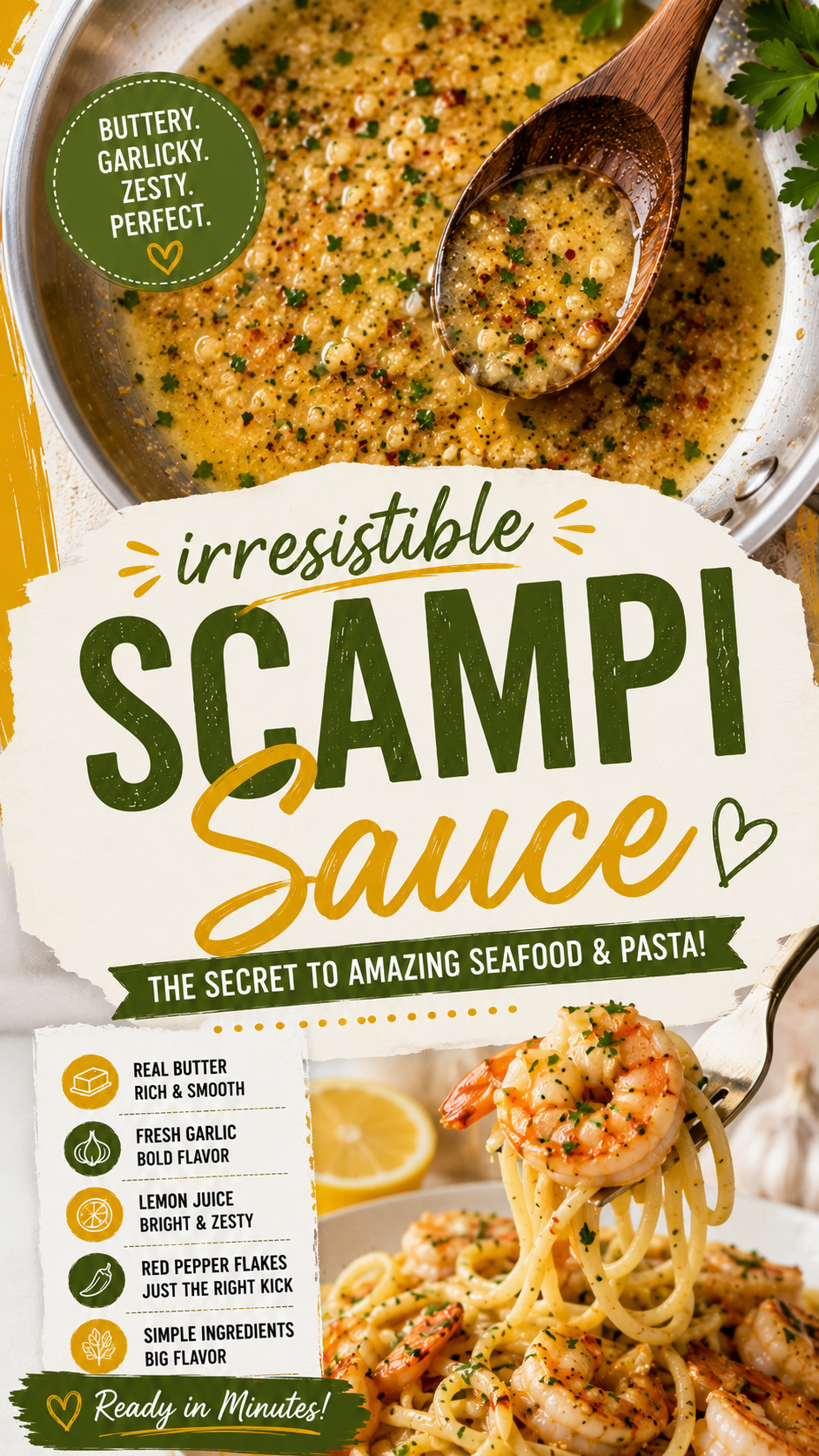
There’s a sauce that turns a plain bowl of pasta into something people ask about for weeks.
It’s buttery. Garlicky. Zesty. And it comes together in about 10 minutes flat.
Scampi sauce is one of those recipes that sounds restaurant-level but is genuinely one of the simplest things you can make at home. No cream. No complicated technique. Just real butter, fresh garlic, white wine, lemon, and a handful of pantry staples doing exactly what they’re supposed to do.
The result is a sauce so good you’ll be mopping the pan with bread long after the pasta is gone.
There’s a finishing technique in the Pro Tips section that completely transforms the texture of this sauce — it’s a small move that makes a noticeably big difference. Keep reading.
What You’ll Need
For the Scampi Sauce:
- 6 tablespoons unsalted butter, divided (4 tbsp + 2 tbsp cold)
- 2 tablespoons good quality olive oil
- 8 cloves fresh garlic, minced
- ½ cup dry white wine (Pinot Grigio or Sauvignon Blanc)
- ¼ cup fresh lemon juice (about 2 lemons)
- 1 teaspoon lemon zest
- ½ teaspoon red pepper flakes
- ¼ teaspoon black pepper
- Salt to taste
- ¼ cup fresh flat-leaf parsley, finely chopped
Optional Add-Ins:
- 1 lb large shrimp, peeled and deveined (16/20 count)
- Or scallops, lobster tails, or crab
For Serving:
- 12 oz linguine or spaghetti, cooked
- Or crusty sourdough bread, zucchini noodles, or rice
- Extra lemon wedges and parsley for finishing
Tools You’ll Need
- Large skillet or sauté pan (12-inch)
- Wooden spoon or silicone spatula
- Microplane or zester
- Citrus juicer
- Garlic press or sharp knife and cutting board
- Measuring cups and spoons
- Large pot (if making pasta)
- Ladle or spoon for pasta water
Pro Tips
1. Use cold butter at the very end — off the heat. This is called “mounting” the sauce. You swirl 2 tablespoons of cold butter into the warm sauce after removing it from the burner. The result is a velvety, glossy, restaurant-quality consistency. Add it while the pan is still on heat and the emulsification breaks — the sauce goes greasy and thin instead.
2. Don’t rush the garlic. Cook it low and slow — about 60 seconds over medium heat. You want fragrant and barely golden, not brown. Burned garlic turns bitter and it will take the whole sauce down with it. There’s no saving it once it’s burned.
3. Scrape the pan when you add the wine. Those browned bits stuck to the bottom of the skillet are packed with flavor. The wine lifts them and pulls everything into the sauce. Don’t skip this step and don’t use a non-stick pan — you want those bits.
4. Reserve your pasta water. Before draining your pasta, scoop out ½ cup of that starchy, salty water. If your sauce is too thick or too thin, a splash of pasta water adjusts it perfectly without diluting the flavor.
5. Season at the end, not the beginning. The wine and butter both carry salt. Taste the sauce right before serving and adjust then — seasoning too early can leave you with an oversalted sauce that’s hard to fix.
How to Make Irresistible Scampi Sauce
Step 1: Prep everything first. Mince the garlic, juice the lemons, zest one lemon, and chop the parsley. Have everything measured and ready. This sauce moves fast and you don’t want to be searching for the zester while the garlic burns.
Step 2: Heat the pan. Add 4 tablespoons of butter and the olive oil to a large skillet over medium heat. Let the butter melt completely until it starts to foam slightly.
Step 3: Cook the garlic. Add the minced garlic and red pepper flakes. Stir constantly and cook for exactly 60 seconds. The garlic should be soft, fragrant, and just barely turning golden. Pull it back if needed — burnt garlic is unrecoverable.
Step 4: Add the wine. Pour in the white wine and use your wooden spoon to scrape up any browned bits from the bottom of the pan. Let the wine simmer for 2-3 minutes until it reduces by about half.
Step 5: Add lemon. Stir in the lemon juice and zest. Let the sauce simmer for another minute to bring everything together.
Step 6: Add protein (if using). If adding shrimp — pat them dry, season with salt and pepper, and add them to the sauce now. Cook 2 minutes per side until pink and just cooked through. Remove immediately. They continue cooking from residual heat.
Step 7: Mount the sauce. Remove the pan from heat completely. Add the remaining 2 tablespoons of cold butter and swirl the pan gently — don’t stir aggressively. Watch it melt into the sauce and turn silky and glossy. This happens in about 30 seconds.
Step 8: Finish and serve. Stir in the fresh parsley. Taste and adjust salt and pepper. Toss with your cooked pasta (add a splash of pasta water to loosen if needed), or spoon directly over your protein of choice. Serve immediately.
Substitutions and Variations
No white wine? Low-sodium chicken broth is the best swap. The flavor is slightly milder but still very good. Add an extra squeeze of lemon to compensate for the missing acidity.
Dairy-free: Swap the butter for a high-quality vegan butter — Miyoko’s or Earth Balance both work. The sauce won’t be quite as silky but the flavor holds up well.
Want it creamy? Stir in 3-4 tablespoons of heavy cream just before the final butter addition. Scampi traditionalists will raise an eyebrow, but honestly it’s very good and the crowd will not complain.
More heat: Double the red pepper flakes or add a pinch of cayenne. A small spoonful of calabrian chili paste takes it somewhere really interesting.
Different proteins:
- Scallops: sear separately in butter, spoon sauce over the top
- Lobster tails: cook in the sauce for the last 4-5 minutes
- Chicken: thin-sliced and pan-seared, then finished in the sauce
- Vegetarian: use over roasted cauliflower or white beans — genuinely excellent
Different pasta shapes: Linguine is traditional but spaghetti, fettuccine, bucatini, or even rigatoni all work. Long pasta clings to the sauce better. Short pasta captures it in the tubes.
Make-Ahead Tips
Scampi sauce is best made fresh — butter-based sauces don’t reheat perfectly. But here’s what you can prep ahead:
- Mince the garlic up to 2 days ahead (store in an airtight container in the fridge)
- Juice and zest the lemons the night before
- Measure out the wine and have it ready at room temperature
- Cook and refrigerate pasta up to 24 hours ahead — toss with a tiny bit of olive oil to prevent sticking, then rewarm in boiling water for 30 seconds before saucing
The actual sauce itself takes 10 minutes, so there’s not much to gain by making it in advance.
Nutritional Breakdown (Per Serving, Sauce Only, Serves 4)
| Nutrient | Amount |
|---|---|
| Calories | ~290 kcal |
| Protein | 1g |
| Fat | 24g |
| Saturated Fat | 13g |
| Carbohydrates | 5g |
| Sodium | ~210mg |
| Cholesterol | 55mg |
Numbers increase significantly when shrimp or other proteins are added. Pasta adds approximately 200 kcal per serving.
Diet notes:
- Gluten-free when served over rice, zucchini noodles, or with gluten-free pasta
- Low-carb / keto-friendly without pasta
- Can be made dairy-free with vegan butter
Meal Pairing Suggestions
Scampi sauce is rich and buttery, so pair it with things that balance it:
- Caesar salad — the anchovy and parmesan play beautifully against the lemon and butter
- Crusty sourdough or garlic bread — for wiping the pan completely clean
- Roasted asparagus or broccolini — the slight bitterness cuts through the richness
- Crisp white wine — whatever you cook with, drink the rest of the bottle alongside it
- Simple arugula salad with lemon vinaigrette — bright and peppery, perfect contrast
Leftovers and Storage
In the fridge: Store in an airtight container for up to 2 days. The sauce will firm up and look separated when cold — that’s normal.
Reheating: Low and slow in a skillet over medium-low heat. Add a splash of chicken broth or water to bring it back together and stir gently. High heat will break the sauce and overcook any protein.
Freezing: Not recommended. Butter-based sauces separate badly when frozen and thawed, and shrimp texture suffers significantly after freezing.
Using leftovers:
- Toss with fresh pasta the next day
- Spoon over a piece of pan-seared white fish
- Use as a base for a quick grain bowl with rice and whatever vegetables you have
FAQ
Do I have to use wine? No — chicken broth works as a substitute. The depth of flavor is slightly different but still delicious. Add a little extra lemon juice to make up for the acidity.
Why is my sauce greasy or broken? Most likely the heat was too high when you added the final butter, or you stirred too aggressively instead of swirling. Always add the finishing butter off the heat, and be gentle.
Can I make this sauce without seafood? Absolutely. The sauce on its own over pasta with a generous handful of parmesan and extra parsley is a complete, incredible meal.
My sauce is too thin. How do I fix it? Let it simmer a bit longer before the finishing step. A small splash of pasta water (starchy) can also help it cling better. An extra half tablespoon of butter at the end thickens it slightly too.
What’s the best garlic to use? Fresh, always. Pre-minced jarred garlic has a more muted, slightly sour flavor that won’t give you the same result. This sauce has very few ingredients — each one matters.
Can I use salted butter? You can, but you lose control over the salt level. Unsalted butter lets you season intentionally at the end, which gives a much more balanced result.
How do I know when shrimp are done in the sauce? Pink color and a C-shaped curl. The moment they hit that C-shape, pull them out. An O-shape means overcooked. It happens in 2-3 minutes — watch them closely.
Wrapping Up
Scampi sauce is one of those kitchen staples that earns its place every single time you make it.
It works on pasta, it works on shrimp, it works on bread, it works on scallops. It takes 10 minutes, uses ingredients you probably already have, and produces something that genuinely tastes like it came from a good Italian restaurant.
Make it this week and drop a comment below — tell me what you served it with, what protein you used, and whether you managed to save any for leftovers. Questions welcome too.