There are weeknight dinners you make because you have to.
And then there’s this one.
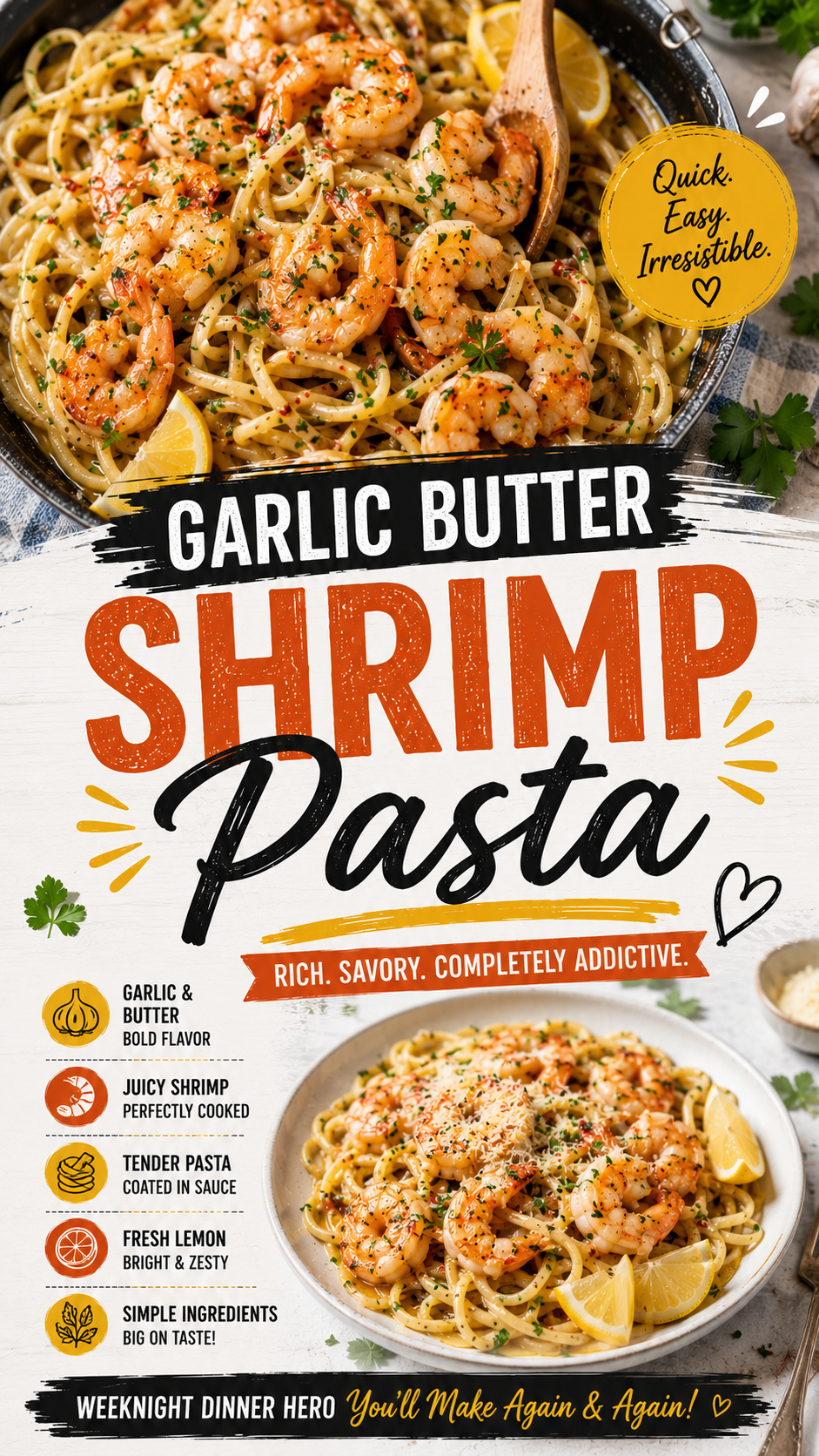
Garlic butter shrimp pasta is the kind of meal you actually look forward to — garlicky, rich, with a sauce that coats every strand of pasta and shrimp that’s juicy and perfectly cooked. It’s on the table in 25 minutes and it tastes like you put in a lot more effort than you did.
The difference between this and a mediocre version comes down to one thing: building the sauce properly. Most people melt butter, dump in garlic, and call it a day. This recipe builds the sauce in layers — searing the shrimp first to get flavor into the pan, then using those browned bits as the base for the garlic butter sauce. Every step adds something.
The result hits different. Keep reading.
What You’ll Need
For the Garlic Butter Shrimp Pasta (serves 4):
Pasta:
- 12 oz linguine or spaghetti
- 1 tbsp salt (for pasta water)
Shrimp:
- 1½ lbs large shrimp (21–25 count), peeled and deveined
- ½ tsp salt
- ½ tsp black pepper
- ½ tsp smoked paprika
- ¼ tsp garlic powder
Garlic Butter Sauce:
- 5 tbsp unsalted butter, divided
- 1 tbsp olive oil
- 8 cloves garlic, minced
- ½ tsp red chili flakes
- ¼ cup dry white wine OR chicken broth
- 3 tbsp fresh lemon juice (about 1½ lemons)
- 1 tsp lemon zest
- ¼ cup fresh parsley, chopped
- Salt and black pepper to taste
For Serving:
- ¼ cup freshly grated Parmesan
- Extra parsley
- Lemon wedges
- Crusty bread
Tools You’ll Need
- A large pot (for boiling pasta)
- A large skillet (12-inch, stainless steel or cast iron)
- Tongs
- A colander or slotted spoon
- A ladle or measuring cup (for reserving pasta water)
- A microplane or fine grater (for lemon zest and Parmesan)
- A knife and cutting board
- Measuring cups and spoons
Pro Tips
Garlic butter shrimp pasta is quick — but a few things separate a truly great version from a forgettable one.
- Sear the shrimp in batches and remove them early. Shrimp are done in 60–90 seconds per side. They will finish cooking when you add them back to the hot sauce at the end. Pulling them out while they’re still slightly underdone in the center is how you keep them juicy. Leave them in the pan too long and they turn rubbery — there’s no coming back from that.
- Don’t burn the garlic. Garlic goes from golden and fragrant to bitter and acrid in about 30 seconds. Once it hits the pan, keep stirring and keep your heat at medium, not medium-high. Golden garlic is what you want. Brown garlic is tolerable. Black garlic means starting over.
- Those browned bits in the pan are flavor. After searing the shrimp, the bottom of your skillet will have a layer of golden-brown residue. That’s called fond — it’s pure concentrated flavor. When you add wine or broth in the next step, scrape it up immediately. It dissolves into the sauce and makes it taste 10x better than a clean pan would.
- Reserve more pasta water than you think you need. Save at least 1 cup. You may only use half of it, but the starchy pasta water is what transforms the butter and garlic from separate ingredients into a cohesive, silky sauce that clings to the pasta. It’s the move professional pasta cooks use every single time.
- Grate Parmesan fresh, never pre-grated. The pre-shredded stuff in the green can contains anti-caking agents that stop it from melting properly — you get a grainy, clumpy texture instead of a smooth finish. Fresh Parmesan takes 30 seconds to grate and makes a visible difference.
How to Make It
Step 1: Cook the Pasta
Bring a large pot of heavily salted water to a boil. Cook linguine until al dente — usually 1–2 minutes less than the package suggests, since it’ll finish in the sauce.
Before draining, scoop out 1 full cup of pasta water. Set aside. Drain the pasta.
Step 2: Season and Dry the Shrimp
Pat shrimp completely dry with paper towels.
Season with salt, black pepper, smoked paprika, and garlic powder. Toss to coat evenly.
Step 3: Sear the Shrimp
Heat 1 tbsp butter and 1 tbsp olive oil in a large skillet over medium-high heat.
Add shrimp in a single layer — work in two batches if needed. Sear for 60–90 seconds per side until pink and just barely opaque. Don’t cook through completely.
Transfer shrimp to a plate and set aside. They’ll finish in the sauce.
Step 4: Build the Garlic Butter Sauce
Reduce heat to medium. Add 2 tbsp butter to the same pan.
Once melted, add the minced garlic and chili flakes. Stir continuously for 60–90 seconds until golden and fragrant.
Pour in the white wine or chicken broth. It’ll sizzle and steam — scrape up all the browned bits from the bottom of the pan. Let reduce for 2 minutes.
Add lemon juice and lemon zest. Stir to combine.
Step 5: Bring It All Together
Add the drained pasta directly to the pan using tongs. Toss to coat.
Add the remaining 2 tbsp butter and a splash of reserved pasta water (start with ¼ cup). Toss continuously for about 60–90 seconds until the butter melts and the sauce becomes glossy and clings to every strand.
Add more pasta water if the sauce looks tight or dry — a little at a time.
Return the shrimp to the pan. Toss gently for 30 seconds to warm through and coat in sauce.
Remove from heat. Add fresh parsley and toss one final time.
Step 6: Plate and Serve
Divide into bowls. Top with freshly grated Parmesan, a sprinkle of extra parsley, and a lemon wedge on the side.
Serve immediately with crusty bread. This does not hold well — eat it hot.
Substitutions and Variations
| Ingredient | Swap Ideas |
|---|---|
| Linguine | Spaghetti, fettuccine, bucatini, or angel hair |
| Large shrimp | Jumbo shrimp, scallops, or chunks of salmon |
| Unsalted butter | Salted butter (reduce added salt), vegan butter |
| White wine | Chicken broth, vegetable broth, or broth + splash of white wine vinegar |
| Fresh parsley | Fresh basil, chives, or a mix of both |
| Parmesan | Pecorino Romano, Grana Padano, or skip entirely |
Variations worth trying:
- Creamy garlic butter shrimp pasta: Add ½ cup heavy cream after the wine reduces. Stir in before adding pasta. Takes this from light and bright to rich and indulgent — a completely different dinner.
- Cajun garlic butter shrimp pasta: Add 1½ tsp Cajun seasoning to the shrimp and 1 tsp to the sauce. Bold, smoky, with a slow heat that builds as you eat.
- Cherry tomato garlic butter pasta: Add 1 cup halved cherry tomatoes with the garlic. Let them burst and release their juices into the sauce — adds acidity, sweetness, and color.
- One-pan version: Cook everything in the same pan from start to finish, including cooking the pasta directly in the sauce with enough broth and water. Less dishes, slightly saucier result.
Make Ahead Tips
This recipe is designed to be made fresh — but you can get a head start.
- Shrimp prep: Peel, devein, pat dry, and season. Refrigerate uncovered on a plate for up to 8 hours. The surface dries out even more in the fridge, which gives you an even better sear.
- Garlic butter sauce base: Make the garlic-wine-lemon sauce up to 2 days ahead. Reheat gently and add pasta water to loosen before adding pasta and shrimp.
- Pasta: Cook al dente, toss with a drizzle of olive oil to prevent sticking, refrigerate. Reheat briefly in boiling water before adding to the sauce.
For entertaining: prep everything ahead and do the final cook in under 10 minutes while guests are watching. It looks impressive. It smells incredible. It takes almost no effort once the prep is done.
Nutritional Breakdown
Per serving (with pasta and Parmesan, approximately):
| Nutrient | Approx. Per Serving |
|---|---|
| Calories | 540–600 kcal |
| Protein | 38–42g |
| Carbohydrates | 55–60g |
| Fat | 18–22g |
| Fiber | 2–3g |
| Sodium | 640–700mg |
Shrimp is one of the highest protein-to-calorie seafood options you’ll find. A 4 oz serving packs roughly 24g of protein for under 100 calories before cooking — the butter and pasta are doing most of the caloric heavy lifting here.
Something worth knowing: garlic has been studied extensively for its cardiovascular benefits. Eight cloves sounds like a lot. It’s genuinely the right amount for the dish — and as a bonus, you’re getting a meaningful dose of allicin, the compound in garlic linked to lower blood pressure and improved cholesterol levels. This is comfort food that’s also doing something useful.
Diet-friendly notes:
- Gluten-free: Use brown rice linguine or GF spaghetti
- Dairy-free: Swap butter for good quality olive oil; skip Parmesan or use a dairy-free version
- Lower carb: Serve over zucchini noodles or spaghetti squash
- Alcohol-free: Chicken broth plus a tiny splash of white wine vinegar works perfectly
Meal Pairing Suggestions
This pasta can absolutely stand alone, but here’s what makes it a proper spread:
- Garlic bread or focaccia — for sauce-scooping. Non-negotiable.
- Arugula salad with shaved Parmesan and a lemon vinaigrette — peppery bitterness cuts the butter beautifully
- Roasted asparagus — toss with olive oil and salt, roast at 425°F for 12 minutes
- Caprese salad — fresh tomatoes, mozzarella, and basil keep things light and fresh alongside the richness of the pasta
- A glass of cold Pinot Grigio or Sauvignon Blanc — use what’s left from cooking, obviously
Leftovers and Storage
Fridge: Store in an airtight container for up to 2 days. The pasta absorbs most of the sauce overnight — plan on adding liquid when reheating.
Reheating: Add 2–3 tbsp of water or chicken broth to a pan over medium-low heat. Add the leftover pasta and toss gently until warmed through and the sauce re-emulsifies. Microwave works in a pinch — cover with a damp paper towel and use 60% power.
Freezing: Skip it. Shrimp doesn’t survive freezing and thawing without turning rubbery, and the butter sauce separates. Make this one fresh.
Leftover ideas:
- Toss cold into a pasta salad with cherry tomatoes and a lemon-herb dressing
- Chop the shrimp and fold into a quick frittata with the remaining pasta
- Serve cold in a wrap with arugula and a squeeze of lemon for lunch the next day
FAQ
What’s the difference between garlic butter shrimp pasta and shrimp scampi? Mostly the name and the technique. Shrimp scampi is the classic Italian-American version — traditionally finished with white wine and served without Parmesan. Garlic butter shrimp pasta is a looser term for essentially the same concept, often richer and with more butter. In practice the difference is minor. Both are delicious.
Can I use frozen shrimp? Yes. Thaw overnight in the fridge or in a bowl of cold water for 15–20 minutes. Pat completely dry before seasoning — frozen shrimp releases extra water as it thaws and that moisture is the enemy of a good sear.
How do I know when the shrimp are done? Watch the shape. Raw shrimp is straight. Perfectly cooked shrimp curls into a C shape. Overcooked shrimp curls tightly into an O. Pull at C every time. If you’re unsure, pull early — they’ll finish in the hot sauce.
My sauce is greasy and separated. What happened? Usually one of two things: the heat was too high when you added the butter at the end, or you didn’t add enough pasta water. Butter emulsifies into a sauce when combined with starchy water over moderate heat while tossing. If it breaks, add a splash more pasta water and toss vigorously — it usually comes back together.
Can I make this without wine? Absolutely. Chicken broth is the easiest swap and keeps the savory depth of the sauce. Add a small splash of white wine vinegar or lemon juice for the brightness that wine would have brought. You won’t miss it.
How much garlic is too much? For this recipe? Eight cloves is the right amount. It sounds aggressive. In a butter sauce over pasta it’s perfectly balanced — the cooking mellows the sharpness significantly. If you’re genuinely nervous about it, start with 5 or 6 cloves the first time and adjust from there.
Wrapping Up
Twenty-five minutes. One pan. A pasta bowl that looks and tastes like you actually tried.
Garlic butter shrimp pasta is the weeknight dinner that earns its spot on permanent rotation — fast enough for a Tuesday, good enough for guests on a Saturday.
Learn the shrimp timing. Respect the garlic. Save the pasta water. Those three things alone make the difference between fine and genuinely great.
Try the Cajun variation when you want something bold. Make the creamy version on a Friday when you’re feeling indulgent. And always, always serve it with bread.
Drop a comment below and tell me how it went 👇 Did you use wine or broth? Did you go creamy or keep it classic? Any tweaks that worked out really well? I want to know all of it.