I’ve made a lot of apple cakes over the years. Chunky American ones, French tarts, Swedish apple crumbles.
None of them taste like this.
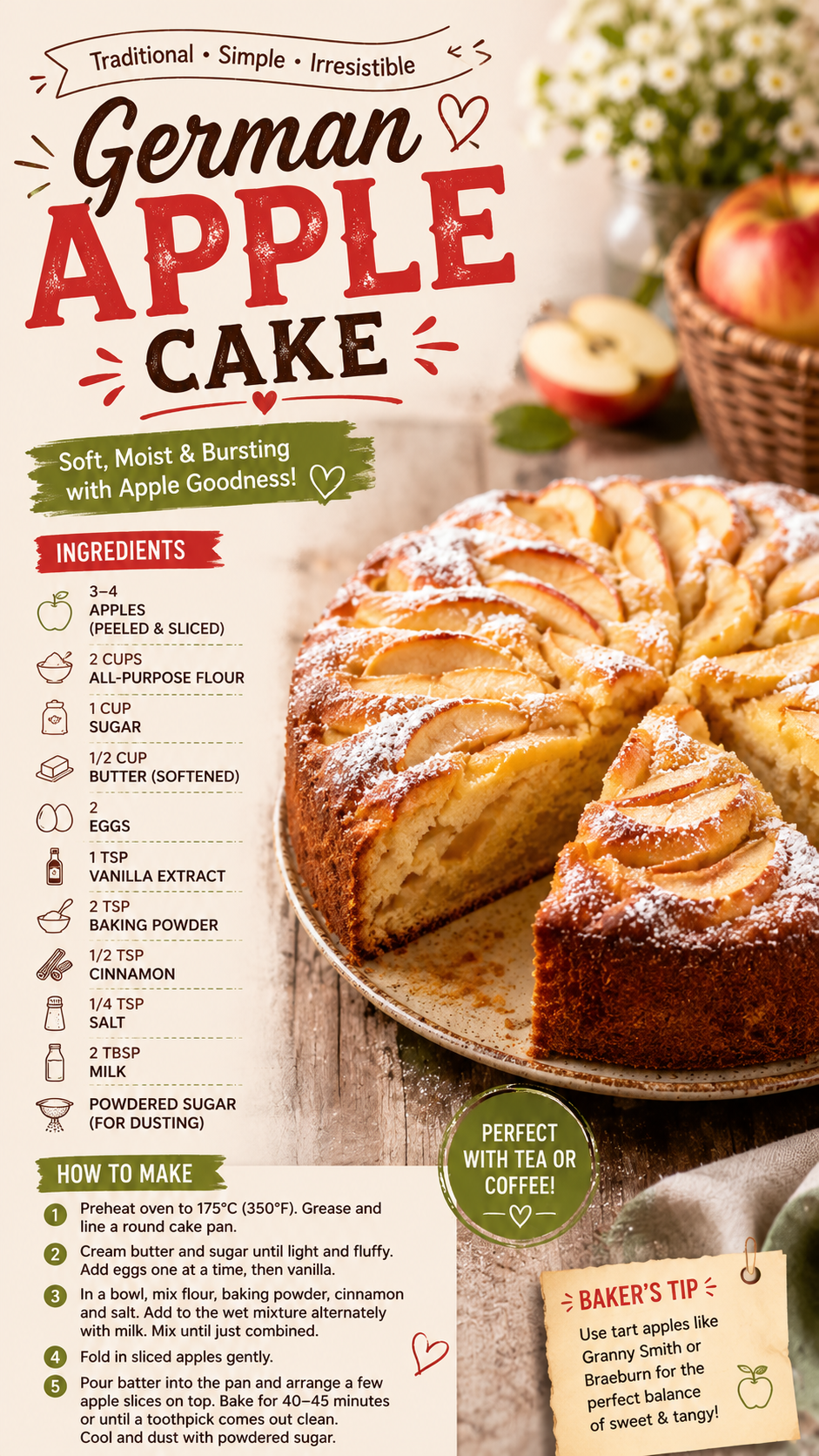
German apple cake, known as Apfelkuchen, has a texture that’s completely different from anything you’d find at your average bakery. It’s dense but tender, buttery but not heavy, and the apples don’t disappear into the batter. They stay in thick, visible slices that fan out across the top like a pattern someone spent actual effort on.
It looks like a bakery cake. It tastes like one too.
And here’s the part that gets people: it’s made in one bowl.
No stand mixer, no multiple pans, no complicated techniques. Just a bowl, a springform pan, and about 15 minutes of actual hands-on time.
Let’s get into it.
What Makes German Apple Cake Different
Most apple cakes fold the apples into the batter.
Apfelkuchen doesn’t do that.
The apples sit on top of a soft, buttery base batter and bake down into the cake as it rises, which means every single slice gets a guaranteed layer of tender apple on top.
Some versions also score the apple slices partway through before placing them, which helps them fan out and cook more evenly.
The cake is also traditionally made with a springform pan, which releases the sides cleanly and gives you that tall, neat edge you see in German bakery windows.
No messy removal, no crumbled edges. Just a clean, beautiful cake every time.
What You’ll Need
- 3 large apples (Granny Smith or Breaburn work best)
- 1 ¾ cups all purpose flour
- 1 teaspoon baking powder
- ¼ teaspoon salt
- ½ cup unsalted butter, softened
- ¾ cup granulated sugar, plus 1 tablespoon for topping
- 3 large eggs, room temperature
- 1 teaspoon vanilla extract
- ¼ cup milk
- 1 teaspoon cinnamon
- 2 tablespoons apricot jam (for glazing, optional but traditional)
- Powdered sugar for dusting
A short, simple list for a cake that looks like it took all day.
Tools You’ll Need
- 9 inch springform pan
- Large mixing bowl
- Hand mixer or whisk
- Rubber spatula
- Paring knife and cutting board
- Pastry brush (for the glaze)
- Wire cooling rack
- Sifter or fine mesh strainer (for powdered sugar)
How to Make German Apple Cake
- Preheat your oven to 350°F and grease your springform pan with butter, then dust lightly with flour.
- Peel, core, and halve your apples. Make thin parallel cuts across each half almost all the way through, stopping about ½ inch from the bottom. This is the fan cut that makes the cake look stunning without any extra effort.
- In a large mixing bowl, beat the softened butter and sugar together until pale and fluffy, about 3 minutes.
- Add the eggs one at a time, beating well after each one.
- Mix in the vanilla extract.
- In a separate small bowl, whisk together the flour, baking powder, and salt.
- Add the flour mixture to the butter mixture in two batches, alternating with the milk, and stir until just combined.
- Pour the batter into your prepared springform pan and spread it evenly.
- Press the apple halves gently into the batter, cut side up, fanning them slightly as you go.
- Mix the 1 tablespoon of sugar with the cinnamon and sprinkle it evenly over the apples and batter.
- Bake for 45 to 55 minutes, until the edges are golden and a toothpick inserted between the apples comes out clean.
- Let the cake cool in the pan for 15 minutes before releasing the springform sides.
- While still slightly warm, heat the apricot jam with a teaspoon of water in a small saucepan and brush it over the apple tops for a glossy finish.
- Dust with powdered sugar just before serving.
It takes patience in the oven but almost no effort at the counter.
Pro Tips
Things that actually move the needle on this cake:
- Use firm, slightly tart apples. Granny Smith holds its shape through the long bake time without turning mushy. Sweeter apples like Fuji collapse too much.
- Don’t rush the creaming step. Getting the butter and sugar fluffy before adding eggs makes the difference between a dense brick and a light, tender crumb.
- Score the apples deeply but not all the way through. If you cut through, the slices fall apart when you press them into the batter.
- Check the cake at the 45 minute mark. Every oven runs slightly differently, and overbaking by even 10 minutes dries out the batter beneath the apples.
- The apricot glaze is optional but worth it. It adds a subtle sweetness and gives the apples that glossy, professional finish you see on bakery versions.
Substitutions and Variations
- No springform pan? A regular 9-inch round cake pan works, just line the bottom with parchment and run a knife around the edges before flipping.
- Dairy free? Swap butter for a plant based alternative and use oat milk instead of regular milk.
- Want more spice? Add a pinch of cardamom and nutmeg to the cinnamon sugar topping for a warmer, more aromatic flavor.
- No apricot jam? Honey or apple jelly both work as a glaze substitute.
- Want a crumble top? Mix 3 tablespoons of cold butter with 4 tablespoons each of flour and sugar, rub it into crumbs, and scatter it between the apple halves before baking for a Streusel Apfelkuchen variation.
- Gluten free? A 1:1 gluten free flour blend works in this recipe with no other adjustments needed.
Make Ahead Tips
This cake is genuinely better the next day.
The batter has time to set, the apple flavor deepens, and the texture firms up into something that slices cleanly and cleanly every time.
Bake it the evening before, cover it loosely with a clean kitchen towel, and serve it the next morning or afternoon.
It also travels well to potlucks and gatherings without falling apart, which is more than can be said for most cakes.
Nutritional Breakdown (Per Slice, 10 Slices)
| Nutrient | Amount |
|---|---|
| Calories | ~265 |
| Protein | 4g |
| Carbs | 38g |
| Fat | 11g |
| Fiber | 2g |
| Sugar | 20g |
Apples bring pectin, a natural fiber that slows sugar absorption slightly. Not exactly a health food, but not a nutritional disaster either.
Cooking Time Efficiency Tips
- Prep your apples while the oven preheats to save a solid 10 minutes of standing around waiting.
- Make the batter first, then score the apples. This keeps the apples from browning while you mix.
- Use room temperature eggs and butter. Cold ingredients take significantly longer to cream and can lead to a lumpy batter.
Serving Ideas
- Serve slightly warm with a generous spoonful of lightly whipped cream or crème fraîche.
- Pair with a strong black coffee or an Americano, the traditional German way.
- Serve cold with a scoop of vanilla ice cream for dessert.
- Slice thin and serve alongside afternoon tea for a lighter treat.
Leftovers and Storage
Store covered at room temperature for up to 2 days.
In the fridge, it keeps well for up to 5 days, though the powdered sugar topping will absorb into the cake overnight. Just re-dust before serving.
This cake also freezes beautifully. Wrap individual slices tightly in plastic wrap and freeze for up to 3 months. Thaw overnight at room temperature.
FAQ
What are the best apples for Apfelkuchen?
Granny Smith is the classic choice for its tartness and firm texture. Braeburn and Boskoop (a traditional German variety) are also excellent. Avoid overly soft apples like Red Delicious that turn to mush under heat.
Do I have to use a springform pan?
Not strictly, but it makes releasing the cake significantly easier. A regular cake pan lined with parchment works as a substitute.
Why did my cake sink in the middle?
This usually happens from underbaking, or from opening the oven door too early in the bake. Leave it alone until the 45 minute mark before checking.
Can I use store bought applesauce instead of fresh apples?
Not for this recipe. The visual appeal and texture of Apfelkuchen comes from whole apple slices baked into the top. Applesauce would give you a completely different cake.
Is Apfelkuchen served warm or cold in Germany?
Traditionally at room temperature, often with a side of whipped cream called Schlagsahne. Warm is also common in cafes, served fresh from the oven in the afternoon.
Can I add raisins or nuts to the batter?
Yes. A handful of raisins soaked in rum first, or some roughly chopped walnuts folded into the batter, are both common regional additions across Germany.
Wrapping Up
This is the cake that makes people stop mid-bite and ask what it is.
It doesn’t look complicated, but there’s something about the combination of buttery batter, tart apple, and that cinnamon sugar crust on top that just works on a different level than anything you’ll find in a box mix aisle.
Make it on a Sunday, slice it the next morning with coffee, and you’ll understand why German bakeries have been serving this cake for over a century.
Drop a comment below and let me know how yours turned out, and if you tried the streusel variation, I’d especially love to hear about that one.