Craving a warm, comforting bowl of soup that tastes like home? This homemade soup recipe brings together tender shredded chicken, soft potatoes, fresh carrots, and celery in a flavorful broth that’s easy to prepare.
It’s the kind of meal you’ll want on a chilly evening, especially when you need something filling without spending hours in the kitchen.
What makes this homemade soup recipe so good is how simple everything is. You don’t need fancy ingredients or complicated cooking skills. Just a few everyday vegetables, cooked chicken, and basic seasonings.
Plus, you can add noodles or rice to make it even more satisfying. Serve it with crusty bread, and you’ve got a cozy homemade meal the whole family can enjoy.
Why You’ll Love This Homemade Soup Recipe
Simple everyday ingredients: You don’t need anything fancy to make this soup. Chicken, fresh vegetables, broth, and a few seasonings come together to create a comforting homemade meal.
Warm and comforting: There’s nothing quite like a bowl of hot chicken soup on a chilly day. The tender vegetables and flavorful broth make every spoonful satisfying.
Easy to customize: Love a thicker soup? Add more potatoes. Want something heartier? Stir in cooked noodles or rice. You can easily adjust this recipe to suit your family’s preferences.
Great for leftovers: This homemade soup tastes delicious the next day, too. Store it in the refrigerator and reheat a portion whenever you need a quick lunch or dinner.
Perfect for family meals: It’s a practical way to bring chicken and vegetables together in one bowl. Serve it with warm bread for a simple, filling dinner.
What You’ll Need
You don’t need a long shopping list to make this homemade soup recipe. Most of these ingredients are simple kitchen staples, and each one helps build a comforting bowl of soup.
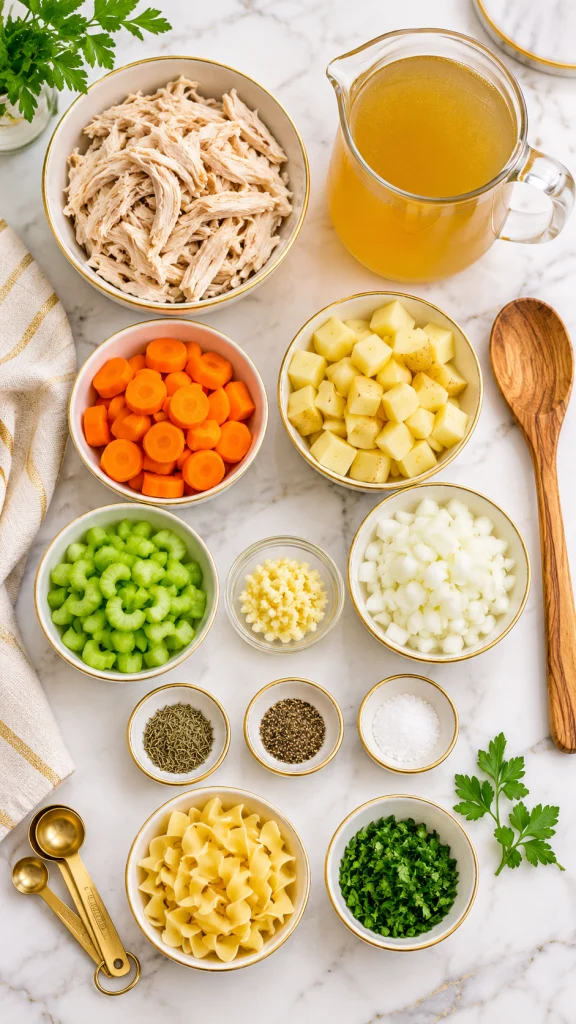
Cooked Chicken: Shredded chicken makes the soup filling and adds a tender, satisfying texture. You can use leftover roasted chicken or freshly cooked chicken breast.
Carrots: Fresh carrots bring a touch of natural sweetness and a beautiful pop of color to the broth. Slice them evenly so they cook at the same rate.
Potatoes: Cubed potatoes make the soup heartier without needing cream or flour. They become soft and tender as they simmer.
Celery: Chopped celery adds a mild, savory flavor that works beautifully with chicken and vegetables.
Onion: A small chopped onion creates a flavorful starting point for the soup.
Garlic: Fresh minced garlic adds a little extra depth. Cook it gently with the onion to bring out its flavor.
Chicken Broth: This is the main liquid in your soup, so choose one that tastes good on its own. A low-sodium broth also makes it easier to control the salt.
Dried Thyme: This simple herb gives the soup a warm, earthy flavor that pairs nicely with chicken.
Black Pepper: Adds gentle warmth without making the soup spicy.
Salt: Season to taste, especially if your chicken broth already contains salt.
Noodles or Rice (Optional): Add either one if you want a more filling meal. Keep in mind that both absorb liquid as they cook.
Fresh Parsley (Optional): Sprinkle chopped parsley over the finished soup for a fresh flavor and a little extra color.
For the exact ingredient amounts, check the printable recipe card below.
Tools You’ll Need
You don’t need any special kitchen equipment to make this homemade soup recipe. A few basic tools will help you prepare the vegetables, cook the soup, and serve it with ease.
- Large Soup Pot or Dutch Oven: A heavy-bottomed pot gives the chicken, vegetables, and broth enough room to simmer without spilling.
- Sharp Kitchen Knife: Use it to chop the onion, carrots, celery, and potatoes into evenly sized pieces.
- Cutting Board: A sturdy cutting board makes preparing the vegetables easier and safer.
- Wooden Spoon: Perfect for stirring the vegetables while they cook and keeping everything moving.
- Measuring Cups and Spoons: Helpful for measuring the broth, herbs, and seasonings accurately.
- Ladle: Makes serving the hot soup into bowls simple and mess-free.
- Two Forks: Useful for shredding cooked chicken into bite-sized pieces before adding it to the soup.
Quick Tip: Prepare and chop all your vegetables before heating the pot. This small step makes the cooking process much easier, especially if you’re making homemade soup for the first time.
Pro Tips for the Best Homemade Soup Recipe
A few small cooking tricks can make your homemade soup recipe taste even better. These simple tips will help you get tender vegetables, flavorful broth, and perfectly cooked chicken every time.
1. Cook the Onions and Garlic First
Start by gently cooking the chopped onions until they soften. Then add the garlic and stir briefly until fragrant. This creates a flavorful base for the soup without making the garlic taste bitter.
2. Cut Vegetables into Similar Sizes
Try to chop your carrots, potatoes, and celery into evenly sized pieces. This helps everything cook at a similar rate, so you won’t end up with hard potatoes and overly soft carrots.
3. Keep the Soup at a Gentle Simmer
Once the broth starts bubbling, reduce the heat. A gentle simmer allows the vegetables to become tender without breaking apart. It also helps the soup develop a well-balanced flavor.
4. Add Cooked Chicken Near the End
Since the chicken is already cooked, it only needs enough time to heat through. Adding it toward the end helps keep it tender instead of dry or chewy.
5. Taste Before Adding More Salt
Chicken broth can already contain plenty of salt. Taste your soup near the end of cooking, then adjust the salt, black pepper, and thyme as needed.
Extra Tip: If your soup becomes too thick, stir in a little extra warm broth. This is especially helpful if you’ve added noodles or rice, which absorb liquid as they sit.
How to Make Homemade Soup Recipe Step by Step
Making this homemade soup recipe is simple once you’ve prepared the ingredients. Follow these eight easy steps to make a warm, flavorful chicken and vegetable soup.
Step 1: Soften the Onion and Garlic
Place a large soup pot over medium heat and add a little cooking oil. Add the chopped onion and cook for 3 to 4 minutes, stirring occasionally, until softened.
Stir in the minced garlic and cook for another 30 seconds, just until fragrant. Be careful not to let it burn.
Step 2: Add the Vegetables
Add the sliced carrots, cubed potatoes, and chopped celery to the pot.
Stir gently and cook for about 2 to 3 minutes to combine the vegetables with the onion and garlic.
Step 3: Pour in the Broth
Pour the chicken broth into the pot and stir everything together.
Bring the mixture to a gentle boil, then reduce the heat to maintain a steady simmer.
Step 4: Simmer Until Tender
Cover the pot partially and let the vegetables simmer for approximately 15 to 20 minutes.
Check the potatoes and carrots with a fork. They should be tender but not falling apart.
Step 5: Add the Cooked Chicken
Stir the shredded cooked chicken into the soup.
Let it simmer gently for another 3 to 5 minutes, until the chicken is heated through.
Avoid boiling it too long, as cooked chicken can become dry.
Step 6: Add Noodles or Rice (Optional)
For a heartier meal, add noodles and cook according to their package instructions.
If using rice, stir in already cooked rice and let it warm through. Add extra broth if the soup becomes too thick.

Photo credit: @miarecipes6| Source: Instagram
Step 7: Season to Taste
Add dried thyme, black pepper, and salt as needed.
Stir everything together and taste the broth. Adjust the seasonings until the soup has a balanced flavor.
Step 8: Garnish and Serve
Turn off the heat once the vegetables are tender and the chicken is hot.
Ladle the soup into bowls and garnish with freshly chopped parsley if desired.
Serve warm with crusty bread, crackers, or a simple green salad.
Prefer to watch? This helpful video from The Recipe Rebel shows how to make chicken vegetable soup step by step. Their version includes tomatoes and spinach and cooks the chicken in the broth, while my homemade soup recipe uses pre-cooked shredded chicken, potatoes, carrots, and celery for a simpler variation.
Storage and Reheating
Made a big pot of homemade soup and have some left over? Good news! This chicken and vegetable soup stores well, making it a handy option for quick lunches and easy dinners throughout the week.
How to Store Homemade Soup in the Refrigerator
Allow the soup to cool slightly, then transfer it into shallow, airtight containers. Refrigerate within two hours of cooking.
Store the soup in the refrigerator at 40°F (4°C) or below for up to 3 to 4 days.
If you’ve added noodles or rice, consider storing them separately from the broth. This helps prevent them from becoming too soft.
Can You Freeze Homemade Soup?
Yes! This homemade soup recipe can be frozen for future meals.
Let the soup cool safely, then divide it into freezer-safe containers or bags. Leave a little room for expansion and label each portion with the date.
For the best quality, enjoy frozen soup within 2 to 3 months. Properly frozen soup can remain safe longer, although its texture and flavor may change.
Freezer Tip: Potatoes can become slightly grainy after freezing. If you plan to freeze a large batch, consider adding freshly cooked potatoes when reheating.
How to Reheat Homemade Soup
Transfer the refrigerated soup to a saucepan and warm it over medium heat, stirring occasionally.
Reheat until the soup reaches 165°F (74°C) throughout. If it becomes too thick, add a splash of chicken broth or water.
You can also reheat individual portions in the microwave. Use a microwave-safe bowl, cover loosely, and stir halfway through for even heating.
How to Thaw Frozen Soup
For the safest results, thaw frozen soup overnight in the refrigerator.
If you’re short on time, you can also reheat soup directly from frozen in a saucepan over low heat, stirring as it begins to melt, then heat it thoroughly.
Avoid leaving frozen soup on the kitchen counter to thaw.
Quick Tip: Freeze soup in individual portions so you only need to reheat what you’re planning to eat.
Homemade Soup Recipe Variations
One of my favorite things about this homemade soup recipe is how easy it is to change things up. You can use different vegetables, try new seasonings, or make it a little heartier depending on what you have in your kitchen.
Here are a few simple variations worth trying.
1. Creamy Chicken Vegetable Soup
Love a richer, creamier soup? Stir in a splash of heavy cream near the end of cooking.
Keep the heat low after adding the cream and avoid boiling the soup vigorously. This helps maintain a smooth texture.
For a lighter creamy option, blend a small portion of the cooked potatoes with some broth, then stir it back into the pot.
2. Chicken Noodle Soup
Turn this recipe into a comforting chicken noodle soup by adding egg noodles or your favorite small pasta.
Cook the noodles according to their package directions until tender.
If you’re preparing soup for leftovers, cook the noodles separately and add them to individual bowls before serving. This keeps them from soaking up too much broth.
3. Chicken and Rice Soup
For a more filling meal, add cooked white rice or brown rice to the soup.
Stir it in during the final few minutes of cooking, allowing enough time for the rice to heat through.
You may need a little extra chicken broth because rice absorbs liquid as it sits.
4. Extra Vegetable Soup
Want to add more vegetables? Try green beans, peas, zucchini, spinach, or corn.
Add firm vegetables early enough to become tender, while delicate greens like spinach can go in during the final few minutes.
This is also a handy way to use small amounts of vegetables left in the refrigerator.
5. Spicy Chicken Soup
If you enjoy a little heat, add a pinch of red pepper flakes or a small amount of cayenne pepper.
Start with a little, taste the broth, and add more only if needed.
For a fresh finish, squeeze a little lemon juice into each bowl before serving.
6. Herb-Flavored Homemade Soup
Try adding fresh rosemary, parsley, or a bay leaf while the soup simmers.
Fresh herbs can give the broth a different flavor without making the recipe complicated.
Remember to remove any bay leaves and woody herb stems before serving.
Quick Tip: When trying a new variation, make one or two changes at a time. This makes it easier to balance the flavors and keep the soup tasting delicious.
Ingredient Substitutions for Homemade Soup
Missing an ingredient? You can still make a delicious homemade soup recipe with a few simple swaps. Most of these substitutions work well without changing the basic cooking method.
Chicken Substitutes
If you don’t have cooked chicken breast, use shredded rotisserie chicken or leftover roasted chicken.
Boneless chicken thighs also work nicely. Just make sure they’re fully cooked before shredding and adding them to the soup.
For a meat-free option, replace the chicken with cooked white beans or chickpeas and use vegetable broth instead.
Vegetable Substitutes
Don’t have potatoes? Try sweet potatoes, butternut squash, or cauliflower.
If you’re out of celery, use a little extra carrot or chopped zucchini. The flavor will be slightly different, but the soup will still taste good.
Frozen mixed vegetables are another handy option when fresh vegetables aren’t available.
Chicken Broth Substitutes
Vegetable broth is a simple alternative to chicken broth. It gives the soup a lighter flavor while keeping the vegetables and seasonings at the center of the recipe.
You can also use homemade chicken stock if you have some available.
If you’re using bouillon, prepare it according to the package directions and taste the soup before adding extra salt.
Herb and Seasoning Substitutes
If you don’t have dried thyme, try a small amount of dried oregano, rosemary, or Italian seasoning.
Start with a little because some dried herbs have a stronger flavor than thyme.
Fresh parsley, dill, or a squeeze of lemon juice can also brighten the finished soup.
Noodle and Rice Substitutes
Small pasta shapes, egg noodles, or cooked rice all work well if you want a more filling soup.
For a gluten-free option, choose certified gluten-free noodles or plain rice, and check that your broth and seasonings are gluten-free too.
You can also leave out noodles and rice completely and enjoy the soup with chicken and vegetables.
Quick Tip: Whenever you swap ingredients, taste the broth before serving. Even small changes can affect the salt level and overall flavor.
Common Mistakes to Avoid When Making Homemade Soup
Even a simple homemade soup recipe can turn out differently than expected if a few small details are overlooked. The good news? Most soup-making mistakes are easy to prevent or fix.
Here are six common mistakes to watch out for.
1. Boiling the Soup Too Quickly
A rolling boil can make tender vegetables break apart and cause unnecessary evaporation.
Instead, bring the broth to a boil briefly, then reduce the heat to a gentle simmer.
How to Fix It: If the soup starts bubbling too vigorously, lower the heat and stir gently. Add a little warm broth if too much liquid has evaporated.
2. Cutting Vegetables into Uneven Pieces
Large potato chunks take longer to cook than smaller carrot or celery pieces. As a result, some vegetables may be soft while others are still firm.
Cut the vegetables into similar-sized, bite-sized pieces before adding them to the pot.
How to Fix It: If some vegetables remain firm, continue simmering gently until they become tender. Remove any already-soft pieces temporarily if needed.
3. Adding Cooked Chicken Too Early
Since this homemade soup recipe uses pre-cooked chicken, adding it at the beginning can cause it to become dry or stringy.
Wait until the vegetables are nearly tender before stirring in the shredded chicken.
How to Fix It: If the chicken seems dry, keep it in the warm broth for a few minutes without boiling vigorously. This may improve its texture slightly.
4. Adding Too Much Salt
Store-bought chicken broth can contain plenty of sodium, especially if you’re using regular broth instead of a low-sodium version.
Adding salt before tasting can make your soup overly salty.
How to Fix It: Add more unsalted broth or water to dilute the saltiness. You can also add extra unseasoned vegetables if the soup needs more substance.
5. Overcooking Noodles or Rice
Noodles and rice continue absorbing liquid while sitting in hot soup. This can make them overly soft and leave you with a thick broth.
For better results, cook noodles or rice separately when preparing soup for leftovers.
How to Fix It: Stir in extra warm broth before serving. Next time, add the noodles or rice shortly before eating.
6. Not Tasting the Soup Before Serving
Even when you follow the recipe carefully, the final flavor can vary depending on the broth, vegetables, and seasonings you use.
Taste the soup near the end of cooking and adjust the seasoning gradually.
How to Fix It: If the broth tastes flat, try a little more black pepper, thyme, or a small squeeze of lemon juice. Add one ingredient at a time and taste again.
Final Tip: Great homemade soup doesn’t need complicated techniques. Keep the heat gentle, cook the vegetables until tender, and adjust the flavors before serving.
Make-Ahead Tips for Homemade Soup
Want a comforting homemade soup recipe without spending too much time in the kitchen on a busy weekday? Preparing a few ingredients in advance can make dinner much easier.
This chicken and vegetable soup is a great option for meal prep because you can chop the vegetables, prepare the chicken, and organize the seasonings before cooking.
Prep the Vegetables Ahead of Time
Wash and chop the carrots, celery, and onion up to 1 to 2 days before cooking.
Store them in separate airtight containers in the refrigerator so they stay fresh and ready to use.
For the potatoes, it’s usually easier to peel and chop them just before cooking. If you prepare them early, keep them covered with cold water in the refrigerator for no more than 24 hours, then drain before using.
Prepare the Chicken in Advance
Cook and shred the chicken ahead of time so it’s ready to add when your soup is nearly finished.
Keep the cooked chicken in an airtight container in the refrigerator at 40°F (4°C) or below. Use it within 3 to 4 days of cooking.
You can also freeze cooked shredded chicken in small portions for future recipes.
Measure the Seasonings Early
Measure the dried thyme and black pepper before you begin cooking.
Keeping the seasonings together in a small covered container makes it easy to add them when needed.
Wait until the end of cooking to adjust the salt, especially if you’re using store-bought chicken broth.
Make the Soup a Day Ahead
You can prepare the entire soup a day before serving.
Once cooked, divide it into shallow containers and refrigerate within two hours. Reheat thoroughly to 165°F (74°C) before serving.
If you’re planning to add noodles or rice, cook them separately and stir them into individual portions when serving. This helps prevent them from becoming overly soft.
Freeze Individual Portions for Busy Days
For longer meal planning, divide the cooled soup into freezer-safe containers or bags.
Freeze individual portions so you can thaw only what you need.
For the best texture, consider leaving out noodles and rice until reheating.
Quick Tip: If you’re preparing this homemade soup recipe for the week, label each container with the cooking date. This makes it easier to keep track of leftovers and avoid unnecessary food waste.
Nutrition Information for Homemade Soup
This homemade soup recipe combines chicken, potatoes, carrots, celery, and broth in one comforting meal.
Protein: Cooked chicken provides protein, which helps support normal muscle maintenance and repair.
Carbohydrates: Potatoes provide carbohydrates for energy. Adding rice or noodles will increase the total carbohydrate content.
Vitamins and Minerals: Carrots provide beta-carotene, which the body can convert into vitamin A. Potatoes and other vegetables also contribute useful nutrients.
Sodium: The sodium content depends mainly on the chicken broth and how much salt you add. Using low-sodium broth can help you manage the amount.
Fat: The total fat content depends on the cut of chicken, the amount of cooking oil, and any optional ingredients.
Nutrition Note: Exact calories, protein, carbohydrates, fat, and sodium per serving depend on the ingredient quantities and serving size. Check the printable recipe card for calculated estimates once those measurements are finalized.
What to Serve With Homemade Soup
This homemade soup recipe makes a comforting meal on its own, but a few simple sides can make dinner even more satisfying.
Crusty Bread: Serve warm slices of crusty bread alongside the soup for dipping into the flavorful broth.
Garlic Bread: Toasted garlic bread adds a delicious savory flavor and pairs nicely with the chicken and vegetables.
Fresh Green Salad: A simple salad with lettuce, cucumber, and a light dressing brings a refreshing contrast to the warm soup.
Crackers: Saltine crackers or whole-grain crackers make an easy side when you want something quick.
Grilled Cheese Sandwich: A warm grilled cheese sandwich turns a bowl of soup into a heartier lunch or dinner.
Serving Tip: Garnish each bowl with freshly chopped parsley and a little black pepper just before serving.
Frequently Asked Questions About Homemade Soup Recipe
1. What is the secret to making a flavorful homemade soup recipe?
Start by gently cooking onions and garlic before adding the vegetables and broth. Use good-quality chicken broth, allow the vegetables to simmer until tender, and taste the soup before serving.
2. Can I make homemade soup with leftover chicken?
Yes! Leftover cooked chicken works wonderfully in this recipe. Shred it into bite-sized pieces and add it toward the end of cooking so it heats through without becoming dry.
3. How long does homemade chicken soup last in the refrigerator?
Properly stored homemade chicken soup generally lasts 3 to 4 days in the refrigerator at 40°F (4°C) or below. Refrigerate it within two hours of cooking.
4. Can I freeze this homemade soup recipe?
Yes. Store the cooled soup in freezer-safe containers, leaving room for expansion. For best quality, use it within 2 to 3 months. Potatoes may become slightly grainy after freezing.
5. How can I make homemade soup thicker?
Mash some of the cooked potatoes against the side of the pot or blend a small portion of the soup, then stir it back in. This naturally thickens the broth without adding flour.
6. Can I use raw chicken instead of cooked chicken?
Yes, but the cooking method will change. Add raw chicken early enough for it to cook completely. Check that the thickest part reaches 165°F (74°C) before serving.
7. What vegetables work best in homemade chicken soup?
Carrots, celery, potatoes, and onions work especially well. You can also try peas, zucchini, green beans, corn, or spinach depending on your preferences.
8. Can I make this homemade soup recipe without noodles?
Absolutely! Noodles are optional. The chicken, vegetables, and broth make a satisfying soup on their own. You can also add cooked rice if you prefer.
9. Why does my homemade soup taste bland?
The broth may need more seasoning. Try adding a little thyme, black pepper, or lemon juice. Taste after each addition, and check the salt level before adding more.
10. Can I prepare homemade soup a day ahead?
Yes. Prepare the soup, refrigerate it safely in shallow containers, and reheat it to 165°F (74°C) before serving. Add separately cooked noodles or rice when reheating for a better texture.
Wrapping Up
This homemade soup recipe is a simple way to turn everyday ingredients into a warm, comforting meal. With tender chicken, soft potatoes, fresh vegetables, and flavorful broth, it’s an easy dish to enjoy with the whole family.
You can keep it simple or add noodles, rice, and your favorite vegetables to make it your own.
Give this homemade soup recipe a try the next time you want an easy, satisfying dinner.
Have you tried this recipe? Leave a comment below and let me know how it turned out. I’d love to hear which vegetables or seasonings you added!
More Recipes You’ll Love
If you enjoyed this homemade soup recipe, here are a few more comforting dishes to try. They’re perfect for family dinners, cozy evenings, and those days when you want something homemade without too much fuss.
Love a warm bowl of chicken soup? This comforting recipe combines tender chicken, soft egg noodles, carrots, and celery in a flavorful broth. It’s a lovely choice when you’re craving a classic homemade meal.
Looking for something hearty and filling? This bean soup is packed with different beans and savory flavors. It’s a satisfying option for meal prep, family lunches

Homemade Soup Recipe with Chicken and Vegetables
Ingredients
Equipment
Method
- Heat the olive oil in a large soup pot over medium heat. Add the diced onion, carrots, and celery. Cook for 5 minutes, stirring occasionally, until the vegetables begin to soften.
- Add the minced garlic and cook for another 30 seconds, stirring continuously until fragrant.
- Add the diced potatoes, chicken broth, dried thyme, dried parsley, black pepper, salt, and bay leaf. Stir everything together.
- Bring the soup to a gentle boil, then reduce the heat to medium-low. Cover and simmer for 15–20 minutes, or until the potatoes and carrots are tender.
- Add the cooked shredded chicken and stir gently. Continue simmering for another 5 minutes until the chicken is heated through.
- Remove the bay leaf. Taste the soup and adjust the salt and pepper as needed. Add lemon juice if you prefer a slightly brighter flavor.
- Ladle the hot soup into serving bowls. Garnish with freshly chopped parsley and serve warm with crusty bread or crackers.