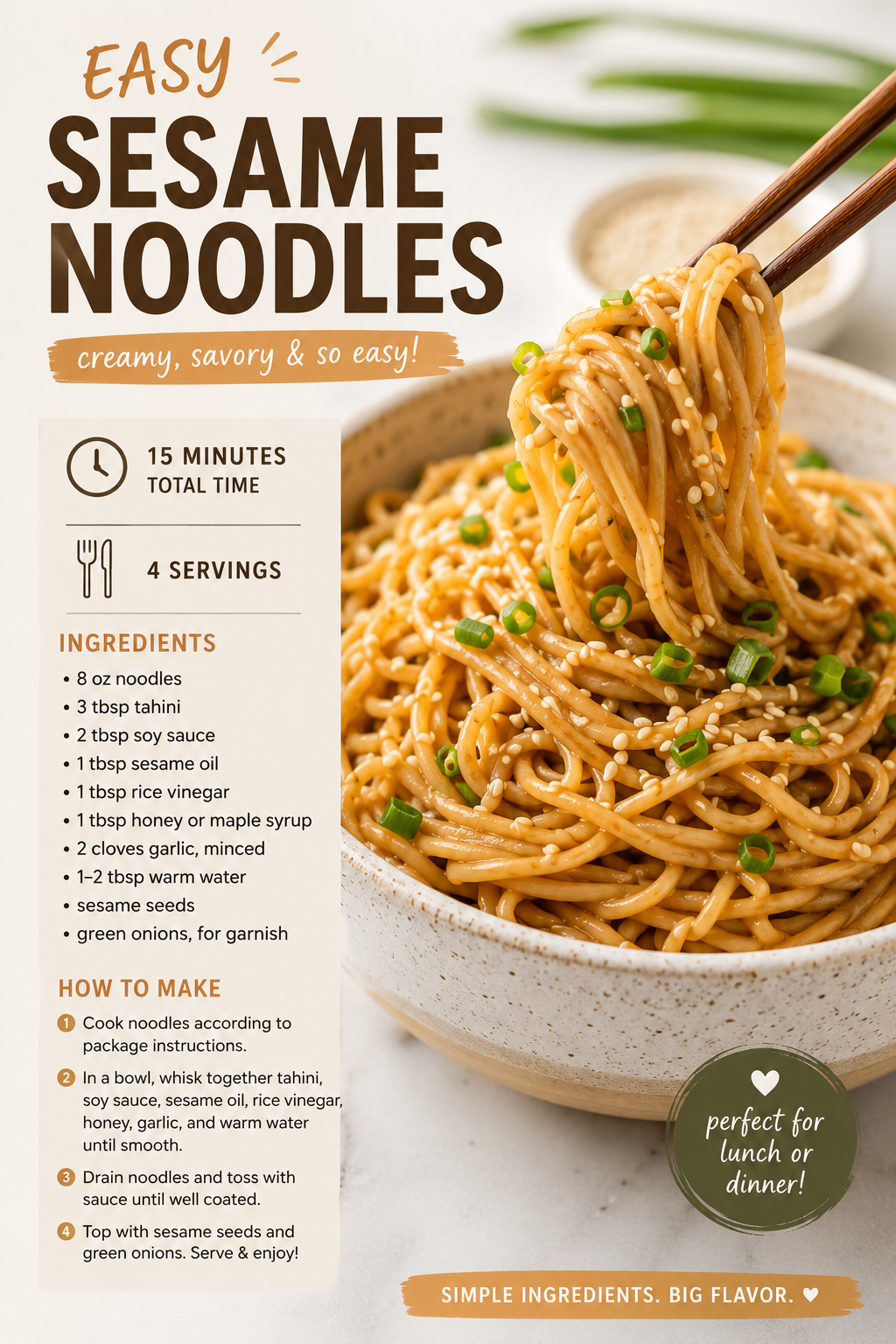
Cold, glossy, nutty, and just the right amount of spicy — this one hits different every single time.
You know those meals you make once and immediately add to your permanent rotation? This is that meal.
Sesame noodles take about 20 minutes, use pantry staples you probably already have, and taste like something you’d order at a really good Asian restaurant. Except you made it. In your kitchen. In your pajamas.
And honestly? That’s the vibe.
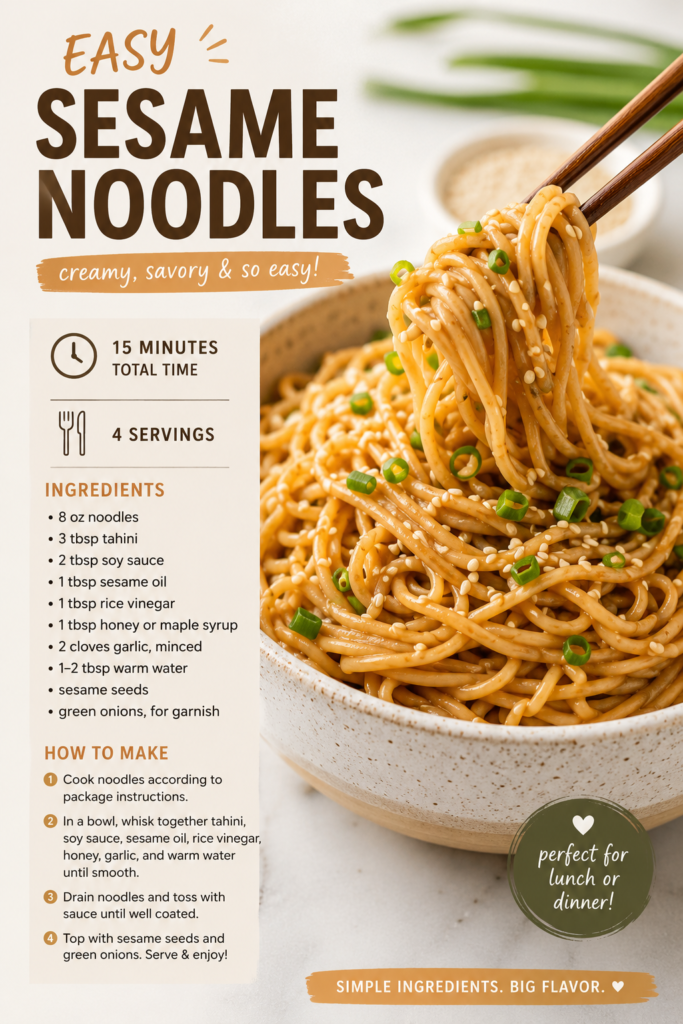
What You’ll Need
For the Noodles
- 8 oz (225g) noodles (lo mein, spaghetti, or ramen noodles work great)
- 1 tablespoon sesame oil (for boiling water, optional)
For the Sesame Sauce
- 3 tablespoons soy sauce
- 2 tablespoons tahini or creamy peanut butter
- 1.5 tablespoons toasted sesame oil
- 1 tablespoon rice vinegar
- 1 tablespoon honey or maple syrup
- 1 tablespoon chili garlic sauce (or sriracha)
- 2 cloves garlic, minced
- 1 teaspoon fresh ginger, grated
- 2–3 tablespoons warm water (to thin the sauce)
Toppings
- 2 green onions, thinly sliced
- 1 tablespoon toasted sesame seeds
- 1 small cucumber, julienned (optional but so good)
- Shredded carrots (optional)
- Crushed red pepper flakes
Tools You’ll Need
- Large pot (for boiling noodles)
- Colander
- Medium mixing bowl
- Whisk or fork
- Tongs or chopsticks
- Cutting board and knife
- Grater (for the ginger)
- Measuring spoons
Pro Tips
These are the things nobody tells you the first time, and they make a huge difference.
- Toast your sesame seeds. Takes 2 minutes in a dry pan over medium heat. The difference in flavor is wild.
- Don’t skip the warm water in the sauce. It loosens the tahini/peanut butter so everything coats the noodles evenly instead of clumping. Start with 2 tablespoons and add more if needed.
- Rinse your noodles under cold water after draining. This stops the cooking immediately and keeps them from turning mushy or sticking together.
- Make the sauce first. Always. That way it’s ready to pour the second the noodles are done and still warm enough to absorb the flavor.
- Taste as you go. More soy sauce = saltier. More vinegar = tangier. More honey = sweeter. The sauce is completely adjustable and that’s what makes it so good.
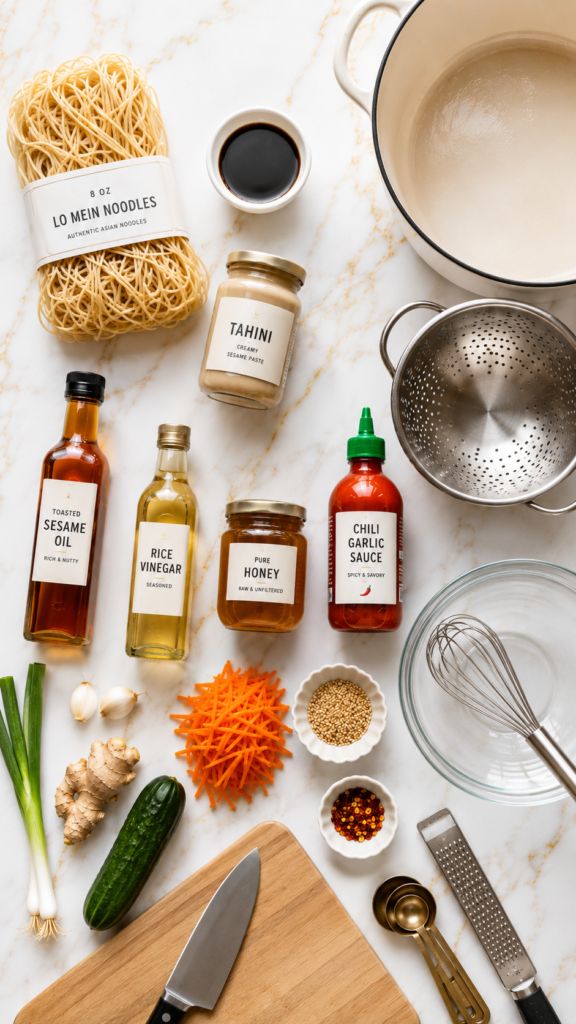
How to Make Sesame Noodles
Step 1: Cook the Noodles
Bring a large pot of salted water to a boil. Cook your noodles according to the package directions, but pull them out 1 minute early. You want them al dente, not soft.
Drain and rinse under cold water. Set aside.
Step 2: Make the Sauce
Add soy sauce, tahini (or peanut butter), toasted sesame oil, rice vinegar, honey, chili garlic sauce, minced garlic, and grated ginger to a bowl.
Whisk everything together until smooth. Add warm water one tablespoon at a time until the sauce is pourable but still thick.
Taste it. Adjust anything that feels off.
Step 3: Toss It Together
Add your noodles to the bowl with the sauce. Toss until every noodle is fully coated.
This is the part where you’ll want to steal a bite. Do it. You deserve it.
Step 4: Add Toppings and Serve
Transfer to a serving bowl or plate. Add green onions, sesame seeds, cucumber, carrots, and chili flakes on top.
Serve immediately at room temperature, or refrigerate for a cold noodle bowl situation (which is equally incredible, just so you know).
Substitutions and Variations
The sauce is flexible. Here’s how to customize it:
| Ingredient | Swap For |
|---|---|
| Tahini | Creamy peanut butter or almond butter |
| Soy sauce | Tamari (gluten-free) or coconut aminos |
| Honey | Maple syrup or agave |
| Chili garlic sauce | Sriracha, gochujang, or skip entirely |
| Lo mein noodles | Spaghetti, ramen, rice noodles, or soba |
| Cucumber | Shredded cabbage or snap peas |
For protein: Add shredded rotisserie chicken, sautéed shrimp, crispy tofu, or a soft-boiled egg on top.
For a peanut version: Use peanut butter instead of tahini and add a squeeze of lime. It becomes almost like a cold peanut noodle dish. Completely different flavor profile, completely delicious.
Make Ahead Tips
Sesame noodles are one of those recipes that actually get better the next day.
- Make the sauce up to 5 days ahead and store in a jar in the fridge. Give it a good shake or stir before using.
- Cook the noodles ahead and toss them with a little sesame oil to prevent sticking. Store in an airtight container for up to 3 days.
- Assemble right before eating for the freshest result, especially if you’re adding cucumber.
Nutritional Breakdown (Per Serving, Approximate)
| Nutrient | Amount |
|---|---|
| Calories | ~420 kcal |
| Protein | 12g |
| Carbohydrates | 55g |
| Fat | 16g |
| Fiber | 3g |
| Sodium | ~800mg |
Based on 4 servings using lo mein noodles and tahini, without protein toppings.
Want to lighten it up? Use soba noodles (higher protein, lower glycemic index) and skip the honey.
Meal Pairing Suggestions
These noodles go with a lot. Here are a few pairings that work really well:
- Protein side: Pan-seared salmon, teriyaki chicken, or crispy tofu
- Soup: Miso soup or a light ginger broth
- Salad: A simple cucumber salad with rice vinegar dressing
- Drink: Iced jasmine green tea or sparkling water with lemon
Leftovers and Storage
- Store leftovers in an airtight container in the fridge for up to 3 days.
- The noodles will absorb the sauce over time. When reheating, add a small splash of water or extra sesame oil to loosen things up.
- These noodles are honestly just as good cold straight from the fridge. Lunch the next day sorted.
- Do not freeze. The texture of the noodles goes downhill fast.
FAQ
Can I serve sesame noodles hot or cold?
Both. Hot straight from the pot is comfort food. Cold from the fridge the next day is a completely different, refreshing experience. You get two meals in one recipe, which is never a bad thing.
Is this recipe spicy?
It has a mild kick from the chili garlic sauce, but you can dial it up or completely leave it out. Completely your call.
Can I make this gluten-free?
Yes. Swap soy sauce for tamari or coconut aminos, and use rice noodles or gluten-free soba instead of lo mein.
What kind of noodles work best?
Lo mein and ramen noodles give the most authentic texture. Spaghetti is a solid backup if that’s what you have. Rice noodles work great for a lighter, gluten-free version.
My sauce is too thick. What do I do?
Add warm water, one tablespoon at a time, and whisk until it loosens up. The warm water is the trick here — cold water doesn’t incorporate as smoothly.
Can I add vegetables?
Absolutely. Shredded cabbage, snap peas, edamame, bell peppers, and broccoli all work well. Toss them in raw for crunch or quickly sauté them if you prefer them softer.
Wrapping Up
Here’s the thing about sesame noodles: they’re one of those recipes that sounds simple, tastes complex, and leaves everyone wondering what your secret is.
The sauce takes five minutes to make. The noodles take fifteen. And somehow the final result tastes like you spent way more time on it than you actually did.
Make it once, and it’s in your regular lineup. Make it twice, and you’re sending the recipe to everyone you know. 😄
Give it a shot this week and let me know how it goes in the comments below. Did you add a protein? Swap the tahini for peanut butter? Make it extra spicy? I want to hear all of it. And if you have any questions, drop them down there too — I’m happy to help.