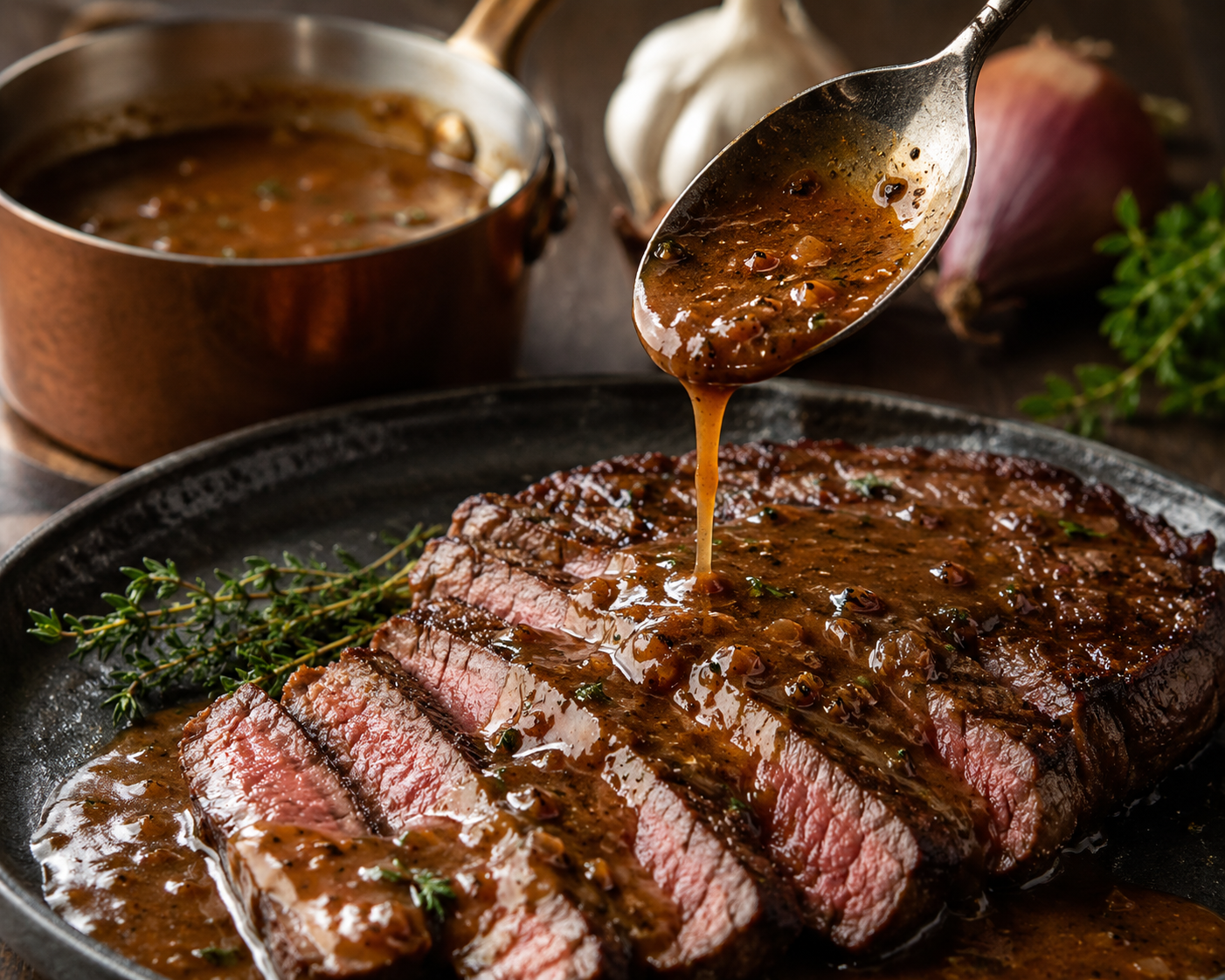
You’ve nailed the sear. The steak is rested. And then you plate it, take a bite, and think… it’s missing something.
That something? A really good sauce.
I used to skip the sauce entirely and convince myself a great steak doesn’t need one. And sure, a wagyu ribeye probably doesn’t. But for everything else — your weekly NY strip, your flank steak, even a good sirloin — a pan sauce is what takes it from “solid home cook” to “how did you make this?”
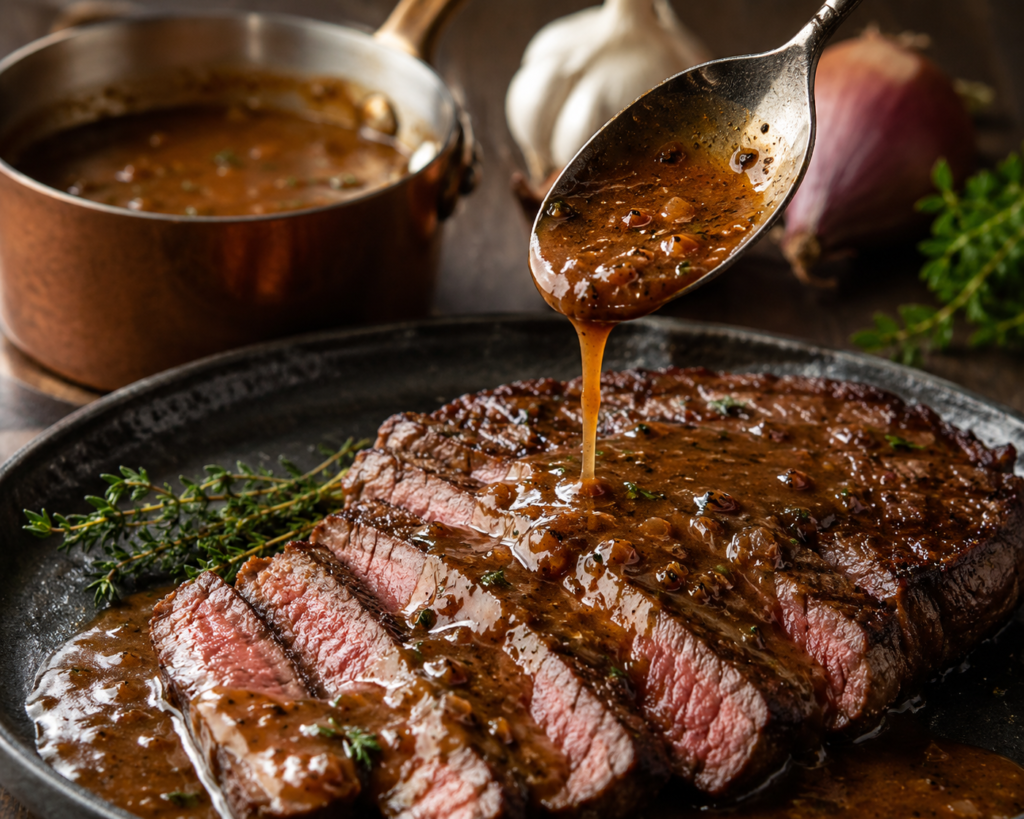
The sauce I’m sharing today is a garlic butter pan sauce with red wine and fresh herbs. It comes together in about 10 minutes in the same pan you cooked your steak in (which means zero wasted fond, the flavor stuck to the bottom of the pan), and it genuinely makes the whole meal feel elevated without much effort at all.
And yes, I’ll walk you through it step by step. 👇
What You’ll Need
For the Sauce:
- 3 tablespoons unsalted butter, divided
- 4 cloves garlic, minced
- 1 small shallot, finely diced
- ½ cup dry red wine (like Cabernet Sauvignon or Merlot)
- ½ cup beef broth (low-sodium)
- 1 tablespoon Worcestershire sauce
- 1 teaspoon Dijon mustard
- 1 teaspoon fresh thyme leaves (or ½ tsp dried)
- 1 tablespoon fresh rosemary, finely chopped
- Salt and black pepper, to taste
- Fresh parsley, for garnish (optional)
For the Steak:
- 2 ribeye, NY strip, or sirloin steaks (about 1–1.5 inches thick)
- 1 tablespoon olive oil or avocado oil
- Salt and black pepper (generous)

Want restaurant-quality steak sauce in minutes? Ditch the stovetop and use this one simple kitchen trick. Click here to learn the secret!
Tools You’ll Need
- Cast iron skillet or stainless steel pan (non-stick won’t develop the fond you need for this sauce)
- Tongs
- Wooden spoon or silicone spatula (for deglazing)
- Small whisk
- Meat thermometer (so you nail the internal temp every time)
- Cutting board
- Sharp chef’s knife
Pro Tips
A few things I’ve learned from making this more times than I can count:
- Don’t use a cheap wine you wouldn’t drink. You don’t need to open your best bottle, but if the wine tastes off in the glass, it’ll taste off in the sauce. A $10–12 bottle works perfectly here.
- Let your steak come to room temp before cooking. Take it out of the fridge 20–30 minutes before you start. This one thing makes a noticeable difference in how evenly it cooks.
- Don’t rush the deglazing. When the wine hits the hot pan, use your wooden spoon to really scrape up all the browned bits (that’s the fond). Those bits are the sauce. Don’t skip this.
- Swirl in the final butter off the heat. This is called “mounting” the butter and it’s what gives the sauce that glossy, restaurant-style finish. If the pan is too hot, the butter breaks and you get a greasy mess instead.
- Rest your steak. I know you’ve heard it before. But seriously — 5 minutes under a foil tent before you slice. This is non-negotiable if you want those juices to stay in the meat where they belong.
Substitutions and Variations
Not everyone has red wine on hand, and that’s totally fine. Here’s how to adapt:
| Swap | Use Instead |
|---|---|
| Red wine | Beef broth + 1 tsp balsamic vinegar |
| Shallot | ½ small yellow onion, finely diced |
| Fresh thyme | ½ tsp dried thyme |
| Worcestershire | Soy sauce (same umami depth) |
| Unsalted butter | Salted butter (just skip extra salt at end) |
Want a creamy version? After reducing the wine and broth, stir in 3–4 tablespoons of heavy cream before adding the butter. It makes the sauce richer and mellower.
Going herb-forward? Add a tablespoon of tarragon instead of rosemary. It pairs especially well with filet mignon.
Make Ahead Tips
The sauce itself is best made fresh in the same pan you cooked your steak in, because the fond is where all the flavor lives.
That said, you can prep ahead in a few ways:
- Mince the garlic, shallots, and herbs the night before and store in small bowls covered with plastic wrap.
- Measure out your liquids (wine, broth, Worcestershire) into a small jar or cup so you can pour them in quickly without stopping to measure while cooking.
This kind of prep makes the whole process feel faster and less chaotic, especially if you’re cooking for guests.
How to Make It
Step 1: Season and Prep the Steak
Pat your steaks dry with paper towels. This step matters more than most people think. A dry surface = a better sear.
Season both sides generously with salt and black pepper. Don’t be shy here.
Step 2: Sear the Steak
Heat your cast iron skillet over high heat until it’s very hot — about 2 minutes. Add the oil and swirl to coat.
Add the steaks and don’t move them for 3–4 minutes per side (for medium-rare on a 1-inch steak). Use a meat thermometer to check: 130°F for medium-rare, 140°F for medium.
Once done, transfer steaks to a cutting board and tent loosely with foil. Let them rest for 5 minutes.
Step 3: Sauté Garlic and Shallots
With the pan still on medium heat (don’t wipe it out!), add 1 tablespoon of the butter.
Once melted, add the shallots and cook for 1–2 minutes until softened. Add the garlic and cook another 30 seconds until fragrant. Watch it closely — garlic burns fast and burnt garlic will ruin the sauce.
Step 4: Deglaze With Wine
Pour in the red wine and use your wooden spoon to scrape up all the browned bits from the bottom of the pan.
Let the wine reduce by half — about 2–3 minutes. You’ll see it go from watery to slightly thicker and glossy.
Step 5: Add Broth and Seasonings
Pour in the beef broth, Worcestershire sauce, Dijon mustard, thyme, and rosemary.
Stir everything together and let the sauce simmer for 3–5 minutes until it reduces and coats the back of a spoon. Taste it. Adjust salt and pepper as needed.
Step 6: Finish With Butter
Take the pan off the heat completely. Cut the remaining 2 tablespoons of cold butter into small pieces and swirl them in one at a time until fully melted and the sauce is glossy.
This is where it transforms from “good” to really good.
Step 7: Plate and Serve
Slice your steak against the grain, spoon the sauce generously over the top, and finish with fresh parsley if you want that restaurant-level presentation.
Serve immediately.
Nutritional Information (Approximate Per Serving)
| Nutrient | Amount |
|---|---|
| Calories | ~180 (sauce only) |
| Fat | 14g |
| Saturated Fat | 8g |
| Carbohydrates | 4g |
| Protein | 1g |
| Sodium | 320mg |
Note: Does not include the steak itself. Numbers will vary based on exact wine/broth used.
Meal Pairing Suggestions
This sauce goes with more than just steak. Here are a few things I love serving alongside it:
- Garlic mashed potatoes — the sauce doubles as a gravy here
- Roasted asparagus or broccolini — the bitterness balances the richness
- Crusty bread — for soaking up every last drop of sauce (highly recommended)
- Simple arugula salad — the peppery greens cut through the richness nicely
Leftovers and Storage
Leftover sauce keeps in an airtight container in the fridge for up to 3 days.
To reheat, warm it gently on the stovetop over low heat. If it looks separated or grainy, whisk in a small splash of broth or water as you heat it — it’ll come back together.
Don’t microwave it — the butter breaks and the texture goes off. Low and slow on the stovetop is the move here.
Leftover steak + sauce makes an excellent steak sandwich the next day, just so you know. 🥩
FAQ
Can I use white wine instead of red? You can, but the flavor profile will be lighter and less savory. White wine works better with chicken or fish sauces. For steak, red wine or beef broth with a splash of balsamic is the better swap.
My sauce is too thin. What do I do? Let it simmer longer — just a few extra minutes on medium heat will reduce it further. If you’re in a rush, mix ½ teaspoon of cornstarch with 1 tablespoon of cold water and stir it in. It thickens instantly.
My sauce is too thick or salty. What do I do? Add a splash of beef broth and stir. It’ll loosen it up and mellow out any saltiness.
Can I make this without wine? Absolutely. Use ½ cup of extra beef broth plus 1 teaspoon of balsamic vinegar. You lose a little depth but it’s still a really solid sauce.
Do I have to use cast iron? No, but it does make the best fond. A stainless steel skillet works just as well. Non-stick won’t give you the browned bits at the bottom, so the sauce won’t have the same depth of flavor.
Can I use this sauce on chicken or pork? Yes! It pairs really well with pork chops especially. For chicken, swap the beef broth for chicken broth and skip the Worcestershire or replace it with a little soy sauce.
Wrapping Up
Here’s the thing about this sauce: it’s genuinely simple, and it’s one of those recipes where once you make it, you’ll be making it on repeat.
The whole process takes about 15 minutes from start to finish — most of which is just letting things reduce while you stand there doing barely anything. And the result is something that tastes like you put a lot more effort into dinner than you actually did.
Try it this week and see for yourself. And when you do, I’d love to hear how it went — drop a comment below and let me know what cut of steak you used, any tweaks you made, or any questions that came up along the way. I read every single one. 👇