You know that moment when you take a bite of something and immediately think, okay, I need to make this at home?
That’s what this salmon sauce does to people.
It’s creamy, garlicky, and has this depth of flavor that makes a simple piece of salmon feel like something you’d order at a nice restaurant. And the kicker? It comes together in under 10 minutes.
No complicated techniques. No obscure ingredients. Just a sauce so good it might ruin you for plain salmon forever.
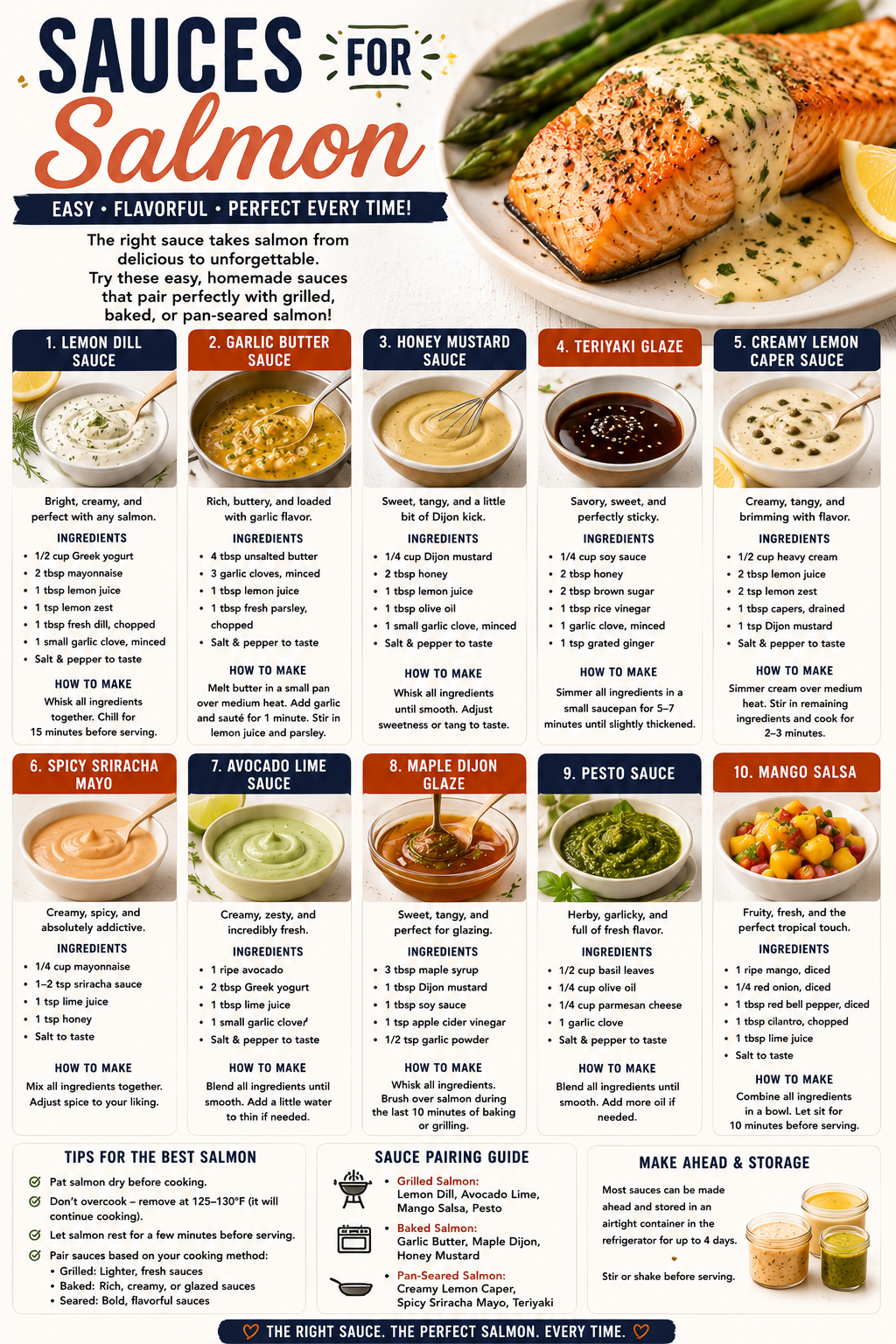
What You’ll Need
For the Salmon
- 4 salmon fillets (6 oz each), skin-on or skinless
- 1 tablespoon olive oil
- 1 teaspoon garlic powder
- 1 teaspoon smoked paprika
- Salt and black pepper, to taste
For the Creamy Garlic Lemon Sauce
- 2 tablespoons unsalted butter
- 4 cloves garlic, minced
- 1 cup heavy cream
- ½ cup chicken broth (low sodium)
- 2 tablespoons freshly squeezed lemon juice
- 1 teaspoon lemon zest
- ½ teaspoon Dijon mustard
- ¼ cup freshly grated Parmesan cheese
- 2 tablespoons fresh parsley, chopped
- Salt and black pepper, to taste
- Pinch of red pepper flakes (optional, for heat)
Tools You’ll Need
- Large skillet or cast iron pan (12-inch recommended)
- Microplane or fine grater (for zesting the lemon)
- Tongs or a wide fish spatula
- Small whisk
- Wooden spoon or silicone spatula
- Measuring cups and spoons
- Cutting board and chef’s knife
Pro Tips
These are the things that make a noticeable difference, especially the first time you make this.
- Pat your salmon completely dry before seasoning. Any moisture on the surface will steam the fish instead of searing it, and you’ll lose that beautiful golden crust. Use paper towels and really press down on it.
- Don’t move the salmon once it hits the pan. Leave it alone for 3-4 minutes. The crust forms when the fish releases naturally from the pan. If you try to flip it early, it’ll stick and fall apart.
- Use room temperature salmon. Taking it out of the fridge 15 minutes before cooking helps it cook evenly all the way through without overcooking the outside.
- Freshly grated Parmesan only. The pre-shredded kind has anti-caking agents that make the sauce grainy instead of silky smooth. It’s a small thing that makes a big difference.
- Add the cream off high heat first, then bring it back up. This prevents the sauce from breaking and keeps it velvety.
How to Make It
Step 1: Season and Sear the Salmon
Pat the salmon fillets dry with paper towels. Season both sides with garlic powder, smoked paprika, salt, and pepper.
Heat olive oil in a large skillet over medium-high heat until it shimmers. Add the salmon fillets, skin-side up.
Sear for 3-4 minutes without touching them. Flip and cook another 2-3 minutes, depending on thickness. You’re looking for the flesh to be opaque about ¾ of the way up the side.
Remove the salmon from the pan and set aside on a plate. Tent loosely with foil.
Step 2: Build the Sauce
Lower the heat to medium. In the same pan (don’t clean it, those browned bits are flavor), add the butter.
Once melted, add the minced garlic. Stir and cook for about 60 seconds until fragrant. Watch it closely. Garlic goes from golden to burnt very fast.
Pour in the chicken broth and scrape up any browned bits from the bottom of the pan with a wooden spoon.
Step 3: Add the Cream
Pour in the heavy cream. Add the lemon juice, lemon zest, and Dijon mustard. Whisk everything together and bring to a gentle simmer.
Let it simmer for 2-3 minutes, stirring occasionally, until the sauce thickens slightly and coats the back of a spoon.
Step 4: Finish the Sauce
Reduce heat to low. Stir in the Parmesan cheese until fully melted. Taste and adjust seasoning with salt, pepper, and red pepper flakes if using.
If the sauce is too thick, add a splash more chicken broth. Too thin, let it simmer another minute.
Step 5: Plate and Serve
Return the salmon fillets to the pan. Spoon the sauce generously over each piece. Let it sit in the sauce for 1-2 minutes over low heat to warm back through.
Garnish with fresh parsley and an extra squeeze of lemon.
Serve immediately.
Substitutions and Variations
This sauce is forgiving and works beautifully with tweaks.
| Swap | Use Instead |
|---|---|
| Heavy cream | Half-and-half (lighter, but slightly less rich) |
| Chicken broth | Vegetable broth or dry white wine |
| Parmesan | Pecorino Romano or Asiago |
| Salmon | Works great with halibut, cod, or sea bass |
| Butter | Dairy-free butter for a lactose-sensitive version |
| Heavy cream (dairy-free) | Full-fat coconut cream (adds a subtle sweetness) |
Want more heat? Add ½ teaspoon of crushed red pepper flakes to the garlic.
Want an herb twist? Swap parsley for fresh dill or tarragon. Both are absolutely excellent with salmon.
Going low-carb? This recipe already fits into a keto or low-carb diet perfectly as written.
Make Ahead Tips
The sauce can be made up to 2 days ahead and stored in an airtight container in the fridge.
Reheat it gently in a small saucepan over low heat, stirring constantly. Add a small splash of cream or broth if it’s thickened too much.
The salmon is best cooked fresh, but if you want to prep the fillets ahead of time, season them and store covered in the fridge for up to 24 hours before cooking.
Nutritional Breakdown (Per Serving)
| Nutrient | Amount |
|---|---|
| Calories | ~520 kcal |
| Protein | 42g |
| Fat | 36g |
| Saturated Fat | 16g |
| Carbohydrates | 5g |
| Fiber | 0.3g |
| Sodium | ~380mg |
| Omega-3 Fatty Acids | ~2.5g |
Figures are estimates based on 6 oz salmon fillet with full sauce portion.
Salmon nutrition fact that surprises most people: A single 6 oz serving of Atlantic salmon contains more Omega-3 fatty acids than most people get in an entire week from their regular diet. 🐟
Meal Pairing Suggestions
This sauce is rich, so pair it with something that balances it out.
Great sides:
- Garlic butter asparagus
- Steamed jasmine or basmati rice (to soak up every bit of that sauce)
- Roasted baby potatoes
- Sautéed spinach with a touch of garlic
- Crusty bread (100% necessary for sauce mopping)
- Simple arugula salad with lemon vinaigrette
For a full dinner situation: Start with a light soup like a tomato basil, serve the salmon as the main, and finish with something simple like a lemon sorbet.
Leftovers and Storage
Storage: Keep leftover salmon and sauce in separate airtight containers in the fridge for up to 2 days.
Reheating salmon: Low and slow is the move. Cover it with foil and warm in a 275°F oven for about 15 minutes. Microwaving salmon is technically possible but… you deserve better.
Reheating sauce: Warm gently on the stovetop over low heat. Stir constantly and add a small splash of broth if needed to loosen it.
Leftover ideas: Flake leftover salmon over pasta with the reheated sauce. It’s arguably even better the second day.
FAQ
Can I use frozen salmon? Yes, just make sure it’s fully thawed and patted very dry before cooking. Frozen salmon tends to release more moisture, so the pat-dry step is even more important here.
My sauce is grainy. What happened? Almost always pre-shredded Parmesan with anti-caking agents, or the heat was too high when adding the cheese. Use freshly grated Parmesan and add it over low heat.
Can I bake the salmon instead of pan-searing? You can. Bake at 400°F for 12-15 minutes, then make the sauce separately in a pan and pour it over. The sear gives better texture and flavor, but baking works fine.
Is this sauce gluten-free? As written, yes. Just double-check your Dijon mustard label to confirm no hidden gluten.
How do I know when salmon is done? The flesh should flake easily with a fork and look opaque throughout. The internal temperature should read 125-130°F for medium (slightly translucent in the very center) or 145°F for fully cooked.
Can I make this without Parmesan? You can skip it entirely for a lighter sauce. It’ll be thinner, but still delicious. Or substitute with a tablespoon of cream cheese for a different kind of richness.
Will this work with canned salmon? For the sauce, absolutely. For the sear? Not quite. If canned salmon is what you have, just warm it through and pour the sauce over. Not the same dish, but still a solid meal.
Wrapping Up
This is one of those recipes that looks and tastes like you spent way more time on it than you did.
A good sear, a pan sauce that comes together in minutes, and suddenly you’ve got something that feels genuinely special on a random Tuesday night.
Give it a try and then come back and tell me how it went. Did you make any swaps? Did it disappear embarrassingly fast? Did someone in your house immediately ask for the recipe?
Leave a comment below. I love hearing how these turn out in your kitchen, and any questions you have, drop them there too.