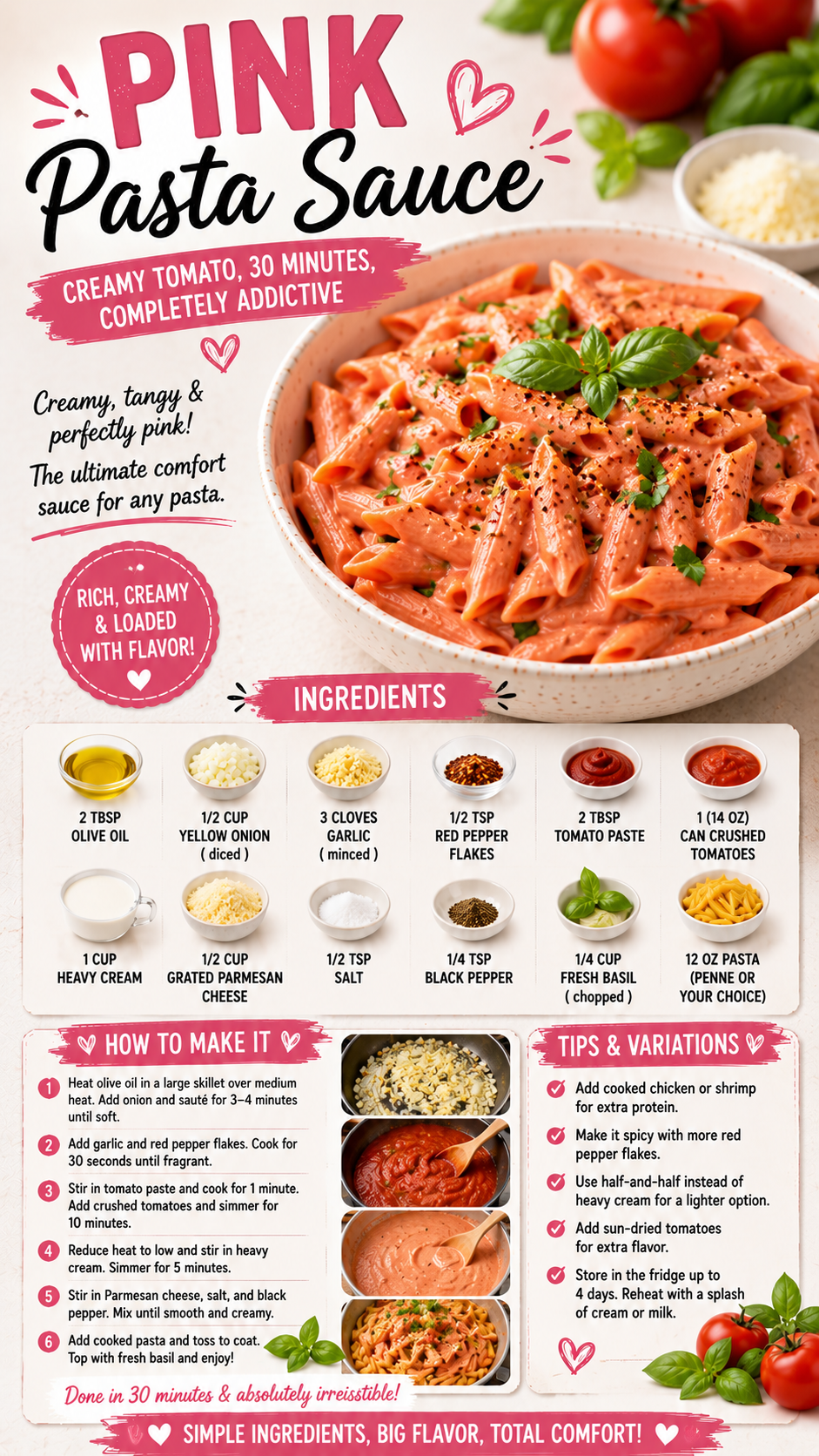
If you’ve never made pink pasta sauce from scratch, you’re about to wonder where it’s been your whole life.
It’s the lovechild of marinara and alfredo — a silky, creamy tomato sauce that coats every piece of pasta in the most satisfying way. Rich enough to feel indulgent, bright enough from the tomato that it doesn’t feel heavy. The kind of bowl you finish and immediately think about making again.
And the cook time is genuinely 30 minutes, start to finish.
There’s one ratio in this sauce — how much cream versus tomato — that most recipes get wrong. Too much cream and you lose the tomato flavor entirely. Too little and it stops being pink sauce and starts just being marinara with cream in it. This recipe gets it right. Keep reading.
What You’ll Need
For the Pink Sauce
- 3 tbsp unsalted butter
- 1 tbsp olive oil
- 6 cloves garlic, minced
- ½ medium yellow onion, finely diced
- 1 can (28 oz) crushed tomatoes (San Marzano if you can find them)
- ¾ cup heavy cream
- ½ cup freshly grated parmesan, plus more for serving
- 1 tsp red pepper flakes (adjust to taste)
- 1 tsp granulated sugar (balances the tomato acidity)
- 1 tsp salt, plus more to taste
- ½ tsp black pepper
- 8–10 fresh basil leaves, torn
- 2 tbsp reserved pasta water (the secret weapon)
For the Pasta
- 1 lb penne, rigatoni, or your pasta of choice
- Salt for the pasta water (a generous amount — pasta water should taste like the sea)
Tools You’ll Need
- Large pot (for pasta)
- Large skillet or sauté pan (at least 12-inch)
- Wooden spoon or heat-safe spatula
- Sharp knife and cutting board
- Box grater (for parmesan)
- Ladle or heatproof measuring cup (for pasta water)
- Colander
Pro Tips
Small moves that make a big difference here.
- Save your pasta water. Before you drain the pasta, scoop out at least ½ cup of the starchy cooking water. The starch in pasta water acts as an emulsifier — when you add a splash to the sauce and toss the pasta in it, everything comes together into a glossy, cohesive coating that doesn’t slide off. This is the single most impactful technique in pasta cooking and most home cooks skip it entirely.
- Use San Marzano tomatoes. Not all crushed tomatoes are equal. San Marzanos (look for the DOP label on the can) are sweeter, less acidic, and have a richer tomato flavor than standard crushed tomatoes. They’re usually a dollar or two more — worth every cent in a simple sauce like this where the tomato is the star.
- Add the cream off the heat. Or at minimum on very low heat. If your pan is screaming hot when the cream hits it, the cream can separate and turn grainy instead of silky. Reduce to low before adding, stir constantly, and you’ll get that smooth, velvety texture every time.
- Don’t skip the sugar. Just 1 teaspoon balances the natural acidity of canned tomatoes without making the sauce taste sweet at all. If your sauce ever tastes sharp or tinny, a pinch of sugar is almost always the fix.
- Finish the pasta in the sauce. Don’t just pour the sauce over cooked pasta in a bowl. Cook the pasta 1–2 minutes shy of al dente, drain it, and toss it directly into the sauce over low heat with a splash of pasta water. The pasta finishes cooking in the sauce, absorbs the flavor, and the whole dish comes together in a way it simply doesn’t when you plate separately.
Substitutions and Variations
Heavy cream: Half-and-half works for a lighter version — the sauce will be thinner but still good. Full-fat coconut cream is a solid dairy-free substitute that adds a very subtle coconut note.
Butter: Can be replaced with olive oil entirely for a dairy-free version (combined with the coconut cream swap above).
Parmesan: Pecorino Romano makes a slightly saltier, sharper version. Nutritional yeast (3–4 tbsp) works as a vegan alternative.
Crushed tomatoes: Whole peeled tomatoes that you crush by hand work great. Tomato passata (smooth tomato purée) gives a silkier, more refined sauce. Diced tomatoes work but give a chunkier result.
Pasta shape: Penne and rigatoni are classics because the sauce gets inside the tubes. Fettuccine, tagliatelle, and gnocchi are all excellent. Avoid very delicate pasta shapes — this sauce is rich enough to need something substantial.
Flavor and protein variations:
- Add ½ lb of Italian sausage (crumbled and browned before making the sauce) for a heartier version
- Add 1 lb of shrimp in the last 3–4 minutes of simmering
- Stir in 2 tbsp of vodka with the tomatoes and let it cook off for a classic pink vodka sauce (the alcohol extracts flavor compounds in the tomato that water can’t)
- Add 1 cup of baby spinach or arugula at the very end
- Stir in 2 tbsp of mascarpone instead of (or alongside) heavy cream for an even richer, more luxurious sauce
Make Ahead Tips
The sauce: Makes an excellent make-ahead component. Cook the sauce through, cool completely, and refrigerate for up to 5 days or freeze for up to 3 months. Reheat gently on the stove over low heat, adding a splash of cream or water to loosen if needed.
Do not make the pasta ahead — cooked pasta stored separately gets gummy. Cook fresh pasta when you’re ready to serve and toss it with the reheated sauce.
For meal prep: Portion the cooled sauce into individual freezer bags or containers. Having individual portions of this sauce in the freezer makes weeknight dinners genuinely effortless.
How to Make Pink Pasta Sauce
Step 1: Cook the Pasta
- Bring a large pot of water to a boil. Add a generous amount of salt — it should taste pleasantly salty, like lightly seasoned broth.
- Cook pasta according to package directions, but pull it out 1–2 minutes before the suggested time (it’ll finish in the sauce).
- Before draining, scoop out 1 cup of pasta water and set aside.
- Drain the pasta and set aside.
Step 2: Build the Sauce Base
- In a large skillet, melt butter with olive oil over medium heat.
- Add the diced onion and cook for 4–5 minutes until soft and translucent.
- Add the minced garlic and red pepper flakes. Cook for 1 minute, stirring constantly, until fragrant. Don’t let the garlic brown.
Step 3: Add the Tomatoes
- Pour in the crushed tomatoes. Add sugar, salt, and black pepper. Stir to combine.
- Simmer over medium-low heat for 10–12 minutes, stirring occasionally, until the sauce has deepened in color and thickened slightly.
Step 4: Add the Cream
- Reduce heat to low.
- Pour in the heavy cream slowly, stirring as you go.
- Simmer gently for 3–4 minutes, stirring frequently, until the sauce is fully combined and has turned that beautiful salmon-pink color.
- Stir in the grated parmesan until melted and smooth.
- Taste and adjust salt, pepper, and red pepper flakes.
Step 5: Finish the Pasta
- Add the drained pasta directly to the sauce.
- Add 2–3 tablespoons of the reserved pasta water.
- Toss over low heat for 1–2 minutes until the pasta is coated and the sauce clings to every piece.
- Remove from heat and tear in the fresh basil leaves. Toss once more.
Step 6: Serve
- Plate immediately and top with extra grated parmesan and a crack of black pepper.
- A drizzle of good olive oil on top right before eating is worth it if you have it.
Nutrition Breakdown
Per serving, based on 4 servings (with pasta)
| Nutrient | Amount |
|---|---|
| Calories | ~620 kcal |
| Total Fat | 28g |
| Saturated Fat | 16g |
| Carbohydrates | 74g |
| Fiber | 5g |
| Sugar | 10g |
| Protein | 18g |
| Sodium | ~780mg |
Estimates only. Will vary based on pasta brand and parmesan amount.
Dietary Swaps
| Diet | Swap |
|---|---|
| Dairy-free | Vegan butter + full-fat coconut cream + nutritional yeast |
| Gluten-free | Use your favorite GF pasta (chickpea or brown rice pasta work well) |
| Vegan | Vegan butter, coconut cream, nutritional yeast, skip parmesan |
| Lower calorie | Half-and-half instead of heavy cream; reduce butter to 1 tbsp |
| Higher protein | Add Italian sausage, shrimp, or white beans |
What to Serve It With
- Garlic bread — the sauce is made for mopping up, and garlic bread is the obvious partner
- Simple arugula salad with lemon vinaigrette — the peppery bitterness cuts right through the richness
- Roasted broccoli or zucchini — great alongside or tossed directly into the pasta
- A glass of Pinot Grigio or light Rosé — the slight acidity in both pairs naturally with the tomato cream
Leftovers and Storage
Refrigerator: Store pasta and sauce together in an airtight container for up to 3 days. The pasta will absorb more sauce overnight — add a splash of cream or water when reheating and toss over low heat.
Sauce only (no pasta): Keeps refrigerated for 5 days. Freeze for up to 3 months.
Reheating: Always reheat on the stove over low heat rather than the microwave if possible — it keeps the sauce emulsified and prevents the cream from separating. Add liquid (cream, water, or broth) a little at a time and stir as you go.
Tip: If the sauce looks broken or grainy after reheating, add a splash of cream and stir vigorously over low heat — it almost always comes back together.
FAQ
Why is my sauce orange instead of pink? The color depends entirely on the ratio of cream to tomato. More cream = lighter, more pink. Less cream = deeper orange-red. If your sauce looks more orange, add a little extra cream and stir over low heat. The color will shift.
Can I use milk instead of heavy cream? You can, but the sauce will be noticeably thinner and the texture won’t be as silky. If you use milk, add 1 tablespoon of flour or cornstarch to help it thicken. Half-and-half is a better middle ground.
My sauce is too acidic. How do I fix it? Two moves: add a pinch more sugar (start with ¼ tsp and taste) and a small extra pat of butter. Both neutralize acidity without changing the flavor profile significantly. A pinch of baking soda also works — it actually neutralizes acid chemically — but go very small (⅛ tsp at most) or it can taste soapy.
What pasta shape works best? Penne alla vodka is the classic for a reason — the ridged tubes trap the sauce inside. Rigatoni, mezze rigatoni, and tortiglioni all work on the same principle. For a more elegant presentation, tagliatelle or fettuccine are beautiful. Skip angel hair or spaghettini — too delicate for this sauce.
Can I make this without onion? Yes. The onion adds sweetness and body, but you can skip it and just use garlic. The sauce will be slightly less complex but still really good.
Is this the same as vodka sauce? Very similar. Traditional vodka sauce (penne alla vodka) adds a splash of vodka before the cream, which helps extract certain flavor compounds from the tomatoes that aren’t water-soluble. The result is a slightly deeper, more complex tomato flavor. This recipe skips the vodka but still delivers a similar result with San Marzano tomatoes and the right cream-to-tomato ratio.
Wrapping Up
Pink pasta sauce is one of those recipes that looks and tastes like you spent way more time than you actually did.
It’s creamy without being heavy, tomato-forward without being sharp, and it comes together faster than most people expect. Make it once and it’ll probably become a regular in your rotation — it’s that kind of recipe.
Try it this week and come back to leave a comment below. Tell me which pasta shape you used, what you added to it, and how it went. All questions welcome too. 👇