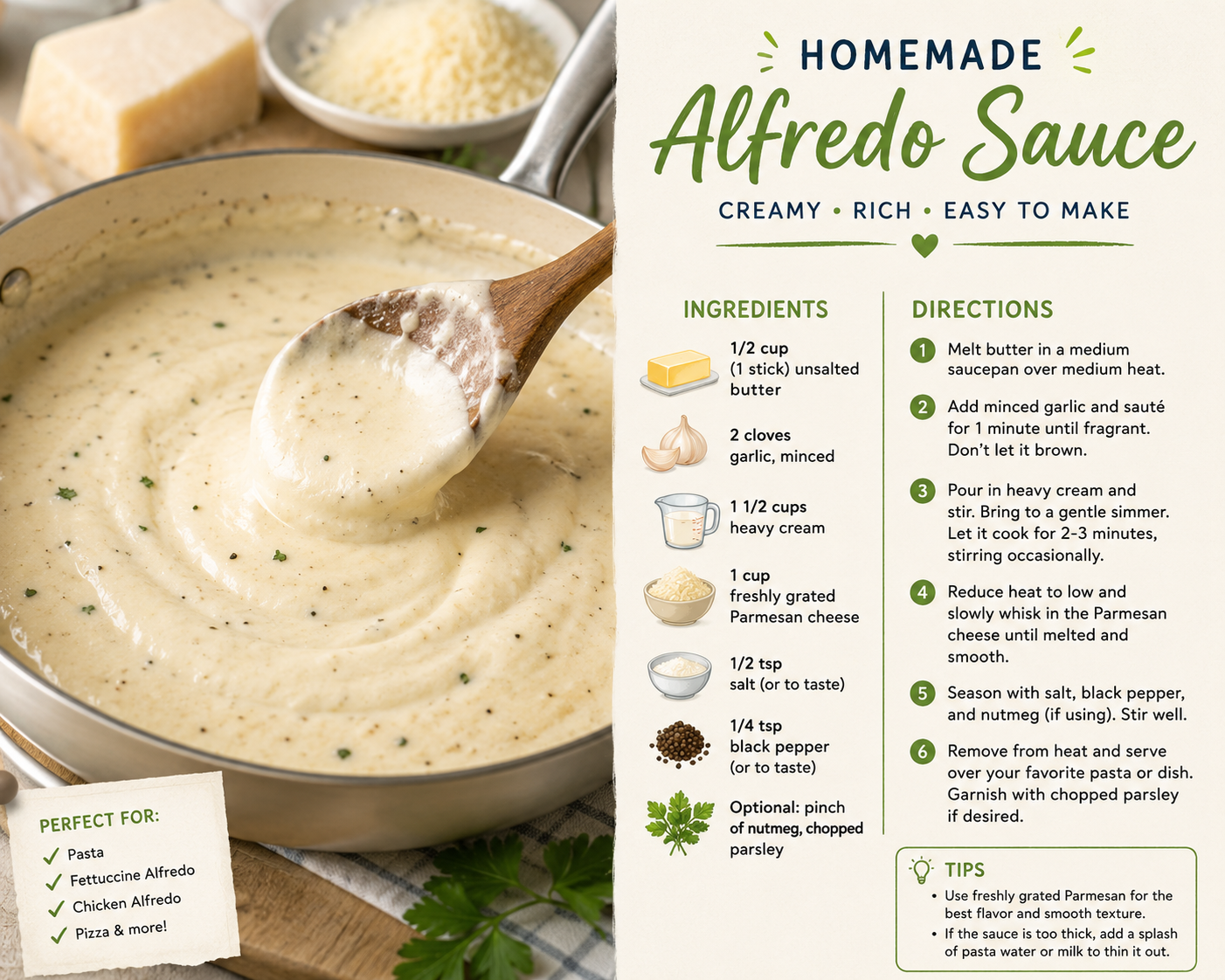
You know that moment when you take a bite of something and instantly think, why have I been settling for less my entire life? That’s exactly what happens the first time you make Alfredo sauce from scratch.
No starch. No weird preservatives. Just butter, cream, Parmesan, and a little patience.
And here’s the thing most people don’t realize: authentic Alfredo sauce has zero flour in it. What you’ve been eating from a jar? That’s not it. The real version is silkier, richer, and comes together in under 15 minutes.
Stick with me because there’s a technique in the instructions section that changes everything about how this sauce turns out, and most recipes skip right over it.
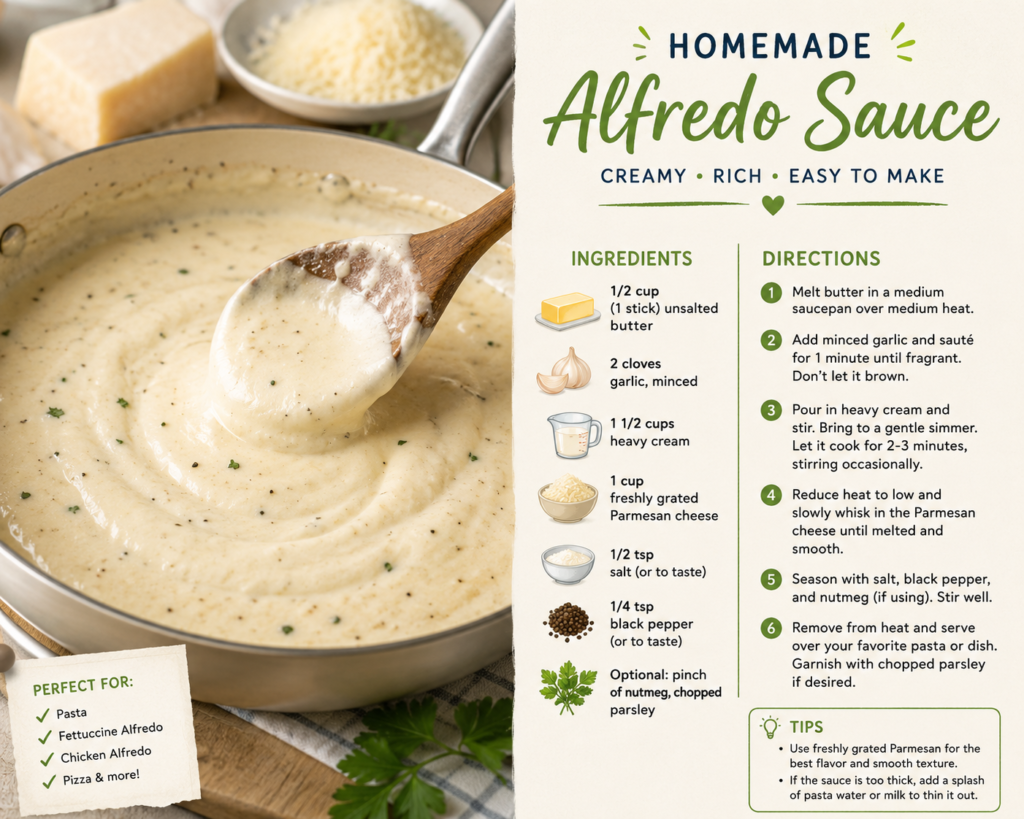
What You’ll Need
For the Sauce (Serves 4)
- 1/2 cup (1 stick / 113g) unsalted butter
- 1 1/2 cups heavy cream
- 2 cups freshly grated Parmesan cheese (do NOT use the green can)
- 3 cloves garlic, minced
- 1/2 tsp salt (plus more to taste)
- 1/4 tsp black pepper
- 1/4 tsp nutmeg (optional but trust me)
For the Pasta
- 1 lb (450g) fettuccine
- 1 tbsp salt (for pasta water)
- 1/2 cup pasta water (reserved before draining)
Tools You’ll Need
- Large pot (for the pasta)
- Large skillet or sauté pan
- Box grater or microplane
- Wooden spoon or silicone spatula
- Measuring cups and spoons
- Ladle (for the pasta water)
- Colander
Pro Tips
These are the things I wish someone had told me the first time I made this.
- Grate your own Parmesan. Pre-shredded cheese has anti-caking agents that make the sauce grainy instead of smooth. A fresh block of Parm takes 2 minutes to grate and makes a massive difference.
- Low and slow is your best friend. High heat is what makes Alfredo sauce break and turn greasy. Keep your flame on medium-low and be patient.
- The pasta water is non-negotiable. That starchy, salty water is what keeps the sauce clinging to the pasta instead of sliding off. Don’t skip it, and don’t forget to scoop it out before you drain.
- Take the pan off the heat before adding cheese. Adding Parmesan to a screaming hot pan is how you end up with clumps. Pull the pan off the burner, then stir in the cheese gradually.
- Season at the end, not the beginning. Parmesan is already salty. Taste first, then decide if it needs more salt.
Substitutions & Variations
| Ingredient | Swap |
|---|---|
| Heavy cream | Half-and-half (lighter, less rich) |
| Unsalted butter | Salted butter (skip the added salt) |
| Parmesan | Pecorino Romano (sharper, saltier flavor) |
| Fettuccine | Pappardelle, linguine, or penne |
| Garlic | 1/2 tsp garlic powder if you’re in a pinch |
Want to make it a full meal? Add grilled chicken, sautéed shrimp, or even roasted mushrooms on top. A handful of fresh baby spinach stirred in at the end works surprisingly well too.
Dairy-free version: Substitute the butter with vegan butter, heavy cream with full-fat coconut cream, and Parmesan with a vegan Parm alternative. The flavor will be different but still really good.
Make Ahead Tips
Alfredo sauce is honestly best made fresh, but if you need to prep ahead:
- The sauce alone keeps in the fridge for up to 3 days in an airtight container.
- Reheat it on low with a splash of cream or milk, stirring constantly.
- Do NOT microwave it on high, it will separate.
- Store sauce and pasta separately if possible. Once combined, the pasta absorbs the sauce quickly.
Meal Pairing Suggestions
This Alfredo pairs really well with:
- A simple arugula salad with lemon vinaigrette (cuts through the richness perfectly)
- Garlic bread or crusty sourdough
- Roasted asparagus or broccolini
- A glass of Pinot Grigio or Chardonnay if you’re making it a whole thing
How to Make Alfredo Sauce
Step 1: Start the pasta water.
Bring a large pot of water to a boil. Add 1 tbsp of salt, then add the fettuccine. Cook according to package directions until al dente (usually 8-10 minutes). Before draining, scoop out 1/2 cup of pasta water and set it aside. Then drain the pasta.
Step 2: Build the sauce base.
While the pasta cooks, melt the butter in a large skillet over medium-low heat. Add the minced garlic and cook for about 60 seconds, just until it smells incredible and turns slightly golden. Don’t let it burn.
Step 3: Add the cream.
Pour in the heavy cream and stir to combine with the butter. Let it simmer on medium-low for 3-4 minutes, stirring occasionally. You want it to thicken just slightly, not boil.
Step 4: The most important step.
Remove the pan from the heat. Add the Parmesan in two or three batches, stirring after each addition until it’s fully melted before adding more. This is how you get a silky sauce instead of a lumpy one.
Step 5: Season it.
Add salt, pepper, and nutmeg. Stir and taste. Adjust as needed.
Step 6: Bring the pasta in.
Add the drained fettuccine directly to the pan with the sauce. Toss everything together over very low heat. If the sauce feels too thick, add your reserved pasta water a few tablespoons at a time until you reach the consistency you want.
Step 7: Serve immediately.
Plate it up and top with extra Parmesan and a crack of black pepper. Eat it right away, Alfredo waits for no one.
Nutritional Breakdown (Per Serving, Approximate)
| Nutrient | Amount |
|---|---|
| Calories | ~680 kcal |
| Fat | 42g |
| Saturated Fat | 26g |
| Carbohydrates | 54g |
| Protein | 22g |
| Sodium | ~620mg |
Note: Values are estimates based on standard ingredients. Using half-and-half instead of heavy cream reduces calories to approximately 520 per serving.
Leftovers & Storage
- Fridge: Store in an airtight container for up to 3 days.
- Reheat: Low heat on the stovetop with a splash of cream or milk. Stir frequently.
- Freezer: Not recommended. Cream-based sauces don’t freeze well and will separate when thawed.
- Meal prep hack: If you know you’ll have leftovers, slightly undercook the pasta before storing. It’ll finish cooking when you reheat it.
FAQ
Can I use milk instead of heavy cream?
You can, but the sauce won’t be as thick or rich. Whole milk works better than skim or 2%. If you go this route, let it simmer a bit longer to thicken up.
Why is my sauce gritty?
Almost always a cheese issue. Either the pan was too hot when you added the Parmesan, or you used pre-shredded cheese. Freshly grated Parm from a block, added off the heat, is the fix.
Why did my sauce separate and turn greasy?
The heat was too high. Butter and cream can split when they get too hot. If this happens, take the pan off the heat, add a splash of pasta water, and whisk vigorously. It usually comes back together.
Can I make this gluten-free?
Yes! Just swap the fettuccine for your favorite gluten-free pasta. The sauce itself is naturally gluten-free (no flour, no thickeners).
Is this the same as Fettuccine Alfredo?
Fettuccine Alfredo is just this sauce tossed with fettuccine. The dish is named after Alfredo di Lelio, a Roman restaurateur who created it in the early 1900s for his wife after she gave birth. The original version was actually just butter and Parmesan, no cream. The cream came later, and honestly, we don’t regret it.
Can I add protein to this?
Absolutely. Grilled chicken is the classic addition. Shrimp sautéed in garlic butter is also really good. Even crispy pancetta or bacon crumbled on top works incredibly well.
Wrapping Up
This is the kind of recipe that becomes a staple. The one your friends ask you to make, the one you turn to on a weeknight when you want something that feels indulgent without a ton of effort.
Once you make it from scratch, going back to the jarred stuff genuinely feels like a downgrade. And that’s not a bad problem to have.
Give it a try this week, and when you do, come back and leave a comment. Tell me how it turned out, what you added to it, or if you have a question I didn’t cover in the FAQ. I’d love to hear about it. 🍝