You’ve made jarred sauce work. You’ve told yourself it’s “basically the same.” And then one day you make pasta sauce from scratch and suddenly… you can never go back.
That’s exactly what happened to me. And now I’m going to ruin jarred sauce for you forever. You’re welcome 😏
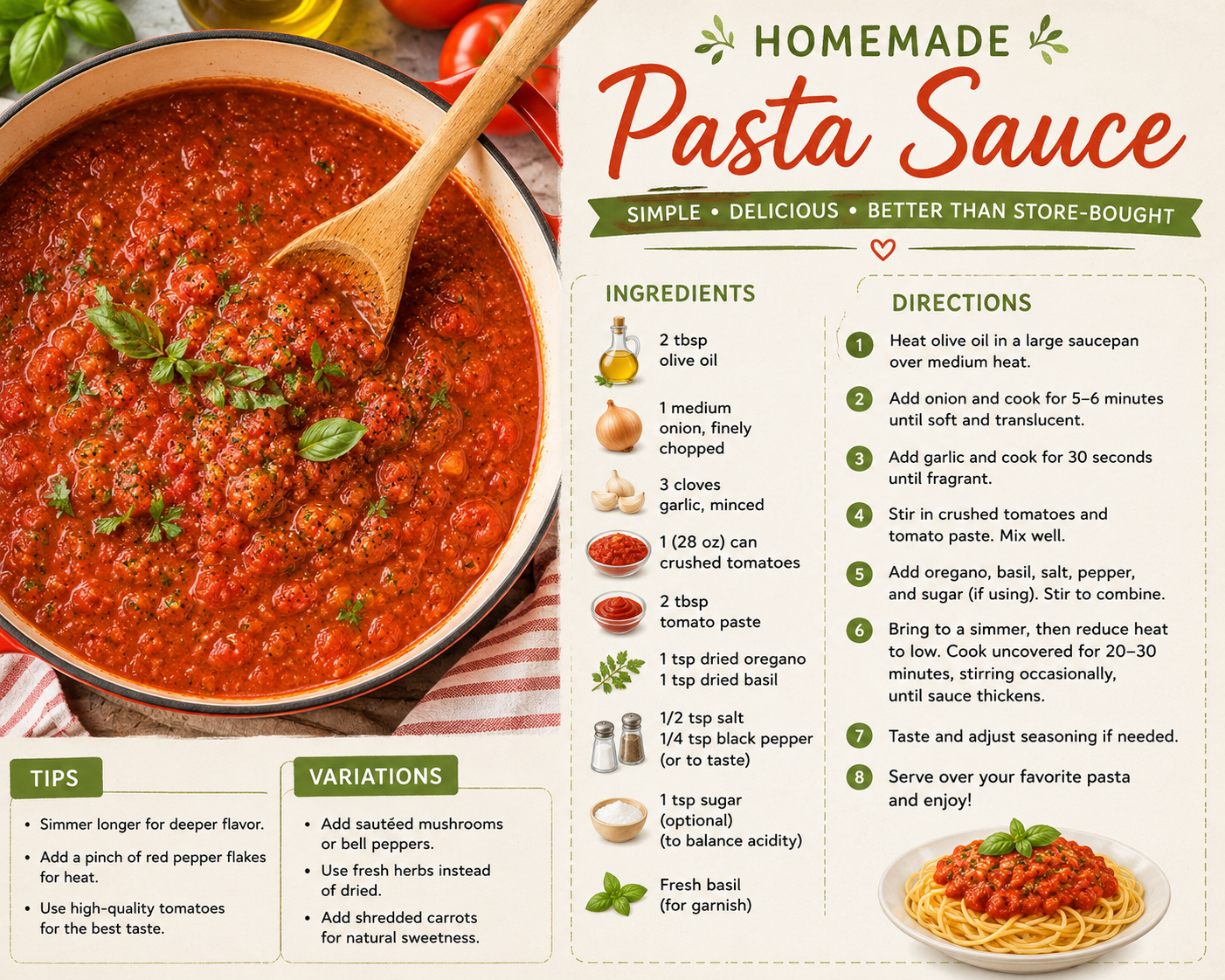
This sauce is rich, deeply flavorful, and embarrassingly simple. We’re talking 45 minutes, one pot, and a handful of real ingredients that do all the heavy lifting.
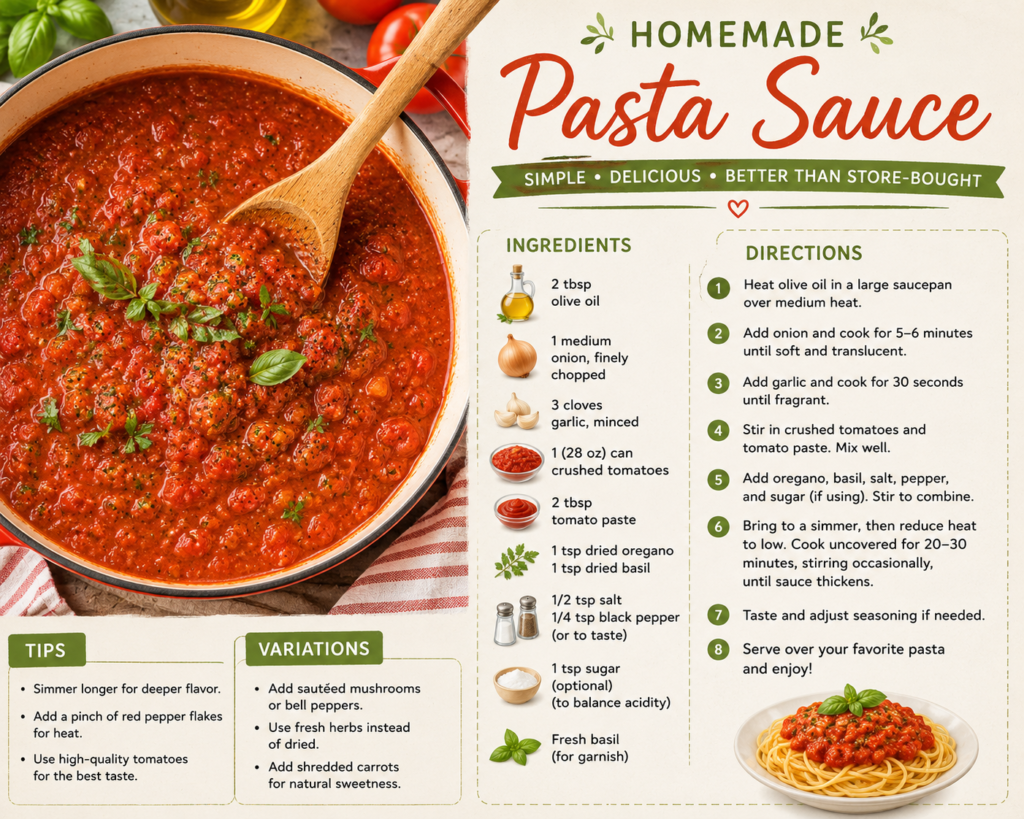
What You’ll Need
For the sauce:
- 2 cans (28 oz each) whole peeled San Marzano tomatoes
- 3 tablespoons extra virgin olive oil
- 6 cloves of garlic, thinly sliced
- 1 small yellow onion, finely diced
- 1 teaspoon red pepper flakes (adjust to taste)
- 1 teaspoon granulated sugar
- 1 teaspoon sea salt (plus more to taste)
- 1/2 teaspoon black pepper
- 1 small bunch of fresh basil (about 10–12 leaves)
- 2 tablespoons unsalted butter
- 1/2 cup dry red wine (optional but highly recommended)
For serving:
- 1 lb pasta of choice (rigatoni, spaghetti, or pappardelle work beautifully)
- Freshly grated Parmesan cheese
- Extra fresh basil leaves
- A drizzle of good olive oil
Tools You’ll Need
- Large heavy-bottomed pot or Dutch oven
- Wooden spoon
- Can opener
- Chef’s knife and cutting board
- Measuring spoons
- Ladle
- Large pasta pot for boiling
Pro Tips
These are the things I wish someone had told me the first time I made this.
- Use San Marzano tomatoes. Not all canned tomatoes are the same. San Marzano varieties are sweeter, less acidic, and make a genuinely noticeable difference in the final sauce. Look for “DOP” on the label if you want the real deal.
- Crush the tomatoes by hand. Before adding them to the pot, pour the tomatoes into a bowl and crush them with your hands. Yes, it’s messy. Yes, it makes the texture so much better than using a blender or leaving them whole.
- Low and slow wins. Once the tomatoes hit the pot, resist the urge to crank up the heat. Simmering on low for a full 30 minutes lets the flavors develop and the sauce thicken naturally. Rushing this step is where most people go wrong.
- Add butter at the end. This is a trick borrowed from Italian nonnas and it changes everything. Stirring in cold butter right before serving gives the sauce a silky, restaurant-quality finish.
- Salt your pasta water like you mean it. It should taste like the sea. Under-salted pasta water is one of the most common reasons homemade pasta dishes fall flat, even with a great sauce.
Substitutions and Variations
No red wine? Use chicken broth or vegetable broth instead. It adds depth without the wine flavor.
Want it meat-based? Brown 1/2 lb of Italian sausage or ground beef in the pot before adding garlic and onion. Drain excess fat, then continue with the recipe.
Vegan? Skip the butter and use an extra tablespoon of olive oil instead. The sauce is still excellent.
Spice it up. Double the red pepper flakes or add a pinch of cayenne for extra heat.
Arrabbiata-style. Use 1.5 teaspoons of red pepper flakes, skip the wine, and finish with just olive oil (no butter). Sharp, spicy, and perfect.
No fresh basil? Add 1 teaspoon of dried basil along with the tomatoes. It’s not the same, but it works in a pinch.
Make Ahead Tips
This sauce is genuinely better the next day. Make a big batch on Sunday and you’ve basically pre-made dinner for most of the week.
- Refrigerator: Stores well in an airtight container for up to 5 days.
- Freezer: Freeze in portioned containers or zip-lock bags for up to 3 months. Thaw in the fridge overnight, then reheat gently on the stove.
If you’re making it ahead for a dinner party, hold off on adding the butter and fresh basil until you’re reheating and about to serve.
How to Make the Pasta Sauce
Step 1: Prep your tomatoes
Open both cans and pour the tomatoes into a large bowl. Crush them by hand until you have a rough, chunky texture. Set aside.
Step 2: Build your base
Heat olive oil in your Dutch oven over medium heat. Add the diced onion and cook for 5–6 minutes until soft and translucent. Add the sliced garlic and red pepper flakes, and cook for another 1–2 minutes until fragrant. Keep stirring so the garlic doesn’t burn.
Step 3: Deglaze with wine
Pour in the red wine and let it cook for 2–3 minutes, scraping up any bits from the bottom of the pot. This step adds a layer of depth you’ll absolutely taste.
Step 4: Add the tomatoes
Pour in your crushed tomatoes. Add the sugar, salt, and black pepper. Stir everything together and bring to a gentle boil.
Step 5: Simmer
Reduce heat to low. Add a few whole basil leaves directly to the pot. Let the sauce simmer uncovered for 25–30 minutes, stirring occasionally. It will deepen in color and thicken beautifully.
Step 6: Finish the sauce
Remove from heat. Fish out the cooked basil leaves (they’ve done their job). Stir in the cold butter until it’s fully melted and incorporated. Taste and adjust salt as needed.
Step 7: Cook and toss your pasta
Cook pasta in a large pot of well-salted boiling water until al dente. Reserve 1/2 cup of pasta water before draining. Toss the hot pasta directly into the sauce, adding a splash of pasta water to help everything come together.
Step 8: Serve immediately
Top with fresh basil, a generous amount of Parmesan, and a drizzle of good olive oil. Eat it while it’s hot.
Nutritional Info (Per Serving, Sauce Only)
Based on 6 servings of sauce
| Nutrient | Amount |
|---|---|
| Calories | ~180 kcal |
| Total Fat | 10g |
| Saturated Fat | 3g |
| Carbohydrates | 18g |
| Fiber | 3g |
| Sugar | 9g |
| Protein | 3g |
| Sodium | ~480mg |
Dietary notes: Naturally gluten-free (sauce only), easily made vegan by swapping butter for olive oil.
Meal Pairing Suggestions
This sauce pairs with more than just pasta. A few ideas:
- Shakshuka-style: Crack eggs directly into the simmering sauce and cook until set.
- Pizza base: Use it as a rich homemade pizza sauce.
- Chicken Parm: Spoon over crispy breaded chicken cutlets with mozzarella on top.
- Dipping sauce: Serve warm alongside crusty sourdough bread. Just try not to eat the whole loaf.
- Stuffed peppers: Use as the base liquid when baking stuffed bell peppers.
Leftovers and Storage
Fridge: Store cooled sauce in a sealed jar or container for up to 5 days.
Freezer: Freeze flat in zip-lock bags or in portions for up to 3 months. Label with the date so you’re not guessing in December.
Reheating tip: Always reheat on low with a splash of water or broth to loosen the sauce. Don’t microwave it if you can help it — the stovetop keeps the texture intact.
Leftover pasta: If you have already-tossed pasta, store it with the sauce. Reheat with a little water or olive oil in a pan over medium-low heat.
FAQ
Can I use fresh tomatoes instead of canned?
Absolutely. Use about 3 lbs of ripe Roma tomatoes. Blanch, peel, and deseed them first, then proceed the same way. Canned San Marzano tomatoes are actually more consistent year-round, so fresh tomatoes work best when they’re in peak summer season.
Do I have to use wine?
Nope. The sauce is still excellent without it. Just skip straight to adding the tomatoes after the garlic is fragrant. Use a splash of broth if you want something to deglaze with.
Why does my sauce taste bitter?
Two likely culprits: garlic that got a little too dark in the pan (burnt garlic goes bitter fast), or low-quality canned tomatoes. That’s why the San Marzano tip matters. A pinch of sugar also helps balance any acidity or bitterness.
How do I make it thicker?
Simmer longer with the lid off. Every extra 10 minutes of uncovered cooking reduces and thickens the sauce more. You can also add a tablespoon of tomato paste along with the canned tomatoes.
Can I double the recipe?
Yes, and you should. It freezes so well that making a double batch and storing portions is honestly one of the better decisions you can make on a Sunday afternoon.
What pasta shape is best?
Rigatoni, pappardelle, and spaghetti all work beautifully. Ribbed or textured pasta (like rigatoni) catches and holds onto the sauce better than smooth pasta. That said, use whatever you have and love.
Wrapping Up
Once you make this sauce, jarred will feel like a downgrade you’re no longer willing to accept.
It’s the kind of recipe that’s simple enough for a Tuesday night but good enough to serve at a dinner party. That sweet spot is exactly why I keep coming back to it.
Give it a go this week and then come back and drop a comment below — I’d love to hear how it turned out for you. Did you try it with meat? Did you go the vegan route? Did you just eat it with bread and call it dinner? (Totally valid, by the way.) Let me know 🍅