Every family has that dish. The one that gets requested for birthdays, holidays, and any time someone needs a little comfort food in their life.
For a lot of families, lasagna is it.
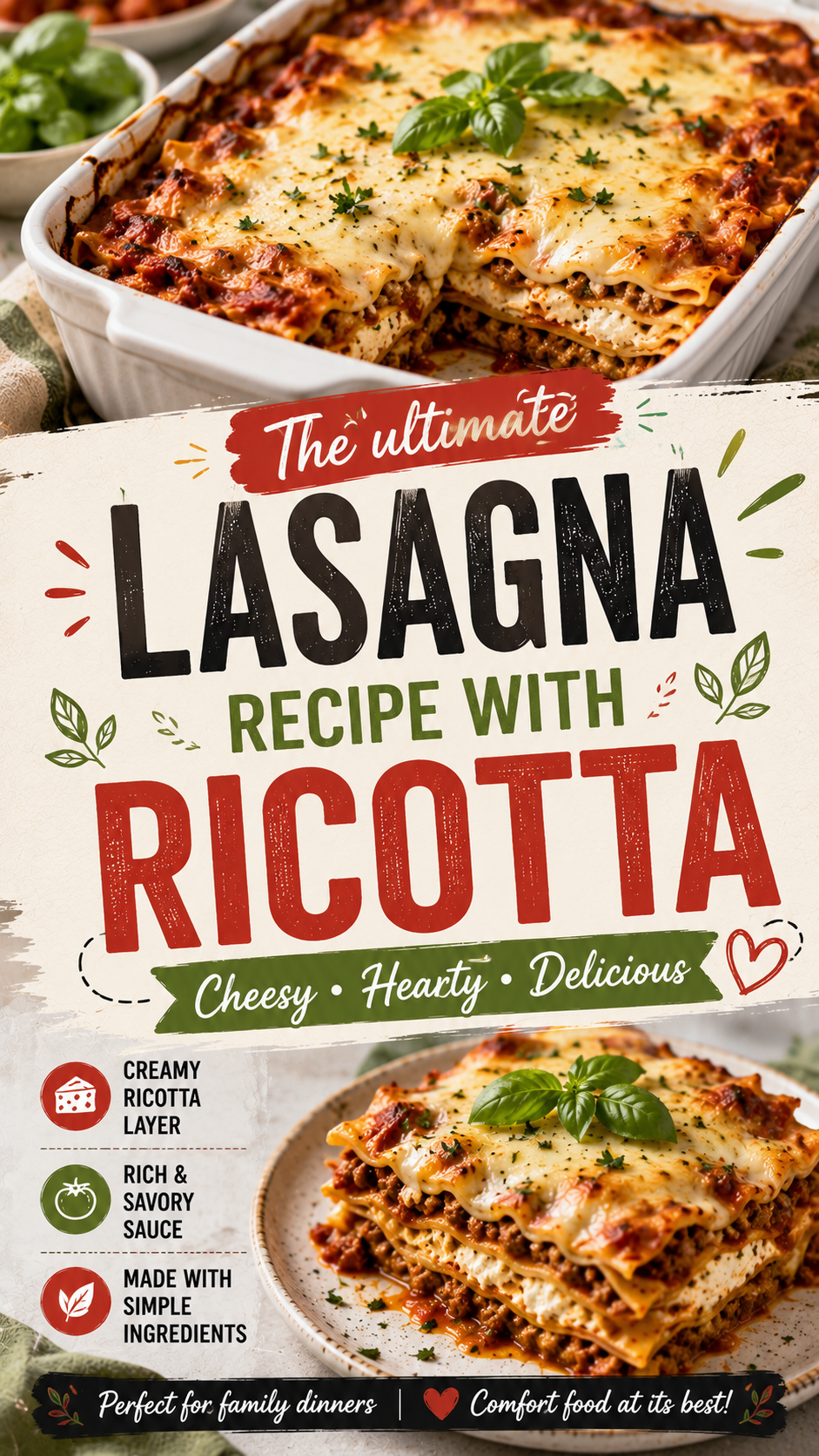
And once you make this version, with its rich meat sauce, creamy ricotta layer, and that golden bubbly cheese on top, you’ll understand exactly why.
This isn’t a quick weeknight recipe. It takes time. But it’s the kind of recipe that makes people stop mid-bite to say something. So keep reading, because there are a few steps in here that make all the difference between a good lasagna and one people ask about for years.
What You’ll Need
For the Meat Sauce
- 500g (1 lb) ground beef (85% lean)
- 500g (1 lb) ground Italian sausage, casings removed
- 1 large yellow onion, diced
- 5 garlic cloves, minced
- 2 tbsp olive oil
- 1 can (800g / 28 oz) crushed tomatoes
- 1 can (400g / 14 oz) tomato sauce
- 2 tbsp tomato paste
- 1 tsp dried basil
- 1 tsp dried oregano
- ½ tsp dried thyme
- 1 tsp sugar
- 1 tsp salt
- ½ tsp black pepper
- ¼ tsp red chili flakes (optional)
- 2 tbsp fresh basil, torn (for finishing the sauce)
For the Ricotta Layer
- 500g (2 cups) whole milk ricotta cheese
- 1 large egg
- ½ cup grated parmesan cheese
- 2 tbsp fresh parsley, finely chopped
- ½ tsp salt
- ¼ tsp black pepper
- ¼ tsp nutmeg (this is the secret ingredient, don’t skip it)
For the Layers
- 12-15 dry lasagna noodles (regular, not no-boil)
- 3 cups shredded mozzarella cheese, divided
- ½ cup grated parmesan cheese, divided
- Fresh basil leaves for garnish
Tools You’ll Need
- Large deep pot (for boiling noodles)
- Large skillet or Dutch oven (for the meat sauce)
- 9×13 inch baking dish (ceramic or glass)
- Aluminum foil
- Colander (for draining noodles)
- Mixing bowl (for ricotta mixture)
- Wooden spoon and spatula
- Sharp knife and cutting board
- Measuring cups and spoons
- Cheese grater
Pro Tips
1. Use a mix of ground beef and Italian sausage. All beef lasagna is good. Half beef, half Italian sausage is on a completely different level. The sausage brings fennel, pepper, and spice that turn a simple meat sauce into something that tastes like it simmered all day in someone’s Italian grandmother’s kitchen.
2. Add an egg to your ricotta mixture. This is the step most home cooks skip, and it’s the reason restaurant lasagna holds together in clean, gorgeous slices while homemade ones sometimes fall apart. The egg binds the ricotta so it sets during baking and stays in place when you cut and serve.
3. Let the meat sauce reduce properly. A watery sauce makes a watery lasagna. After adding your tomatoes, let the sauce simmer uncovered for at least 20-25 minutes until it thickens visibly. You want it almost jammy. That concentrated flavor is everything.
4. Salt your pasta water aggressively. The noodles are the backbone of the dish. If they’re bland, the whole lasagna is flat. The water should taste like the sea. This is not an exaggeration.
5. Rest the lasagna for 20 minutes after baking. This is the hardest step because the smell coming out of your oven is absolutely criminal. But cutting into it too early means a runny, falling-apart mess. Let it rest and it slices cleanly into those perfect layered pieces that actually stay together on the spatula.
Substitutions and Variations
Protein
| Original | Swap Options |
|---|---|
| Ground beef + Italian sausage | All ground beef, ground turkey, ground pork |
| Meat sauce | Skip meat entirely for a vegetarian version (add mushrooms + zucchini instead) |
Cheese
| Original | Swap Options |
|---|---|
| Whole milk ricotta | Cottage cheese (blend smooth first), cream cheese thinned with a little milk |
| Mozzarella | Provolone, fontina, or a mix of both |
| Parmesan | Pecorino Romano for a sharper flavor |
Noodles
| Original | Swap Options |
|---|---|
| Regular lasagna noodles | No-boil noodles (add ¼ cup extra sauce to compensate for moisture absorption) |
| Regular | Gluten-free lasagna noodles |
Dietary Modifications
- Dairy-free: Use dairy-free ricotta and mozzarella alternatives. The texture won’t be identical but it still works.
- Lower fat: Use lean ground turkey and part-skim ricotta and mozzarella.
- Vegetarian: Replace meat with sautéed mushrooms, zucchini, spinach, and eggplant. Use vegetable broth to thin the sauce if needed.
Make Ahead Tips
Lasagna is genuinely one of the best make-ahead dishes that exists.
Option 1: Assemble, refrigerate, bake later. Fully assemble the lasagna, cover tightly with plastic wrap and then foil, and refrigerate for up to 24 hours. When baking from cold, add 15-20 extra minutes to the covered bake time.
Option 2: Bake fully, refrigerate, reheat. Bake the entire lasagna, cool completely, cover, and refrigerate for up to 4 days. Reheat individual portions in the microwave or reheat the whole dish covered in foil at 350°F for 30-40 minutes.
Option 3: Freeze unbaked. Assemble completely, wrap tightly in two layers of foil, and freeze for up to 3 months. Thaw in the fridge overnight, then bake as directed adding 20-25 extra minutes covered.
The sauce can be made 3 days ahead and stored in the fridge. It actually improves with time as the flavors develop.
How to Make It
Step 1: Make the Meat Sauce
- Heat olive oil in a large skillet or Dutch oven over medium-high heat.
- Add diced onion and cook 4-5 minutes until soft and golden.
- Add garlic and cook 1 minute until fragrant.
- Add ground beef and Italian sausage. Break up the meat and let it brown without stirring for 2 minutes, then break up further and cook through completely. Drain excess fat.
- Stir in tomato paste and cook for 2 minutes, stirring constantly.
- Add crushed tomatoes, tomato sauce, basil, oregano, thyme, sugar, salt, pepper, and chili flakes. Stir to combine.
- Bring to a simmer, then reduce heat to low and cook uncovered for 25-30 minutes, stirring occasionally, until the sauce has thickened significantly.
- Stir in fresh torn basil. Taste and adjust seasoning. Set aside.
Step 2: Make the Ricotta Mixture
- In a medium bowl, combine ricotta, egg, parmesan, parsley, salt, pepper, and nutmeg.
- Stir until smooth and fully combined. Refrigerate until ready to assemble.
Step 3: Cook the Noodles
- Bring a large pot of heavily salted water to a boil.
- Cook lasagna noodles for 2 minutes less than the package directions (they’ll finish cooking in the oven).
- Drain and lay flat on a lightly oiled baking sheet or piece of parchment to prevent sticking.
Step 4: Assemble
Preheat oven to 375°F (190°C).
Layer in this order in your 9×13 baking dish:
- Thin layer of meat sauce on the bottom of the dish (stops noodles from sticking)
- Layer of noodles (3-4 noodles, slightly overlapping)
- Half the ricotta mixture spread evenly
- One third of the meat sauce spread over the ricotta
- ¾ cup mozzarella and a sprinkle of parmesan
- Layer of noodles
- Remaining ricotta mixture
- One third of the meat sauce
- ¾ cup mozzarella and parmesan
- Final layer of noodles
- Remaining meat sauce
- Remaining mozzarella (about 1½ cups) and parmesan on top
Step 5: Bake
- Cover tightly with foil (tent it slightly so it doesn’t stick to the cheese).
- Bake covered at 375°F for 40 minutes.
- Remove foil and bake an additional 20-25 minutes until the cheese is golden and bubbly and the edges are slightly caramelized.
- Remove from oven and let rest for 20 minutes before cutting.
- Garnish with fresh basil leaves and serve.
Nutritional Breakdown (per serving, recipe makes 10-12 servings)
| Nutrient | Amount |
|---|---|
| Calories | ~520 |
| Protein | 34g |
| Carbohydrates | 38g |
| Fat | 24g |
| Fiber | 3g |
| Sodium | ~780mg |
Using ground turkey and part-skim cheeses brings this to approximately 420 calories per serving.
Meal Pairing Ideas
- Classic garlic bread: Non-negotiable. The sauce begs for something to soak it up.
- Caesar salad: The crisp romaine and sharp dressing cuts through the richness of the lasagna perfectly.
- Roasted asparagus or green beans: Something light and green balances the heaviness of the dish.
- Red wine: A Chianti, Sangiovese, or Montepulciano are all perfect pairs with a tomato-based meat sauce.
- Sparkling water with lemon for a non-alcoholic option that cleanses the palate between bites.
Leftovers and Storage
Fridge: Store covered tightly for up to 5 days. The lasagna actually tastes better on day two once everything has settled and the flavors have had time to meld together overnight.
Freezer: Cut into individual portions, wrap each in plastic wrap, then foil, and freeze for up to 3 months. Label with the date.
Reheating from fridge:
- Microwave: 2-3 minutes, cover with a damp paper towel to retain moisture
- Oven: Cover with foil, bake at 350°F for 20-25 minutes
Reheating from frozen:
- Thaw overnight in fridge, then reheat as above
- Or bake from frozen at 350°F, covered, for 60-75 minutes
One tip: Add a tablespoon of water or extra sauce to each portion before reheating. It prevents the noodles from drying out and keeps everything moist.
FAQ
Can I use no-boil lasagna noodles? Yes. Skip the boiling step entirely and layer them in dry. Add an extra ¼ cup of water or broth to your sauce before assembling so there’s enough moisture for the noodles to absorb as they bake. Keep covered for the full 45 minutes before uncovering.
My lasagna is watery. What went wrong? A few possible causes: the meat sauce wasn’t reduced enough, the mozzarella had too much moisture (always shred your own from a block rather than using pre-shredded), or the lasagna wasn’t rested long enough before cutting. All three of these issues result in liquid pooling on the plate.
How do I get clean slices? Two things: rest the lasagna for a full 20 minutes after baking, and use a sharp knife rather than a spatula to cut. Cut first, then use the spatula to lift. Also, the first slice is always the hardest to remove cleanly. It gets easier after that.
Can I make this in a smaller dish? Yes. An 8×8 inch dish makes about 6 servings. Use roughly half the ingredients and reduce the bake time by about 10 minutes covered. Check for doneness by inserting a knife in the center, it should feel hot all the way through.
Do I have to use both beef and sausage? No, but the combination is genuinely worth trying at least once before deciding. All-beef lasagna is good. The beef and sausage version has a depth of flavor that’s hard to get any other way.
My ricotta layer seems dry after baking. What happened? Make sure you’re using whole milk ricotta, not part-skim. Part-skim ricotta has less fat and dries out more during baking. Also check that you mixed an egg into the ricotta, which keeps it creamy and custardy rather than grainy.
Can kids eat this? Absolutely. Just skip the red chili flakes for a milder version and it’s a universal crowd-pleaser. It’s one of those dishes that adults and kids both clear their plates without complaint.
Wrapping Up
Making lasagna from scratch is a commitment. There’s no pretending otherwise.
But the moment you pull that bubbling, golden dish out of the oven and the whole kitchen smells like something incredible is happening, you’ll understand why people have been making this dish for generations.
It’s the kind of food that brings people to the table and keeps them there.
Make it for someone you love, or honestly, make it for yourself on a Sunday and enjoy it all week. Both are completely valid choices.
Try this recipe and leave a comment below letting me know how it went. Tell me which layers you changed, what you served it with, and how long it lasted in your fridge. My guess is not very long. 👇