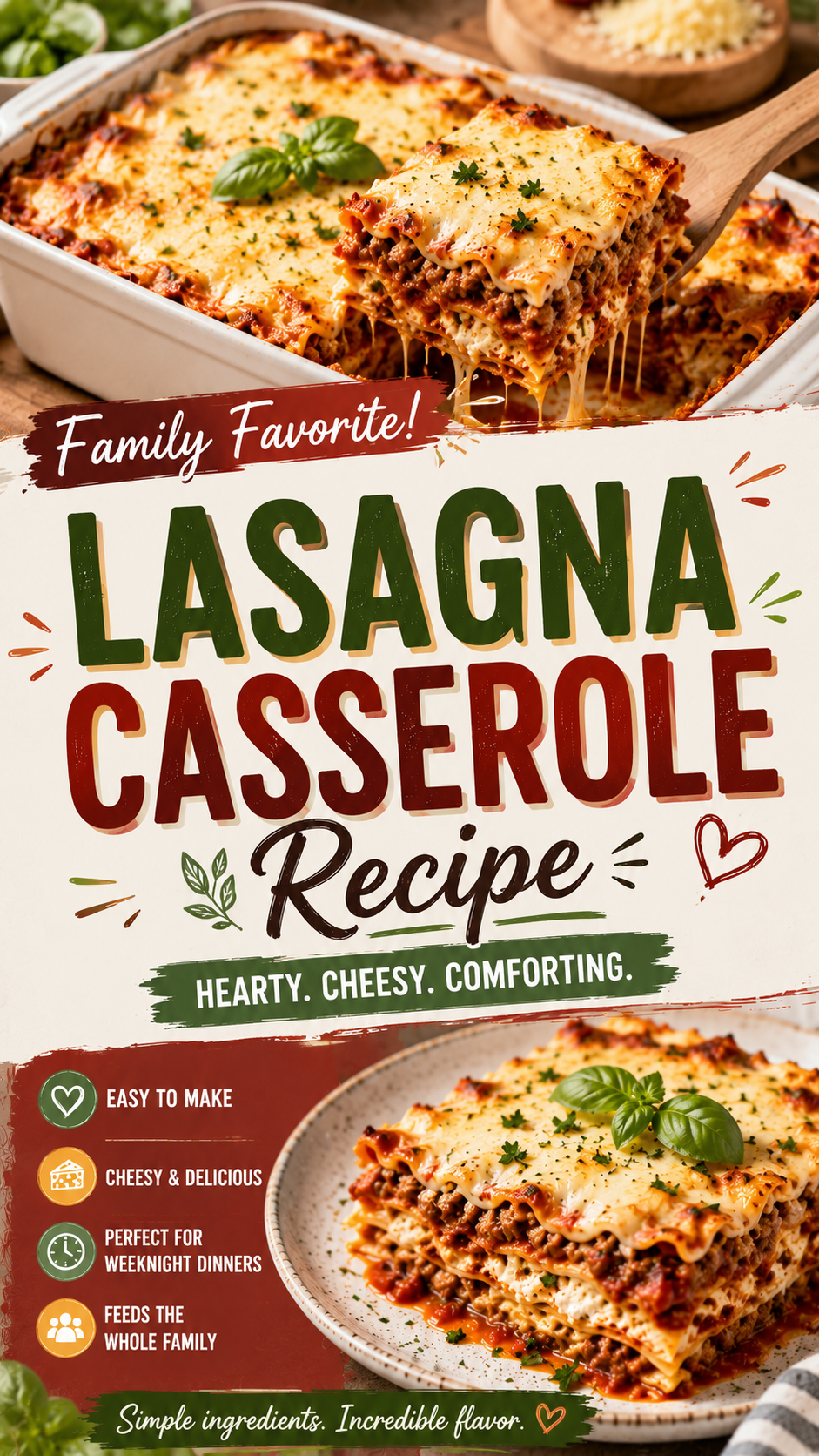
Full lasagna flavor. Half the effort. One pan to wash.
That’s the whole pitch for this lasagna casserole and honestly, it delivers on every single point.
Classic lasagna is one of the greatest dishes ever made. But it also involves boiling noodles, making multiple components, careful layering, and about two hours of your life. On a Tuesday night, that’s a lot to ask.
This casserole takes everything that makes lasagna so good and puts it together in a way that’s actually weeknight-friendly. Same rich meat sauce. Same melted cheese on top. Same comforting result. Just done in a way that doesn’t require you to clear your entire evening.
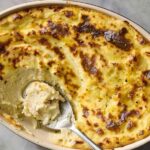
And here’s the part worth reading for: the cheese pull on this one is genuinely something. The technique in the topping section is what makes it happen every single time.
What You’ll Need
For the Meat Sauce
- 600g (1.3 lbs) ground beef (85% lean)
- 1 medium yellow onion, diced
- 4 garlic cloves, minced
- 2 tbsp olive oil
- 2 tbsp tomato paste
- 1 can (800g / 28 oz) crushed tomatoes
- 1 can (400g / 14 oz) diced tomatoes, drained
- ½ cup beef broth
- 1½ tsp dried Italian seasoning
- 1 tsp dried basil
- ½ tsp dried oregano
- 1 tsp salt
- ½ tsp black pepper
- 1 tsp sugar
- ¼ tsp red chili flakes (optional)
For the Cheese Layer
- 375g (1½ cups) whole milk ricotta cheese
- 1 large egg
- ½ cup grated parmesan cheese
- 1 tsp dried parsley
- ½ tsp salt
- ¼ tsp black pepper
- ¼ tsp nutmeg
For the Casserole
- 12 lasagna noodles, cooked and cut into thirds
- 2½ cups shredded mozzarella cheese, divided
- ½ cup grated parmesan cheese, divided
- Fresh basil leaves and chopped parsley for garnish
Tools You’ll Need
- Large oven-safe skillet or Dutch oven (ideal if going skillet-to-oven)
- OR large skillet + separate 9×13 inch baking dish
- Medium mixing bowl
- Large pot for boiling noodles
- Colander
- Wooden spoon or spatula
- Whisk
- Sharp knife and cutting board
- Measuring cups and spoons
- Cheese grater
- Aluminum foil
- Wooden spoon for serving
Pro Tips
1. Cut the noodles instead of layering them whole. This is what turns a regular lasagna into a casserole. Cut each cooked noodle into three or four pieces and toss them through the sauce rather than laying them flat. Every forkful gets pasta, meat sauce, and cheese all at once. It’s a completely different eating experience.
2. Mix the ricotta into the casserole, don’t just dollop it on top. Stir small spoonfuls of the ricotta mixture through the assembled casserole before adding the final cheese layer on top. It distributes the creaminess throughout instead of leaving it concentrated in one spot.
3. Use a block of mozzarella and shred it yourself. Pre-shredded mozzarella is coated in anti-caking starch that prevents it from melting smoothly. A block of low-moisture mozzarella shredded fresh gives you that stretchy, gooey, photo-worthy cheese pull. It makes a visible difference.
4. Finish under the broiler for 2-3 minutes. After the bake time is done, switch to broil on high for the last 2-3 minutes. This is what creates those golden, slightly caramelized spots on top. Watch it closely though because it goes from perfect to burnt fast.
5. Season every component separately. Season the meat sauce while it cooks. Season the ricotta mixture. Season the pasta water. If you only season at the end, the individual layers will taste flat no matter how much you add on top.
Substitutions and Variations
Protein
| Original | Swap Options |
|---|---|
| Ground beef | Half beef, half Italian sausage (enormous flavor upgrade) |
| Ground beef | Ground turkey or ground chicken (lighter option) |
| Meat sauce | Roasted mushrooms and lentils (vegetarian version) |
Cheese
| Original | Swap Options |
|---|---|
| Whole milk ricotta | Cottage cheese blended smooth, or cream cheese thinned with milk |
| Mozzarella block | Provolone, fontina, or low-moisture mozzarella mix |
| Parmesan | Pecorino Romano for a saltier, sharper bite |
Pasta
| Original | Swap Options |
|---|---|
| Lasagna noodles | Penne, rigatoni, or ziti (no cutting required) |
| Regular noodles | Gluten-free lasagna noodles |
| Regular noodles | No-boil noodles broken into pieces (add ¼ cup extra broth to sauce) |
Dietary Swaps
- Gluten-free: Use GF noodles and check that your broth is gluten-free
- Lower calorie: Ground turkey + part-skim ricotta + reduced-fat mozzarella
- Dairy-free: Use dairy-free ricotta and mozzarella alternatives
- Extra veggie: Add diced zucchini, spinach, or bell pepper into the meat sauce
Make Ahead Tips
This casserole is genuinely excellent for making ahead and the leftovers are arguably better than day one.
Prep components separately: Make the meat sauce up to 3 days ahead and refrigerate. Cook and store noodles separately tossed in a little olive oil. Assemble and bake when ready.
Assemble and refrigerate: Fully assemble the casserole, cover tightly with foil, and refrigerate for up to 24 hours. Add 15 minutes to bake time since it starts cold.
Freeze before baking: Assemble in a foil pan, cover with two layers of foil, freeze for up to 3 months. Thaw overnight in the fridge then bake as directed, adding 20 minutes covered.
Freeze after baking: Cool completely, portion into individual servings, wrap each tightly and freeze up to 3 months. Reheat from frozen at 350°F covered with foil for 35-40 minutes.
How to Make It
Step 1: Make the Meat Sauce
- Heat olive oil in a large skillet or Dutch oven over medium-high heat.
- Add diced onion and cook for 4-5 minutes until softened and golden at the edges.
- Add garlic and cook 60 seconds until fragrant.
- Add ground beef. Press it flat and let it sit undisturbed for 2 minutes to get some browning, then break up and cook completely through. Drain excess fat.
- Push meat to the side. Add tomato paste directly to the pan and cook for 2 minutes, stirring, until it darkens and smells slightly caramelized. Stir into the meat.
- Add crushed tomatoes, diced tomatoes, beef broth, Italian seasoning, basil, oregano, salt, pepper, sugar, and chili flakes. Stir well.
- Bring to a boil, then reduce heat to medium-low. Simmer uncovered for 20-25 minutes, stirring occasionally, until the sauce has thickened and reduced. Taste and adjust salt.
Step 2: Cook the Noodles
- Bring a large pot of heavily salted water to a boil.
- Cook lasagna noodles for 1-2 minutes less than package directions.
- Drain, rinse with cool water, and toss with a drizzle of olive oil so they don’t stick.
- Once cool enough to handle, cut each noodle into thirds. Set aside.
Step 3: Make the Ricotta Mixture
- In a medium bowl, combine ricotta, egg, parmesan, dried parsley, salt, pepper, and nutmeg.
- Stir until smooth and well combined. Set aside.
Step 4: Assemble and Bake
Preheat oven to 375°F (190°C).
If using an oven-safe skillet:
- Stir cut noodles directly into the meat sauce in the skillet.
- Drop small spoonfuls of the ricotta mixture throughout and gently fold through (don’t fully mix, you want pockets of ricotta).
- Smooth the top. Sprinkle 1½ cups mozzarella and half the parmesan evenly over the surface.
- Cover with foil and bake for 25 minutes.
- Remove foil. Top with remaining mozzarella and parmesan.
- Bake uncovered for 15 minutes until bubbling.
- Broil on high for 2-3 minutes until the top is golden and spotted with caramelized cheese. Watch closely.
- Rest for 10-15 minutes before serving.
If using a baking dish:
- Transfer the meat sauce to a 9×13 inch baking dish.
- Fold cut noodles through the sauce.
- Drop spoonfuls of ricotta throughout and gently fold in.
- Top with cheese and bake as above.
Garnish with fresh basil leaves and chopped parsley before serving.
Nutritional Breakdown (per serving, serves 8)
| Nutrient | Amount |
|---|---|
| Calories | ~490 |
| Protein | 34g |
| Carbohydrates | 38g |
| Fat | 22g |
| Fiber | 3g |
| Sodium | ~790mg |
Swapping ground turkey and part-skim cheeses brings this to approximately 390 calories per serving.
Meal Pairing Ideas
- Garlic bread or cheesy pull-apart bread for scooping up sauce from the pan
- Simple green salad dressed with lemon and olive oil to balance the richness
- Roasted broccoli or asparagus on the side for something green
- Caesar salad with big croutons for a classic pairing
- A glass of Chianti or Sangiovese if you’re making this a proper dinner
Leftovers and Storage
Fridge: Store covered for up to 5 days. The flavors deepen overnight and this reheats extremely well. Day two is honestly peak lasagna casserole.
Freezer: Individual portions wrapped tightly last up to 3 months.
Reheating from fridge:
- Microwave: 2-3 minutes covered with a damp paper towel, stirring once halfway
- Oven: 350°F covered with foil for 20 minutes
Reheating from frozen:
- Thaw overnight in fridge, then reheat as above
- From frozen: 350°F covered for 50-60 minutes
Tip: Add a small splash of water or pasta sauce to each portion before reheating. It keeps the noodles from drying out and keeps the texture close to freshly made.
FAQ
What makes this a casserole and not a regular lasagna? The main difference is how the noodles are incorporated. Traditional lasagna has flat whole noodles layered horizontally. This casserole cuts the noodles into pieces and folds them through the sauce, making it closer to a baked pasta dish. Easier to scoop, easier to serve, and every bite has an even mix of everything.
Can I use penne or rigatoni instead of lasagna noodles? Yes and it works really well. Shorter pasta with ridges holds onto the meat sauce and ricotta even better. Use about 350g (12 oz) of dry pasta cooked to al dente. The result is more like a baked ziti but with lasagna flavors, and there’s absolutely nothing wrong with that.
My casserole is too dry after baking. What happened? Either the sauce was reduced too much before baking, the pasta absorbed too much liquid, or it was baked uncovered for too long. For the next time, make sure the sauce is loose and saucy before folding in the noodles. A drier casserole can be fixed by stirring in a few spoonfuls of warm marinara or broth when reheating.
Can I make this without the ricotta? Yes. The casserole is still very good without ricotta. You’ll just have a meat sauce and pasta situation with a cheese topping, which is delicious on its own. If you want creaminess without ricotta, stir two tablespoons of cream cheese into the sauce before adding the noodles.
How do I get the cheese on top properly golden? The broiler step at the end is the key. After the uncovered bake, switch your oven to broil on high and let it go for 2-3 minutes. Stay at the oven during this step because the difference between golden and burnt is about 60 seconds. Position the rack about 6 inches from the broiler element.
Can kids eat this? This is genuinely one of the most kid-friendly dinners possible. Skip the red chili flakes for a milder version. The cut noodles are also easier for younger kids to eat than big flat lasagna sheets, which is a practical bonus.
Does this work in a cast iron skillet? It works beautifully in a 12-inch cast iron skillet if you have one that’s oven-safe. Cast iron retains heat really well and gives you slightly crispier edges where the sauce meets the pan, which most people consider a bonus.
Wrapping Up
This is the kind of recipe that earns a permanent spot in your rotation.
It’s hearty enough to feed the whole table, flexible enough to work with whatever you have in the fridge, and easy enough to pull off on a Wednesday night without losing your mind in the kitchen.
The leftovers are just as good as the first serving, which means making this once covers you for multiple meals without extra effort.
Give it a go this week and drop a comment below. Tell me if you used penne or lasagna noodles, what cheese you went with, and whether the broiler step at the end gave you that golden top you were after. I want to know how it went. 👇