I almost walked right past garlic scapes at the farmers market the first time I saw them.
They look like something between a green onion and a science experiment, all curly and weird looking in a bin most people ignore. But once I found out what they actually turn into, I started buying every bunch I could find.
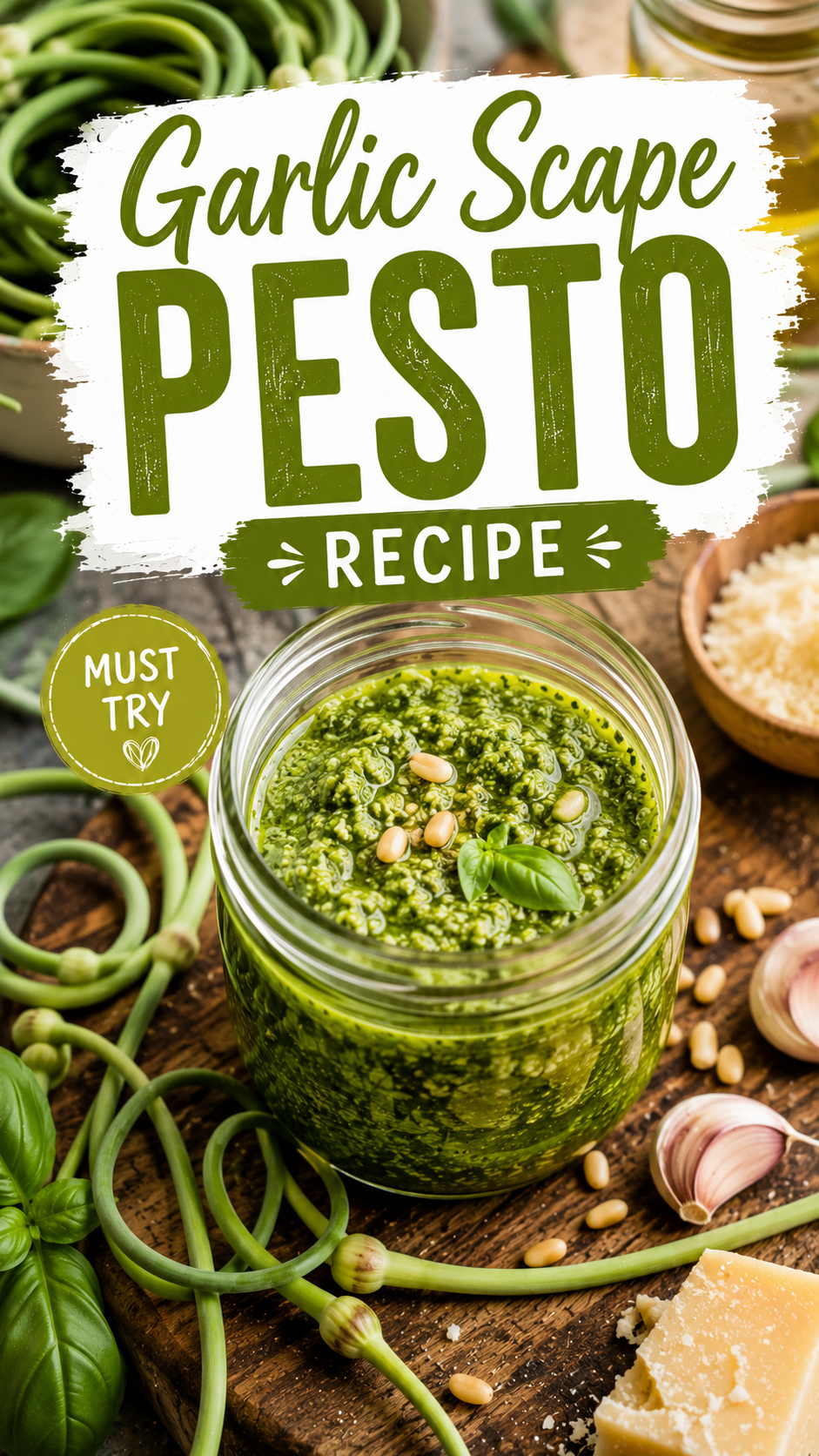
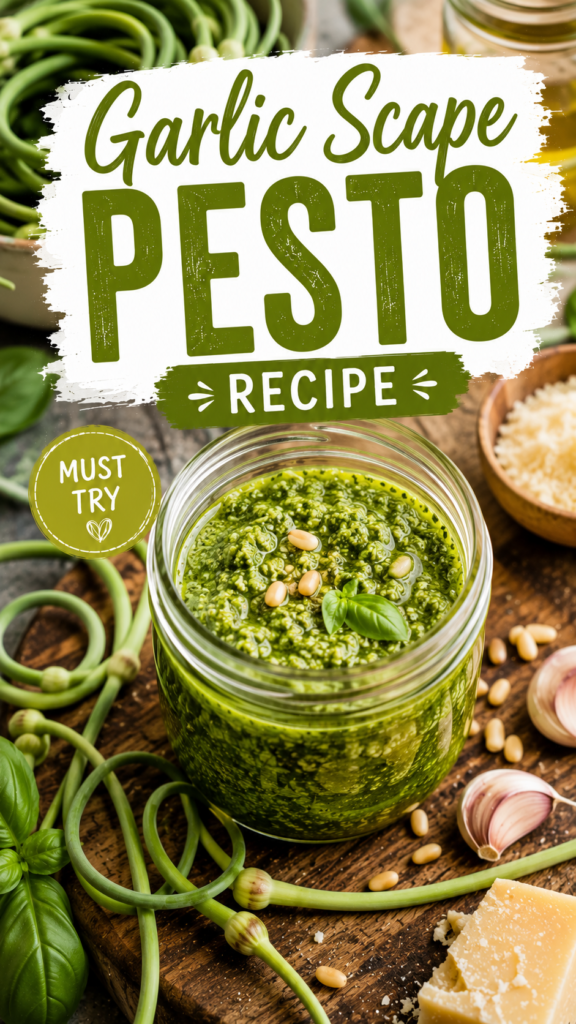
Garlic scapes are the curly green stems that grow from garlic bulbs before they’re harvested. They taste like garlic, but softer and a little grassy, without that sharp bite raw garlic gives you.
And when you blend them into pesto? It’s genuinely one of my favorite things to make in early summer.
This pesto comes together in about 10 minutes, and it makes everything taste better. Pasta, sandwiches, roasted veggies, eggs, you name it.
If you’ve never cooked with garlic scapes before, you’re in for a fun little surprise. Let’s get into it.
What You’ll Need
Garlic scapes only show up for a few short weeks in late spring and early summer, so grab them while you can.
| Ingredient | Amount |
|---|---|
| Garlic scapes, chopped | 1 cup |
| Grated Parmesan cheese | 1/2 cup |
| Pine nuts | 1/2 cup |
| Extra virgin olive oil | 1/2 cup |
| Fresh lemon juice | 1 tablespoon |
| Salt | 1/2 teaspoon |
| Black pepper | 1/4 teaspoon |
That’s it. Seven ingredients and most of them are probably already in your kitchen.
Tools You’ll Need
- Food processor or high powered blender
- Cutting board and knife
- Measuring cups and spoons
- Rubber spatula
- Small airtight jar or container for storing
How to Make Garlic Scape Pesto
Step 1: Trim the scapes. Cut off the tough end (the part that was closest to the ground) and the curly little flower bud at the top if it feels stiff. Chop the rest into 1-inch pieces.
Step 2: Toast the pine nuts. Add them to a dry skillet over medium heat for 2 to 3 minutes, stirring often. You want them golden, not burnt. This step is optional but it makes a real difference in flavor.
Step 3: Blend the base. Add the chopped garlic scapes, toasted pine nuts, and Parmesan to your food processor. Pulse a few times until everything is roughly chopped.
Step 4: Stream in the olive oil. With the processor running, slowly pour in the olive oil until the mixture turns smooth and creamy. Scrape down the sides as needed.
Step 5: Season it. Add the lemon juice, salt, and pepper. Pulse again to combine, then taste. Add more salt if it needs it.
Step 6: Store or use right away. Spoon it into a jar, or toss it straight into warm pasta.
Pro Tips
- Don’t skip toasting the pine nuts. Raw pine nuts taste kind of flat next to toasted ones. Toasting brings out a nuttiness that makes the whole pesto taste more complex.
- Taste as you go. Garlic scapes vary in strength depending on how fresh they are, so the amount of garlic flavor can shift batch to batch.
- Add oil slowly. Pouring it in all at once can make the pesto separate instead of turning creamy.
- Use young, tender scapes if you can find them. The thinner ones are more tender and blend up smoother than the thick, woody ones.
- A splash of pasta water stirred into the pesto right before serving helps it coat noodles instead of clumping.
Substitutions and Variations
- No pine nuts? Walnuts, almonds, or even sunflower seeds work fine.
- Dairy free? Swap the Parmesan for nutritional yeast, about 3 tablespoons.
- No garlic scapes? Regular basil pesto with a clove or two of garlic is the closest substitute, though the flavor will be a bit sharper.
- Want it spicier? Add a pinch of red pepper flakes when you blend.
- Vegan version? Skip the cheese entirely and add an extra tablespoon of nutritional yeast plus a small squeeze of lemon.
Make Ahead Tips
This pesto actually gets better after sitting in the fridge for a few hours since the flavors have time to settle.
You can make it up to 3 days ahead of when you plan to use it. Just keep it in an airtight jar with a thin layer of olive oil poured on top to keep it from browning.
A Few Extra Details
Nutrition (per 2 tablespoon serving): Around 120 calories, 12g fat, 2g protein, 1g carbs. Numbers will shift slightly depending on the exact ingredients you use.
Meal pairing ideas: Toss it with pasta, spread it on a sandwich instead of mayo, dollop it onto scrambled eggs, or swirl it into soup right before serving.
Time saving tip: Make a double batch and freeze half in an ice cube tray. Pop out a cube or two whenever you need a quick flavor boost for weeknight dinners.
Leftovers and Storage
Store leftover pesto in an airtight container in the fridge for up to a week. Pour a thin layer of olive oil on top before sealing it, this keeps air out and prevents browning.
For longer storage, freeze it in an ice cube tray, then transfer the frozen cubes into a freezer bag. It’ll keep for up to 3 months this way.
FAQ
What do garlic scapes taste like? Milder than raw garlic, with a slightly grassy, oniony flavor. Cooking or blending them mellows it out even more.
Where do I find garlic scapes? Farmers markets are your best bet, usually from late May through June depending on where you live. Some specialty grocery stores carry them too during that window.
Can I use this pesto on anything besides pasta? Yes. It works on pizza, roasted vegetables, grilled chicken, or even mixed into mashed potatoes.
My pesto turned brown, is it still good? It’s still safe to eat, the color just changed from oxidation. The oil layer trick mentioned above helps prevent this.
Can I make this nut free? Yes, just leave the pine nuts out entirely or swap in pumpkin seeds for a similar texture.
Wrapping Up
Garlic scapes only stick around for a few weeks each year, so this is one of those recipes worth making the moment you spot them.
Give this pesto a try and let me know how it turns out for you in the comments below. I’d love to hear what you paired it with, and if you ran into any questions along the way, drop them below too.