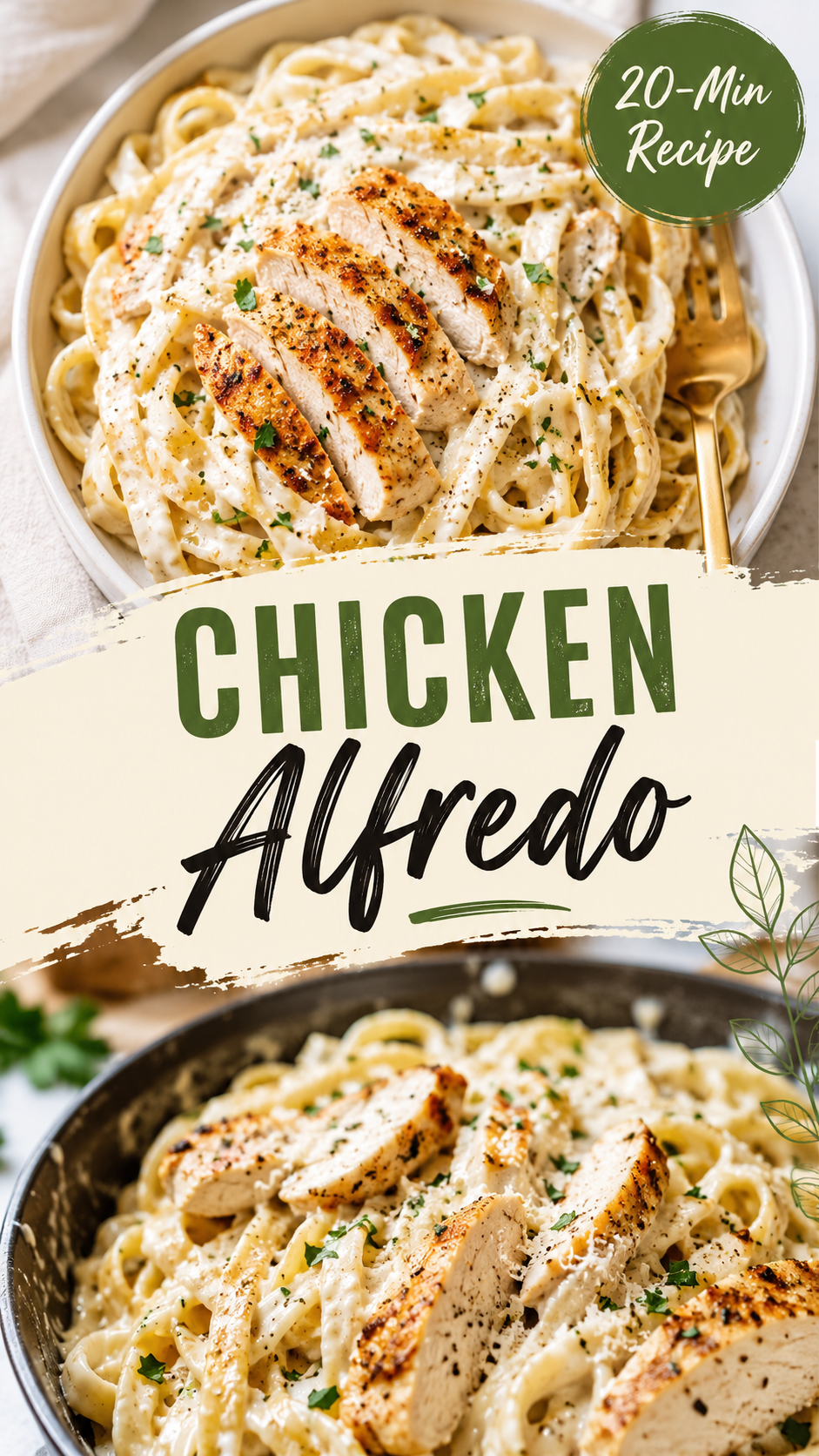
Have you ever ordered chicken alfredo at a restaurant and thought, this is just butter, cream, and cheese wearing a fancy name tag?
You’d be right.
And that’s exactly why this is one of the easiest “impressive” dinners you can make at home.
I used to think alfredo sauce required some kind of secret technique. Turns out it’s just butter, cream, garlic, and parmesan, simmered together until it’s silky enough to coat every noodle.
No flour. No roux. No standing over the stove whisking for twenty minutes.
This version comes together in about 20 minutes, start to finish, and it tastes like something you’d pay $24 for at a checkered-tablecloth Italian spot.
Why This Recipe Actually Works
A lot of homemade alfredo turns out grainy or breaks into an oily mess.
That usually comes down to one thing: the heat is too high, too fast.
This recipe keeps things low and slow once the cream and cheese hit the pan. No flour-based roux, no cornstarch, just real ingredients given the time to come together properly.
The chicken gets seared separately so it actually browns instead of steaming in the sauce, then gets sliced and layered on top right at the end.
That’s the difference between “decent pasta dinner” and “wait, can we have this again tomorrow.”
What You’ll Need
For the chicken:
- 2 boneless, skinless chicken breasts
- 1 tablespoon olive oil
- 1 teaspoon Italian seasoning
- 1/2 teaspoon garlic powder
- Salt and black pepper, to taste
For the alfredo sauce:
- 4 tablespoons butter
- 4 cloves garlic, minced
- 1 1/2 cups heavy cream
- 1 1/4 cups freshly grated parmesan
- 1/4 teaspoon black pepper
- Salt, to taste
For the pasta:
- 12 oz fettuccine
- Fresh parsley, chopped, for garnish
Tools You’ll Need
- A large pot for boiling pasta
- A large skillet (for both the chicken and the sauce)
- A meat thermometer
- A sharp knife and cutting board
- Tongs
How to Make Chicken Alfredo
Step 1: Boil the pasta. Bring a large pot of salted water to a boil.
Cook the fettuccine according to the package instructions until al dente.
Before draining, scoop out about a cup of the pasta water and set it aside. You might need it later to loosen the sauce.
Step 2: Season the chicken. While the water heats up, season both sides of the chicken with Italian seasoning, garlic powder, salt, and pepper.
Step 3: Sear the chicken. Heat the olive oil in a large skillet over medium-high heat.
Cook the chicken for 5-6 minutes per side, until golden brown and cooked through (165°F internally).
Remove from the skillet and let it rest on a cutting board.
Step 4: Start the sauce. In the same skillet, lower the heat to medium and melt the butter.
Add the garlic and cook for about 30 seconds, just until fragrant. Don’t let it brown.
Step 5: Add the cream. Pour in the heavy cream and bring it to a gentle simmer.
Let it simmer for 2-3 minutes, stirring occasionally, until it thickens slightly.
Step 6: Melt in the cheese. Lower the heat to low and slowly whisk in the parmesan, a little at a time.
This is the step where patience matters. Adding it too fast or over heat that’s too high is what makes sauce turn grainy.
Step 7: Adjust the consistency. If the sauce feels too thick, add a splash of the reserved pasta water until it reaches a consistency that coats a spoon without clumping.
Step 8: Combine and serve. Add the drained fettuccine directly into the skillet and toss until every strand is coated.
Slice the rested chicken and arrange it over the top.
Finish with a sprinkle of fresh parsley and an extra crack of black pepper.
Pro Tips From Making This More Times Than I Can Count
1. Use freshly grated parmesan, not the pre-shredded bag. Pre-shredded parmesan has anti-caking agents that keep it from melting smoothly. Freshly grated melts into the sauce instead of clumping at the bottom of the pan.
2. Keep the heat low once the cream goes in. High heat is the number one reason homemade alfredo splits or turns grainy. Low and steady gets you that silky texture every time.
3. Save your pasta water before you drain it. This is easy to forget, and once it’s down the drain, there’s no getting it back. It’s the easiest way to loosen sauce that’s gone too thick.
4. Let the chicken rest before slicing. Cutting into it right off the skillet lets all the juices run out onto the cutting board instead of staying in the meat.
5. Don’t walk away while whisking in the cheese. This step takes maybe 90 seconds of actual attention, but it’s the one moment in the whole recipe where rushing really shows.
Substitutions and Variations
- No heavy cream? Half-and-half works in a pinch, though the sauce will be slightly thinner.
- Want it lighter? Swap half the cream for whole milk and reduce the butter slightly.
- No fettuccine? Penne, linguine, or even bowtie pasta all work well here.
- Prefer shrimp? Swap the chicken for shrimp, searing them for just 2-3 minutes per side since they cook much faster.
- Want more flavor? Add a pinch of nutmeg to the sauce. It sounds unexpected, but it rounds out the richness nicely.
Make Ahead Tips
Alfredo sauce is best made fresh, since it can separate slightly when reheated.
That said, you can season and sear the chicken up to a day ahead, then store it in the fridge and reheat it gently while you make the sauce and pasta fresh.
If you do need to make the full dish ahead, store the sauce and pasta separately and reheat the sauce low and slow on the stove, whisking in a splash of cream or pasta water to bring it back together.
A Quick Note on Lightening This Up
This dish is rich by design, but there are a few easy swaps if you want to lighten it up.
Using half-and-half instead of heavy cream cuts a meaningful amount of fat without losing much in the way of flavor.
You can also bulk up the dish with steamed broccoli or spinach stirred in at the end, which adds volume and nutrients without changing the flavor much.
Leftovers and Storage
Store leftovers in an airtight container in the fridge for up to 3 days.
To reheat, warm gently on the stove over low heat with a splash of milk or cream to loosen the sauce back up. Microwaving works too, just do it in short bursts so the sauce doesn’t separate.
This dish doesn’t freeze particularly well, since cream-based sauces tend to separate once thawed.
FAQ
Why did my alfredo sauce turn grainy? This almost always comes down to heat that’s too high when the cheese goes in. Keep the heat low and add the parmesan gradually for a smooth result.
Can I use pre-cooked or rotisserie chicken instead? Yes. Just warm it through gently at the end instead of searing it, since it’s already cooked.
Can I make this without heavy cream? Half-and-half or whole milk can work, though the sauce will be noticeably thinner and less rich.
Why is my sauce too thin? Let it simmer a bit longer before adding the cheese, and make sure you’re using freshly grated parmesan, which thickens the sauce better than pre-shredded.
Is this recipe kid-friendly? Very much so. It’s mild, creamy, and the chicken can easily be left plain if your kids are picky about seasoning.
Wrapping Up
This chicken alfredo proves that restaurant-quality dinner doesn’t need a long ingredient list or a complicated technique.
Twenty minutes, one skillet for the sauce, and you’ve got a meal that tastes like a lot more effort went into it than actually did.
Give it a try this week, and let me know in the comments how your sauce turned out. I’d love to hear if you tried any of the variations above.