You’ve probably bought a bottle of store-bought dressing, used it twice, and forgotten about it in the back of the fridge.
This is the antidote to that.
A homemade lemon vinaigrette takes about 5 minutes to put together, uses ingredients you almost certainly already have, and honestly makes even a boring bowl of greens feel like something you’d order at a restaurant.
Once you make it from scratch, going back to the bottle feels like a step backward.
What You’ll Need
For the Vinaigrette
| Ingredient | Amount |
|---|---|
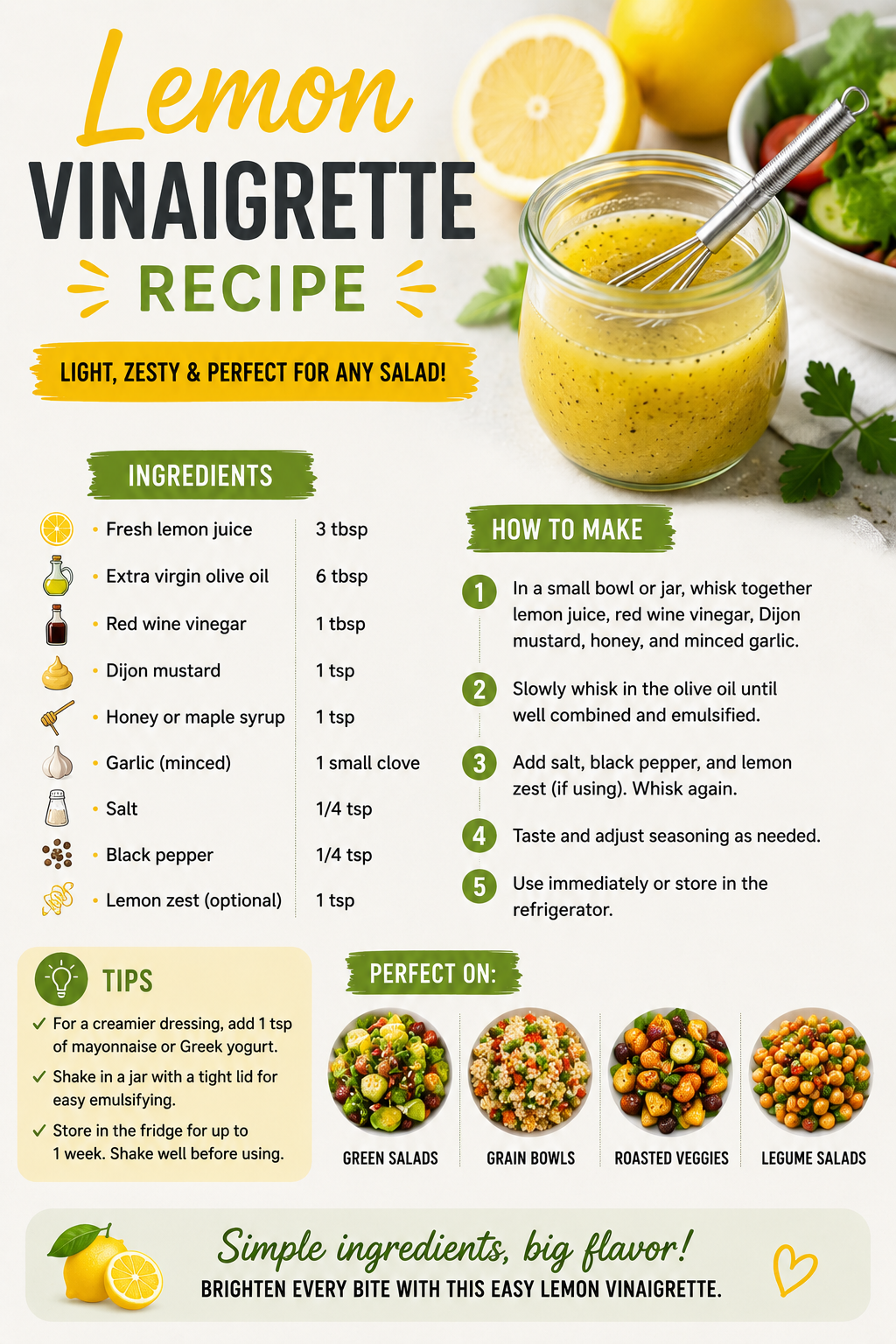
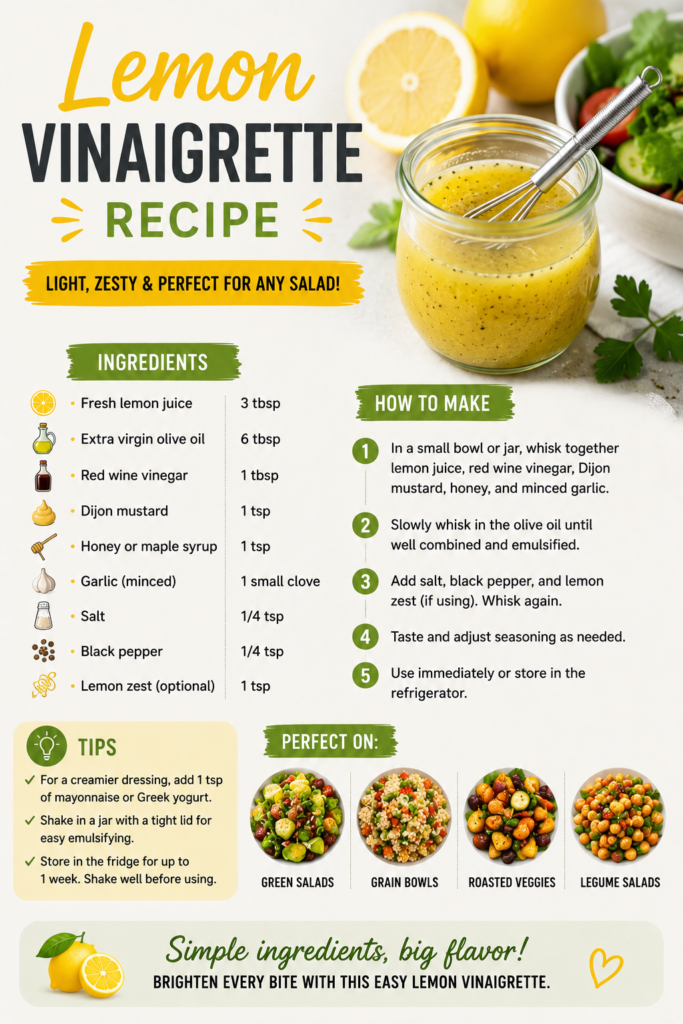
| Fresh lemon juice | 3 tablespoons (about 1.5 lemons) |
| Lemon zest | 1 teaspoon |
| Extra virgin olive oil | 6 tablespoons |
| Dijon mustard | 1 teaspoon |
| Garlic | 1 small clove, finely minced or grated |
| Honey or maple syrup | 1 teaspoon |
| Fine sea salt | 1/4 teaspoon (plus more to taste) |
| Freshly cracked black pepper | A few good cracks |
That’s it. Eight ingredients and you’ve got something that tastes like it came from a nice bistro.
Tools You’ll Need
- Small bowl or mason jar (a jar with a lid makes shaking it together ridiculously easy)
- Whisk or fork
- Microplane or fine grater (for the zest and garlic)
- Citrus juicer (optional but helpful)
- Measuring spoons
No fancy equipment. Nothing that requires a trip to a kitchen store.
Pro Tips
These are the things that make the difference between a good vinaigrette and one that people ask you about.
1. Use fresh lemon juice, always. Bottled lemon juice has a flat, slightly metallic taste. Fresh lemons give you that bright, almost floral acidity that makes this dressing pop. Non-negotiable.
2. The mustard is doing more than you think. Dijon acts as an emulsifier, which is just a fancy way of saying it keeps the oil and lemon juice from separating. Skip it, and you’ll spend a lot of time re-shaking your dressing.
3. Zest before you juice. This sounds obvious until the moment you juice the lemon first and realize you now have a slippery, deflated lemon that’s almost impossible to zest. Do the zest first, every time.
4. Let the garlic mellow. If raw garlic is too sharp for you, stir it into the lemon juice and let it sit for 2-3 minutes before adding the oil. The acid tones it down significantly.
5. Taste and adjust. Every lemon is different. Some are more acidic, some are sweeter. Mix everything together, taste it on a piece of lettuce (not just off the spoon), and then decide if it needs more salt, more honey, or another squeeze of lemon.
Substitutions and Variations
Sweetener swaps Honey is classic, but maple syrup works just as well and keeps it vegan. You can also skip the sweetener entirely if you prefer something sharper.
Oil options Extra virgin olive oil is the standard here, but a light avocado oil works beautifully if you want something more neutral.
Acid variations Try half lemon, half white wine vinegar for a slightly more complex flavor. Or go full orange juice for a sweeter, fruitier dressing that works great on grain bowls.
Add herbs A small amount of fresh thyme, basil, or tarragon stirred in at the end takes this in a completely different direction. Great for when you want to use up fresh herbs before they go bad.
Make it creamy Whisk in a tablespoon of tahini or Greek yogurt for a creamier version. It’s thicker, richer, and pairs especially well with roasted vegetables.
Make-Ahead Tips
This dressing actually gets better after sitting for about 30 minutes, once the flavors have had time to meld together.
You can make a batch at the start of the week and keep it in the fridge for up to 5 days. Just bring it to room temperature and give it a good shake before using, since the olive oil will solidify slightly when cold.
It won’t take you more than 5 minutes to make, but if you’re a meal-prep person, double the recipe and store it in a small mason jar. One batch easily dresses 6-8 servings.
How to Make It
Step 1: Zest and juice your lemons. Zest one lemon until you have about a teaspoon of zest, then juice 1.5 lemons until you have 3 tablespoons of juice. Remove any seeds.
Step 2: Mince or grate your garlic. Use a microplane for the smoothest result. You want it almost paste-like, not chunky. Chunky garlic in a salad dressing is never a great experience.
Step 3: Combine the base. In a small bowl or mason jar, add the lemon juice, lemon zest, minced garlic, Dijon mustard, honey, salt, and black pepper. Whisk or stir until everything is combined.
Step 4: Slowly add the olive oil. If you’re whisking in a bowl, slowly drizzle in the olive oil while continuously whisking. This helps the dressing emulsify. If you’re using a jar, just add the oil and shake vigorously for about 20-30 seconds.
Step 5: Taste and adjust. Dip a piece of lettuce or a small piece of bread into the dressing. Does it need more salt? Another tiny squeeze of lemon? A bit more honey to balance? Adjust from there.
Step 6: Use immediately or store. Dress your salad right before serving, not beforehand, unless you want wilted greens. If making ahead, store in a sealed jar in the fridge.
What to Pair It With
This vinaigrette is more versatile than you’d expect. A few ideas:
- Classic green salad with romaine, arugula, or mixed greens
- Roasted vegetables like asparagus, broccoli, or cauliflower
- Grain bowls with farro, quinoa, or bulgur
- Grilled chicken or fish (drizzle it on right when it comes off the heat)
- Pasta salad in place of heavier mayo-based dressings
- Caprese salad instead of the usual balsamic
It’s one of those things you’ll find yourself putting on more and more once you have a jar of it in your fridge.
Nutritional Breakdown
(Per 2-tablespoon serving, approximate)
| Nutrient | Amount |
|---|---|
| Calories | ~110 kcal |
| Total Fat | 12g |
| Saturated Fat | 1.7g |
| Carbohydrates | 2g |
| Sugar | 1.5g |
| Protein | 0g |
| Sodium | ~95mg |
This is a dressing made almost entirely from olive oil, which means most of the fat content is heart-healthy monounsaturated fat. Worth noting if you’re tracking macros or just trying to eat a little cleaner.
Dietary notes:
- Vegan-friendly if you swap honey for maple syrup
- Naturally gluten-free
- Whole30 compliant if you skip the sweetener
- Keto and paleo friendly
Leftovers and Storage
Store any leftover vinaigrette in a sealed glass jar or airtight container in the refrigerator.
How long does it last? Up to 5 days in the fridge.
What to expect: The olive oil will solidify when cold. This is completely normal. Take the jar out of the fridge 10-15 minutes before you need it, or run it under warm water for a few seconds, then shake well.
One thing to watch for: if you used fresh garlic, the flavor will get stronger the longer it sits. If you prefer a milder garlic taste, use it within the first 2-3 days or reduce the garlic slightly when making ahead.
FAQ
Can I use bottled lemon juice? You can, but the flavor will noticeably suffer. Fresh lemon juice has a brightness that bottled simply can’t replicate. If you’re going to the effort of making homemade dressing, use fresh lemons.
Why does my dressing keep separating? Oil and water-based liquids always separate, that’s just science. The Dijon mustard helps slow this down, but you’ll still need to shake or whisk before each use. It doesn’t mean something went wrong.
My dressing tastes too sour. How do I fix it? Add a touch more honey or a tiny pinch of sugar. Alternatively, add another tablespoon of olive oil to balance it out.
Can I use this as a marinade? Yes, and it works really well for chicken, shrimp, or white fish. Marinate for 20-30 minutes, but not much longer for fish since the acid will start to “cook” it.
Can I make this without mustard? You can, but the dressing will separate much faster and won’t be as creamy. A small pinch of lecithin or a very small amount of mayonnaise can stand in if you really don’t want the mustard flavor.
How much does this recipe make? About half a cup, which is roughly 4 servings at 2 tablespoons each.
Wrapping Up
A great salad dressing is one of those small things that genuinely changes how you eat day-to-day.
You start making your own, you start using it on everything, and suddenly that lunchtime salad you used to eat out of obligation becomes something you actually look forward to.
This lemon vinaigrette is one of those recipes that earns a permanent spot in your rotation. It’s fresh, bright, and takes less time to make than it does to find your keys.
Give it a try this week, and come back to leave a comment below! I’d love to hear how it turned out, what you paired it with, and if you made any swaps that worked out really well.
Your tips might help someone else figure out their new favorite version of this recipe. 🍋