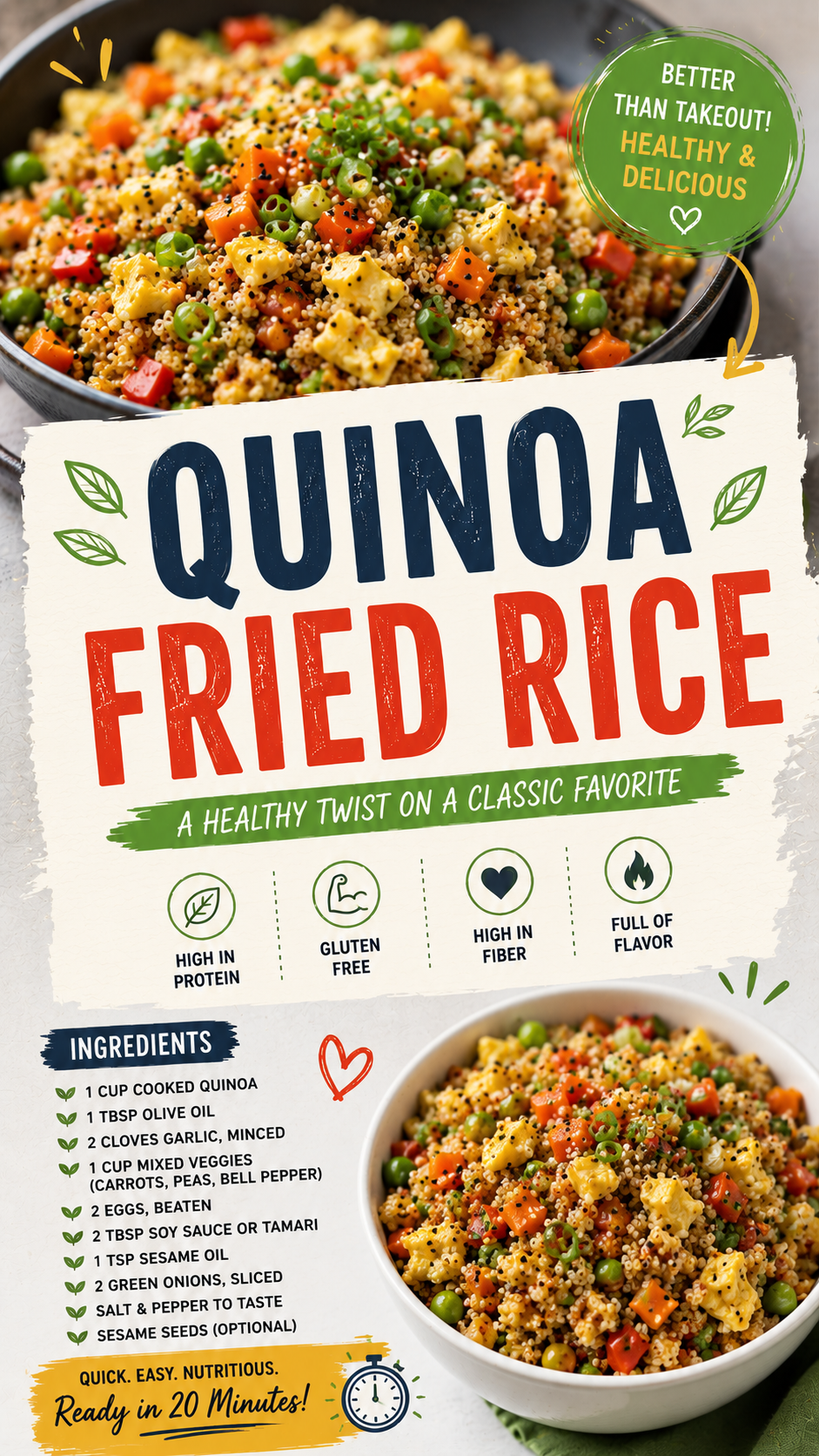
I love fried rice, but the version from my favorite takeout spot leaves me feeling weighed down for the rest of the night.
This version doesn’t do that. 🍳
Quinoa fried rice swaps regular rice for cooked quinoa, keeping all the same savory, garlicky flavor while adding extra protein and fiber to the mix.
It comes together in about 20 minutes, in one pan, and tastes close enough to the real thing that you won’t feel like you’re missing out.
Once you try it, takeout fried rice might start to feel like the lesser option.
Here’s something worth knowing: a cup of cooked quinoa has roughly double the protein of a cup of cooked white rice, which is a big part of why this swap genuinely makes a difference, not just on paper. 🍚
It’s a small change with a real impact on how the meal actually feels afterward.
Why This Recipe Works
Quinoa has a slightly different texture than rice, a little firmer, with a small amount of natural chew.
That texture actually works in its favor here, since it holds up well to high heat stir-frying without turning mushy or sticking together.
Using day-old, cold quinoa instead of freshly cooked also helps a lot. Just like with traditional fried rice, cold grains fry up better than warm, freshly cooked ones.
The eggs add richness, the soy sauce and sesame oil bring the savory depth, and the vegetables add color, crunch, and nutrition without much extra effort.
What You’ll Need
- 1 cup cooked quinoa
- 1 tbsp olive oil
- 2 garlic cloves, minced
- 1 cup mixed vegetables (carrots, peas, bell pepper)
- 2 eggs, beaten
- 2 tbsp soy sauce or tamari
- 1 tsp sesame oil
- 2 green onions, sliced
- Salt and pepper to taste
- Sesame seeds (optional)
That’s the full list, and it’s almost entirely pantry staples you probably already have.
Tools You’ll Need
- Large skillet or wok
- Wooden spoon or spatula
- Small bowl for beating the eggs
- Cutting board and knife
How to Make Quinoa Fried Rice
Step 1: Prep your ingredients
Make sure your quinoa is fully cooked and cooled, ideally from the day before.
Beat the eggs in a small bowl and set aside.
Step 2: Cook the vegetables
Heat the olive oil in a large skillet or wok over medium-high heat.
Add the garlic and cook for about 30 seconds, until fragrant.
Add the mixed vegetables and cook for 3-4 minutes, until just tender.
You want a little bit of bite left in the vegetables here, not fully soft, since they’ll continue cooking slightly once everything else gets added back in.
Step 3: Cook the eggs
Push the vegetables to one side of the pan, then pour the beaten eggs into the empty space.
Scramble the eggs until just set, then mix them in with the vegetables.
Try not to overcook the eggs at this stage. They’ll firm up a little more once mixed in with the warm quinoa.
Step 4: Add the quinoa
Stir in the cold cooked quinoa, breaking up any clumps as you go.
Cook for 3-4 minutes, stirring frequently, until everything is heated through.
Step 5: Season and finish
Add the soy sauce or tamari and sesame oil, stirring until everything is evenly coated.
Season with salt and pepper to taste, then stir in the sliced green onions.
Top with sesame seeds if using, and serve immediately.
Pro Tips
A handful of small details that genuinely improve this recipe.
- Use cold, day-old quinoa. Freshly cooked quinoa holds too much moisture and can turn the whole dish mushy.
- Don’t overcrowd the pan. If you’re doubling the recipe, cook it in two batches instead of one overcrowded pan, or the quinoa won’t crisp up properly.
- Have all your ingredients prepped before you start. This dish moves fast once it’s in the pan, so prep work upfront makes a big difference.
- Use tamari if you need it gluten-free. It tastes nearly identical to soy sauce but is made without wheat.
- Add the sesame oil at the end, not the beginning. It has a stronger flavor and a lower smoke point, so it’s better added toward the finish rather than used for the initial cooking.
- Use high heat throughout. Fried rice depends on quick, hot cooking to get that slightly crisp texture, so resist the urge to turn the heat down.
Substitutions and Variations
- Want more protein? Add diced chicken, shrimp, or tofu alongside the vegetables.
- No mixed vegetables on hand? Use whatever you have, corn, broccoli, snap peas, and zucchini all work well.
- Want it spicier? Add a drizzle of sriracha or a pinch of red pepper flakes at the end.
- Vegan version? Skip the eggs entirely, or substitute with crumbled firm tofu for a similar texture.
- No sesame oil available? A little extra olive oil works in a pinch, though you’ll lose some of that signature nutty flavor.
Make Ahead Tips
Cooking a batch of quinoa specifically to use the next day is honestly the best way to plan for this recipe.
You can also prep the vegetables and beat the eggs ahead of time, storing each separately in the fridge until you’re ready to cook.
I wouldn’t fully cook the dish ahead of time though, since fried rice is always best enjoyed fresh out of the pan.
Nutritional Info & Diet Swaps
One serving (this recipe makes about 2 servings) comes out to roughly 280 calories, with a solid amount of protein from both the quinoa and eggs.
For a lower sodium version: Use a low-sodium soy sauce or tamari, and adjust the added salt at the end.
For a vegan version: Skip the eggs or substitute with crumbled tofu, and double check your soy sauce or tamari doesn’t contain any animal-derived ingredients.
This recipe is naturally gluten-free if you use tamari instead of regular soy sauce.
Meal Pairing Suggestions
This dish works well as a stand-alone meal, but a few additions round it out.
- A simple cucumber salad: Adds a cool, crunchy contrast to the warm, savory fried rice.
- Grilled chicken or shrimp on the side: Turns this into an even heartier meal.
- Miso soup: A light, classic pairing that complements the overall flavor profile.
- A simple side of edamame: Adds extra protein and fits naturally with the overall flavor direction.
Time-Saving Tips
- Cook a double batch of quinoa earlier in the week specifically for this recipe.
- Buy frozen mixed vegetables instead of chopping fresh ones, they cook just as well and save real time.
- Prep everything before turning on the stove, since this dish comes together fast once it starts cooking.
Leftovers and Storage
Store in an airtight container in the fridge for up to 4 days.
Reheat in a skillet over medium heat for the best texture, though the microwave works fine in a pinch.
I don’t recommend freezing this dish, since the texture of both the quinoa and vegetables changes significantly once thawed.
FAQ
Can I use freshly cooked quinoa instead of day-old? You can, but the texture won’t be quite as good. Spreading freshly cooked quinoa on a sheet pan to cool and dry out slightly can help if you’re short on time.
Is this recipe healthier than regular fried rice? Generally yes, since quinoa has more protein and fiber than white rice, and this version uses less oil than most restaurant versions.
Can I make this without eggs? Yes, just skip them entirely or substitute crumbled tofu for a similar texture and added protein.
Why is my quinoa fried rice sticking to the pan? This usually means the pan wasn’t hot enough, or there wasn’t quite enough oil. A well-heated pan with a thin coating of oil helps prevent sticking.
Can I double this recipe for meal prep? Yes, just cook it in batches if your pan isn’t large enough to hold everything without overcrowding.
What’s the best pan to use for this recipe? A wide, flat-bottomed wok or a large nonstick skillet both work well, since they give the quinoa and vegetables enough surface area to actually fry instead of just steam.
Wrapping Up
This recipe proved to me that healthier versions of takeout favorites don’t have to taste like a compromise.
Cold quinoa, a few vegetables, eggs, and a quick trip through a hot pan. That’s genuinely the whole process.
Make a batch this week for a quick dinner, a meal prep lunch, or anytime you’re craving fried rice without the heavy aftermath.
If you try this one, leave a comment below and let me know how it turned out, or what you added to make it your own. I’d love to hear about it.