Have you ever ordered sesame chicken from your go-to takeout spot and thought, I could probably do better than this at home?
Same. And it turns out, you actually can.
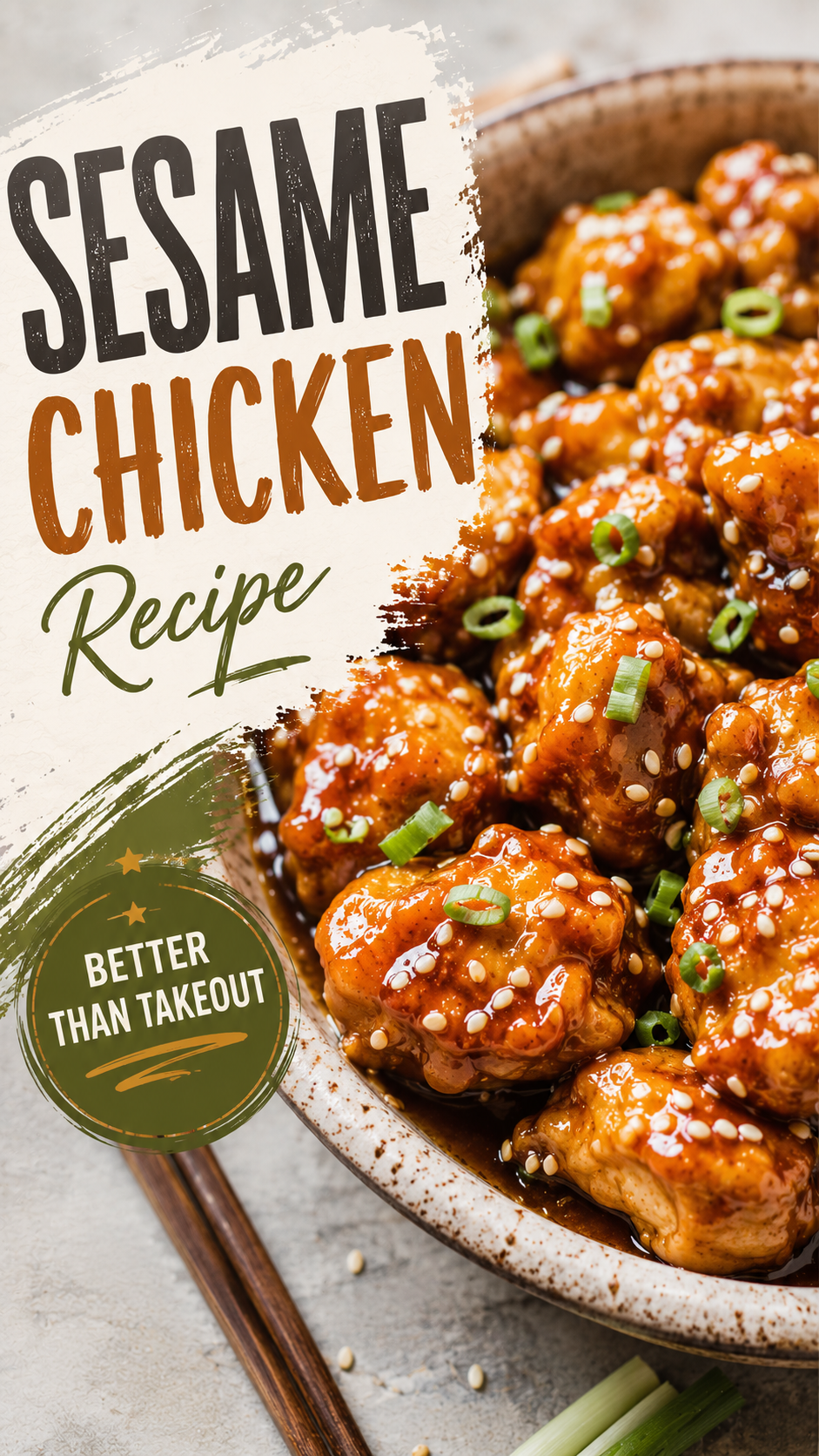
This is the recipe that made me stop ordering it out entirely. Crispy chicken pieces, tossed in a glossy, sticky-sweet sauce, finished with sesame seeds and green onion.
It looks like something that came in a paper bag with your name scribbled on it. It didn’t.
And the best part isn’t even the flavor, though that’s obviously the main event. It’s that you control exactly what goes into it, with none of the mystery oil or sodium bomb that comes with the delivery version.
If you’ve got 30 minutes, you can have this on the table tonight.
Why This Recipe Actually Works
Most homemade versions of sesame chicken end up either soggy or bland, missing that glossy, clingy sauce you get from a good takeout spot.
This recipe fixes both problems.
The chicken gets a light cornstarch coating before frying, which gives it a crispy exterior that actually holds up once the sauce goes on. No deep fryer needed, just a few tablespoons of oil in a regular skillet.
And the sauce itself is built the same way a restaurant would build it: soy sauce, garlic, ginger, and a touch of sweetness, simmered down until it’s thick enough to coat every piece instead of pooling at the bottom of the bowl.
What You’ll Need
For the chicken:
- 1.5 lbs boneless, skinless chicken thighs, cut into bite-sized pieces
- 1/3 cup cornstarch
- 1/2 teaspoon salt
- 1/4 teaspoon black pepper
- 3 tablespoons vegetable oil, for frying
For the sauce:
- 1/3 cup soy sauce
- 3 tablespoons honey
- 2 tablespoons rice vinegar
- 1 tablespoon sesame oil
- 3 cloves garlic, minced
- 1 teaspoon grated ginger
- 1 tablespoon cornstarch mixed with 2 tablespoons water
For topping:
- 1 tablespoon sesame seeds
- 2 green onions, sliced
Tools You’ll Need
- A large skillet
- A mixing bowl, for coating the chicken
- A small bowl, for the cornstarch slurry
- A whisk
- Tongs
- A sharp knife and cutting board
How to Make Sesame Chicken
Step 1: Coat the chicken. In a mixing bowl, toss the chicken pieces with the cornstarch, salt, and pepper until evenly coated.
Step 2: Heat the oil. Heat the vegetable oil in a large skillet over medium-high heat.
Step 3: Cook the chicken. Add the chicken in a single layer, working in batches if needed so the pieces aren’t crowded.
Cook for 4-5 minutes per side, until golden brown and crispy, and cooked through (165°F internally).
Remove and set aside on a plate.
Step 4: Make the sauce. In the same skillet, lower the heat to medium and add the soy sauce, honey, rice vinegar, sesame oil, garlic, and ginger.
Whisk together and bring to a gentle simmer.
Step 5: Thicken it up. Stir in the cornstarch slurry and continue whisking for 1-2 minutes, until the sauce thickens enough to coat the back of a spoon.
Step 6: Combine. Add the cooked chicken back into the skillet and toss until every piece is coated in sauce.
Step 7: Finish and serve. Sprinkle with sesame seeds and sliced green onion.
Serve over rice, or with steamed vegetables on the side.
Pro Tips From Making This More Times Than I Can Count
1. Don’t crowd the chicken in the skillet. Overcrowding traps steam and keeps the chicken from getting that crispy edge. Cook in batches if your skillet isn’t big enough to fit everything in a single layer.
2. Pat the chicken dry before coating it. Excess moisture keeps the cornstarch from sticking properly. A quick pat with a paper towel makes a real difference here.
3. Don’t skip the cornstarch slurry. This is what gives the sauce its glossy, clingy texture. Without it, the sauce stays thin and slides right off the chicken.
4. Use chicken thighs instead of breasts. Thighs stay juicier through the frying process and hold up better once tossed in sauce. Breast meat works too, but it’s easier to overcook.
5. Toss the chicken in sauce right before serving. If it sits too long in the sauce, the crispy coating starts to soften. Toss and serve as close together as you can.
Substitutions and Variations
- No chicken thighs? Chicken breast works fine, just watch the cook time since it dries out faster.
- Want it spicier? Add a teaspoon of sriracha or a pinch of red pepper flakes to the sauce.
- Looking for a gluten-free version? Swap the soy sauce for coconut aminos or a gluten-free tamari.
- Want it air-fried instead? Toss the cornstarch-coated chicken with a light spray of oil and air fry at 400°F for 12-15 minutes, flipping halfway through.
- Prefer it less sweet? Cut the honey down to 2 tablespoons and add an extra splash of rice vinegar to balance it out.
Make Ahead Tips
You can coat the chicken with cornstarch and store it in the fridge for a few hours before cooking, though it’s best fried fresh for the crispiest texture.
The sauce can be made up to 3 days ahead and stored in the fridge. Just reheat it gently in the skillet before tossing in the freshly cooked chicken.
A Quick Note on Lightening This Up
If you want a lighter version, skip the frying step entirely and bake the cornstarch-coated chicken at 425°F for 20-22 minutes, flipping halfway through, then toss it in the sauce as directed.
You’ll lose a bit of the crispy texture, but the flavor holds up well, and it cuts down significantly on the oil used.
Leftovers and Storage
Store leftovers in an airtight container in the fridge for up to 4 days.
To reheat, warm in a skillet over medium heat for a few minutes, or microwave in 1-minute bursts. The texture will be softer than fresh, but the flavor stays just as good.
This recipe doesn’t freeze particularly well, since the crispy coating doesn’t hold up after thawing.
FAQ
Why isn’t my chicken getting crispy? This usually means the skillet was overcrowded, or the chicken wasn’t patted dry before coating. Both lead to steaming instead of crisping.
Can I use chicken breast instead of thighs? Yes. Just reduce the cook time slightly and pull it off the heat right at 165°F, since breast meat dries out faster than thighs.
Is this recipe very sweet? It’s balanced rather than overly sweet, thanks to the soy sauce and rice vinegar cutting through the honey. Reduce the honey slightly if you prefer it less sweet.
Can I double the sauce? Absolutely, especially if you’re serving this over rice and want extra sauce to drizzle on top.
What’s the best way to serve this? Steamed white rice is the classic pairing, though it’s just as good over rice noodles or alongside steamed broccoli.
Wrapping Up
This sesame chicken proves that the takeout favorite you keep ordering is genuinely easy to recreate at home, and arguably better once you’ve made it yourself.
Crispy chicken, a glossy sauce, and a sprinkle of sesame seeds gets you most of the way to something that tastes like it came from your favorite spot down the street.
Give it a try this week, and let me know in the comments how yours turned out. I’d love to hear if you tried any of the variations above.