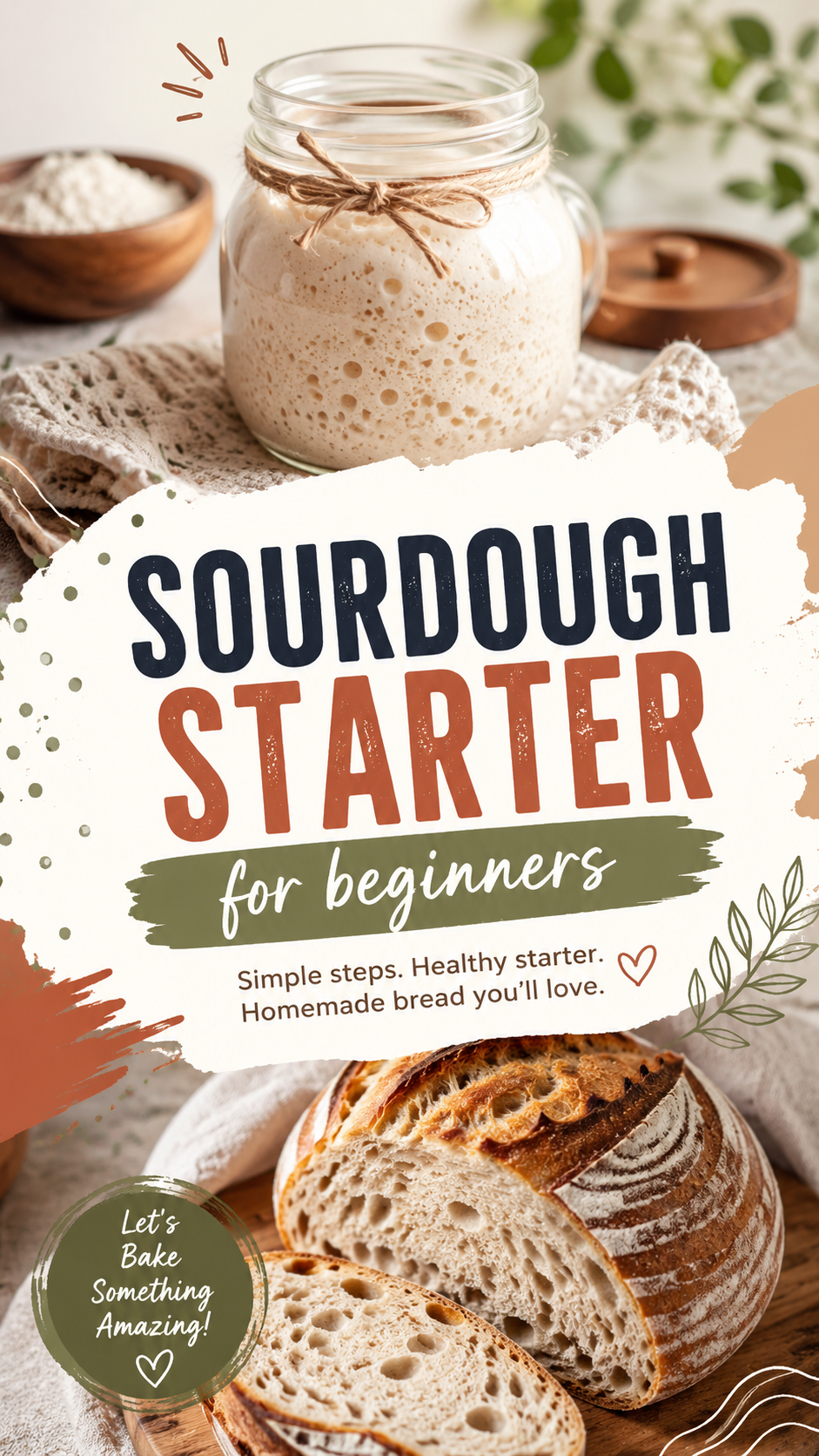
My first attempt at a starter sat on my counter for three days doing absolutely nothing.
I was convinced I’d messed it up somehow.
Then on day four, it doubled overnight, and I went from “this is never going to work” to “wait, that’s it?” 🍞
A sourdough starter is just flour and water, fermented over time until wild yeast and bacteria move in and make it bubbly and alive.
Once it’s active, it’s the only ingredient you need to bake real sourdough bread, no commercial yeast required.
It takes patience more than skill. That’s genuinely the whole trick.
Here’s something that still gets me: bakeries around the world have starters that are decades old, sometimes passed down through generations of the same family. 🫙
Yours starts the exact same way theirs did, with nothing more than flour and water on a counter.
What a Starter Actually Is
A lot of people picture sourdough starter as some mysterious, complicated thing.
It’s really just a small ecosystem living in a jar. Wild yeast that’s naturally present in flour and in the air starts feeding on the sugars in the flour, and as a byproduct, it produces gas and acid.
That gas is what eventually makes bread rise. That acid is what gives sourdough its signature tang.
You’re not adding yeast from a packet here. You’re cultivating the yeast that’s already around you.
This is also why two starters made in two different kitchens can taste noticeably different, even using the exact same flour and water ratios. The wild yeast living in your kitchen is unique to your space.
What You’ll Need
- Unbleached all-purpose flour or whole wheat flour
- Room temperature filtered water
- A clean 32 oz glass jar
- A rubber band for tracking growth on the outside of the jar
- A clean spoon for stirring
Five things. That’s the entire ingredient and tool list to start.
Tools You’ll Need
- A kitchen scale, for accurate measuring
- A breathable cover like cheesecloth, a coffee filter, or a loose lid
- A spot in your kitchen that stays around 70-75°F
- A small notebook or phone note to track your daily feedings
How to Make a Sourdough Starter
Step 1: Combine flour and water
Mix 50 grams of flour with 50 grams of water directly in your jar.
Stir until there are no dry clumps left. It’ll look like a thick, smooth paste.
Step 2: Let it sit
Cover loosely and set it somewhere warm for 24 hours.
Loosely is the key word. The lid needs to let gas escape, or pressure can build up inside the jar.
Step 3: Discard half, then feed
After 24 hours, remove and discard about half of the mixture.
Add another 50 grams of flour and 50 grams of water to what’s left, then stir well.
Step 4: Repeat daily
Continue this same discard-and-feed process once a day, at roughly the same time each day if possible.
Consistency matters more than precision here. Feeding around the same time daily helps establish a predictable rhythm.
Step 5: Watch for signs of life
Somewhere between day 3 and day 6, you’ll start noticing bubbles, a rise in volume, and a tangy smell.
This is the wild yeast establishing itself. Some starters move faster than others depending on the flour, water, and room temperature.
Don’t be discouraged if it seems to stall for a day or two in the middle. That pause is actually really common, and it almost always picks back up.
Step 6: Confirm it’s ready
Your starter is ready to bake with once it reliably doubles in size within 4-6 hours of a feeding.
Drop a small spoonful into water. If it floats, it’s active enough to leaven bread.
If it sinks, that’s not a failure, it just needs another day or two of feeding before trying again.
Pro Tips
A few things I wish someone had told me before my first attempt.
- Patience matters more than precision. Slightly off measurements won’t ruin a starter, but giving up too early will.
- A clear glass jar is worth using. It lets you actually see the bubbles forming, which a ceramic crock won’t.
- Don’t refrigerate it during the first week. It needs consistent warmth to establish itself before it’s ready for cold storage.
- A slightly sour, almost yogurt-like smell is good. A sharp, unpleasant, rotten smell is the only real red flag to watch for.
- Mark the jar with a rubber band after each feeding. It’s the easiest way to actually see how much it’s rising day to day.
- Keep a small log of each feeding. Noting the day, time, and what it looked like helps you spot patterns and troubleshoot faster if something seems off.
Substitutions and Variations
- Rye flour instead of all-purpose: Rye ferments faster and can speed up the early days noticeably.
- Whole wheat for the first few feedings: It carries more natural yeast than refined white flour, which can help things along.
- Tap water concerns: Let it sit out uncovered for an hour before using, since this allows chlorine to evaporate.
- No kitchen scale available: Use roughly ¼ cup flour and 2-3 tablespoons water per feeding, though weighing is genuinely more reliable.
Make Ahead Tips
This entire process is built around waiting, so there’s really no way to rush it ahead of time.
What you can do is start your jar on a day you know you’ll be home consistently for feedings, since the first week benefits from a predictable routine.
Once established, the starter itself becomes your make ahead tool for every future loaf of bread.
Nutritional Info & Diet Swaps
The starter itself isn’t consumed directly, so nutritional value really only applies once it’s used in baked goods.
For easier digestion: The long fermentation in sourdough bread breaks down some of the gluten structure, which is part of why some people who are sensitive to regular bread tolerate sourdough more comfortably. This isn’t the same as gluten-free.
For a less sour flavor down the line: Feed your starter more often, even twice daily, which keeps acidity lower and flavor milder.
Meal Pairing Suggestions
Once your starter is bubbly and active, here’s what to make first.
- A basic sourdough loaf: The simplest way to test whether your starter is truly ready.
- Sourdough English muffins: A fun, smaller-scale project if a full loaf feels intimidating.
- Discard crackers: A great use for the portion you’d otherwise toss during daily feedings.
Time-Saving Tips
- Set a recurring phone alarm for feeding time, since missing a day or two slows progress.
- Feed in the morning so you’re not stirring a jar of paste right before bed.
- Move to weekly fridge feedings once established, instead of daily room-temperature ones.
Leftovers and Storage
Once active, store your starter in the fridge with a loose lid, feeding it once a week to keep it alive.
If you bake frequently, keeping it at room temperature with daily feedings keeps it more consistently strong and ready to use.
Discard can sit in the fridge for several days and gets used in things like pancakes, waffles, or crackers.
FAQ
My starter rose on day 2, then stopped. Is it dead? No, that’s an early false rise from less stable bacteria. The real, consistent rise usually comes a few days later.
Do I need a special starter jar? No, any clean glass jar with room to grow works fine. Special jars are convenient, not necessary.
What if I forget to feed it for a day? A single missed day usually won’t ruin it, especially once it’s a few days in. Just feed it as soon as you remember and continue as normal.
Can two starters from different kitchens taste different? Yes, since the wild yeast and bacteria in the air and flour vary by location, which is part of why sourdough flavor varies so much between bakeries.
How long until I can actually bake bread? Most starters are ready somewhere between day 7 and day 10, though some take a bit longer depending on conditions.
Is it normal for the texture to change throughout the week? Yes, it often gets noticeably bubblier and slightly more elastic as the days go on. That shift is part of it becoming more active.
Wrapping Up
A sourdough starter asks for very little from you. Some flour, some water, and the willingness to wait it out for about a week.
The slow days in the middle are the hardest part, but they’re also completely normal.
Once it’s bubbly, doubling, and passing the float test, you’re ready to bake your first real loaf of homemade sourdough bread.
If you try this one, leave a comment below and let me know how your starter came together, or which day yours finally came alive. I’d love to hear about it.