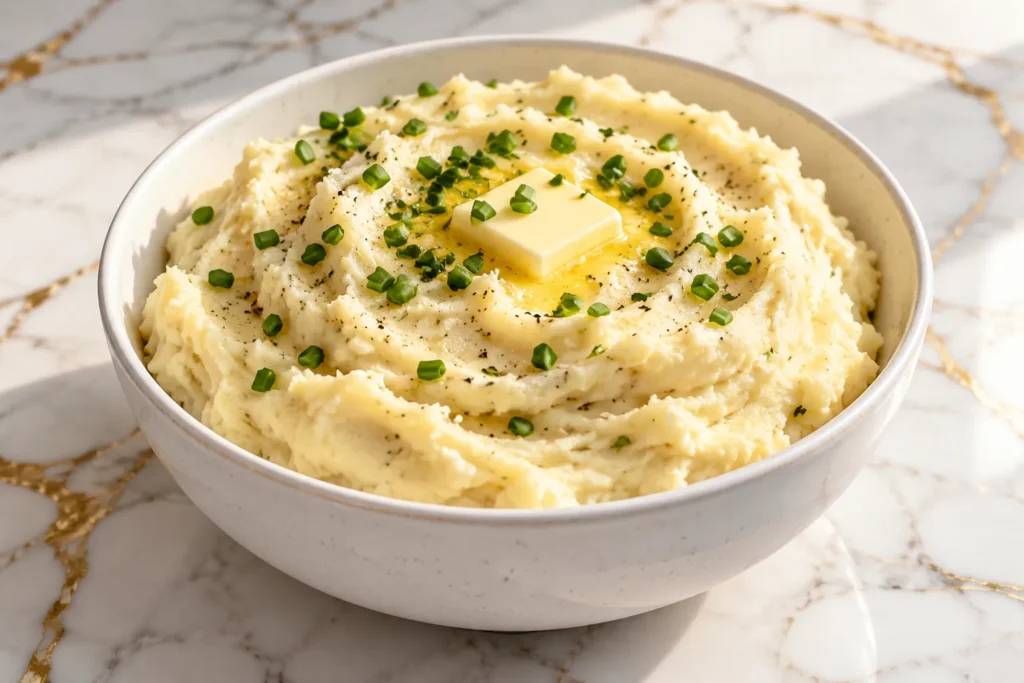
What makes Thanksgiving mashed potatoes so creamy, buttery, and fluffy that everyone reaches for another helping? The secret is choosing the right potatoes, removing excess moisture, and adding warm milk and butter at the right time. With a little care, you can make a smooth, flavourful side dish without complicated techniques or special equipment.
These creamy garlic mashed potatoes bring together tender russet potatoes, real butter, warm milk, fresh garlic, and sour cream. The garlic adds a savoury flavour, while the sour cream gives every spoonful a gentle tang. Together, these ingredients create a comforting side dish that pairs beautifully with turkey, gravy, roasted chicken, and vegetables.
You only need a handful of everyday ingredients to get started. The recipe is also easy to adjust, so you can make the potatoes thicker, creamier, or more garlicky to suit your taste.
Whether you’re preparing a large family dinner or making a simple meal at home, these mashed potatoes are a dependable choice. Follow the steps below for a fluffy texture, balanced seasoning, and a creamy finish that tastes delicious straight from the pot.
Why You’ll Love These Thanksgiving Mashed Potatoes
- Creamy without being gluey: The right potato variety and gentle mixing help create a smooth texture without turning the potatoes sticky.
- Full of garlic flavour: Fresh garlic adds a savoury note that works beautifully with butter and sour cream.
- Made with simple ingredients: You won’t need unusual ingredients or complicated cooking equipment.
- Easy to customise: Add extra butter, use a different potato variety, or adjust the garlic to suit your preferences.
- Great for family dinners: This recipe makes eight servings and fits naturally into a traditional American dinner menu.
Another reason to love this recipe is how easily it fits around other dishes. You can peel and cut the potatoes before cooking, prepare the garlic and butter mixture while they simmer, and finish everything just before serving.
These potatoes also make excellent leftovers. Warm them gently with a splash of milk, and they can be served alongside another meal later in the week.
What You’ll Need
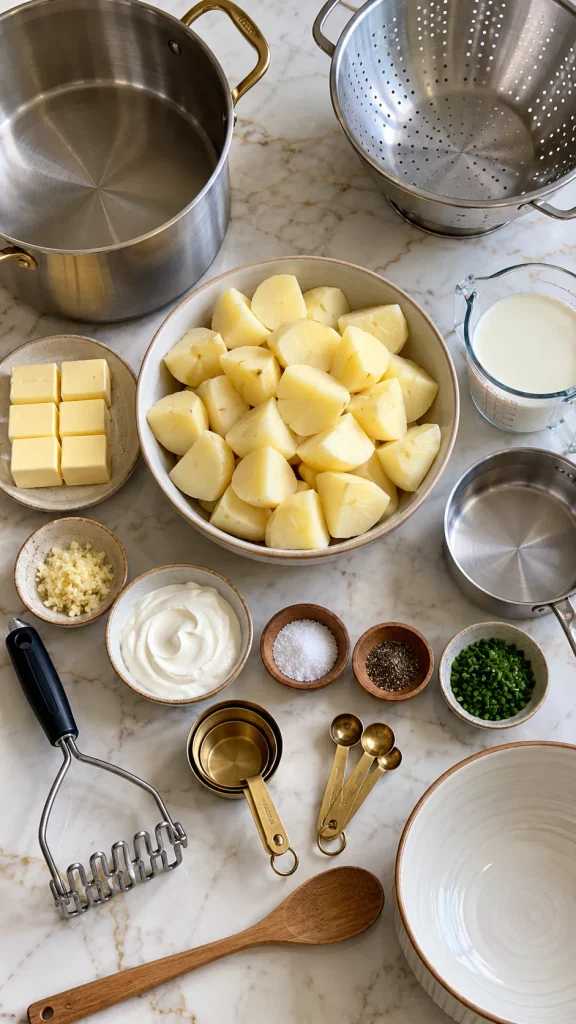
Russet Potatoes
Use 3 pounds of russet potatoes. Their high starch content helps create a fluffy mash that absorbs butter and milk nicely.
Choose firm potatoes without green patches, soft spots, or extensive sprouting. Peel them and cut them into similar-sized chunks so they cook evenly.
Yukon Gold potatoes are another good option if you prefer a naturally buttery flavour and a slightly denser texture.
Unsalted Butter
Measure 6 tablespoons of unsalted butter. Butter gives the potatoes their rich flavour and helps create a silky consistency.
Unsalted butter also makes it easier to control the seasoning. If you only have salted butter, use less salt initially and adjust after mixing everything together.
Whole Milk
You’ll need 1 cup of whole milk. Warm milk blends more easily into hot potatoes and helps keep the finished dish creamy.
Add it gradually rather than pouring it all in at once. Depending on the moisture in your potatoes, you may prefer to use slightly less for a thicker mash.
Fresh Garlic
Use 3 garlic cloves, peeled and minced. Fresh garlic gives the potatoes a pleasant savoury flavour without requiring a large number of seasonings.
For a milder garlic taste, warm the minced garlic in the milk and butter mixture for a few minutes. This softens its sharpness and helps distribute the flavour throughout the dish.
Sour Cream
Add ½ cup of full-fat sour cream. It contributes a creamy texture and a slight tang that balances the richness of the butter.
Let it soften briefly at room temperature before adding it to the hot potatoes. This helps it blend more evenly.
Salt
Use 1½ teaspoons of salt for the cooking water, then season the finished potatoes to taste.
Some salt drains away with the water, so the final amount needed depends on your ingredients and preferences. Taste before adding more, especially if you’re using salted butter.
Black Pepper
Measure ½ teaspoon of freshly ground black pepper. It provides a gentle warmth and complements the garlic.
You can reduce the amount for a milder flavour or add a little more at the table.
Fresh Chives
Use 1 tablespoon of chopped fresh chives as an optional garnish. Their mild onion flavour adds a fresh finish and a little colour.
If chives aren’t available, chopped parsley is a suitable alternative.
Tools You’ll Need
- Large pot: A 5- to 6-quart pot gives the potatoes enough room to cook evenly.
- Colander: Helps drain the potatoes thoroughly after cooking.
- Potato masher: Creates a fluffy, slightly rustic texture.
- Small saucepan: Used to warm the milk, butter, and garlic.
- Measuring cups and spoons: Help keep ingredient quantities consistent.
- Wooden spoon or silicone spatula: Makes it easy to fold the dairy into the potatoes gently.
- Serving bowl: A warmed bowl helps the potatoes stay hot when served.
A potato ricer is useful if you prefer a particularly smooth texture. Avoid using a food processor or high-speed blender, as excessive mixing can release too much starch and leave the potatoes sticky.
Pro Tips Before You Start
Cut the Potatoes into Even Pieces
Cut the potatoes into chunks about 1½ inches wide. Pieces of similar size cook at a similar rate, reducing the chance of having firm centres and overcooked edges in the same pot.
Smaller pieces cook faster, but very small chunks can absorb more water. Keeping the pieces evenly sized helps you get a consistent result.
Start with Cold Water
Place the potatoes in a pot and cover them with cold water before turning on the heat. Bring the water to a boil, then lower it to a gentle simmer.
Starting with cold water helps the pieces heat more evenly from the outside to the centre. This makes it easier for the potatoes to become tender throughout.
Drain Away Excess Moisture
After draining, return the potatoes to the warm pot for 1 to 2 minutes over low heat. Shake the pot gently to help excess moisture evaporate.
This small step makes a difference because watery potatoes can dilute the butter and milk. Drying their surfaces first helps the finished mash taste richer.
Warm the Milk and Butter
Warm the milk, butter, and garlic in a small saucepan over low heat for 3 to 5 minutes. The butter should melt, and the mixture should become hot without boiling.
Warm dairy blends more easily into the potatoes and helps maintain their temperature. Keep an eye on the saucepan so the milk doesn’t scorch.
Mash Gently
Mash the potatoes while they’re hot, then fold in the warm dairy mixture. Stop mixing when the texture is creamy, and the ingredients are evenly combined.
Overworking the potatoes can make them gluey. A hand masher or potato ricer is a better choice than a blender for this recipe.
How to Make Thanksgiving Mashed Potatoes
Step 1: Peel and Cut the Potatoes
Peel 3 pounds of russet potatoes and cut them into evenly sized chunks, about 1½ inches wide.
Place the pieces in a large pot and cover them with cold water by about 1 inch. Add 1½ teaspoons of salt.
Set the pot over medium-high heat and bring the water to a boil. Once boiling, reduce the heat to maintain a gentle simmer.
Step 2: Cook Until Fork-Tender
Simmer the potatoes for about 15 to 20 minutes. The exact time depends on the size of the chunks and the strength of the simmer.
Pierce one of the larger pieces with a fork or thin knife. It should slide easily into the centre without resistance.
If the potatoes still feel firm, continue cooking for another 2 to 3 minutes before checking again. Properly tender potatoes are easier to mash without leaving hard lumps.
Step 3: Drain and Dry the Potatoes
Pour the potatoes into a colander and allow the water to drain completely.
Return them to the warm pot and place it over low heat for 1 to 2 minutes. Shake the pot gently from time to time to help release excess moisture.
Remove the pot from the heat when the potatoes look dry on the surface. Don’t leave them over the heat for too long, as the bottom may begin to scorch.
Step 4: Warm the Garlic, Butter, and Milk
While the potatoes cook, combine 1 cup of whole milk, 6 tablespoons of unsalted butter, and 3 minced garlic cloves in a small saucepan.
Warm the mixture over low heat for 3 to 5 minutes, stirring occasionally. The butter should melt completely, and the garlic should become fragrant.
Don’t let the milk boil. Remove the saucepan from the heat once the mixture is hot and the ingredients are combined.
Step 5: Mash the Potatoes
Use a potato masher to break down the potatoes while they’re still hot.
Mash until most of the large lumps disappear. If you prefer a rustic texture, leave a few small pieces.
For a smoother result, press the potatoes through a potato ricer. Avoid using a food processor or high-speed blender because aggressive mixing can make the potatoes sticky and elastic.
Step 6: Add the Warm Milk Mixture
Pour about three-quarters of the warm garlic, butter, and milk mixture into the potatoes.
Fold gently with a wooden spoon or silicone spatula until the liquid is incorporated. Add the remaining mixture a little at a time until you reach your preferred consistency.
You may not need every drop. The finished potatoes should be creamy and soft enough to scoop while still holding their shape.
Step 7: Stir in the Sour Cream
Add ½ cup of sour cream and ½ teaspoon of black pepper. Fold gently until the sour cream is evenly distributed.
Taste the potatoes and add more salt if needed. If the mixture is too thick, stir in a tablespoon of warm milk at a time.
Give the potatoes a moment to settle before adding more liquid. This helps you avoid making them thinner than you intended.
Step 8: Garnish and Serve
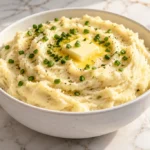
Transfer the potatoes to a warmed serving bowl. Sprinkle 1 tablespoon of chopped fresh chives over the top if desired.
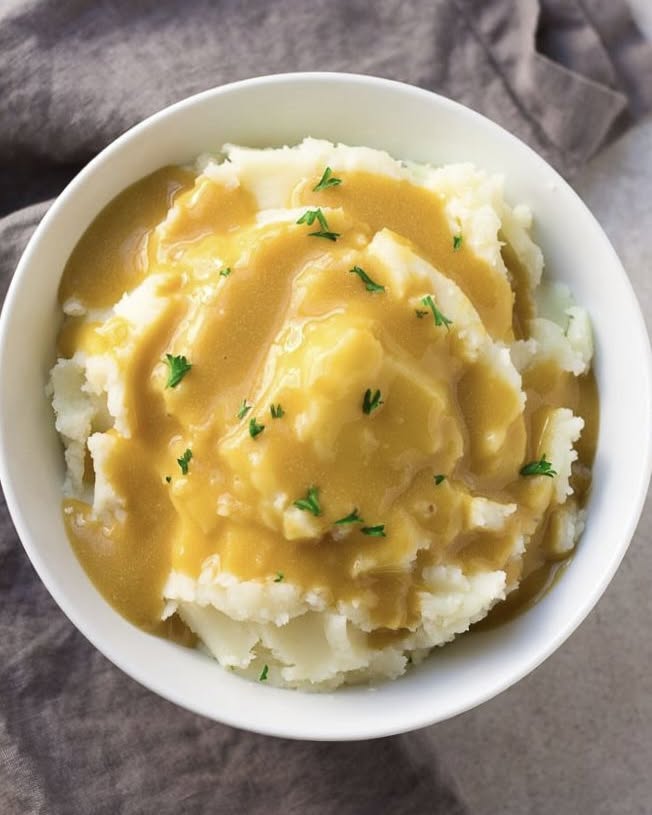
For an extra-rich finish, add a small pat of butter just before serving. Serve the potatoes hot alongside gravy, turkey, roasted chicken, or your favourite vegetables.
If dinner isn’t ready yet, cover the potatoes and keep them hot at a safe holding temperature of at least 140°F (60°C). Stir gently before serving.
Substitutions and Halal Swaps
Use Yukon Gold Potatoes
Yukon Gold potatoes can replace russets in the same quantity. They have a naturally buttery flavour and usually produce a creamier, denser mash.
If you enjoy a balance of fluffiness and creaminess, you can also use a combination of russet and Yukon Gold potatoes.
Replace Whole Milk
If you don’t have whole milk, use 2% milk. The potatoes may be slightly less rich, but the recipe should still work well.
For a dairy-free version, use unsweetened, unflavoured oat milk or soy milk and a suitable plant-based butter alternative. The flavour and texture will vary depending on the products you choose.
Make the Recipe Without Sour Cream
Replace the sour cream with ¼ cup of additional warm milk or ¼ cup of plain, unsweetened Greek yoghurt.
Greek yoghurt gives the potatoes a tangier flavour, so add it gradually and taste as you go. Avoid boiling the finished potatoes.
Adjust the Garlic
For a milder flavour, use 1 or 2 garlic cloves instead of 3. For a stronger garlic taste, roast a whole head of garlic, squeeze out the softened cloves, and fold them into the mash.
Roasted garlic has a softer, sweeter flavour than fresh minced garlic.
Keep the Meal Halal-Friendly
The potatoes themselves are naturally suitable for a halal-friendly menu when prepared with the ingredients listed. If you’re serving them with gravy, choose one made without alcohol or non-halal meat ingredients.
Homemade gravy made with suitable turkey drippings or halal chicken broth is a good option. Check packaged ingredients when following specific dietary requirements.
Variations to Try
Roasted Garlic Mashed Potatoes
Replace the minced garlic with roasted garlic cloves. Roast a whole garlic bulb until the cloves are soft, then squeeze them out of their skins and mash them into the potatoes.
This version has a milder, slightly sweet garlic flavour that pairs nicely with butter and sour cream.
Cheddar Mashed Potatoes
Fold in ¾ cup of freshly grated sharp cheddar after adding the warm milk mixture. Stir gently until the cheese melts.
Check that the cheese meets your dietary requirements if suitable rennet is important to you.
Fresh Herb Mashed Potatoes
Add 1 tablespoon of chopped parsley and 1 teaspoon of fresh thyme leaves. These herbs bring a fresh flavour that complements the garlic without overpowering the potatoes.
Start with a small amount, then adjust to taste.
Extra-Buttery Mashed Potatoes
Increase the butter from 6 tablespoons to 8 tablespoons for a richer result. Add the butter gradually and fold gently to help it blend evenly.
If the potatoes become too thick, add a small splash of warm milk.
Slow Cooker Mashed Potatoes
Prepare the potatoes on the stovetop, then transfer them to a slow cooker to keep warm for serving. Use the warm setting only if it maintains the potatoes at 140°F (60°C) or above.
Stir occasionally and add a little warm milk if the potatoes begin to thicken.
Common Mistakes to Avoid
Using the Wrong Type of Potato
Waxy potatoes can produce a denser texture than russets. That’s not necessarily a problem, but the result won’t be as fluffy.
The fix: Choose russet potatoes for a light mash or Yukon Gold potatoes for a creamier texture.
Leaving Too Much Water in the Potatoes
If the potatoes aren’t drained properly, the finished dish can taste watery. Adding extra butter won’t fully solve the problem.
The fix: Let the drained potatoes sit over low heat for 1 to 2 minutes to release excess moisture before mashing.
Adding Cold Milk
Cold milk can cool the potatoes and take more mixing to incorporate evenly.
The fix: Warm the milk and butter together before adding them. Keep the heat low so the milk doesn’t scorch or boil.
Overmixing the Mash
Mixing too vigorously releases more starch, which can create a sticky, glue-like consistency.
The fix: Mash the potatoes with a hand masher or potato ricer, then fold in the dairy gently. Stop as soon as everything is combined.
Adding All the Milk at Once
Different batches of potatoes absorb different amounts of liquid. Pouring in the entire cup immediately can leave the mash thinner than you want.
The fix: Begin with about three-quarters of the milk mixture, then add more gradually until the texture is right.
Forgetting to Taste Before Serving
The salt level can vary depending on the butter, cooking water, and other ingredients. Potatoes can taste bland if the final seasoning isn’t checked.
The fix: Taste after adding the sour cream and pepper. Adjust the salt in small amounts, stirring gently between additions.
Make-Ahead Tips
You can prepare this recipe ahead of time, which helps when several dishes need attention before dinner.
Prepare the potatoes early: Peel and cut the potatoes shortly before cooking. If you need to prepare them in advance, keep the cut pieces submerged in cold water in the refrigerator and cook them within 24 hours. Drain before placing them in fresh cooking water.
Make the complete recipe ahead: Cook and mash the potatoes, then transfer them to a shallow container and refrigerate promptly. For food safety, refrigerate within two hours of cooking, or within one hour when the surrounding temperature exceeds 90°F (32°C).
Reheat gently: Place the chilled potatoes in a saucepan over low heat. Add a splash of milk, stir gently, and continue heating until the centre reaches 165°F (74°C).
Keep them warm for serving: Once reheated, you can transfer the potatoes to a slow cooker that maintains a safe hot-holding temperature of at least 140°F (60°C). Stir occasionally and avoid leaving them at room temperature for long periods.
For the fluffiest texture, stir gently rather than beating the potatoes repeatedly during reheating.
Nutrition and Diet Swaps
Potatoes provide carbohydrates, while butter, milk, and sour cream contribute fat and richness. The nutrition will vary depending on the dairy products you choose and the size of each serving.
The following values are estimates for one serving when the recipe makes eight servings.
| Nutrient | Estimated amount per serving |
| Calories | 280 |
| Carbohydrates | 35 g |
| Protein | 5 g |
| Fat | 14 g |
| Saturated fat | 9 g |
| Fibre | 3 g |
| Sodium | 500 mg |
These are approximate values, not laboratory-tested nutrition information. Actual amounts will vary with ingredient brands and portion sizes.
Make a Lighter Version
Use 2% milk, reduce the butter to 4 tablespoons, and replace the sour cream with plain low-fat Greek yoghurt. The potatoes will have a slightly different texture and flavour.
Make Them Dairy-Free
Use a suitable plant-based butter alternative, unsweetened plant milk, and dairy-free sour cream. Add the milk gradually because different products can affect the consistency.
Reduce the Sodium
Start with less salt in the cooking water and adjust the seasoning after mashing. Garlic, black pepper, and fresh chives help add flavour without requiring as much salt.
Adjust the Portion Size
Serve smaller scoops alongside turkey, vegetables, and other side dishes. This makes it easier to accommodate a larger menu without changing the recipe itself.
What to Serve With Creamy Garlic Mashed Potatoes
The smooth texture and savoury garlic flavour make these potatoes a natural partner for many main dishes.
- Roasted turkey: Serve with turkey drippings or a suitable homemade gravy.
- Roasted chicken: Garlic mashed potatoes pair well with crisp-skinned chicken and roasted vegetables.
- Halal beef roast: The creamy potatoes balance the savoury flavour of a slow-roasted beef dinner.
- Green vegetables: Green beans, Brussels sprouts, or broccoli add colour and a fresh contrast.
- Stuffing and gravy: Combine these potatoes with other traditional sides for a filling family meal.
If you’re planning a larger menu, link this recipe to [Thanksgiving Side Dishes for a Crowd]. That roundup can help readers find more dishes for their table, while this mashed potato recipe gives them a detailed option to prepare.
You can also connect it with [Homemade Turkey Gravy], [Classic Green Bean Casserole], [Easy Thanksgiving Stuffing], or [Roasted Garlic Vegetables], provided those posts are published on Recipe Minty.
Leftovers and Storage
How to Store Leftover Mashed Potatoes
Transfer leftovers to an airtight container and refrigerate within two hours of cooking. Use them within 3 to 4 days.
Don’t leave the serving bowl on the table overnight. If the potatoes have been at room temperature for more than two hours, discard them rather than saving them.
Can You Freeze Mashed Potatoes?
Yes. Let the potatoes cool and pack them in freezer-safe containers. For best quality, use them within 1 to 2 months.
The texture may change slightly after freezing, especially when the potatoes contain dairy. A little milk and gentle stirring during reheating can help bring back a creamy consistency.
Reheating on the Stovetop
Place the potatoes in a saucepan over low heat and add 1 to 2 tablespoons of milk to start. Stir gently and add more milk if needed.
Heat until the potatoes reach 165°F (74°C) throughout. Avoid high heat, which can scorch the bottom before the centre is hot.
Reheating in the Oven
Transfer the potatoes to an oven-safe dish and cover with foil. Heat at 350°F (177°C) for about 20 to 30 minutes, depending on the quantity and depth of the dish.
Stir halfway through if practical, and check that the centre reaches 165°F (74°C) before serving.
Frequently Asked Questions
How do you make Thanksgiving mashed potatoes extra creamy?
Use russet or Yukon Gold potatoes, drain them thoroughly, and mash while hot. Add warm butter and milk gradually, then fold in sour cream. Stop mixing once the potatoes are smooth enough, as overworking them can make the texture sticky.
Which potatoes are best for creamy mashed potatoes?
Russet potatoes produce a fluffy mash because of their high starch content. Yukon Gold potatoes create a creamier, slightly denser texture. You can combine both varieties if you prefer a balance of fluffiness and buttery flavour.
Can I make Thanksgiving mashed potatoes the day before?
Yes. Prepare the recipe, refrigerate the potatoes promptly in an airtight container, and reheat gently with a little milk. Stir occasionally and make sure the centre reaches 165°F (74°C) before serving.
Why do mashed potatoes become gluey?
Gluey potatoes usually result from excessive mixing, which releases too much starch. Mash with a hand masher or potato ricer, then fold in the warm dairy. Avoid using a food processor or high-speed blender for this recipe.
Can I use chicken broth instead of milk?
Yes. Replace some of the milk with halal chicken broth for a more savoury flavour. The potatoes will be less rich, so you may want to keep the butter and sour cream. Add the broth gradually to control the consistency.
How much mashed potato should I make per person?
A useful starting point is about ½ pound of raw potatoes per person when several side dishes are served. This recipe uses 3 pounds for eight modest servings. Increase the quantity if mashed potatoes are a favourite at your table.
Can I make mashed potatoes without butter?
Yes. Use olive oil or a suitable plant-based butter alternative. The flavour will change, but warm milk or unsweetened plant milk can still help create a creamy texture. Add the liquid gradually so the potatoes don’t become too thin.
How do I keep mashed potatoes warm before dinner?
Keep the potatoes covered in a slow cooker or heat-safe serving dish that maintains a temperature of at least 140°F (60°C). Stir gently when needed, and avoid leaving them at room temperature for extended periods.
Can I freeze Thanksgiving mashed potatoes?
Yes. Cool the potatoes promptly, place them in airtight freezer-safe containers, and freeze for best quality within 1 to 2 months. Thaw in the refrigerator, then reheat to 165°F (74°C), adding a little milk if needed.
How do I fix mashed potatoes that are too thick?
Stir in warm milk one tablespoon at a time until the potatoes reach the desired consistency. Taste and adjust the seasoning afterward. Avoid adding a large amount at once, as the potatoes can quickly become thinner than intended.
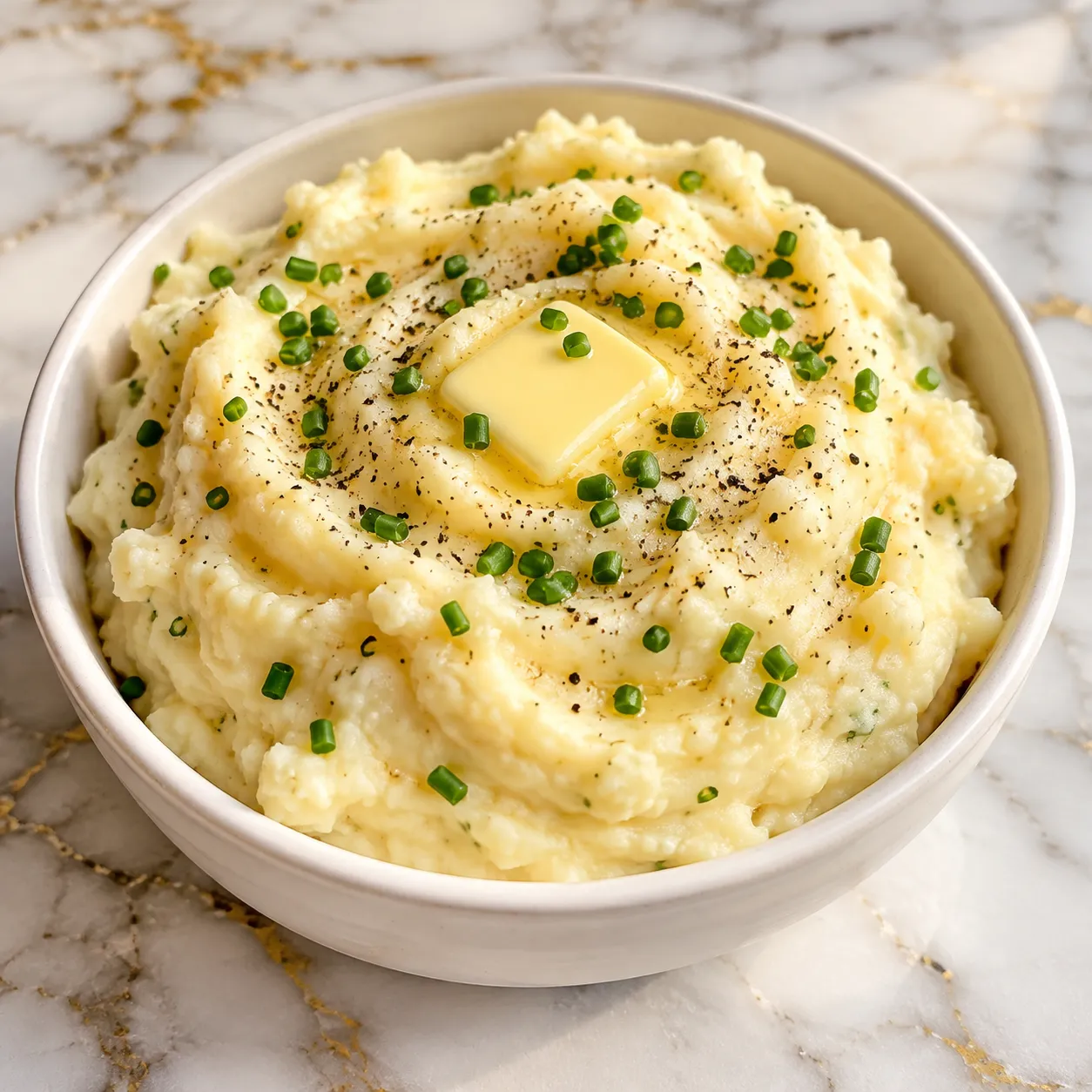
Thanksgiving Mashed Potatoes That Stay Creamy and Fluffy
Ingredients
Equipment
Method
- Peel the potatoes and cut them into evenly sized chunks.
- Place the potatoes in a large pot, cover with cold water by about 1 inch, and add the salt.
- Bring the water to a boil, reduce to a gentle simmer, and cook for 15 to 20 minutes until fork-tender.
- Drain thoroughly and return the potatoes to the warm pot over low heat for 1 to 2 minutes to release excess moisture.
- Warm the milk, butter, and minced garlic in a small saucepan over low heat for 3 to 5 minutes. Do not boil.
- Mash the hot potatoes until most large lumps disappear.
- Add about three-quarters of the warm milk mixture and fold gently.
- Add more of the mixture gradually until the potatoes reach your preferred consistency.
- Fold in the sour cream and black pepper.
- Taste and adjust the seasoning. Garnish with chopped chives if desired, then serve hot.
Notes
- Russet potatoes produce a fluffy texture, while Yukon Gold potatoes make a creamier, denser mash.
- Warm the dairy before adding it to the potatoes.
- Add the liquid gradually to avoid making the mash too thin.
- Refrigerate leftovers within two hours and use within 3 to 4 days.
- Reheat leftovers to 165°F (74°C) throughout.
Wrapping Up
Creamy Thanksgiving mashed potatoes are a comforting side dish made with simple ingredients and a few easy techniques. Warm milk, butter, and garlic help create a rich, fluffy texture for your dinner table. Try this recipe, then leave a comment, share your rating, and ask any questions below.







2 thoughts on “Thanksgiving Mashed Potatoes That Stay Creamy and Fluffy”