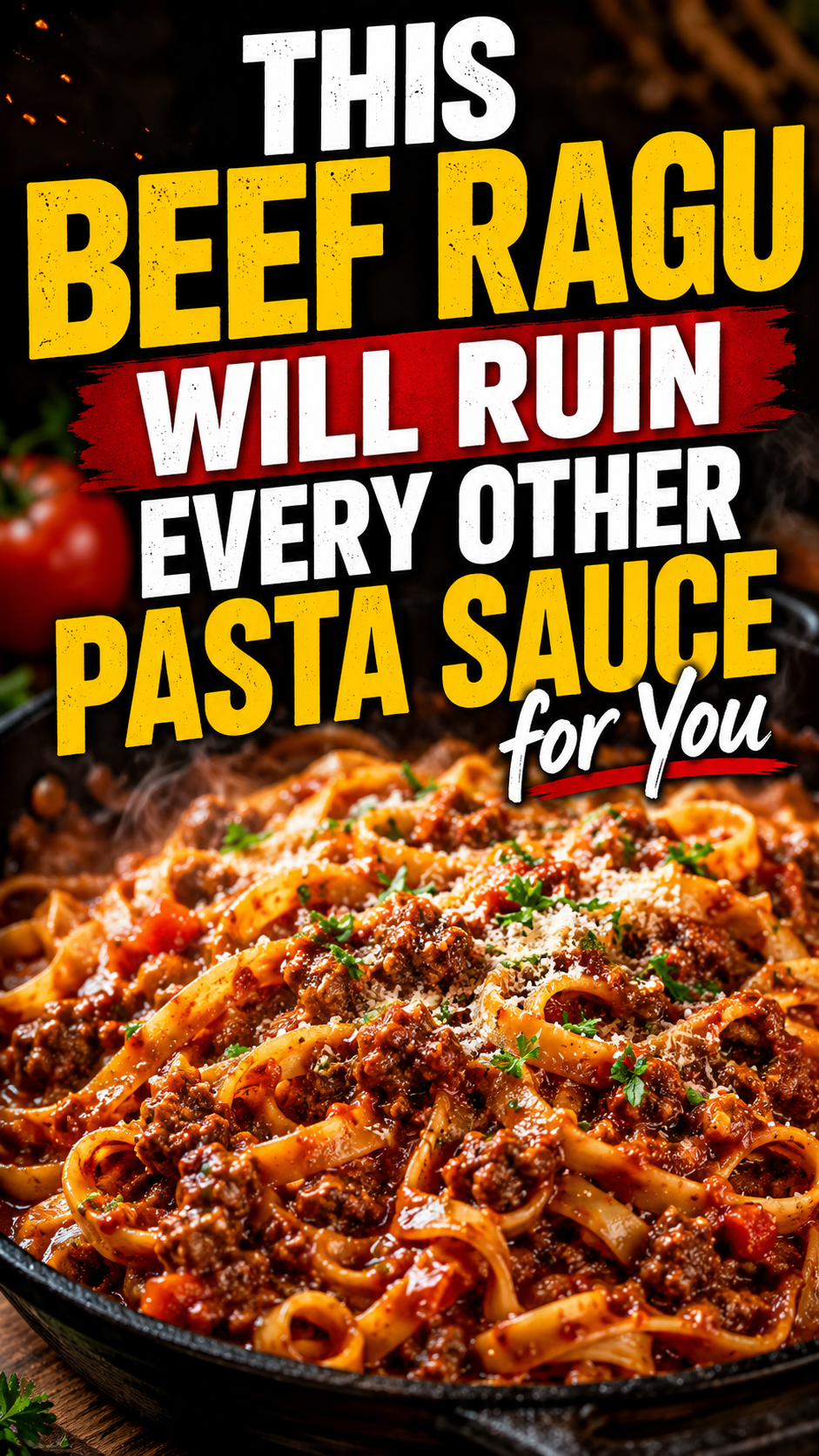
There’s a sauce you make once, and suddenly jarred marinara feels like a betrayal.
This slow-cooked beef ragu is that sauce.
It takes a little time (we’re talking low and slow here, not hours of stress), but the result is this deeply rich, meaty sauce that clings to every strand of pasta like it was made for it. Because it was.
I made this on a random Tuesday and my husband asked if we could “have this every week now.” High praise.
What You’ll Need
For the Ragu
- 1.5 lbs (680g) ground beef (80/20 fat ratio works best)
- 2 tbsp olive oil
- 1 medium yellow onion, finely diced
- 4 garlic cloves, minced
- 2 medium carrots, finely diced
- 2 celery stalks, finely diced
- 2 tbsp tomato paste
- 1 cup dry red wine (Chianti or Cabernet Sauvignon)
- 1 can (28 oz / 800g) crushed San Marzano tomatoes
- 1 cup beef broth
- 1 tsp dried oregano
- 1 tsp dried thyme
- 1 bay leaf
- Salt and black pepper, to taste
- Fresh parsley, chopped (for serving)
- Freshly grated Parmigiano-Reggiano (for serving)
For Serving
- 12 oz (340g) pappardelle or tagliatelle pasta (wide, flat noodles hold the sauce perfectly)
Tools You’ll Need
- Large heavy-bottomed pot or Dutch oven (this is important, thin pots scorch the sauce)
- Wooden spoon or silicone spatula
- Sharp chef’s knife
- Cutting board
- Box grater (for the Parmigiano)
- Large pasta pot with lid
- Colander
Pro Tips
These are the things that actually make a difference. Skip one and you’ll still get a good sauce. Follow all of them and you’ll get a great one.
- Don’t rush the soffritto. The onion, carrot, and celery base (called soffritto in Italian cooking) needs 8-10 full minutes over medium heat until it’s soft and almost melting. This is where the flavor foundation is built, and most people skip past it too fast.
- Brown the meat properly. Add it in two batches if your pot isn’t huge. You want a real sear, not a steam. If you crowd the pan, the meat releases water and you lose all that caramelized, deeply flavored crust. That crust is the flavor.
- The wine actually matters. Use something you’d drink. It doesn’t have to be expensive, but if you wouldn’t pour it in a glass, don’t pour it in your sauce. A good $10-12 bottle of Chianti works great here.
- Let it go low and slow. 90 minutes on a low simmer turns a decent sauce into a deeply developed one. The fat from the beef fully incorporates into the tomatoes and the whole thing just… comes together. Don’t rush it.
- Save your pasta water. Before you drain the pasta, scoop out about a cup of starchy cooking water. Add a splash or two when you toss the pasta with the ragu to help everything bind into a glossy, restaurant-quality finish.
Substitutions and Variations
The meat:
- Swap ground beef for ground pork, or do a 50/50 mix. Some Italian nonnas swear by this combination.
- For something truly special, use 1 lb ground beef + ½ lb Italian sausage (casings removed).
- Ground lamb also works and gives the sauce a slightly gamier, more complex flavor.
The wine:
- Not a wine person? Swap with an equal amount of extra beef broth. The sauce will be slightly less complex, but still really good.
- Milk is a classic Italian addition (used in Bolognese). Add ½ cup along with the broth for a creamier, more mellow sauce.
The pasta:
- Pappardelle is ideal, but this sauce is equally good over rigatoni, tagliatelle, or even a creamy polenta.
- For a low-carb option, serve over zucchini noodles or cauliflower gnocchi.
Dietary swaps:
- Dairy-free: skip the Parmigiano and finish with a drizzle of good olive oil instead.
- Gluten-free: serve over your favorite gluten-free pasta or polenta.
Make Ahead Tips
This sauce is genuinely better the next day. Making it ahead is something I’d actively recommend.
- Cook the ragu fully, cool it to room temperature, and refrigerate for up to 4 days.
- The flavors deepen overnight and you’ll wonder if you accidentally became a better cook.
- You can also freeze it in individual portions for up to 3 months. Thaw overnight in the fridge and reheat gently on the stove.
When reheating, add a small splash of water or broth to loosen it up if needed.
Nutritional Information (Per Serving, Sauce Only, Approx.)
| Nutrient | Amount (approx.) |
|---|---|
| Calories | 420 kcal |
| Protein | 28g |
| Fat | 22g |
| Carbohydrates | 14g |
| Fiber | 3g |
| Sodium | 580mg |
Note: Values vary based on specific brands and exact portions used.
Meal Pairing Suggestions
- A simple green salad dressed with lemon and olive oil balances the richness of the ragu perfectly.
- Garlic bread or focaccia for mopping up every last bit of sauce from the bowl. You’ll want it.
- A glass of the same red wine you cooked with. That’s just the rule.
How to Make It
Total Time: About 2 hours (20 min active, 90 min simmering) Serves: 4-6
Step 1: Build the soffritto
Heat 2 tbsp olive oil in a large Dutch oven over medium heat. Add the diced onion, carrot, and celery with a generous pinch of salt.
Cook, stirring occasionally, for 8-10 minutes until everything is soft, fragrant, and slightly golden. Don’t rush this step.
Add the minced garlic and cook for another 1-2 minutes until it smells incredible.
Step 2: Brown the beef
Push the soffritto to the sides of the pot. Increase the heat to medium-high.
Add the ground beef in two batches. Let it sit undisturbed for 2-3 minutes before breaking it up, so it gets a proper brown sear on the bottom.
Break it into small pieces as it cooks. Season generously with salt and pepper.
Once browned, stir everything together.
Step 3: Add tomato paste and wine
Stir in the tomato paste and cook for 2-3 minutes, stirring frequently. It’ll darken slightly and start to smell almost caramelized. That’s exactly what you want.
Pour in the red wine. Let it bubble and reduce for about 5 minutes, scraping up any browned bits stuck to the bottom of the pot. (Those bits are flavor gold. Don’t waste them.)
Step 4: Add tomatoes, broth, and herbs
Pour in the crushed tomatoes, beef broth, dried oregano, dried thyme, and the bay leaf.
Stir everything together. Bring it to a gentle boil, then reduce the heat to low.
Step 5: Simmer low and slow
Partially cover the pot and let it simmer on low for 90 minutes, stirring every 20-30 minutes.
The sauce should be thick, deeply colored, and smell absolutely unreal by the end. Remove the bay leaf.
Taste and adjust seasoning.
Step 6: Cook the pasta and serve
Boil a large pot of well-salted water. Cook the pappardelle according to package directions until al dente.
Reserve about 1 cup of pasta water before draining.
Toss the drained pasta directly into the ragu pot over low heat. Add a splash or two of pasta water and toss until the sauce coats every strand.
Divide into bowls. Top generously with fresh parsley and a heavy shower of grated Parmigiano-Reggiano.
Serve immediately. Try not to go back for thirds (you’ll go back for thirds).
Leftovers and Storage
Here’s where this recipe gets even better.
Refrigerator: Store leftover ragu (sauce only, without pasta) in an airtight container for up to 4 days. Reheat gently on the stove with a small splash of broth or water.
Freezer: Freeze cooled ragu in zip-lock bags or airtight containers for up to 3 months. Lay the bags flat to freeze space-efficiently.
For best results: Always store the sauce separately from the pasta. Pasta sitting in sauce gets soggy and sad. Cook fresh pasta when you’re ready to eat.
Repurposing leftovers:
- Spoon ragu over polenta for a different vibe entirely
- Use it as a filling for baked pasta or lasagna
- Stuff it into hollowed-out baked potatoes (trust this one)
FAQ
Can I use a slow cooker or Instant Pot for this?
Yes. For a slow cooker: complete steps 1-3 on the stovetop, then transfer everything to the slow cooker and cook on LOW for 6-8 hours or HIGH for 3-4 hours.
For Instant Pot: use the sauté function for steps 1-3, then pressure cook on HIGH for 25 minutes with a natural release.
Can I make this without wine?
Absolutely. Replace the wine with an equal amount of extra beef broth. The sauce will be a little less layered in flavor, but still really delicious.
My sauce is too thin. What do I do?
Remove the lid completely for the last 20-30 minutes of simmering and increase the heat slightly. It’ll reduce and thicken on its own.
Is San Marzano worth it?
In a sauce this simple, ingredients matter. San Marzano tomatoes are sweeter and less acidic than generic crushed tomatoes and you’ll taste the difference. They’re worth it here.
Can I double the recipe?
Yes, and I’d actually encourage it. The sauce freezes beautifully and having it in the freezer for a lazy weeknight feels like a gift to your future self.
What’s the difference between ragu and Bolognese?
Good question. Bolognese is technically a type of ragu, but it traditionally uses a mix of meats (beef + pork), milk or cream, and very little tomato. This recipe is more tomato-forward and uses just beef, making it slightly lighter but still deeply flavorful.
Wrapping Up
If you’ve made it to the end of this recipe, you already know what’s happening this week.
There’s something about a sauce that bubbles away for 90 minutes and fills your entire kitchen with that rich, meaty, herby smell. You earn it. And then you eat it over wide pasta ribbons with a pile of Parmigiano on top and you wonder why you ever bothered with anything else.
Make it. Then come back here and tell me what you thought in the comments below. Did you do any substitutions? Serve it over polenta instead? Add sausage? Tell me everything. I genuinely want to know.
And if you have questions before you start, drop them below. I’ll get back to you. 🍝