Most breakfasts do one of two things: leave you hungry by 10am or send you into a carb coma before lunch.
This one does neither.
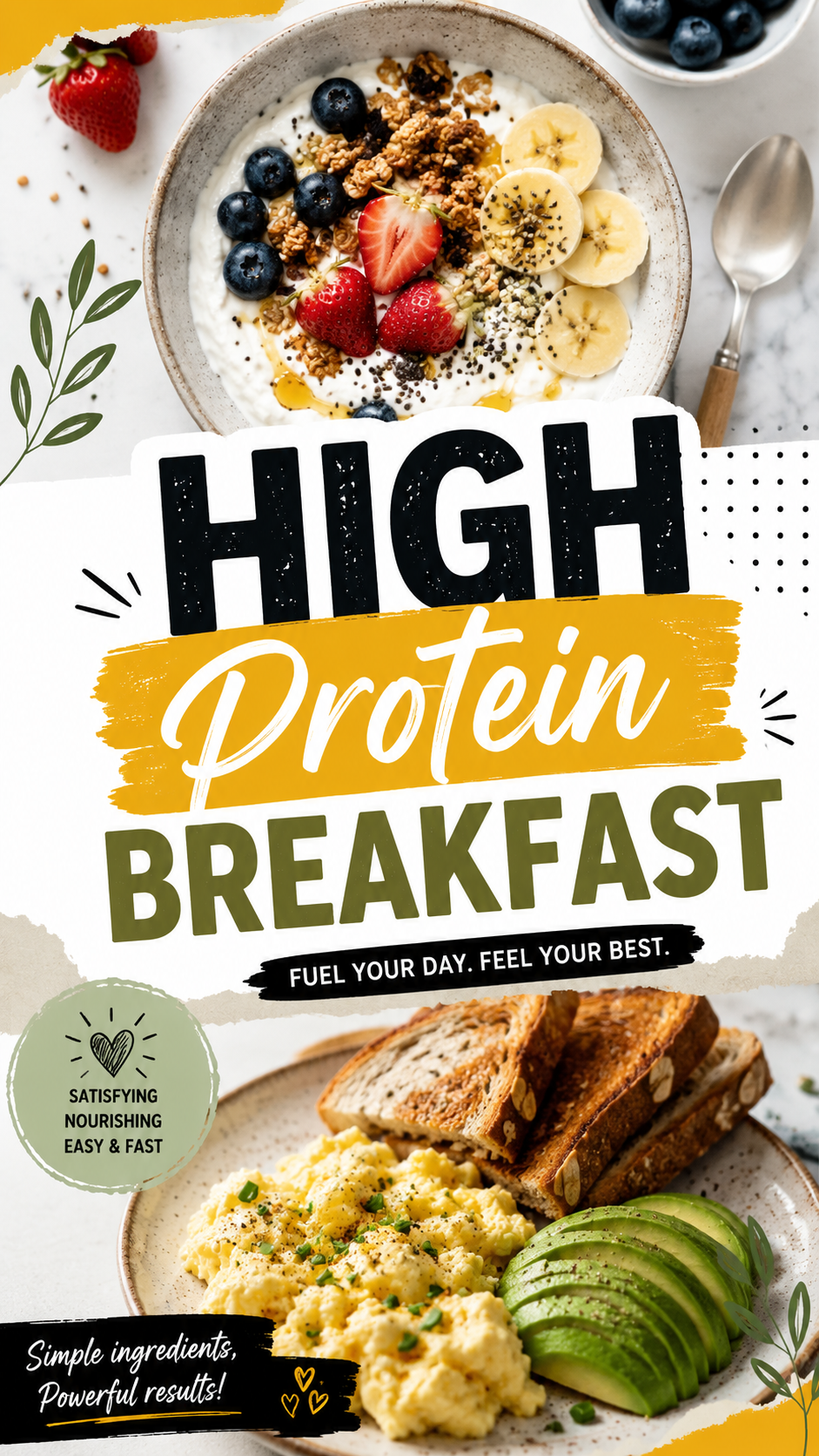
It’s a high-protein breakfast plate built around scrambled eggs, Greek yogurt, and a few simple add-ons that push the total protein to around 38-42 grams per serving. Enough to keep you genuinely satisfied for hours, without spending more than 15 minutes in the kitchen.
And here’s something most people don’t realize — protein at breakfast reduces hunger hormones for up to 4 hours more than a carb-heavy meal does. That mid-morning snack craving? This breakfast quietly kills it.
What You’ll Need
Ingredients
For the Scrambled Eggs:
- 3 large eggs
- 2 tablespoons cottage cheese (stirred in before cooking — trust the process)
- 1 teaspoon butter or olive oil
- Salt and black pepper to taste
- 1 tablespoon fresh chives, chopped (optional but worth it)
For the Greek Yogurt Bowl:
- 3/4 cup full-fat plain Greek yogurt (not regular yogurt — Greek has 2x the protein)
- 1/2 cup fresh blueberries
- 1/2 cup fresh strawberries, halved
- 1/4 banana, sliced
- 2 tablespoons granola
- 1 tablespoon chia seeds
- 1 teaspoon honey
On the Side:
- 2 slices whole grain or seeded toast
- 1/2 ripe avocado, sliced
- Flaky sea salt for the avocado
Makes: 1 serving Prep Time: 5 minutes | Cook Time: 10 minutes | Total: 15 minutes
Tools Required
- Non-stick skillet or pan
- Silicone spatula or wooden spoon
- Small mixing bowl (for the eggs)
- Toaster
- Knife and cutting board
- Serving bowl (for the yogurt)
- Plates for the eggs and toast
How to Make It (Step-by-Step)
The Scrambled Eggs
Step 1: Mix the eggs.
Crack 3 eggs into your small bowl. Add the cottage cheese, a pinch of salt, and a crack of black pepper. Whisk until fully combined. The cottage cheese melts completely into the eggs while cooking — you won’t taste it separately, but it makes the eggs noticeably creamier and adds a solid protein boost.
Step 2: Heat the pan low.
Set your non-stick skillet to low-medium heat. Add the butter and let it melt without browning.
Step 3: Cook slowly.
Pour in the egg mixture. Let it sit for about 20 seconds, then use your spatula to gently push the eggs from the edges toward the center. Keep doing this slowly and steadily.
Step 4: Pull them off early.
This is the most important step. Take the pan off the heat when the eggs look slightly underdone — they’ll finish cooking from the residual heat in the pan. Overcooked scrambled eggs are rubbery. Slightly underdone eggs that finish off-heat are silky and soft.
Step 5: Finish with chives.
Scatter the chopped chives on top right before serving.
The Yogurt Bowl
Step 6: Build the bowl.
Spoon the Greek yogurt into your bowl. Arrange the blueberries, strawberries, banana slices, and granola on top. Sprinkle chia seeds over everything, then drizzle with honey.
The Toast and Avocado
Step 7: Toast the bread.
Toast both slices to your preferred level. While they’re toasting, slice your avocado.
Step 8: Plate everything.
Lay the avocado slices over the toast or alongside the eggs. Add a pinch of flaky sea salt over the avocado. Serve immediately.
Pro Tips
These small things make a big difference:
- Cottage cheese in eggs is a game changer. It sounds strange if you haven’t tried it, but it completely disappears into the eggs while cooking and makes them taste richer and creamier. Two tablespoons adds about 4 extra grams of protein without changing the flavor at all.
- Low and slow for scrambled eggs. High heat is the enemy of good scrambled eggs. If your pan is too hot, the eggs seize up and go rubbery fast. Medium-low heat and patience gives you those soft, custardy folds that actually taste good.
- Full-fat Greek yogurt over low-fat. The fat content in full-fat yogurt keeps you fuller longer and the texture is significantly creamier. The calorie difference per serving is smaller than you’d think — about 30-40 calories — and the satiety difference is real.
- Chia seeds are silent protein workers. Two tablespoons of chia seeds add about 4 grams of protein, 10 grams of fiber, and omega-3s — and they have zero impact on the flavor of your yogurt bowl. Always worth adding.
- Prep your yogurt bowl the night before. If mornings are rushed, assemble the yogurt bowl without the granola (so it doesn’t go soggy) and refrigerate overnight. In the morning all you need to do is cook the eggs and toast the bread.
Substitutions and Variations
No Greek yogurt? Skyr (Icelandic yogurt) has even more protein per serving and works as a perfect 1:1 substitute.
Egg-free version: Swap the scrambled eggs for a tofu scramble seasoned with turmeric, nutritional yeast, garlic powder, and black salt (kala namak — it gives an egg-like sulfur flavor). Add cottage cheese alternative or extra firm tofu for creaminess.
Dairy-free: Use coconut or almond-based yogurt (note: lower protein), plant-based butter, and skip the cottage cheese from the eggs. Add an extra egg or a tablespoon of hemp seeds to compensate for protein.
Different fruit: Any combination works. Raspberries, mango, kiwi, or blackberries are all great. Frozen berries that have been thawed overnight work well too.
No avocado? Swap for a couple of tablespoons of nut butter on the toast — peanut butter or almond butter add healthy fats and even more protein.
Add a protein boost: Stir a half scoop of unflavored or vanilla protein powder into the yogurt before adding toppings. This can push the total protein to 50+ grams if that’s your goal.
Simpler version: If 15 minutes still feels like too much on a weekday, just do the yogurt bowl with chia seeds and skip the eggs. You’ll still hit around 20-22 grams of protein — a solid base.
Make Ahead Tips
Yogurt bowl: Assemble everything except the granola and store covered in the fridge for up to 2 days. Add granola right before eating.
Eggs: Scrambled eggs don’t really make-ahead well — they’re best fresh. But you can pre-whisk the eggs with cottage cheese the night before, store the mixture in a sealed container in the fridge, and just pour and cook in the morning.
Avocado: Once sliced, avocado browns quickly. If prepping ahead, leave it unsliced and add a squeeze of lemon juice after cutting right before serving.
Batch option: Hard-boiled eggs are a great make-ahead protein substitute. Boil 6 at the start of the week and swap them in for the scramble on busy mornings.
Nutritional Breakdown
(Full plate: scrambled eggs + yogurt bowl + toast + avocado)
| Nutrient | Amount |
|---|---|
| Calories | ~560 kcal |
| Protein | ~40g |
| Total Carbohydrates | ~48g |
| Dietary Fiber | ~10g |
| Total Fat | ~22g |
| Healthy (Unsaturated) Fat | ~14g |
| Sugars | ~18g (mostly from fruit + honey) |
| Sodium | ~520mg |
| Calcium | ~250mg |
| Iron | ~3.5mg |
Dietary notes:
- Gluten-free option: Use gluten-free toast or swap for rice cakes
- Vegetarian ✓
- Dairy-free option: Use plant-based yogurt and butter (protein content will be lower)
- High-fiber ✓ (10g fiber supports gut health and digestion)
Protein breakdown by component:
| Component | Approx. Protein |
|---|---|
| 3 large eggs | ~18g |
| 2 tbsp cottage cheese | ~4g |
| 3/4 cup Greek yogurt | ~15g |
| 1 tbsp chia seeds | ~2g |
| 2 slices whole grain toast | ~6g |
| Total | ~45g |
Meal Pairing Suggestions
This plate is a complete meal on its own, but here’s what works well alongside it:
- Coffee with brown sugar syrup or vanilla syrup — the natural pairing (if you’ve been following this series, you already know how to make those 😄)
- A glass of warm lemon water — aids digestion and is a nice way to start the morning
- Matcha latte — a gentler caffeine source that pairs well with the light flavors here
- Fresh orange juice — the vitamin C actually helps with iron absorption from the eggs
Leftovers and Storage
Scrambled eggs: Best eaten immediately. If you have leftovers, store in a sealed container in the fridge for up to 1 day and reheat gently on low heat with a tiny splash of water to re-soften.
Yogurt bowl (without granola): Keeps covered in the fridge for up to 2 days. The fruit softens slightly but still tastes good.
Avocado toast: Eat it fresh. Avocado browns and toast softens — neither stores well.
Tip: If you know you won’t finish everything, prioritize eating the eggs and avocado first (least fridge-friendly) and save the yogurt bowl for later.
FAQ
Why is protein at breakfast so important?
Protein triggers the release of satiety hormones (like PYY and GLP-1) and reduces ghrelin — the hunger hormone. Studies consistently show that a high-protein breakfast reduces total calorie intake for the rest of the day compared to a low-protein or carb-heavy one. Practically speaking: you just won’t get as hungry before lunch.
Can I make this lower calorie?
Yes — use 2 eggs instead of 3, swap full-fat Greek yogurt for 2% fat, skip the honey, and use one slice of toast instead of two. That brings the total closer to 400-420 calories while keeping protein around 30-32 grams.
Is cottage cheese in eggs really worth it?
This is the question I get most skeptical reactions to. Yes — genuinely. It completely melts in, you can’t taste it separately, and it makes the texture noticeably creamier. Give it one try before dismissing it.
What if I don’t like blueberries or strawberries?
Any fruit works. Mango and kiwi are great if you want a tropical feel. Sliced peaches with a drizzle of honey in summer are excellent. Even just a sliced banana with some walnuts is a solid yogurt bowl.
How do I get my scrambled eggs to not stick?
Two things: a good non-stick pan and butter (not oil, which has a lower burning threshold at these temperatures). Also make sure you’re using medium-low heat. If your pan is too hot, eggs will stick even in a non-stick pan.
Can I use flavored Greek yogurt instead of plain?
You can, but flavored yogurts typically have significantly more added sugar. Plain Greek yogurt with your own fruit and a small drizzle of honey gives you way more control over the sweetness — and usually tastes better.
How do I keep avocado from browning if I’m not eating it right away?
Squeeze a little fresh lemon or lime juice over the slices. The acidity slows oxidation. It won’t stop it entirely, but it’ll buy you 30-60 minutes.
Wrapping Up
A high-protein breakfast doesn’t need to be complicated or involve protein powder and a blender.
This plate takes 15 minutes, uses ingredients you probably already have, and genuinely keeps you full until lunch. That’s a hard combination to beat.
Make it once this week and pay attention to how you feel at 10am. My guess is you won’t be reaching for a snack.
Drop a comment below and tell me how it went — especially if you tried the cottage cheese in the eggs and had opinions about it (for or against, I want to hear them 😄). Questions are welcome too.