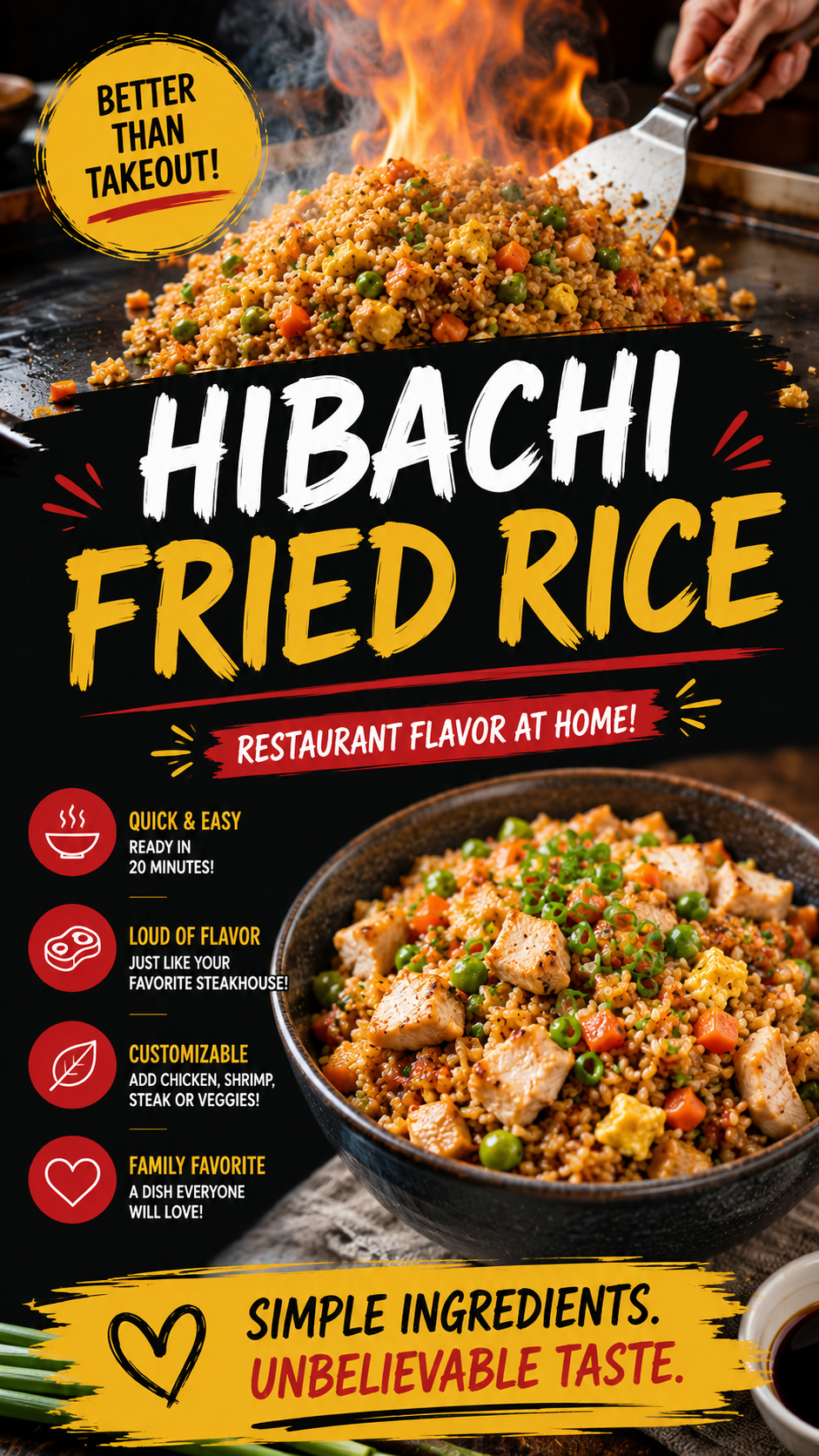
The first time I made hibachi fried rice at home, I was honestly shocked at how close it tasted to the real thing. No reservation, no overpriced drinks, no waiting twenty minutes for a table. Just a hot pan and ingredients I already had sitting in my fridge.
Turns out the secret isn’t some fancy technique. It’s day old rice, a screaming hot pan, and butter. That’s basically it.
Once you’ve got those three things down, you can make this any night of the week and it’ll taste better than what shows up in the takeout bag.
I’ve made this version probably a dozen times now, dialing in the order of operations and the heat level until it actually tasted right.
Let’s get into it.
Why This Recipe Works
Hibachi restaurants cook their rice on a flat top grill that gets way hotter than your average stove.
That high heat is what gives the rice that slightly crispy, toasty flavor.
You can get pretty close at home using a large skillet or wok, as long as you crank the heat and don’t overcrowd the pan.
The other trick is using cold, day old rice. Fresh rice is too soft and steamy, and it’ll turn into a mushy clump instead of those separate, fluffy grains you’re after.
Butter is the other piece most home cooks skip. A lot of fried rice recipes lean on oil, but hibachi spots use butter, and it’s what gives the dish that rich, slightly sweet flavor you can’t quite place when you’re eating it at the restaurant.
What You’ll Need
- 4 cups cooked white rice, cold (day old works best)
- 1 pound boneless chicken breast, cut into small cubes
- 3 tablespoons butter, divided
- 1 small white onion, diced
- 2 carrots, finely diced
- 1 cup frozen peas
- 3 large eggs, beaten
- 4 cloves garlic, minced
- 3 tablespoons soy sauce
- 1 tablespoon sesame oil
- 2 green onions, sliced
- Salt and black pepper, to taste
Simple stuff, nothing you need to hunt down at a specialty store.
Tools You’ll Need
- Large skillet or wok
- Spatula
- Cutting board and knife
- Small mixing bowl (for the eggs)
- Measuring spoons
How to Make Hibachi Fried Rice
- Season your chicken cubes with a pinch of salt and pepper.
- Heat 1 tablespoon of butter in your skillet over medium-high heat.
- Add the chicken and cook until golden and cooked through, about 6 to 7 minutes. Remove from the pan and set aside.
- In the same pan, melt another tablespoon of butter and add the diced onion and carrots.
- Cook for 3 to 4 minutes, until the onion turns soft and slightly translucent.
- Push the veggies to one side of the pan and pour the beaten eggs into the empty space.
- Scramble the eggs gently until just set, then mix them in with the veggies.
- Add the frozen peas and minced garlic, stirring for another minute.
- Crank the heat to high, then add your cold rice, breaking up any clumps as you go.
- Pour the soy sauce and sesame oil over the rice and toss everything together until evenly coated.
- Let the rice sit undisturbed for 30 seconds at a time, then stir. This is what gives you those crispy bits.
- Add the chicken back in along with the final tablespoon of butter, tossing until fully combined.
- Top with sliced green onions and serve immediately.
That’s the whole process, and most of it happens in under 20 minutes.
Pro Tips
A few things that genuinely made a difference for me:
- Use cold rice, no exceptions. If you only have fresh rice, spread it on a baking sheet and pop it in the fridge for 20 minutes to dry it out fast.
- Don’t skip the high heat at the end. That’s the step that actually creates the toasted, restaurant style flavor.
- Cook the eggs separately if you want bigger curds. Pushing the veggies aside works fine, but a separate quick scramble gives cleaner results.
- Use real butter, not oil, for that signature hibachi flavor. It makes a bigger difference than you’d expect.
- Don’t overcrowd the pan. If your skillet feels too small, cook the rice in two batches instead of one giant pile.
- Taste as you go. Soy sauce brands vary a lot in saltiness, so add it gradually and adjust instead of dumping it all in at once.
I tested this with both a wok and a regular nonstick skillet, and honestly the difference was barely noticeable as long as the pan got properly hot first.
Substitutions and Variations
This recipe bends easily depending on what you’ve got on hand.
- No chicken? Swap in shrimp, steak, or tofu, all work great with the same seasoning.
- Want it vegetarian? Skip the meat entirely and double up on the veggies and eggs.
- Lower sodium? Use a low sodium soy sauce, the flavor barely changes.
- No sesame oil? A drizzle of extra butter works in a pinch, though you’ll lose a bit of that nutty flavor.
- Spicy fan? A few dashes of sriracha at the end takes this in a completely different, very good direction.
- Want extra veggies? Diced zucchini, mushrooms, or bean sprouts all fold in well without changing the overall flavor.
- Out of fresh garlic? A half teaspoon of garlic powder works as a backup, just add it earlier so it has time to bloom.
Make Ahead Tips
This is one of those recipes that actually benefits from a little planning ahead.
Cook your rice the night before and let it sit uncovered in the fridge overnight. That’s the single best thing you can do for texture.
You can also prep and chop all your veggies in advance, so the actual cooking takes closer to 10 minutes start to finish.
Nutritional Breakdown (Per Serving, Serves 4)
| Nutrient | Amount |
|---|---|
| Calories | ~420 |
| Protein | 28g |
| Carbs | 45g |
| Fat | 14g |
| Fiber | 3g |
| Sodium | 680mg |
Using brown rice instead of white bumps up the fiber significantly if that’s something you’re after.
Cooking Time Efficiency Tips
- Cook your rice a day or two ahead and keep it in the fridge until you’re ready.
- Dice all your veggies the night before and store them together in one container.
- Double the recipe and freeze half in portioned bags for an easy lunch later.
Meal Pairing Ideas
- Serve alongside hibachi style grilled vegetables for the full restaurant experience.
- Pair with a quick miso soup for a cozy, complete meal.
- Top with a fried egg for an even heartier dinner.
- Serve in lettuce cups for a lighter, low carb twist.
Leftovers and Storage
Store leftovers in an airtight container in the fridge for up to 4 days.
Reheat in a hot skillet with a small splash of water or a little extra butter to bring back that fresh-cooked texture.
Microwaving works too, but you’ll lose some of that crispy bite the stovetop gives you.
This recipe also freezes well for up to 2 months. Thaw overnight in the fridge before reheating.
FAQ
Why is my fried rice mushy instead of crispy?
This almost always comes down to using fresh rice instead of cold, day old rice. Fresh rice holds too much moisture and steams instead of frying.
Can I make this without a wok?
Absolutely. A large nonstick or cast iron skillet works just as well, as long as it gets hot enough.
What makes hibachi rice different from regular fried rice?
The butter is the biggest difference. Most fried rice recipes use oil, while hibachi style leans heavily on butter for that rich, slightly sweet flavor.
Can I use brown rice instead of white?
Yes, just make sure it’s cold and well dried out beforehand. Brown rice tends to hold even more moisture than white, so the drying step matters even more.
Is this recipe kid friendly?
Very much so. It’s mild, slightly sweet, and easy to customize with whatever protein your kids already like.
Can I double this recipe for a crowd?
Yes, but cook it in batches rather than doubling everything in one pan at once. Overcrowding the skillet is the fastest way to end up with steamed rice instead of fried.
What’s the best rice to use for fried rice?
Long grain white rice, like jasmine, tends to hold its shape best and gives you that classic separate-grain texture hibachi spots are known for.
Wrapping Up
Hibachi fried rice is one of those recipes that feels fancy but is genuinely easy once you’ve got the basics down.
Cold rice, hot pan, real butter. That’s the whole formula.
Make a batch this week and let me know in the comments how it turned out, and if you tried any of the variations above. I’d love to hear what protein you went with.