I’d seen rice water mentioned online for years, mostly tied to skincare and hair routines, before I ever thought to actually drink it.
Turns out, it’s also a genuinely old tradition in several cultures, used as a simple, mild drink long before it became a trending topic. 🍚
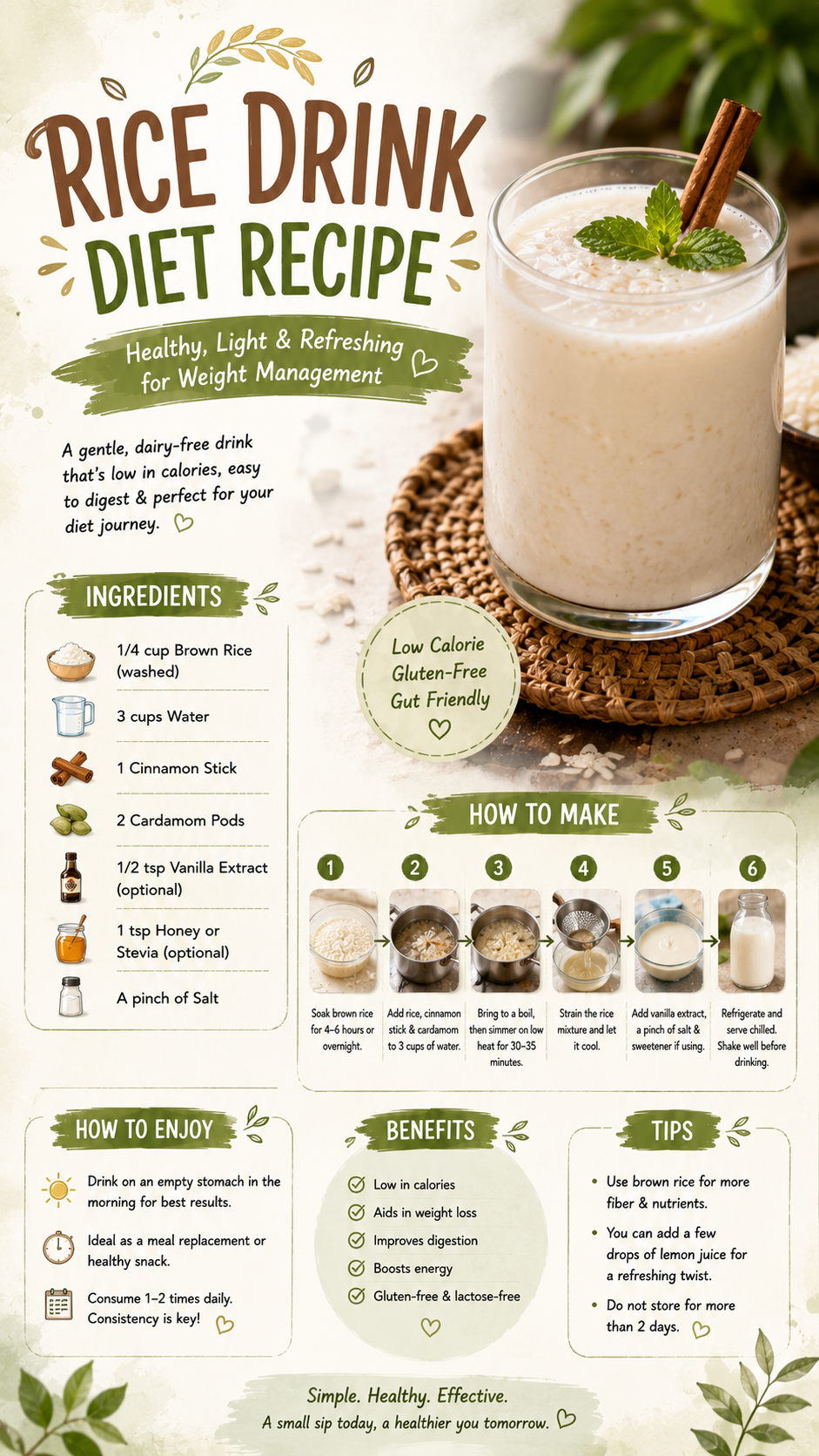
Rice water is exactly what it sounds like, the starchy water left over from soaking or cooking rice, sometimes flavored with a little lemon or honey to make it more enjoyable to drink.
It’s light, mildly starchy, and a low-calorie way to add a little variety to your routine, though it’s worth being clear upfront about what it actually does and doesn’t do.
This isn’t a miracle weight loss drink, and I want to be honest about that rather than overselling it.
Here’s something worth knowing: rice water has actually been part of traditional practices in parts of Asia and beyond for generations, originally as a simple way to avoid wasting the liquid left over from preparing rice. 🍚
The wellness trend version is newer, but the basic drink itself has a much older, more practical history behind it.
Why People Drink This
Rice water is naturally low in calories, which is part of why it’s sometimes included in lighter eating routines as a substitute for higher calorie beverages.
It contains a small amount of starch and minerals that leach out of the rice during soaking or cooking, though the amounts are fairly minimal compared to eating the rice itself.
Some people enjoy it simply for its mild, slightly nutty flavor, treating it more like a light infusion than a specific health treatment.
It’s worth being clear that no food or drink causes targeted weight loss on its own. Any role this might play in a diet comes from it being a low-calorie option, not from any special fat-burning property.
What You’ll Need
- ½ cup white or brown rice
- 4 cups water
- 1 tbsp fresh lemon juice (optional)
- 1 tsp honey (optional)
- Ice
That’s the full list, and it’s about as simple as a drink can get.
Tools You’ll Need
- Medium saucepan or bowl
- Strainer
- Pitcher
- Glass for serving
How to Make Rice Water
Step 1: Rinse the rice
Rinse the rice thoroughly under cold water to remove excess surface starch and any debris.
This first rinse is mostly about cleanliness, not flavor, so a quick rinse under running water is enough.
Step 2: Soak or cook the rice
For soaked rice water, combine the rinsed rice with the water in a bowl and let it sit for 30 minutes to a few hours.
For cooked rice water, simmer the rice in the water for about 10 minutes, then remove from heat before the rice fully cooks through.
Either method works, the soaked version just tends to taste milder than the cooked version.
Step 3: Strain
Strain the rice water into a pitcher, separating the liquid from the rice itself.
You can save the rice to cook fully and eat separately, rather than letting it go to waste.
Step 4: Flavor if desired
Stir in lemon juice and honey if you’d like a little extra flavor.
Step 5: Serve
Pour over ice and serve cold, or drink it warm if you prefer.
Pro Tips
A handful of small details that make this drink more enjoyable.
- Use the soaking method for a milder flavor. Cooking the rice releases a stronger, slightly thicker liquid, while soaking gives you something lighter.
- Don’t oversalt or overcook the rice if cooking it. You want a light, starchy water, not something that tastes overly heavy.
- Add lemon or honey to taste. Plain rice water has a fairly neutral flavor, so a little flavoring goes a long way.
- Store the rice itself for another meal. Cook it through fully after straining and use it in a separate dish instead of throwing it away.
- Drink it as part of a varied routine, not as a stand-alone strategy. It works best alongside a balanced diet and regular movement, not as a replacement for either.
- Use filtered water if your tap water has a strong taste. Since this drink is mostly water, the quality of your starting water genuinely affects the final result.
Substitutions and Variations
- Want it sweeter? Add a little extra honey or a splash of fruit juice for more flavor.
- Want it fizzy? Mix in a splash of sparkling water before serving.
- Want a different grain? Some people make a similar drink using oats or barley, though the flavor and texture will differ.
- No fresh lemon available? A splash of lime juice works as a similar substitute.
Make Ahead Tips
Rice water can be made a day or two ahead and stored in the fridge in a sealed container.
Add fresh lemon juice or honey right before serving, rather than mixing it in too far in advance.
Nutritional Info & Diet Swaps
One serving comes out to roughly 10-30 calories, depending on whether you add honey and how much rice was used relative to the water.
For a lower sugar version: Skip the honey entirely and rely on the lemon juice alone for flavor.
This drink is naturally gluten-free, dairy-free, and vegan as written, assuming you skip the honey for a fully vegan version.
Meal Pairing Suggestions
- A light breakfast: Pairs well alongside something simple like fruit or toast.
- Alongside a balanced lunch: Works as a low-calorie beverage option next to a meal with vegetables and protein.
- A warm afternoon break: Some people enjoy it warm as a calming, simple beverage during a slower part of the day.
- A light snack: Pairs reasonably well with something simple like crackers or fruit.
Time-Saving Tips
- Make a larger batch at once and store it in the fridge for a few days at a time.
- Use the soaking method if you want a faster, more hands-off approach compared to cooking the rice.
- Keep rice specifically set aside for this purpose so you’re not improvising every time you want a glass.
Leftovers and Storage
Store in the fridge in a sealed container for up to 3 days.
I don’t recommend leaving it at room temperature for extended periods, since starchy liquids can spoil faster than plain water.
FAQ
Does rice water actually help with weight loss? Not directly. It’s low in calories, which can make it a reasonable swap for higher calorie drinks, but there’s no research showing it causes weight loss on its own. Sustainable weight management comes from overall diet and activity levels, not a single drink.
Is rice water safe to drink every day? Generally yes, for most people, in moderate amounts as part of a varied diet. If you have any specific health conditions, it’s worth checking with a doctor first.
Is this the same as the rice water used for hair or skin? It’s a similar liquid, but rice water intended for drinking should be made fresh and consumed promptly, while rice water for hair or skin is sometimes fermented for a longer period, which isn’t appropriate for drinking.
Can I drink the rice water without straining out all the rice? Yes, some people prefer a slightly thicker, less strained version. It’s mostly a matter of personal preference.
Why does my rice water taste bland? Plain rice water is naturally mild and starchy. Adding lemon juice, honey, or a small amount of salt can make it more flavorful if you find it too neutral on its own.
Should I be worried about arsenic levels in rice water? Rice can contain trace amounts of arsenic depending on growing conditions, and using more water relative to rice, along with rinsing thoroughly beforehand, can help reduce this somewhat. If you’re concerned, it’s worth discussing with a doctor, especially for children or during pregnancy.
Wrapping Up
Rice water is a simple, low-calorie drink with a long history in several cultures, though it’s not a shortcut to weight loss on its own.
Rice, water, and a little time soaking or simmering. That’s genuinely the whole process.
Make a batch if you’re curious to try it, and think of it as one small, low-calorie addition to an overall healthy routine, not a stand-alone solution.
If you try this one, leave a comment below and let me know how you liked it, or how you flavored yours. I’d love to hear about it.