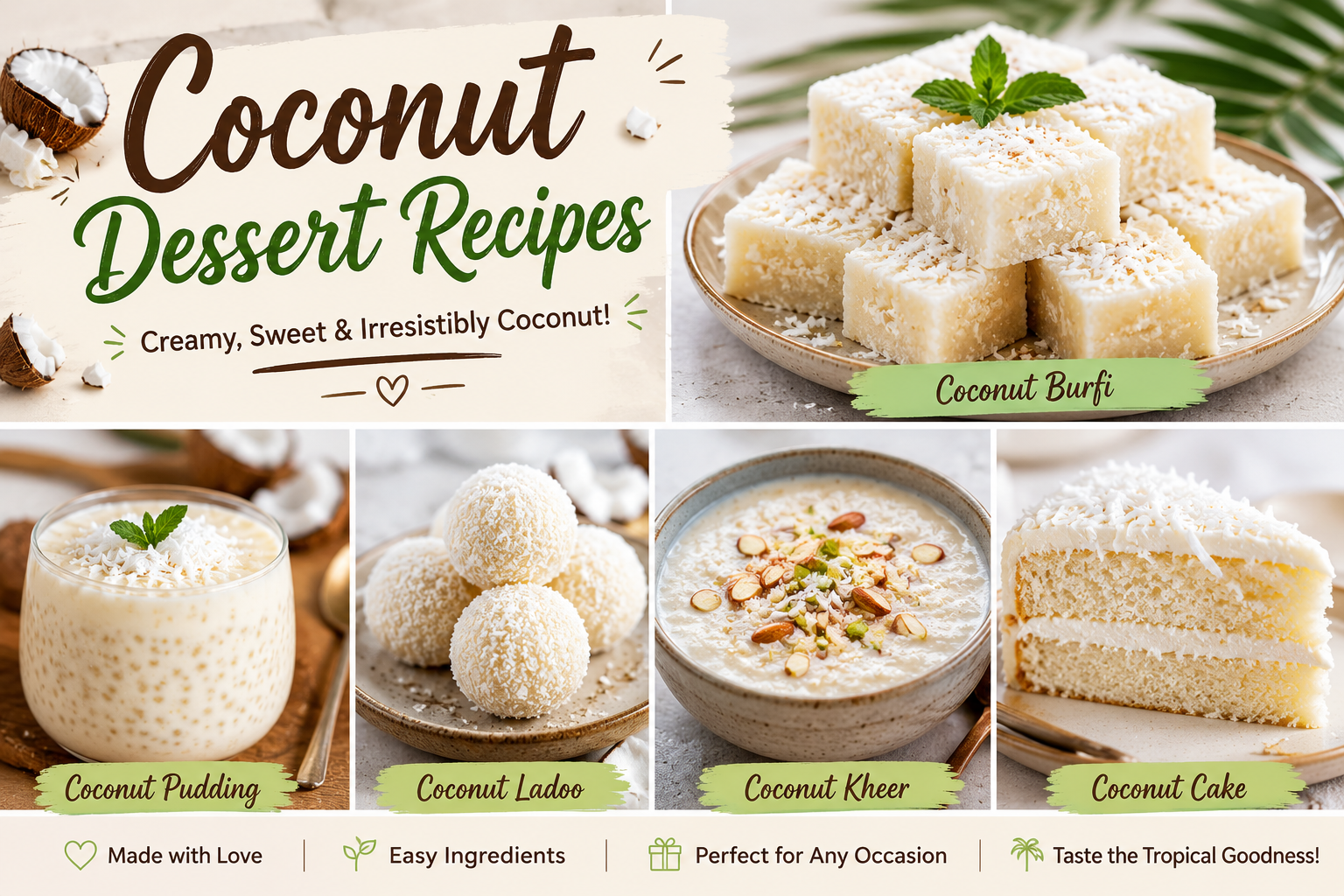
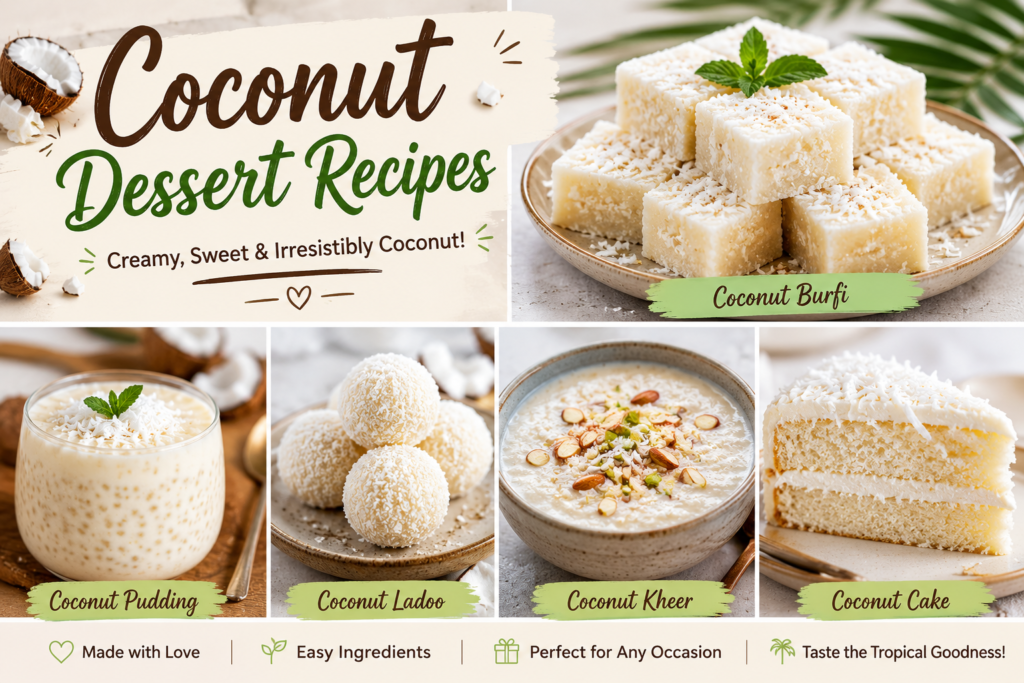
You grab a spoonful, close your eyes, and suddenly you’re somewhere warm. Creamy, tropical, sweet without being over the top. That’s what a really good coconut dessert does.
And honestly? Coconut is one of the most underrated dessert ingredients out there. It’s incredibly versatile, works beautifully across so many cuisines, and the flavor payoff is always so good.
So if you’ve been sleeping on coconut desserts, this is your sign to wake up. Because once you try making any of these at home, store-bought ice cream suddenly feels a little sad.
What You’ll Need
Here’s everything you’ll need to make the Coconut Mango Panna Cotta (the star recipe in this post):
For the panna cotta:
- 2 cans (800ml) full-fat coconut milk
- 3 teaspoons unflavored gelatin powder
- 4 tablespoons cold water
- 4–5 tablespoons granulated sugar (adjust to taste)
- 1 teaspoon pure vanilla extract
- Pinch of sea salt
For the mango topping:
- 2 ripe mangoes, peeled and diced (or 1.5 cups frozen mango chunks, thawed)
- 2 tablespoons honey or maple syrup
- 1 tablespoon fresh lime juice
- Zest of 1 lime
- 1/4 teaspoon chili flakes (optional but you should really try it)
Optional garnish:
- Toasted coconut flakes
- Fresh mint leaves
- Thin lime slices
Tools You’ll Need
No fancy equipment here, which is one of the reasons I love this recipe so much.
- Medium saucepan
- Small bowl (for blooming the gelatin)
- Whisk
- Fine mesh strainer
- 6 ramekins, glasses, or small serving bowls
- Ladle or liquid measuring cup for pouring
- Plastic wrap or small lids for chilling
- Sharp knife and cutting board
That’s it. Seriously.
Pro Tips
1. Use full-fat coconut milk only. This is non-negotiable. Light coconut milk doesn’t set properly and gives you a watery, disappointing texture. Grab the full-fat cans, always.
2. Bloom your gelatin properly. Pour cold water into a small bowl first, then sprinkle the gelatin over the water. Don’t stir. Let it sit for 5 full minutes until it looks like a thick, wrinkled gel. Skipping this step means your panna cotta won’t set correctly.
3. Don’t let your coconut milk boil. Heat it gently over medium-low heat. Boiling changes the flavor and can affect how the gelatin sets. You’re just warming it enough to dissolve the gelatin and sugar, nothing more.
4. Taste before pouring. Coconut milk sweetness varies by brand. Before pouring into molds, taste your mixture and adjust the sugar. You want it slightly sweeter than you’d normally like, because chilling dulls sweetness a little.
5. Make the mango topping fresh. You can prep the panna cotta a full day ahead, but the mango topping is better made right before serving. It keeps the fruit bright, fresh, and from going mushy.
Substitutions and Variations
One of the great things about panna cotta is that it’s super easy to tweak based on what you have.
| Ingredient | Substitution |
|---|---|
| Mango topping | Passion fruit pulp, fresh pineapple, or mixed berries |
| Granulated sugar | Coconut sugar, honey, or maple syrup |
| Vanilla extract | Pandan extract for a Southeast Asian twist |
| Gelatin powder | Agar-agar (use 2 tsp for a firmer, vegan set) |
| Lime juice/zest | Lemon works just fine |
Want a chocolate version? Stir 2 tablespoons of good-quality cocoa powder into the warm coconut milk before adding gelatin. Serve with raspberries instead of mango.
Love tropical flavors? Swap half of the coconut milk for fresh passion fruit juice. The tartness is wild in the best way.
Make Ahead Tips
Panna cotta is basically made for meal prep. 😌
- Make it up to 2 days ahead and keep it covered in the fridge.
- The mango topping can be made a few hours ahead and stored in an airtight container in the fridge.
- If you’re serving it to guests, set your panna cotta in glasses so you don’t have to flip and unmold anything last minute. Much less stressful.
How to Make Coconut Mango Panna Cotta
This recipe makes 6 servings and takes about 20 minutes of active work. The rest is just chilling time.
Step 1: Bloom the gelatin
Add 4 tablespoons of cold water to a small bowl. Sprinkle the gelatin evenly over the top. Don’t stir. Let it sit for 5 minutes until it forms a thick, spongy layer.
Step 2: Warm the coconut milk
Pour both cans of coconut milk into a medium saucepan. Add the sugar, vanilla extract, and pinch of salt. Warm over medium-low heat, stirring occasionally, until the sugar dissolves and the mixture is hot but not boiling. This takes about 5–7 minutes.
Step 3: Add the gelatin
Remove the saucepan from heat. Add the bloomed gelatin to the hot coconut milk and whisk thoroughly for about 2 minutes until it’s completely dissolved. Strain through a fine mesh strainer to catch any lumps.
Step 4: Pour and chill
Lightly grease your ramekins or glasses with a neutral oil if you want to unmold them later. Pour the mixture evenly across your 6 vessels. Let them cool at room temperature for 20 minutes, then cover and refrigerate for at least 4 hours. Overnight is even better.
Step 5: Make the mango topping
Dice your mangoes and toss them with honey (or maple syrup), lime juice, lime zest, and chili flakes if using. Stir gently. Taste it. It should be sweet, tangy, and a tiny bit punchy.
Step 6: Serve
If unmolding, run a thin knife around the edge of each ramekin and flip onto a plate. If serving in glasses, just spoon the mango topping directly on top. Finish with toasted coconut flakes and a few mint leaves.
Nutritional Breakdown (Per Serving)
| Nutrient | Approximate Amount |
|---|---|
| Calories | ~280 kcal |
| Total Fat | 20g |
| Saturated Fat | 18g |
| Carbohydrates | 24g |
| Sugar | 18g |
| Protein | 3g |
| Fiber | 1g |
Full-fat coconut milk is high in saturated fat, but it’s mostly from medium-chain triglycerides (MCTs), which the body processes differently from animal-based saturated fats. That said, it’s still a rich dessert, so a small serving goes a long way.
For a lighter version: Use one can full-fat coconut milk and one can coconut cream diluted with a little water. Same great flavor, slightly fewer calories.
Dietary Swaps
- Vegan: Swap gelatin for agar-agar (2 tsp) and use maple syrup instead of honey in the topping.
- Refined sugar-free: Coconut sugar or raw honey both work perfectly.
- Lower sugar: Cut the sweetener in half and let the mango do the heavy lifting.
Meal Pairing Suggestions
This panna cotta works as a standalone dessert, but if you’re building a full meal around it, here’s what pairs well:
- Thai or Vietnamese inspired dinners are a natural fit. The light coconut flavor and tropical topping complement dishes like a lemongrass chicken or a mango chicken salad.
- A casual summer BBQ. Make the panna cottas in little glasses the night before, keep them in the fridge, and bring them out as a no-fuss dessert that somehow makes you look very put together.
- With tea or coffee. A cup of jasmine tea or a lightly sweetened cold brew alongside this is genuinely one of life’s simple pleasures.
Leftovers and Storage
- In the fridge: Covered panna cotta keeps well for up to 3 days. The texture stays perfect.
- Freezer: Not recommended. The gelatin breaks down when frozen and thawed, and you’ll end up with a grainy texture.
- Mango topping: Store separately in an airtight container for up to 2 days. Add it to the panna cotta right before serving.
If you’re storing panna cotta that’s already been topped, it’s fine for a day in the fridge, but the mango will release juice and start to soften into the cream.
FAQ
Can I make this without gelatin? Yes! Use agar-agar as a plant-based alternative. Use about 2 teaspoons for this recipe. Note that agar gives a slightly firmer, less silky set compared to gelatin, but it still tastes great.
My panna cotta didn’t set. What happened? The most common reason is that the gelatin wasn’t fully dissolved. Make sure you whisk it thoroughly into the hot (not boiling) coconut milk and strain before pouring. Also double-check that your gelatin isn’t expired.
Can I use coconut cream instead of coconut milk? You can, but the result will be very rich and very thick. A mix of one can coconut cream and one can coconut milk gives a great balance of creaminess without being too heavy.
How do I know when the mango is ripe enough? A ripe mango yields slightly when you press it gently and smells fruity near the stem. If your mangoes aren’t quite ripe yet, leave them on the counter for a day or two. Refrigerating unripe mangoes stops the ripening process, so don’t put them in the fridge too early.
Can I use canned mango instead of fresh? Yes, canned mango in syrup works if that’s what you have. Just drain it well, skip the added honey in the topping, and taste before adding any sweetener.
How far in advance can I make this for a dinner party? The panna cotta itself can be made up to 48 hours ahead. The mango topping is best made the day of. This actually makes it one of the best dinner party desserts because all the real work is done beforehand.
Wrapping Up
If you’ve been looking for a dessert that feels special without requiring an entire afternoon in the kitchen, this coconut mango panna cotta is it.
It’s creamy, it’s tropical, and that chili-lime mango on top? People are going to ask you for the recipe. I promise.
Give it a go this weekend and then come back and drop a comment below. Tell me how it turned out, if you tried any fun variations, or if you have any questions at all. I love hearing from you and I read every single one!