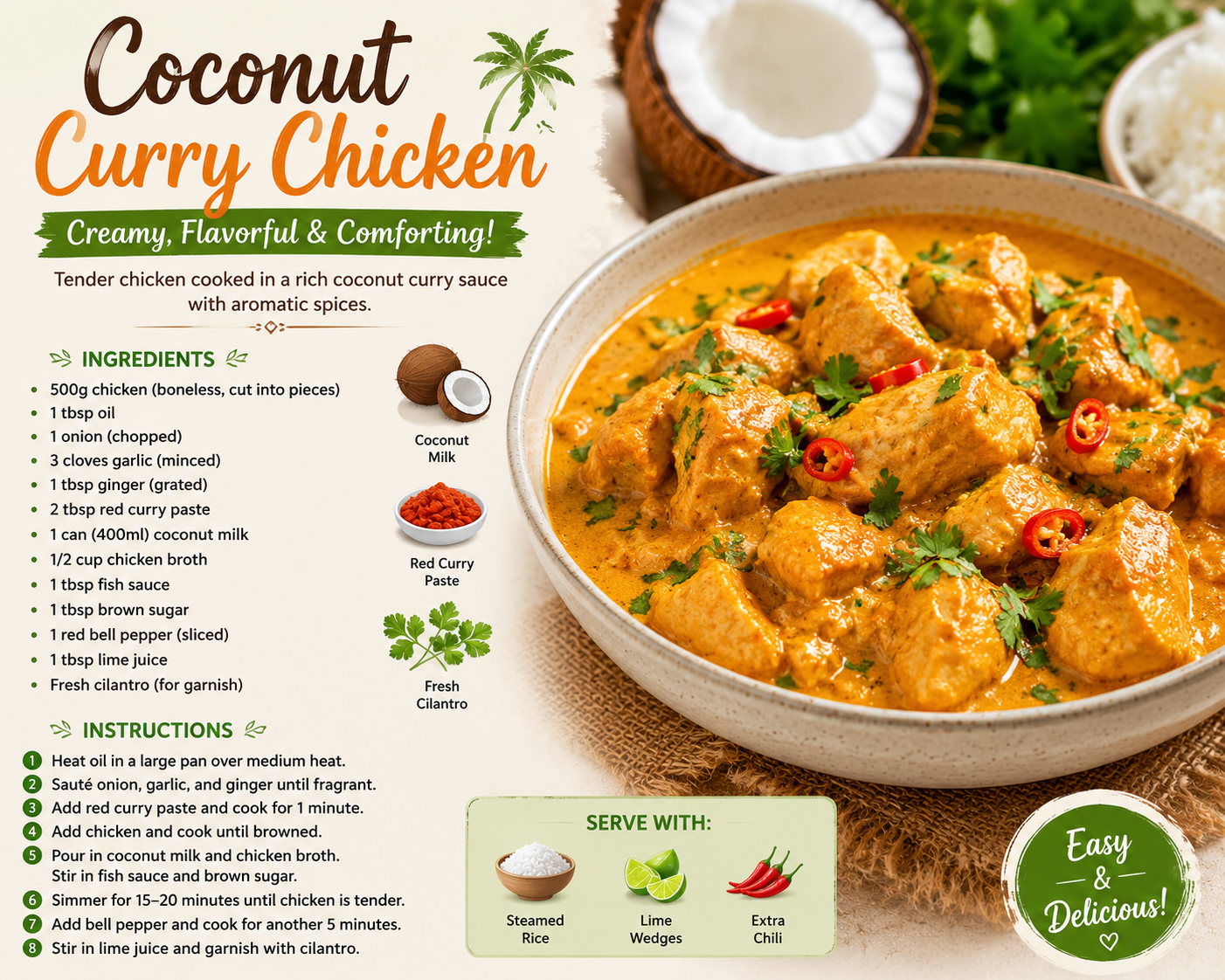
There are recipes you make once and forget. And then there are recipes that earn a permanent spot in your weekly rotation.
This coconut curry chicken is the second kind.
It’s creamy, fragrant, a little spicy, and hits that perfect balance between cozy comfort food and something that actually feels special. And the fact that it comes together in under 45 minutes? That part still surprises me every time.
If you’ve ever ordered Thai or Indian curry at a restaurant and thought, “I wish I could make this at home” — this is your sign.
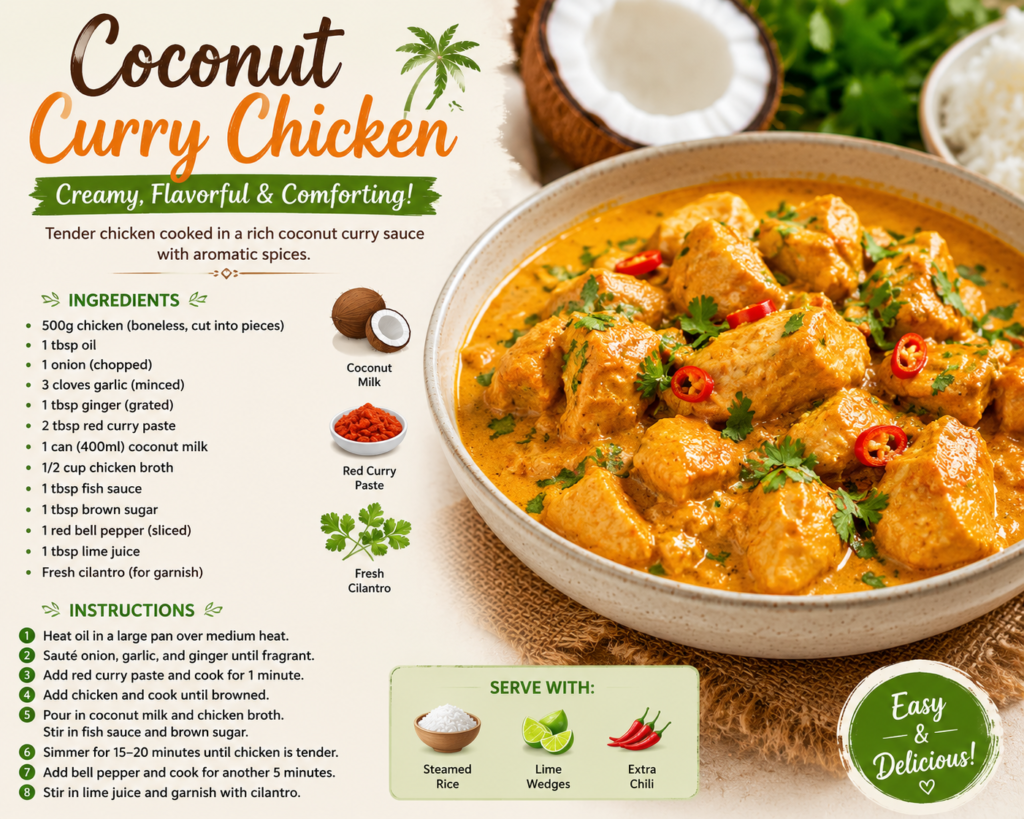
What You’ll Need
For the Chicken
- 1.5 lbs (680g) boneless, skinless chicken thighs, cut into bite-sized chunks
- 1 tsp salt
- ½ tsp black pepper
- 1 tsp turmeric powder
- 1 tbsp olive oil or coconut oil
For the Curry Base
- 1 tbsp coconut oil
- 1 medium yellow onion, finely diced
- 5 garlic cloves, minced
- 1 tbsp fresh ginger, grated
- 2 tbsp red curry paste (Thai-style)
- 1 tsp ground cumin
- 1 tsp ground coriander
- 1 tsp paprika
- ½ tsp cayenne pepper (adjust to heat preference)
- 1 can (14 oz / 400ml) full-fat coconut milk
- 1 can (14 oz / 400ml) diced tomatoes
- 1 tbsp fish sauce (or soy sauce for a vegetarian swap)
- 1 tsp brown sugar
- Juice of 1 lime
- Fresh cilantro, for serving
- Cooked jasmine rice, for serving
Tools You’ll Need
- Large skillet or dutch oven (at least 12 inches)
- Sharp chef’s knife + cutting board
- Wooden spoon or silicone spatula
- Measuring spoons
- Box grater or microplane (for the ginger)
- Can opener
- Citrus juicer (optional but helpful)
Pro Tips
A few things that will make a real difference, especially if this is your first time making curry from scratch:
- Use chicken thighs, not breasts. Thighs stay juicy and tender even if they cook a little longer. Breasts dry out fast in a curry situation. Thighs are the move.
- Full-fat coconut milk only. The reduced-fat versions are watery and the sauce won’t have that rich, velvety texture you’re going for. Don’t compromise on this one.
- Toast your spices. When you add the dry spices to the pan, let them cook for 30-45 seconds before adding the coconut milk. That quick heat unlocks the flavor in a way that just mixing them in never will.
- Taste and adjust at the end. Every can of curry paste and coconut milk is slightly different. Before serving, taste the sauce. Need more heat? Add cayenne. Feels flat? A squeeze of lime and a pinch of sugar fixes that almost every time.
- Don’t rush the onions. Take 6-8 minutes to properly sauté them until they’re soft and golden. This builds the foundation of the whole dish. Undercooked onions will give you a sharp, raw taste that lingers.
Substitutions and Variations
Protein swaps:
- Swap chicken for shrimp (add in the last 5 minutes only — shrimp cooks fast)
- Use firm tofu for a vegetarian version (press it first and pan-fry before adding to the sauce)
- Chickpeas work great as a plant-based protein and soak up all that sauce beautifully
Spice level:
- Mild: Skip the cayenne and use 1 tbsp curry paste instead of 2
- Extra spicy: Add a sliced Thai chili or a full teaspoon of cayenne
Coconut milk alternatives:
- Cashew cream adds a slightly nuttier flavor and works well for dairy-free needs
- Heavy cream can be used but it changes the flavor profile significantly
Curry paste options:
- Red curry paste gives bold, slightly smoky heat (what this recipe uses)
- Yellow curry paste gives a milder, more turmeric-forward flavor
- Green curry paste gives a brighter, more herbaceous taste — also delicious with this dish
Make-Ahead Tips
This curry is one of those rare dishes that tastes better the next day.
The spices deepen overnight and the chicken absorbs even more of the sauce. So if you’re meal prepping or hosting people for dinner, make it the day before and just reheat it on the stove over medium-low heat with a splash of coconut milk or water to loosen it back up.
The base (without chicken) can also be made up to 3 days ahead and stored in the fridge. Just cook the chicken fresh and add it in when you’re ready to eat.
How to Make It
Step 1: Season and sear the chicken
Toss your chicken pieces with salt, pepper, and turmeric until evenly coated.
Heat 1 tbsp oil in your skillet over medium-high heat. Add the chicken in a single layer and sear for 3-4 minutes per side until golden brown. You’re not cooking it through yet — just getting that color on the outside.
Remove the chicken and set it aside.
Step 2: Build your base
In the same pan, add another tablespoon of coconut oil over medium heat.
Add the diced onion and cook for 6-8 minutes, stirring occasionally, until soft and lightly golden. Don’t skip the time here.
Add the garlic and ginger. Cook for 1 minute until fragrant. Your kitchen will smell incredible at this point.
Step 3: Add the curry paste and spices
Add the red curry paste, cumin, coriander, paprika, and cayenne to the pan.
Stir everything together and let it cook for 30-45 seconds. This is where the magic happens — the spices bloom and the aroma shifts from good to really good.
Step 4: Add the liquids
Pour in the coconut milk, then the diced tomatoes. Stir to combine.
Add the fish sauce and brown sugar. Give it a good stir and bring everything to a gentle simmer.
Step 5: Finish the chicken
Return the seared chicken to the pan. Stir it into the sauce.
Let everything simmer together on medium-low heat for 15-20 minutes, uncovered, until the chicken is cooked through and the sauce has thickened slightly.
Step 6: Season and serve
Squeeze in the lime juice. Taste. Adjust with more salt, lime, or a pinch of sugar as needed.
Serve over jasmine rice and top with fresh cilantro.
Nutritional Breakdown (Per Serving, approx.)
Based on 4 servings, without rice
| Nutrient | Amount |
|---|---|
| Calories | ~420 kcal |
| Protein | 38g |
| Fat | 26g |
| Carbohydrates | 12g |
| Fiber | 2g |
| Sodium | 780mg |
Note: Numbers will vary depending on the brand of coconut milk and curry paste you use.
Diet-friendly notes:
- Gluten-free: Swap fish sauce for tamari or coconut aminos
- Dairy-free: Already dairy-free as written
- Low-carb/keto: Serve over cauliflower rice instead
Meal Pairing Suggestions
This curry pairs well with:
- Jasmine or basmati rice — the classic and the most popular for a reason
- Garlic naan — if you want something to scoop up the extra sauce (highly recommended)
- A simple cucumber salad — the cool crunch cuts through the richness of the curry really nicely
- Mango lassi or iced coconut water — if you want a drink that complements the flavors
Leftovers and Storage
Fridge: Store in an airtight container for up to 4 days. The flavor genuinely gets better by day 2.
Freezer: This freezes well for up to 3 months. Let it cool completely, store in a freezer-safe container, and thaw overnight in the fridge before reheating.
Reheating: Warm on the stove over medium-low heat. Add a splash of coconut milk or water if the sauce looks thick after refrigerating.
One heads-up: if you’re freezing it, cook slightly less if you plan to add more fresh chicken later. The texture holds up better that way.
FAQ
Can I use chicken breasts instead of thighs?
You can, but the texture won’t be the same. Chicken breasts cook faster and dry out more easily in a simmered sauce. If you use them, cut them into larger chunks and reduce the simmering time to about 10 minutes.
My curry sauce is too thin. What do I do?
Let it simmer uncovered for an extra 5-10 minutes. It’ll reduce and thicken on its own. You can also mix 1 tsp of cornstarch with 2 tsp of water and stir that into the sauce while it’s simmering.
My curry is too spicy. Can I fix it?
A little more coconut milk and a teaspoon of sugar can dial it back. Full-fat yogurt stirred in at the end also helps cool things down without affecting the overall flavor too much.
Can I make this in a slow cooker?
Yes. Sear the chicken and sauté the onion, garlic, and ginger on the stove first (don’t skip this step), then add everything to the slow cooker and cook on low for 4-5 hours or high for 2-3 hours.
What’s the difference between Thai and Indian-style coconut curry?
Thai curries typically use curry paste (made from fresh herbs and chilies) and tend to be brighter and more aromatic. Indian-style curries use dry spice blends and often have a deeper, earthier flavor. This recipe is a hybrid that borrows from both traditions — which is why it works so well.
Can I add vegetables to this?
Absolutely. Bell peppers, baby spinach, zucchini, snap peas, and sweet potatoes all work well. Add hardy vegetables (like sweet potato) early in the simmering stage. Add delicate ones (like spinach) in the last 2-3 minutes.
Wrapping Up
If there’s one recipe I’d tell you to make this week, it’s this one.
It sounds fancier than it is. It looks like something you’d order at a restaurant. And it comes together in under an hour with ingredients you can find anywhere.
Make it once and you’ll understand why it keeps showing up in people’s weeknight rotations.
Now I want to hear from you — did you try it? Did you add anything to it or change it up? Drop a comment below and let me know how it went. And if you hit any snags along the way, ask away. I’ll help you figure it out. 👇