I used to think sangria required some kind of secret family recipe passed down for generations.
Turns out, it’s mostly just good wine, fresh fruit, and a little patience while it chills. 🍇
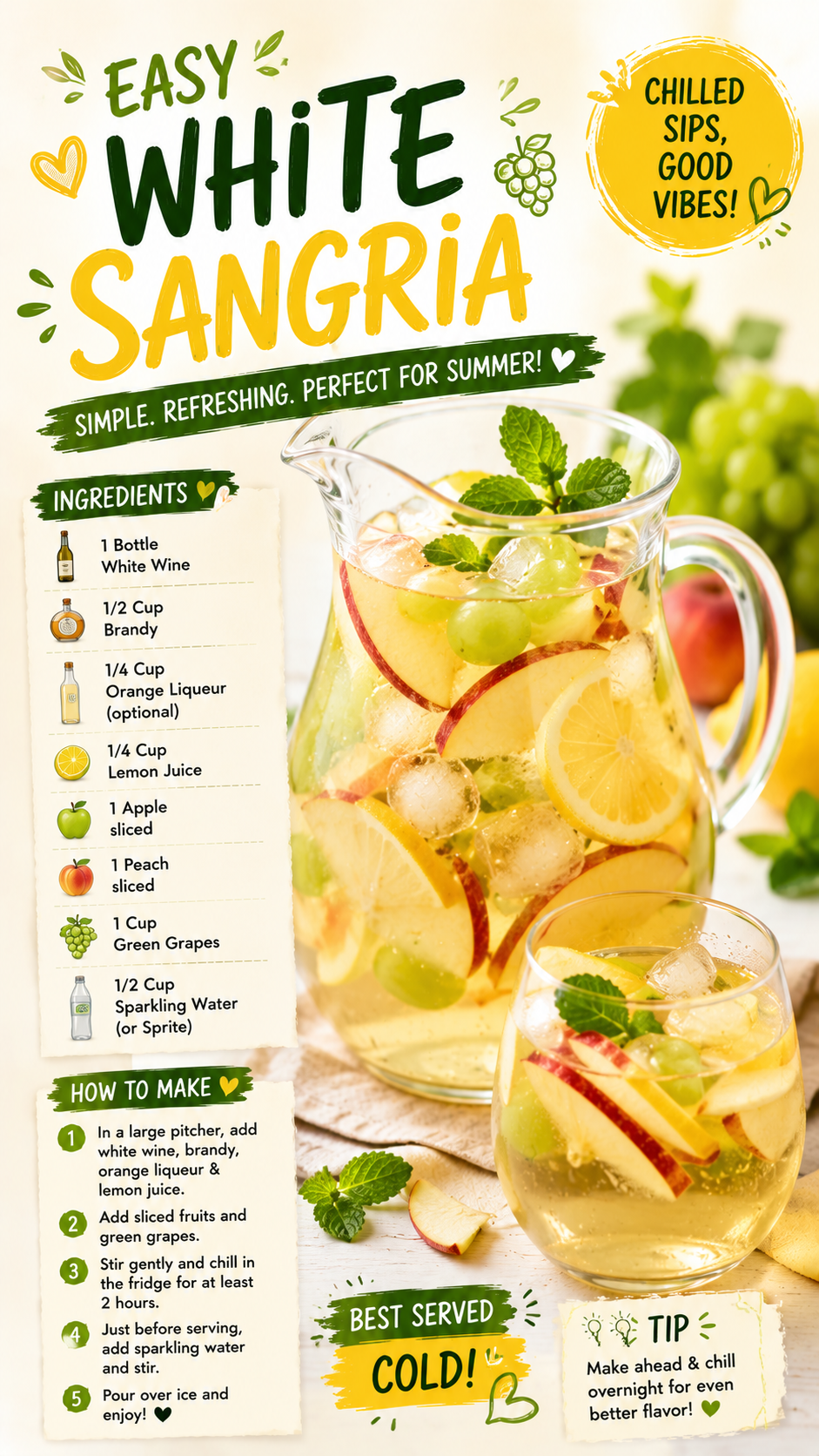
This white sangria is a light, fruity pitcher drink made with white wine, citrus, and a splash of sparkling water, perfect for sipping on a hot afternoon.
It’s easy enough to throw together in 10 minutes, but it tastes like something you’d order at a nice restaurant patio.
And it’s endlessly adjustable, so once you’ve got the base down, you can swap in whatever fruit you have on hand.
Here’s something worth knowing: sangria’s roots trace back to Spain and Portugal, where wine mixed with fruit was originally a practical way to make lower-quality wine more palatable. 🍷
These days it’s less about necessity and more about flavor, but that same basic idea, wine plus fruit plus time, still holds up.
Why This Recipe Works
A crisp, dry white wine like Sauvignon Blanc or Pinot Grigio gives this sangria a clean, refreshing base without being overly sweet on its own.
Letting the fruit soak in the wine for at least a couple of hours allows it to release its natural juices and sugars, which mellow out the wine and add real fruit flavor throughout.
A splash of orange liqueur adds a little extra depth and sweetness, rounding out the citrus notes already present from the fruit.
And topping it off with sparkling water right before serving keeps the whole drink light and bubbly, instead of feeling heavy or syrupy.
It’s a drink built on patience more than skill, which is part of why it’s so approachable even for people who don’t usually mix drinks at home.
What You’ll Need
- 1 bottle (750ml) dry white wine, such as Sauvignon Blanc or Pinot Grigio
- ¼ cup orange liqueur
- 1 orange, sliced
- 1 lemon, sliced
- 1 cup sliced strawberries
- 1 cup sliced peaches
- 1 cup sparkling water
- Ice
That’s the full list, and most of it is easy to grab at any regular grocery store.
Tools You’ll Need
- Large pitcher
- Cutting board and knife
- Wooden spoon or stirrer
- Glasses for serving
How to Make White Sangria
Step 1: Slice the fruit
Slice the orange, lemon, strawberries, and peaches.
Step 2: Combine the wine and fruit
In a large pitcher, combine the white wine, orange liqueur, and all the sliced fruit.
Stir gently to combine.
Make sure the fruit is fully submerged as much as possible, since that’s what helps it release its flavor evenly.
Step 3: Chill
Refrigerate for at least 2 hours, or up to overnight, to let the fruit flavors fully infuse into the wine.
The longer it sits, the more the fruit softens and the wine takes on that signature fruity sweetness.
Step 4: Add the sparkling water
Right before serving, stir in the sparkling water.
Step 5: Serve
Fill glasses with ice and pour the sangria over the top, making sure to include some fruit in each glass.
Serve immediately while it’s still cold and bubbly.
Pro Tips
A handful of small details that make a real difference here.
- Use a wine you’d actually enjoy drinking on its own. A better quality wine makes a noticeably better sangria, even though it’s mixed with other ingredients.
- Let it chill for at least 2 hours. Rushing this step means the fruit hasn’t had enough time to actually flavor the wine.
- Add the sparkling water last. Mixing it in too early lets the carbonation fade before you even get to drink it.
- Slice the fruit thin. Thinner slices release their flavor into the wine more quickly than thick chunks.
- Make it the night before a party. This gives the flavors plenty of time to develop, and it’s one less thing to do the day of.
- Use a glass pitcher if you have one. It lets you see all the colorful fruit floating inside, which makes the whole presentation feel more inviting.
Substitutions and Variations
- No orange liqueur on hand? Skip it entirely, or use a splash of orange juice instead for a milder, less boozy version.
- Want different fruit? Pineapple, grapes, or kiwi all work well as additions or substitutes.
- Want it sweeter? Add a splash of simple syrup or a little extra orange liqueur.
- No sparkling water available? Club soda or a lemon-lime soda both work as substitutes.
- Want a non-alcoholic version? Use white grape juice in place of the wine, and skip the orange liqueur entirely.
Make Ahead Tips
This sangria is genuinely meant to be made ahead, since the fruit needs time to properly infuse into the wine.
Make it the morning of, or even the night before, and keep it in the fridge until you’re ready to serve.
Just remember to add the sparkling water fresh right before pouring, rather than mixing it in too early.
Nutritional Info & Diet Swaps
One serving comes out to roughly 150-180 calories, depending on the exact wine and amount of liqueur used.
For a lower calorie version: Use a dry, lower-calorie wine and skip the orange liqueur.
For a lower sugar version: Use less fruit overall, or stick to fruits that are naturally lower in sugar, like berries.
Meal Pairing Suggestions
- Light seafood dishes: A classic pairing that complements the crisp, fruity flavor of the sangria.
- A summer cheese board: Works well alongside a relaxed afternoon gathering.
- Grilled chicken or salads: Keeps a summer meal feeling light and refreshing.
- A simple pasta salad: Works well for a relaxed outdoor lunch or dinner.
Time-Saving Tips
- Pre-slice your fruit the night before and store it in the fridge until you’re ready to assemble.
- Make a double batch for a party, since this drink tends to disappear fast once people start pouring.
- Keep a bottle of wine specifically for this recipe so you’re not improvising at the last minute.
- Buy fruit that’s already ripe rather than waiting for it to ripen, since this drink benefits from fruit that’s ready to release its flavor right away.
Leftovers and Storage
Store in the fridge in a sealed pitcher for up to 3 days, though the fruit will continue to soften the longer it sits.
I’d recommend adding fresh sparkling water to each new glass rather than mixing it into the whole pitcher at once, since it loses its fizz quickly once combined.
FAQ
What’s the best wine to use for white sangria? A dry, crisp white wine like Sauvignon Blanc, Pinot Grigio, or even a dry Riesling works well, since it balances nicely against the natural sweetness of the fruit.
Can I make a big batch for a party? Yes, just multiply the ingredients and use a larger pitcher or beverage dispenser to accommodate the bigger volume.
How long does the fruit need to soak before it’s ready? At least 2 hours, though overnight gives you an even more developed flavor.
Can I eat the fruit after drinking the sangria? Yes, the fruit absorbs a good amount of wine while soaking, so many people enjoy eating it along with the drink.
Is white sangria sweeter than red sangria? It can be, depending on the specific recipe, though this version stays fairly balanced rather than overly sweet, thanks to the dry wine base.
Can I use a sweeter wine instead of a dry one? You can, but you’ll want to cut back on any added sweetener, since a sweeter wine combined with fruit and liqueur can quickly become overwhelming.
Wrapping Up
This sangria turned out to be a lot simpler than I expected, once I actually understood what was happening during that chilling step.
Good wine, fresh fruit, a splash of liqueur, and a little patience. That’s genuinely the whole process.
Make a pitcher this weekend for a backyard gathering, a lazy Sunday afternoon, or just because the weather finally feels like it should.
If you try this one, leave a comment below and let me know which fruit combination you went with. I’d love to hear about it.